An insightful data platform where macro meets micro: global economic trends alongside the companies behind them. Built for anyone curious about the world.
🔍 See how the world economy works, in charts. Game of Francs covers more than 200 countries and 18,000 listed companies, from inflation, interest rates, trade and energy to market caps, revenues and profits.
https://t.co/AIBwEtVxTB
#economics#macro#stocks#dataviz
@EmmyWss With dividends reinvested, US$10,000 put in the S&P 500 at the start of 1995 would be worth about US$296,000 today, roughly 30 times. Measured in gold it grew about 2.8 times. Most of the dollar gain is real, but a big slice is simply the dollar shrinking. 👇
@ReutersBiz America's emergency stock is part of it. The Strategic Petroleum Reserve held 282.6m barrels on 23 October, down from 415.4m at the end of February and the lowest since 1982. It held 726.6m at its 2010 peak. Buffers drawn this low leave the next shock to be met by price. 👇
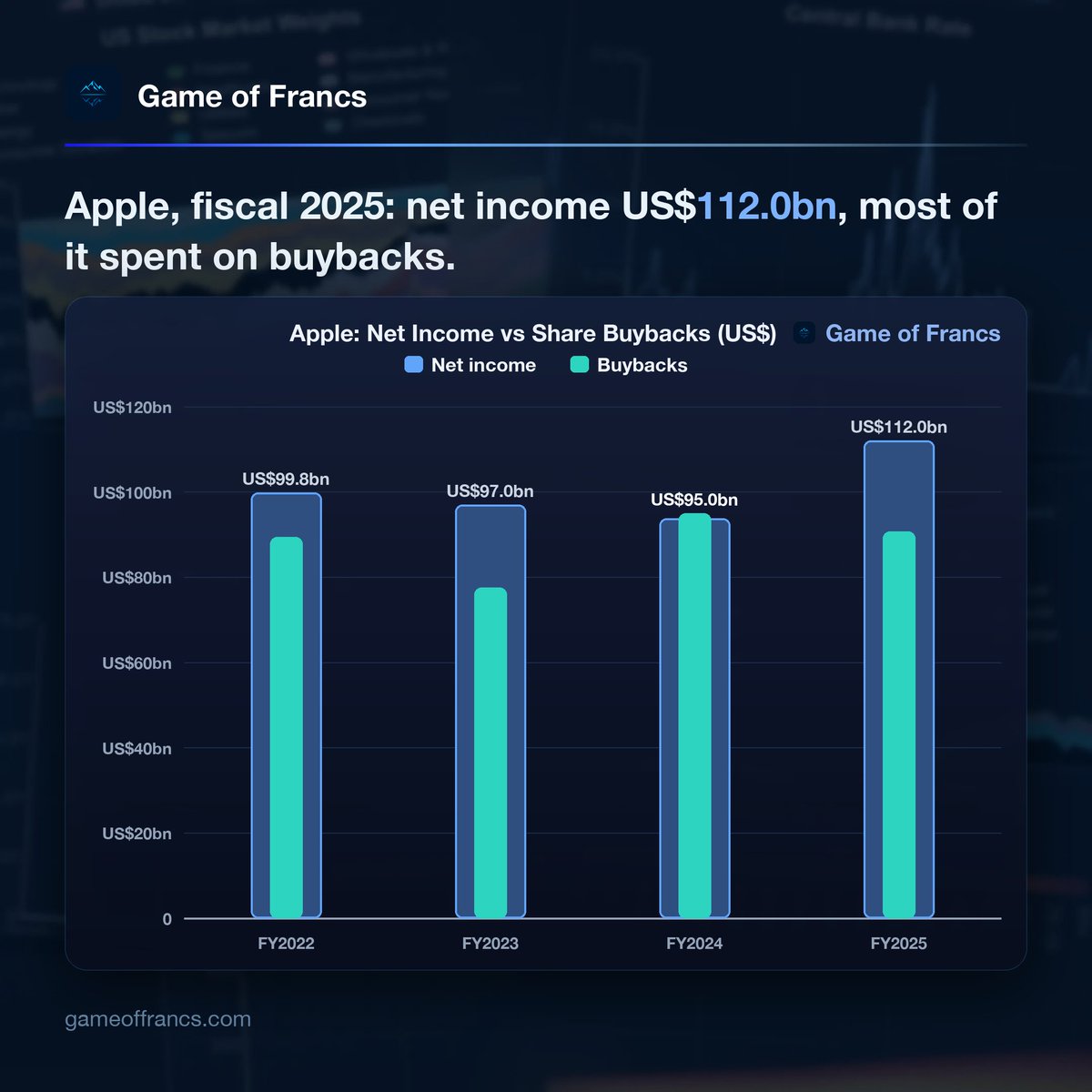
That puts fiscal 2026 sales at about US$479bn. Where the cash goes matters as much: Apple spent US$90.7bn buying back its own shares in fiscal 2025, against net income of US$112.0bn. Over four years buybacks totalled US$352.6bn. A company that hands most of its profit back has more cash than ideas to spend it on. 👇
@arquiguru Belgium already collects half of its economy: government revenue was 50.0% of GDP in 2024. It still spent 54.5%, so the gap was 4.5% of GDP. The last year revenue covered spending was 2006. When even a 50% take falls short, the problem is the spending path, not the tax rate. 👇
The long end shows it. The US 30-year yield touched 5.67% on 7 October, the highest since 2001, and closed Friday at 5.31%, against 0.99% in March 2020. With inflation at 3.7%, that leaves about 1.6% a year after prices. Mediocre beats awful, but only while inflation stays put. 👇
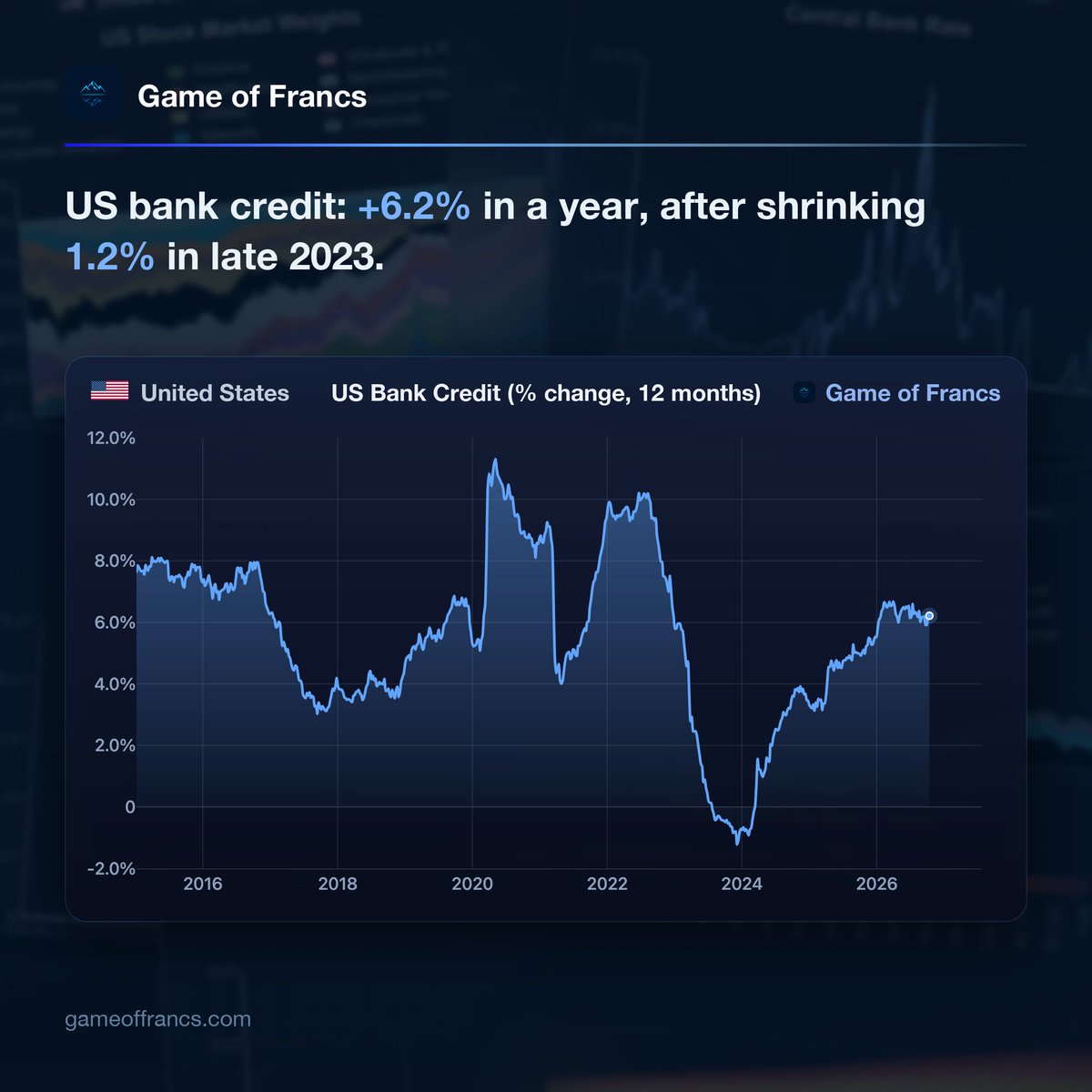
@stlouisfed The bigger picture is total bank credit: US$20.0tn in the week to 21 October, up 6.2% in a year. Growth has run above 6% for most of 2026, the fastest since 2022, after credit actually shrank 1.2% in late 2023. Lending is running well ahead of real growth again. 👇
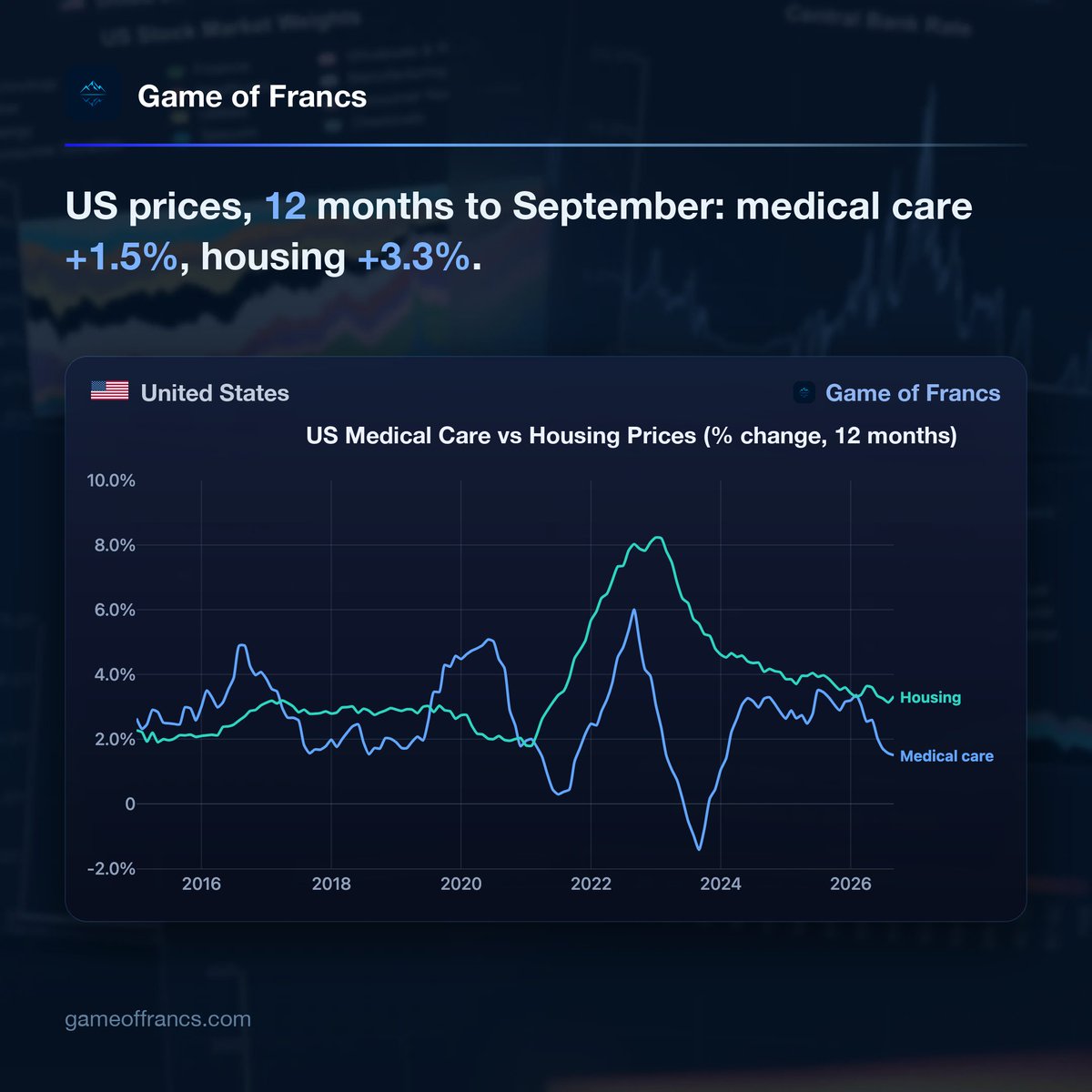
Over 26 years, yes. This year it's the other way round: medical care prices rose 1.5% in the twelve months to September, less than half the 3.7% for all prices, and down from 3.3% a year earlier. Housing costs rose 3.3%. The squeeze has moved from the doctor's bill to the rent and the energy bill. 👇
Belgian prices rose 4.5% in the year to September, against 3.4% in France, 3.2% in Germany and 2.7% in the Netherlands. Among the big euro economies only Spain is higher. Housing and energy costs were up 12.9%. Wage indexation follows prices with a lag, so for now households feel the gap. 👇
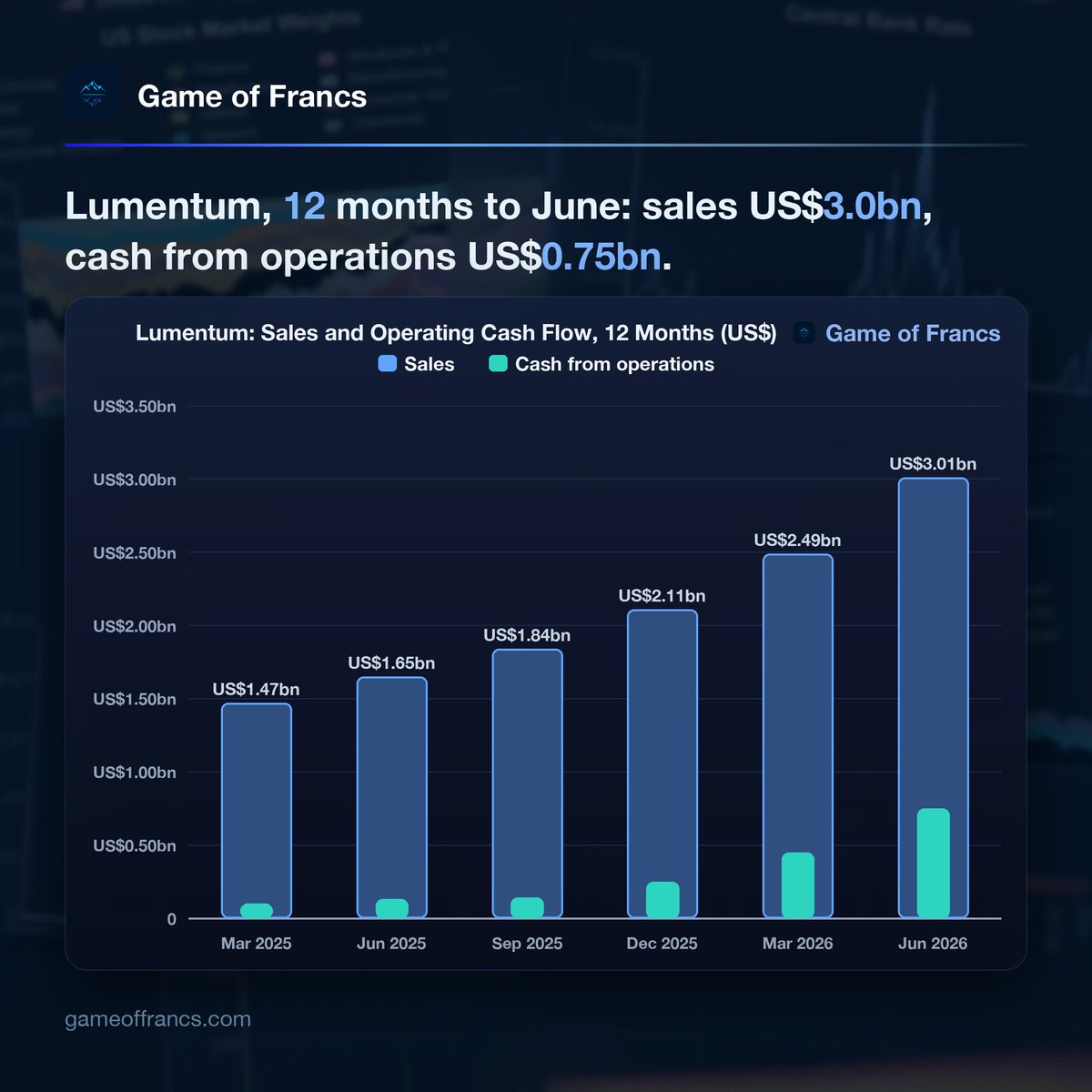
US$115bn for a company with US$3.0bn of sales in its last fiscal year, about 38 times revenue. Lumentum's adjusted profit was US$0.78bn and its cash from operations US$0.75bn. Its reported result was a US$6.9bn loss, because converting debt into shares cost a one-off US$7.8bn. The price assumes the AI boom keeps doubling sales. 👇
4.94 million tonnes would be Chile's lowest since 2003, when it mined 4.90m. Output peaked at 5.83m in 2018 and was 5.39m last year, so the decline is now eight years old. Ore grades fall, new mines take a decade, and the world wants more copper every year. Scarcity is being priced in slowly. 👇
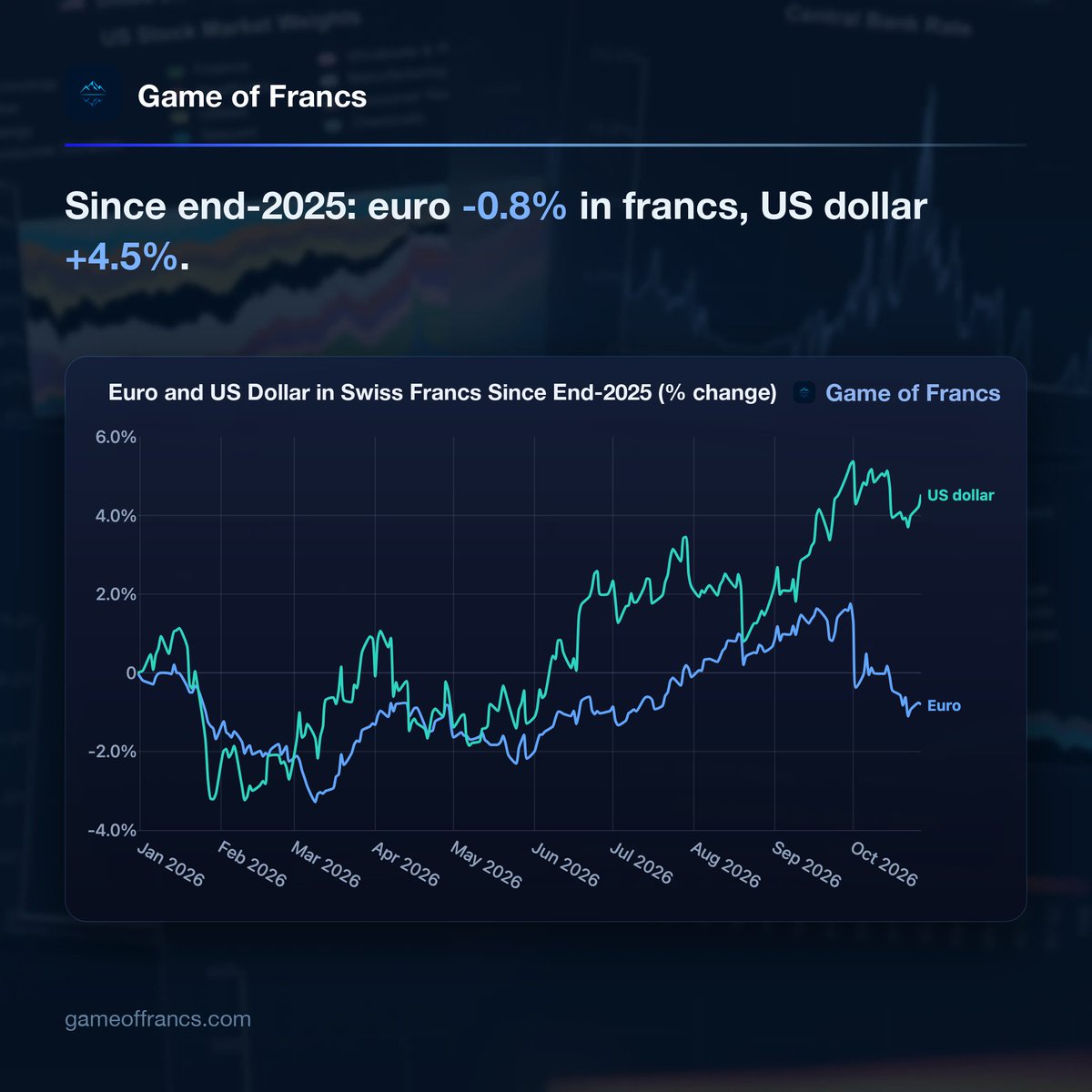
Against the euro the franc has barely moved: 0.931 at the end of 2025, 0.924 on 27 October, slightly stronger. The weakening is against the dollar, about 4.5% (0.793 to 0.829 francs per dollar). Swiss inflation rose from 0.1% in December to 1.0% in September, still inside the SNB's 0-2% band with the rate at zero. 👇
Measured in gold, the losses are far bigger. Since January 2000 the Swiss franc has lost 86% of its value in gold, the euro 92%, the dollar 93% and the yen 95%. Even the hardest paper currency kept only a seventh of its weight. Debasement is relative only between currencies, never against metal. 👇
Today's bounce starts from a long way down. Gold closed Friday at US$3,899, 28% below its record of US$5,405 on 29 January. Silver fell harder, from US$118.45 to US$49.10, a 59% drop. A peace deal takes out the war premium, but it does nothing to the debt that put gold there in the first place. 👇
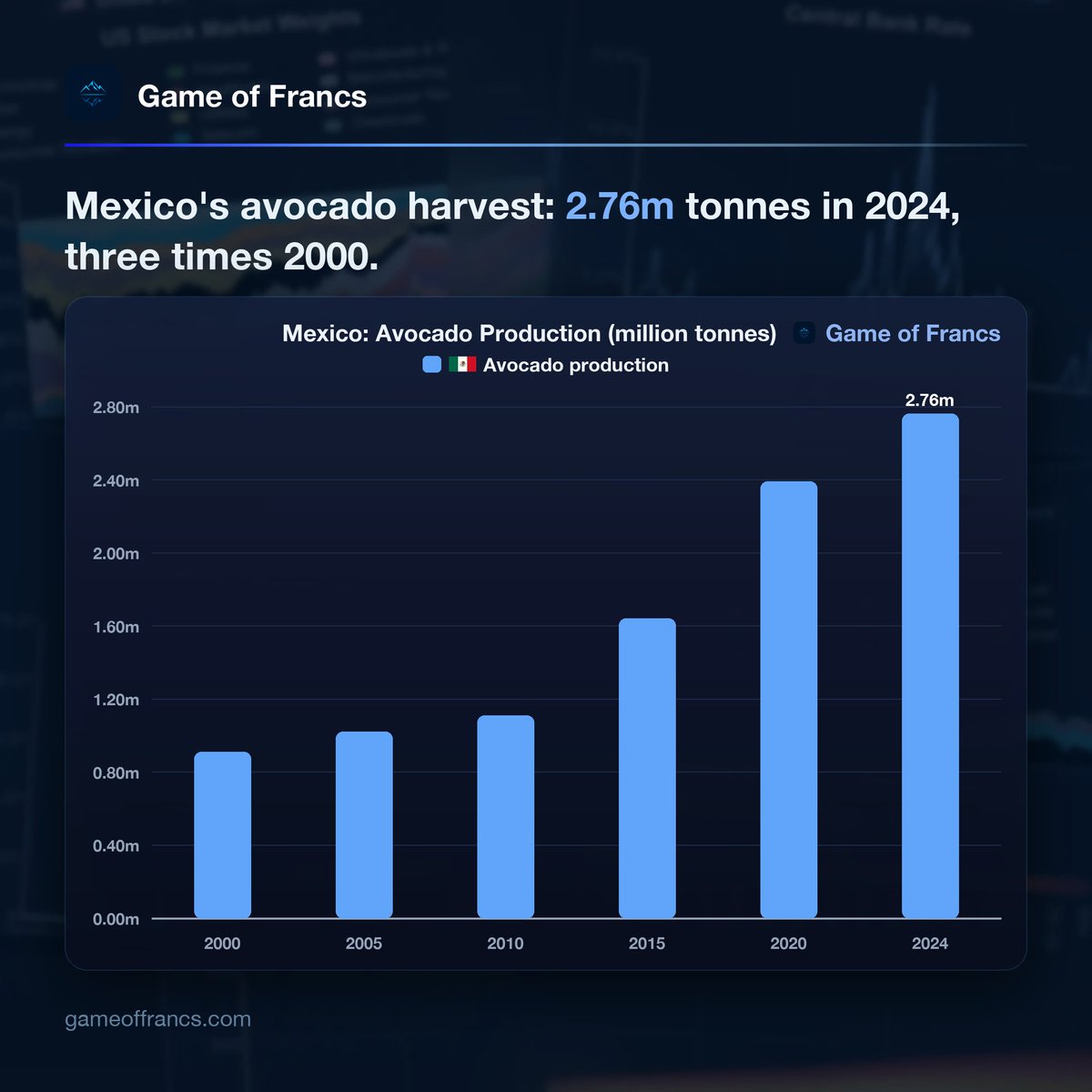
@Reuters The stakes are a quarter of the world's supply. Mexico grew 2.76 million tonnes of avocados in 2024, three times its 0.91 million in 2000 and about 25% of world output. Colombia, second, grew 1.27 million. One pest finding at that scale moves prices from Los Angeles to Tokyo. 👇
@JavierBlas Follow the invoices. China bought US$176bn of goods from Saudi Arabia, the UAE, Iraq, Oman, Qatar and Kuwait in 2025, against US$2.9bn officially from Iran. Russia alone sold it US$120bn, up from US$33bn in 2015. Beijing's hedge for a closed strait already runs overland. 👇
Because the GDP isn't the payslip. Ireland's GDP per head was US$155,089 in 2025 at PPP, more than double Germany's US$75,407. Yet the average hourly wage was US$39.18, below Germany's US$51.44 and France's US$40.59. Multinational profits book in Dublin; the rent is paid in euros earned locally. 👇
@TheEconomist America is racing from far behind. China mined 270,000 tonnes of rare earths in 2025, about 69% of the world total, against 51,000 for the US. US output was zero as recently as 2017. Whoever controls the inputs sets the price of every chip and motor built on them. 👇
@CNBC Higher yields haven't made bonds pay more. The 10-year went from 3.97% at the end of February to 4.98% on Thursday, but inflation rose faster, to 3.7% in September, so the yield after inflation fell from 1.56% to 1.24%. Bondholders are being paid more only to stand still. 👇