🇯🇵A Japanese developer built an app that puts a fat cat on your screen and forces you to take a break
Silicon Valley spent billions on wellness platforms, mindfulness subscriptions, and digital detox retreats
A guy in Japan said: fat cat, problem solved
@dailyhubranx Many years after Final Fantasy the movie in 3D and still the same apparent problems, feel-fake motions and dead eyes...
I love the Matrix but hyper-realism tech has still a way to go IMO 🤔
@_annieversary The central claim is a term-equivalence result rather than a foundational reduction of primitive notions. Since the proposed generator is itself defined using exp and log, the manuscript packages existing analytic structure into a single symbol rather than eliminating it. 🙇♂️
This is big. Really big.
Scientists have just created a molecule that can store sunlight like a rechargeable battery.
In a new study published in Science, researchers designed a pyrimidone based system that captures solar energy and locks it into a high energy form called Dewar pyrimidone.
When exposed to UV light (~300 nm), the molecule undergoes photoisomerization, transforming into a strained structure that stores energy in its chemical bonds.
What makes this powerful is that the energy can be stored for years and then released on demand as heat, simply by triggering the molecule with heat or an acid catalyst 👀
The system achieves an energy density of ~1.6 MJ/kg, which is nearly 2× higher than lithium-ion batteries.
In experiments, the stored energy was strong enough to boil water in seconds, proving it’s not just theoretical.
The molecule is also inspired by DNA chemistry, designed to be compact, stable, and even work in water-based environments.
This is part of a growing field called Molecular Solar Thermal (MOST) energy storage, where the material itself acts as a solar battery.
Instead of converting sunlight into electricity, it stores it directly as chemical energy.
We’re starting to move toward a world where sunlight isn’t just used instantly.. but saved, transported, and released whenever we need it.
Welcome to fastest accelerating SciTech Era ♥️
In 1990 I wrote a letter to Marilyn vos Savant, Parade Magazine in support of her proof on the Monty Hall Problem.
I ran an AI (expert system) test on it and she was right and just about the entire academic community was wrong.
They could not accept it.
Now they do.
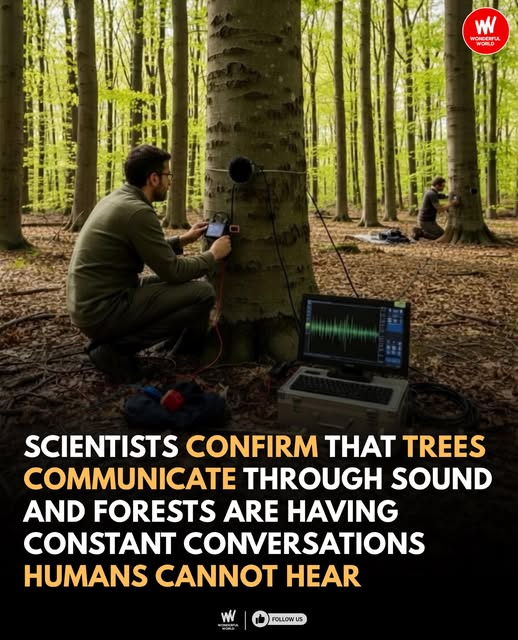
Scientists have confirmed something almost unbelievable… forests aren’t silent at all.
Researchers from the University of Florence discovered that trees communicate using ultrasonic sound pulses — frequencies so high (20–200 kHz) that humans can’t hear them.
In the forests of Casentino Forest, European beech trees under drought stress began emitting rapid ultrasonic “clicks.” These weren’t random noises — they were warnings.
And here’s the wild part…
Nearby trees heard the signal and reacted within hours.
Before experiencing any drought themselves, they started closing their stomata (tiny pores on leaves) to conserve water proving they received and acted on the warning.
Scientists traced the sound to tiny internal events called cavitation microscopic bubbles forming and collapsing inside the tree’s water transport system. These clicks travel through air and soil, reaching trees up to 50 meters away.
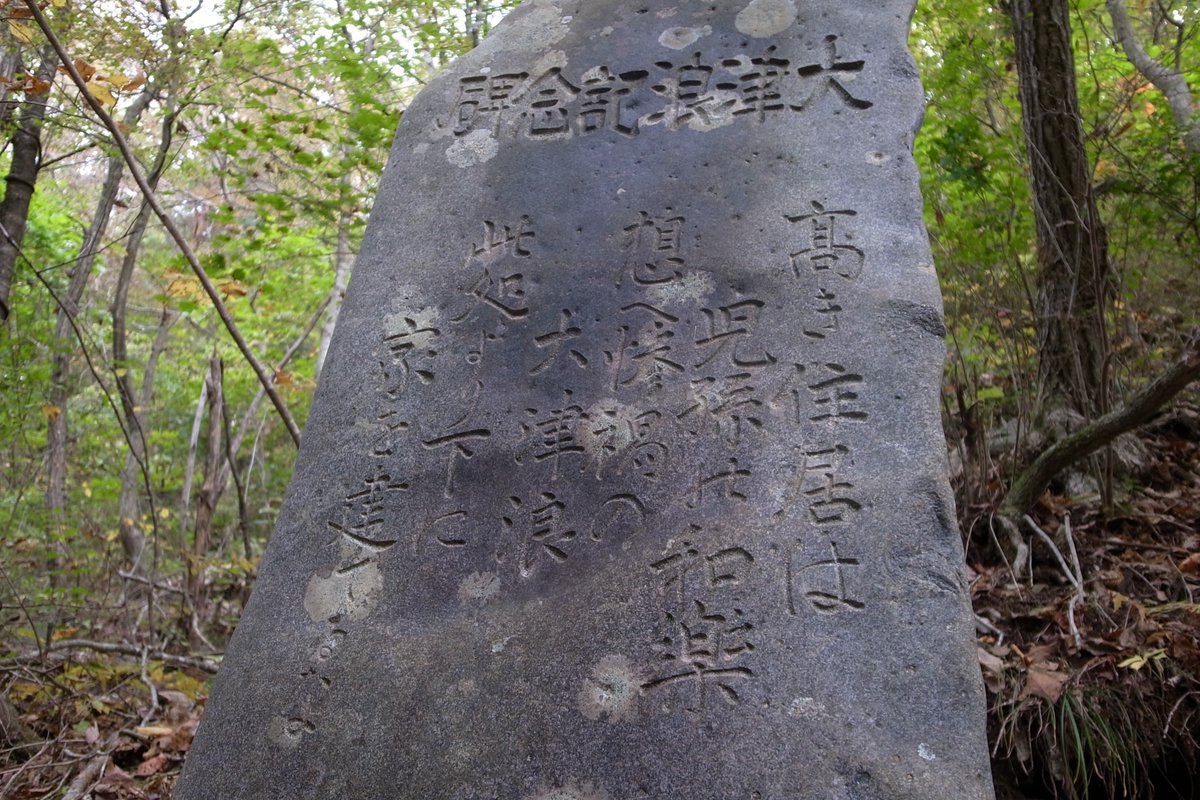
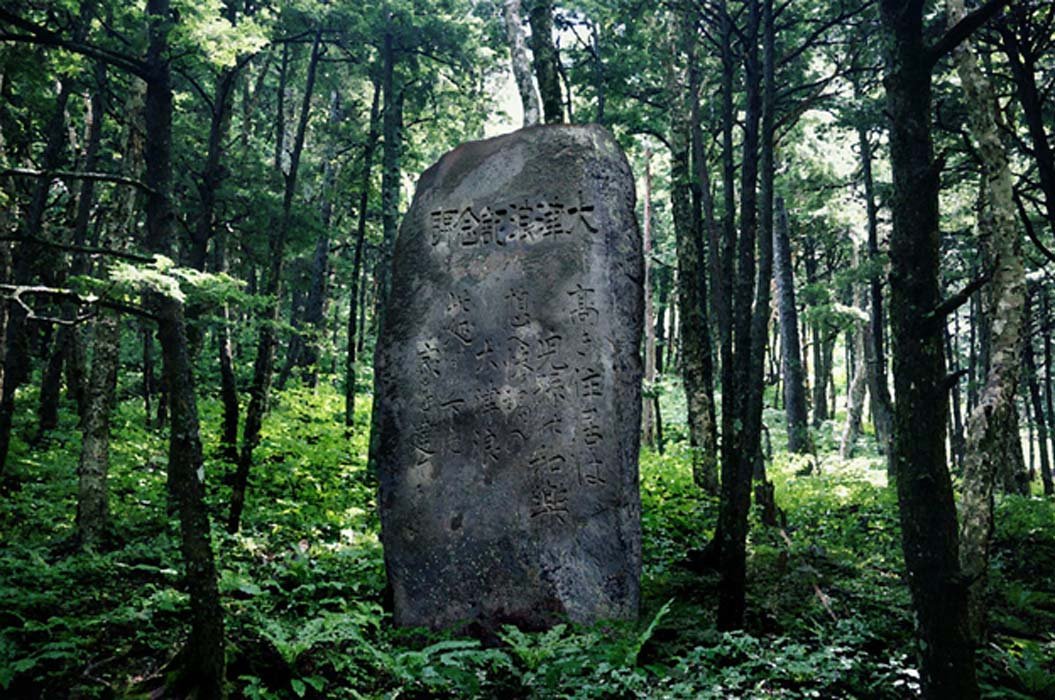
🚨 Japan placed stone warnings along its coastline centuries ago. In 2011, the ocean proved them right.
Scattered along Japan's coast are hundreds of ancient markers known as tsunami stones. Some are over 600 years old.
They carry one message: do not build below this point.
🔹Aneyoshi obeyed and survived 2011
🔹Some stones are over 600 years old
🔹Hundreds placed along Japan's coast
🔹Over 20,000 killed in the 2011 tsunami
🔹Towns below the markers were destroyed
One stone in Aneyoshi reads "Remember the calamity of the great tsunamis. Do not build any homes below this point."
The village obeyed.
When the 2011 tsunami hit, the water stopped just below the stone. Aneyoshi survived. Surrounding towns that built below the markers lost over 20,000 people.
A Tohoku University professor said "It takes about three generations for people to forget." Survivors carved warnings into stone because they knew memory fades.
Civilisation after civilisation did the same thing thousands of years earlier.
If the Japanese stones proved deadly accurate after 600 years, why do we assume the older warnings are just myths?
A peanut-sized Chinese model just dethroned Gemini at reading documents.
GLM-OCR is a 0.9B parameter vision-language model.
It scores 94.62 on OmniDocBench V1.5, ranking #1 overall.
For context, it outperforms models 100x its size. 100% open-source.
It works in two stages.
1. A layout engine detects every region in a document.
2. Each region gets read in parallel.
The model predicts multiple tokens per step instead of one.
That's what makes it so fast at small size.
It handles things most OCR tools struggle with:
> Complex tables and nested layouts
> Handwritten text and stamps
> Math formulas and code blocks
> Mixed image-and-text documents
You can run it locally through Ollama.
It fits on edge devices with limited compute.
Every expensive OCR API just got a free competitor.
Inspired by diving bell spiders & fire ant rafts, researchers built a laser-etched metal that traps air and won’t sink—even when punctured. Unsinkable ships, resilient flotation gear, and long-life ocean sensors? Nature-inspired physics says it’s possible. It’s 6 years old…