FDEs work with the most strategic customers to actively build net new features/products in order the make them successful. You’d often be onsite with the customer and hands-on keyboard. There’s less of a playbook for what success looks like and you get significant product learnings if done right which might result in new product lines or features.
Solutions engineers are more applying a known playbook to help a customer integrate and be success. It’s more of a pre-sales function. There’s normally less custom code written and often it’s advising their engineers of how to implement.
However, it’s a spectrum and some companies would use opposing definitions.
As OpenAI and Meta introduce LLM-driven searchbots, I'd like to once again remind people that neither LLMs nor chatbots are good technology for information access.
A thread, with links:
>>
India's biggest export is hunger.
It might seem cringey to even hear that but there are very very few truly hungry people in the world who will sacrifice everything for opportunity.
India is full of them.
We remain committed to our partnership with OpenAI and have confidence in our product roadmap, our ability to continue to innovate with everything we announced at Microsoft Ignite, and in continuing to support our customers and partners. We look forward to getting to know Emmett Shear and OAI's new leadership team and working with them. And we’re extremely excited to share the news that Sam Altman and Greg Brockman, together with colleagues, will be joining Microsoft to lead a new advanced AI research team. We look forward to moving quickly to provide them with the resources needed for their success.
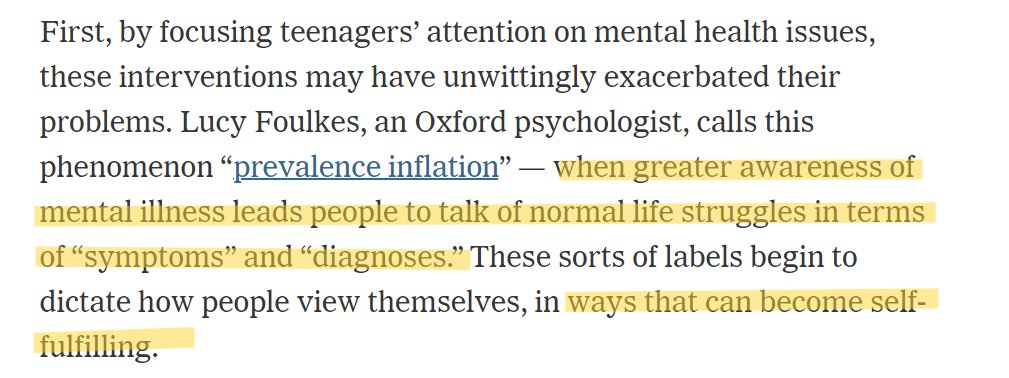
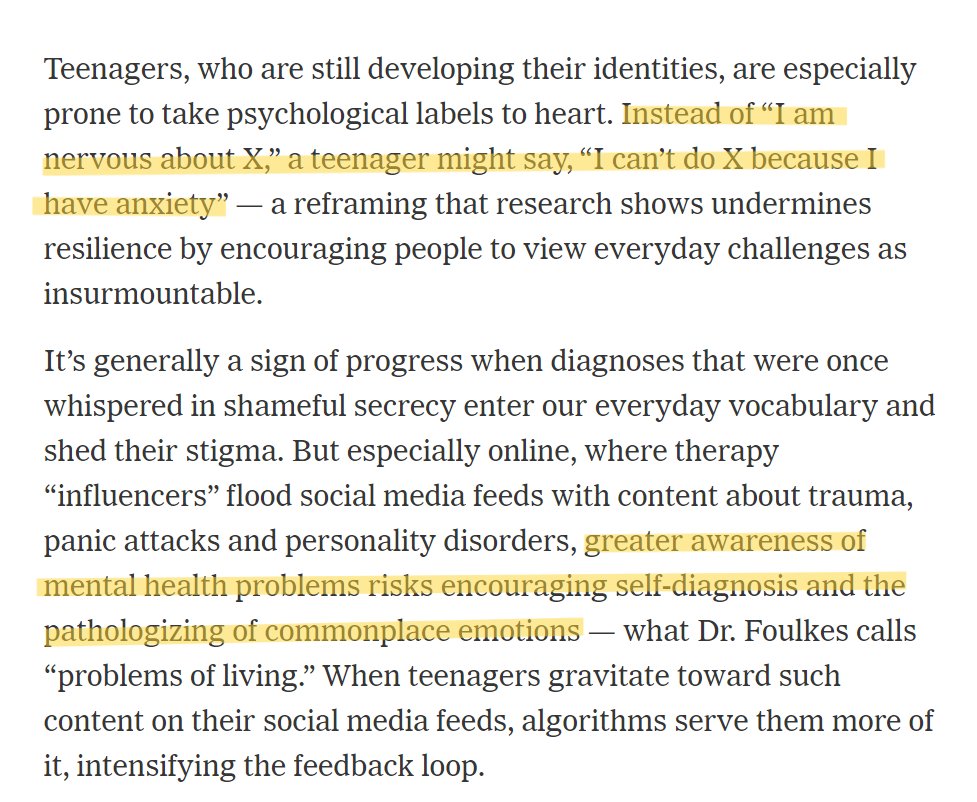
This NYT piece is an endless stream of bangers.
I swear, one of the more destructive recent cultural trends has been the combined push to frame all distress or discomfort as mental illness, and then to encourage people to form their identity around being “mentally ill.”
Daniel Kahneman, the Nobel Prize-winning psychologist, has a rule where he never says yes to anything on the spot.
People-pleasing had him making too many commitments.
He says something to the effect of: "Thanks for the invite. I don't say yes to anything on the spot, but I'll let you know if I'm interested."
Turning the choice into a rule lowers the pain of rejection for others and makes the decision easy for you as well.
...they are no match to the simplicity of monoliths. If I were to build MindFi from scratch, I would still choose a monolithic structure again. They are fast to build, debug, maintain and scales reasonably well if well structured.
Amen. I hear a lot of misguided recommendations when I say we do not do Microservices and still use a monolith built with Python. Monoliths are exceptionally easy to manage, build and most importantly pinpoint issues quickly.
Sure, microservices may have some advantages, but....
I got little furious today - when founders get advice such as move to micro-services, or use golang, because it's faster... don't use php, python because they are slow - none of these advice work, also, when new cto/cpo comes and tells you that you are slow because of these.
@devpod_sh is super cool! I have been wanting to use my home server for development and this is the best solution I have found that does not require you to jump through hoops. All I have to do is to spin up a VM with docker and connect Devpod! 🤯
Kudos to the team!