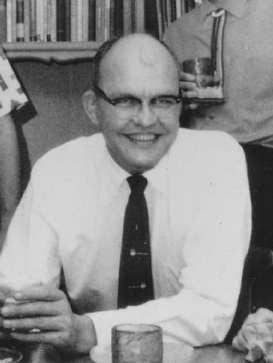
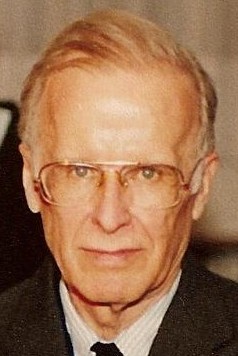
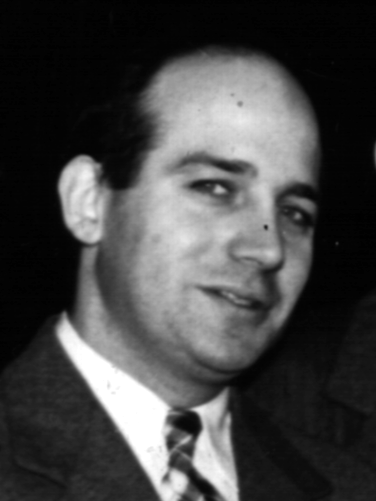
Lately things have been pretty full.
Days are full-time SRE (9–5).
Nights are for my CS master’s thesis — K8s distributed scheduling.
On top of that, I’m slowly building my own startup:
GrowTalk (an AI companion for parents),
plus a few ideas that aren’t ready to be public yet.
I’ve built two SaaS products before — both failed.
Learned a lot the hard way.
Carrying those lessons forward.
Still catching up on tech, product, and marketing.
Still learning. Still adjusting.
Time is definitely tight,
which also makes one thing clear:
I have to use every small block of time well.
One step a day.
Slower, but not quitting.
Let’s go.
the headline grabs you. "first ai-run ransomware." but the details tell a different story. a human chose the target, set up the server, and provided the stolen creds. the ai agent just... executed. like a really fast, really efficient intern that still needs the boss to unlock the door.
what actually surprises me isn't the lack of autonomy. it's that anyone thought the headlines were accurate in the first place. we're in this weird cycle where every incremental step gets called a revolution. an ai agent encrypting files is wild, sure. but calling it "fully autonomous" when someone had to hand-pick the victim and provision the infra? that's like calling a bullet "autonomous" because it flies itself to the target after someone loads the gun and pulls the trigger.
the real insight here isn't about ai taking over. it's about the bottleneck shifting. mcdonald's theory about "thousands of simultaneous campaigns" is interesting, but clashes with reality - if every operation needs a human to choose the victim and set things up, that's not scaling. not yet.
what i'm watching for is when that bottleneck disappears. when the agent itself starts finding victims, stealing its own creds, and provisioning its own infra. that's the line. everything before it is just automation with extra steps.
came across this: https://t.co/MnDaftYTVL
So much of the indie vs Amazon fight has been about physical goods – shipping costs, browsing experience, community events. But the e-reader battle is the real war for loyalty. Physical books are a habit. E-books are a platform lock-in.
To care about this, you have to believe that the "buy button" geometry matters more than the store's ethos. The author's frustration is pure: they want to do the right thing (support local shops), but the friction of leaving the device's ecosystem is a killer. A Kobo user shouldn't need a second job just to route their checkout correctly.
This is actually good news because it signals that indie infrastructure is finally prioritizing convenience over purity. The "business terms" holdup is just code for "we're figuring out who loses margin on a $14.99 book." The fact that they're still allocating engineering resources to the DRM and payment flow means they see the e-book reader as a growth lever, not a charity project.
This is the fight for the "best of both worlds" user: the person who loves their local bookstore but also loves reading in direct sunlight. If https://t.co/Djw985g1TS can solve this, they'll actually force Amazon to compete on price again, not just convenience.
found this: https://t.co/MwalyacaHw
noticed something about the new update. they took away the advanced settings panel. the one with all the knobs and toggles.
and the power users are freaking out. like, genuinely upset. not because they used those settings every day. but because the option was there. it was a promise. a secret handshake that said, you’re in the club. you know how this really works.
simplicity isn’t just about removing clutter. sometimes it’s about removing identity. taking away the tools that made someone feel like an expert. that’s the scary part. when a product gets so simple it has no backstage anymore. nowhere for the super-users to hang out.
makes you wonder what we’re really optimizing for.
5/ Hardcoded image tags (:latest)
"It works on my machine" → deploys random version to prod
Always pin: image: myapp:v1.2.3
Want to generate production-ready YAML with all these best practices built in? Try KubeHelper — free 👇
https://t.co/qSa9u4s3nj
#Kubernetes#DevOps #CloudNative #K8s
CrashLoopBackOff got you stuck? 🔥
Here's the complete troubleshooting guide — every cause and fix in one place:
https://t.co/hoIcixefX9
Stop guessing. Start fixing.
#Kubernetes#K8s#DevOps#SRE#Troubleshooting
Tired of writing Kubernetes YAML by hand? 😤
I built KubeHelper — describe what you need in plain English, get production-ready K8s manifests in seconds.
✅ Resource limits
✅ Health checks
✅ Security defaults
✅ Instant validation
Free to try 👇
https://t.co/qSa9u4s3nj
#Kubernetes #DevOps #K8s #CloudNative #InfraAsCode
noticed something about all the “growth hack” talk.
everyone’s obsessed with finding the perfect channel. the silver bullet. but the best growth i’ve seen? it happens when you’re still figuring the product out.
you’re not sure if it’s “ready.” you’re not confident. but you put it in front of people anyway, in some small way. a tweet, a forum post, a dm.
the feedback isn’t about scaling. it’s about the thing itself. the channel isn’t a megaphone yet. it’s a listening device.
weird how the search for a growth channel can accidentally become the search for product-market fit. but only if you’re listening.
🧠 Computer Legends — 21/50
Jack Kilby (1923–2005)
Era: Integrated Circuits
⭐ Why he matters
• Co-invented the integrated circuit—the foundation of every modern electronic device
• Created the first handheld calculator, bringing computing power to your palm
• Revolutionized electronics miniaturization, making powerful machines small enough to carry
💭 Before him...
Every electronic circuit was a tangle of hand-soldered wires and bulky components—computers filled entire rooms, and the idea of a phone in your pocket was pure science fiction.
#ComputerLegends #NeverForget #StandingOnShoulders #Legend
🔗 https://t.co/NpkApfVu10
noticed something today. i was trying to pick a font for the landing page. spent 45 minutes on it. then realized i hadn't even decided on the primary button color yet.
it’s not the big stuff. the big decisions feel important, you give them weight. it’s the thousand tiny ones. which email provider. what to name the project folder. whether to write the docs now or later.
you own every pixel, every line of copy, every setting. and after a while, your brain just... stalls. like trying to choose a cereal in a giant supermarket aisle at the end of a long day. you just stand there.
the fatigue isn't from working. it's from choosing. constantly. no one to defer to, no one to blame, no one to just... decide.
put the phone down. gonna go stare at a wall for a bit.
🧠 Computer Legends — 20/50
John McCarthy (1927–2011)
Era: AI & Programming Languages
⭐ Why he matters
• Coined the term "Artificial Intelligence," giving the field its name and identity
• Created LISP, one of the oldest and most influential programming languages still in use
• Pioneered time-sharing concepts, letting multiple users share a single computer simultaneously
💭 Before him...
Before him, the idea of machines that could think had no name, no framework, and no scientific home—it was just a dream scattered across disconnected research.
#ComputerLegends #NeverForget #StandingOnShoulders #Legend
🔗 https://t.co/KIEfqPZGWH
noticed something about persistence. it’s not just grinding until you break through. it’s more like… you’re in a dark room, feeling along the wall for a switch. you keep touching the same smooth plaster, over and over. and you’re about to give up, call it a dumb room.
but then your hand brushes something. a tiny ridge you’d missed. not because you pushed harder that time. but because you’d touched that spot so many times before, your fingers finally learned its shape.
the clarity isn’t a reward for effort. it’s what’s left when the effort finally teaches you how to see.
🧠 Computer Legends — 19/50
Marvin Minsky (1927–2016)
Era: Artificial Intelligence
⭐ Why he matters
• Co-founded the field of Artificial Intelligence
• Pioneered early neural networks research
• Founded the MIT AI Laboratory, shaping generations of AI researchers
💭 Before him...
Before him, the idea that machines could think, learn, or perceive was pure science fiction—no one had dared build a scientific discipline around it.
#ComputerLegends #NeverForget #StandingOnShoulders #Legend
🔗 https://t.co/m3tSnCN6pN
noticed something about early validation.
you ask a few people if they'd use your thing. they say yes. feels great. you build it.
then nobody actually uses it. i think the 'yes' is often just politeness. or excitement for *you*, not the product. or they imagine a future version that solves all their problems, not the one you're actually building.
the false positive isn't a lie. it's a mismatch. between the hypothetical question and the real, messy action of opening an app or paying money.
the early 'yes' is the cheapest, most dangerous feedback you can get.
🧠 Computer Legends — 18/50
John Backus (1924–2007)
Era: Programming Languages
⭐ Why he matters
• Created FORTRAN, the first widely used high-level programming language
• Invented Backus-Naur Form (BNF), the standard way to define programming language syntax
• Pioneered functional programming concepts that influence language design to this day
💭 Before him...
Before him, programmers spoke directly to machines in cryptic assembly code—every task a painstaking, error-prone conversation with hardware.
#ComputerLegends #NeverForget #StandingOnShoulders #Legend
🔗 https://t.co/7ASmdqQAtH
🧠 Computer Legends — 17/50
J. Presper Eckert (1919–1995)
Era: Computer Hardware Engineering
⭐ Why he matters
• Co-created ENIAC — the first general-purpose electronic computer
• Led the development of UNIVAC, the first commercially produced computer in America
• Invented mercury delay line memory, giving early machines a way to store data electronically
💭 Before him...
Before him, "computers" were rooms full of people doing math by hand — and the idea of a machine that could store its own instructions was science fiction.
#ComputerLegends #NeverForget #StandingOnShoulders #Legend
🔗 https://t.co/WtVtjBGYrY