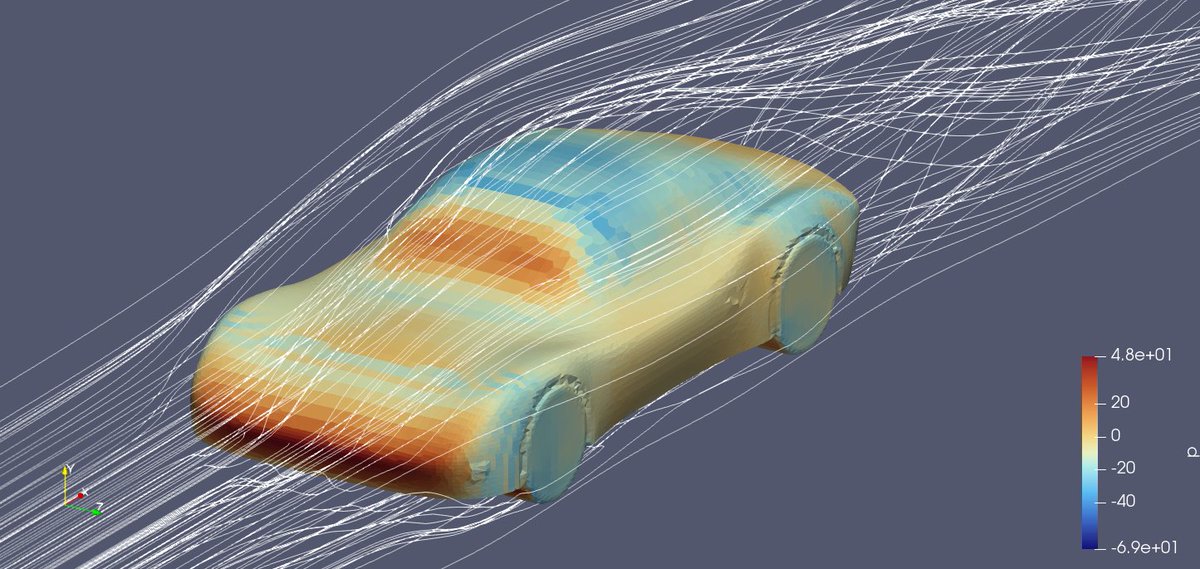
Going back to basics with the octree version of my #UFOCFD solver. This case is 425k leaf cells, and ran 10k iterations in 9 minutes on my laptop (using 4 procs). Its a compressible flow solver, but I made some pressure correction mods to allow it to run incompressible.
Bug fixed.
Root cause: d2 (NW) even-row streaming at https://t.co/0RbbfVzBAq wrote to columns 1: (right shift, x+1) instead of :-1 (left shift, x-1). This lost ~20 particles/step at x=W-1 with no bounce-back, creating the systematic vertical bias.
I (#OpenCode) extended the LGA model to FHP which uses 6 directions (instead of 4) which allows for near diagonal flows. I'm not sure this is setup properly yet since the flows seem asymmetric at walls(?). I put the code here in case anyone wants to run it https://t.co/G0eI4Auwfm
This is the HPP lattice-gas cellular automata (or HPP model), nice little demo put together in #opencode and #claude. I first saw this on @unige_en Coursera module about simulation methods, and it was fascinating. I will put a link to the code below....
I literally couldnt believe this...
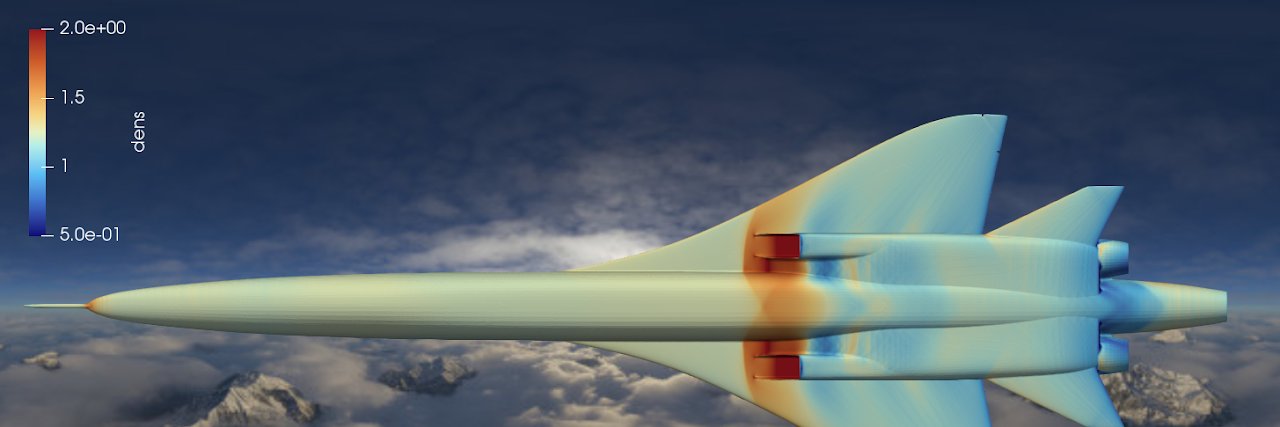
I gave #opencode an STL geometry and 2 commands, and it generated this flow solution using my #openfoam installation. It was a completely new session, but I think it must have been trained from my previous work.
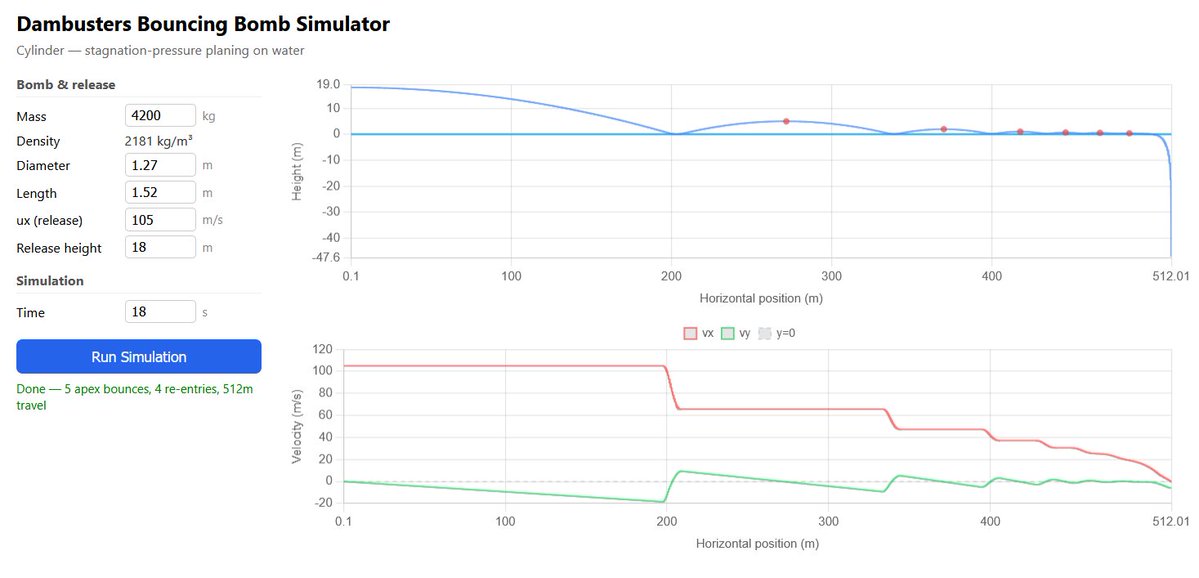
Using #opencode I have updated the bouncing-bomb model to include the hydrodynamic forces (lift and drag) on the cylinder, instead of the spring analogy. Here we use representative values for all parameters. I have excluded rotational effects for now.
https://t.co/smPS1HkcZs
its amazing what you can do with #opencode - it has just written a water bounce simulater, and included a readme with the explanation of physcis:
https://t.co/mKrSAVZJT6
Been dusting off the #UFOLBM solver to check it still works/runs. This case took about 4.5 hours on @runpod single A40 GPU. The mesh is 96 million cells. Here using the bounce-back wall boundary condition, hence the over-separation. Nice car geometry from https://t.co/5oPBtom4td
I ran this case in the OF12 #incompressibleFluid solver. It was an interesting experience because I used #opencode to set up the entire case from scratch starting from just the STL file. It took much longer than normal, because of having to feed error messages back into the GUI.