Elon Musk once jokingly offered to end World Hunger, asking how much it would cost as if it would be some incalculable number.
When the UN replied saying 6.6 Billion would be enough to immediately end Famine for the year he never responded, and a few months later bought Twitter for 44 Billion.
You struggle and suffer because people like him are allowed to exist, not because your neighbor is an immigrant.
A pesar de no tener mis novelas ahí, y de no poder vender mis manuales en papel, ayer alcancé los 333 libros vendidos a través de Draft2Digital. Toma ya. #YoLeoIndie
BRYAN JOHNSON: “I think a lot of people would want to exist [forever] if… society was not so brutal.”
SKEPTIC: “What have you done to change those brutal conditions in society? You spend $2 million every year trying to look younger. And honestly, YOU LOOK YOUR AGE.”
“So what are you doing to make humanity better, really, other than pursuing your own vanity?”
Watch how Bryan answers that question, and how the woman instantly pushes back.
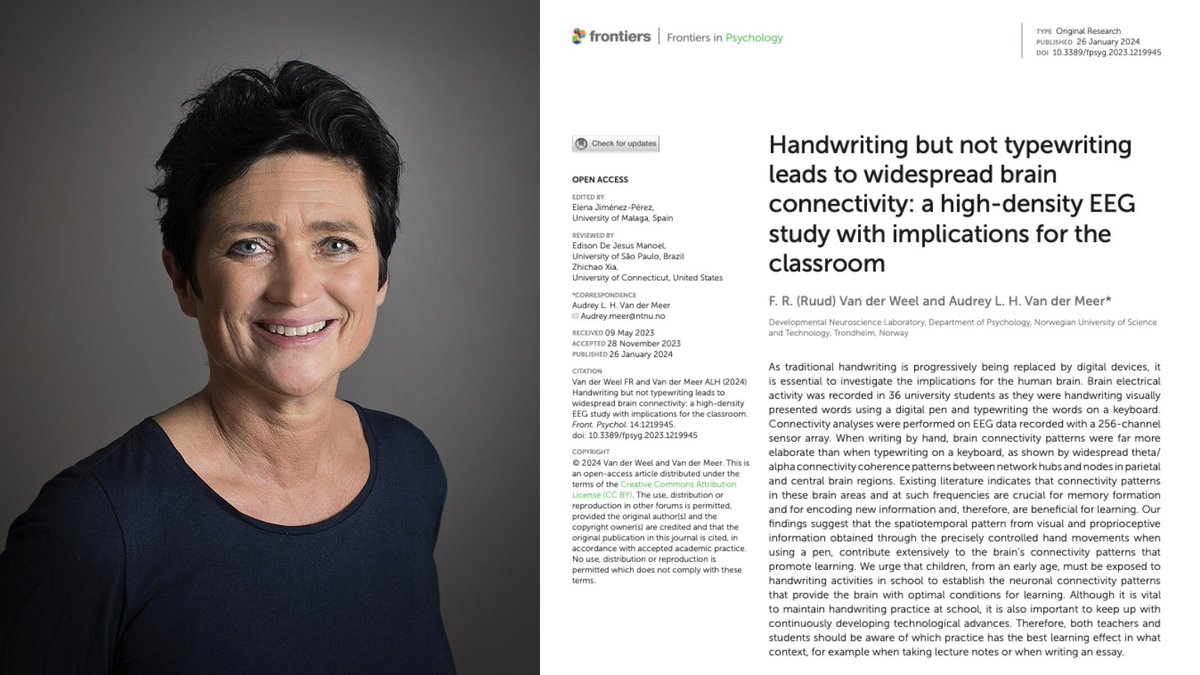
A Norwegian neuroscientist spent 20 years proving that the act of writing by hand changes the human brain in ways typing physically cannot, and almost nobody outside her field has read the paper.
Her name is Audrey van der Meer.
She runs a brain research lab in Trondheim, and the paper that closed the argument was published in 2024 in a journal called Frontiers in Psychology. The finding is brutal enough that it should have changed every classroom on Earth.
The experiment was simple. She recruited 36 university students and put each one in a cap with 256 sensors pressed against their scalp to record brain activity. Words flashed on a screen one at a time.
Sometimes the students wrote the word by hand on a touchscreen using a digital pen, and sometimes they typed the same word on a keyboard. Every neural response was recorded for the full five seconds the word stayed on screen.
Then her team looked at the part of the data most researchers had ignored for years, which is how different parts of the brain were communicating with each other during the task.
When the students wrote by hand, the brain lit up everywhere at once.
The regions responsible for memory, sensory integration, and the encoding of new information were all firing together in a coordinated pattern that spread across the entire cortex. The whole network was awake and connected.
When the same students typed the same word, that pattern collapsed almost completely.
Most of the brain went quiet, and the connections between regions that had been alive seconds earlier were nowhere to be found on the EEG.
Same word, same brain, same person, and two completely different neurological events.
The reason turned out to be something nobody had really paid attention to before her work. Writing by hand is not one motion but a sequence of thousands of tiny micro-movements coordinated with your eyes in real time, where each letter is a different shape that requires the brain to solve a slightly different spatial problem.
Your fingers, wrist, vision, and the parts of your brain that track position in space are all working together to produce one letter, then the next, then the next.
Typing throws all of that away. Every key on a keyboard requires the exact same finger motion regardless of which letter you are pressing, which means the brain has almost nothing to integrate and almost no problem to solve.
Van der Meer said it plainly in her interviews.
Pressing the same key with the same finger over and over does not stimulate the brain in any meaningful way, and she pointed out something that should scare every parent who handed their kid an iPad.
Children who learn to read and write on tablets often cannot tell letters like b and d apart, because they have never physically felt with their bodies what it takes to actually produce those letters on a page.
A decade before her, two researchers at Princeton ran the same fight using a completely different method and ended up at the same answer. Pam Mueller and Daniel Oppenheimer tested 327 students across three experiments, where half took notes on laptops with the internet disabled and half took notes by hand, before testing everyone on what they actually understood from the lectures they had watched.
The handwriting group won by a wide margin on every question that required real understanding rather than surface recall.
The reason was hiding in the transcripts of what the two groups had actually written down.
The laptop students typed almost word for word, capturing more total content but processing almost none of it as they went, while the handwriting students physically could not write fast enough to transcribe a lecture in real time, which forced them to listen carefully, decide what actually mattered, and put it in their own words on the page.
That single act of choosing what to keep was the learning itself, and the keyboard had quietly skipped the choosing and skipped the learning along with it.
Two studies. Two countries. Same answer.
Handwriting makes the brain work. Typing lets it coast.
Every note you have ever typed instead of written went into your brain through a thinner pipe. Every meeting, every book highlight, every idea you captured on your phone instead of on paper was processed at half depth.
You did not forget those things because your memory is bad. You forgot them because typing never woke the part of the brain that would have made them stick.
The fix is the thing your grandmother already knew.
Pick up a pen. Write the thing down. The slower road is the faster one.
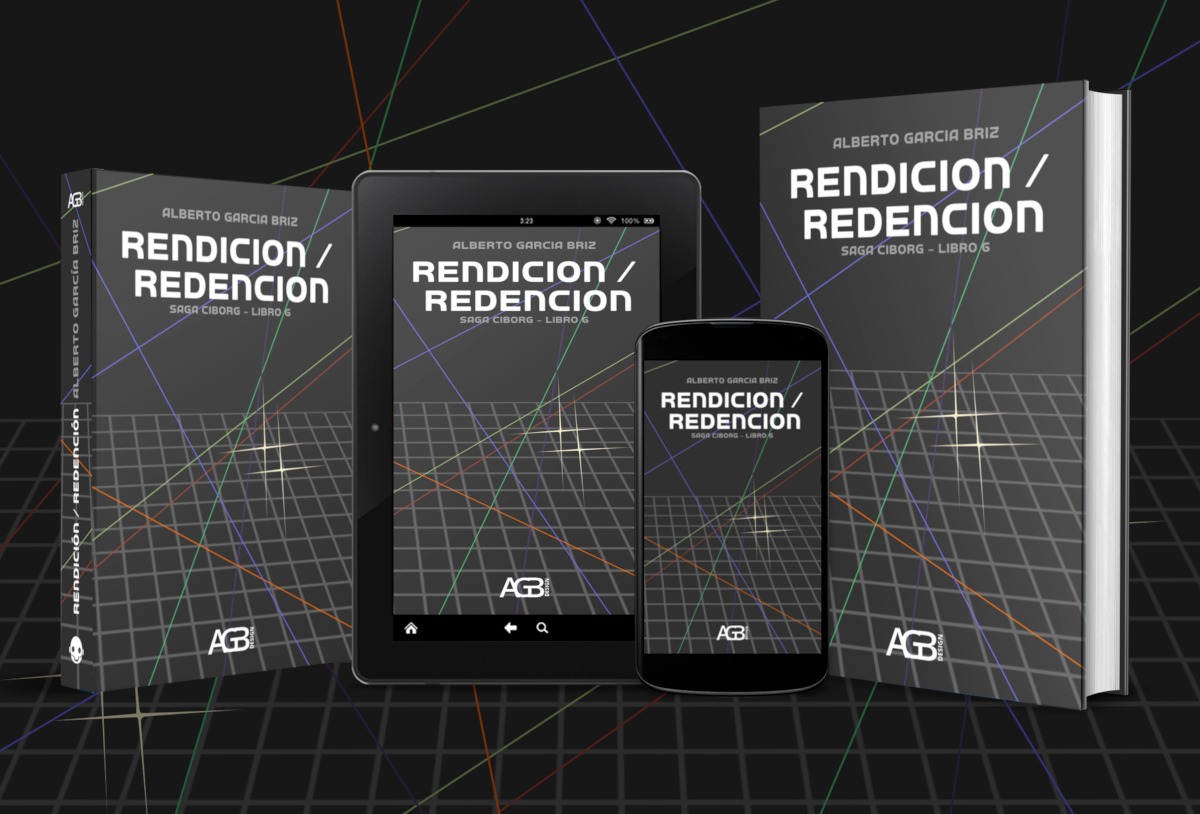
Mi sexta novela de ciencia ficción dura, "Rendición / Redención", participa en el concurso de Amazon para autores independientes Storyteller de este año. Si la has leído, o la estás leyendo, te agradecería que dejases una reseña en la propia tienda... #SagaCiborg#YoLeoIndie
No sé si esto es cine, o si se cargará toda la industria. Y no sé cuántos litros de agua gasta esto. No sé si tenemos un problema gordo, o muy gordo. El cine, pero también la pintura, la fotografía, los libros...
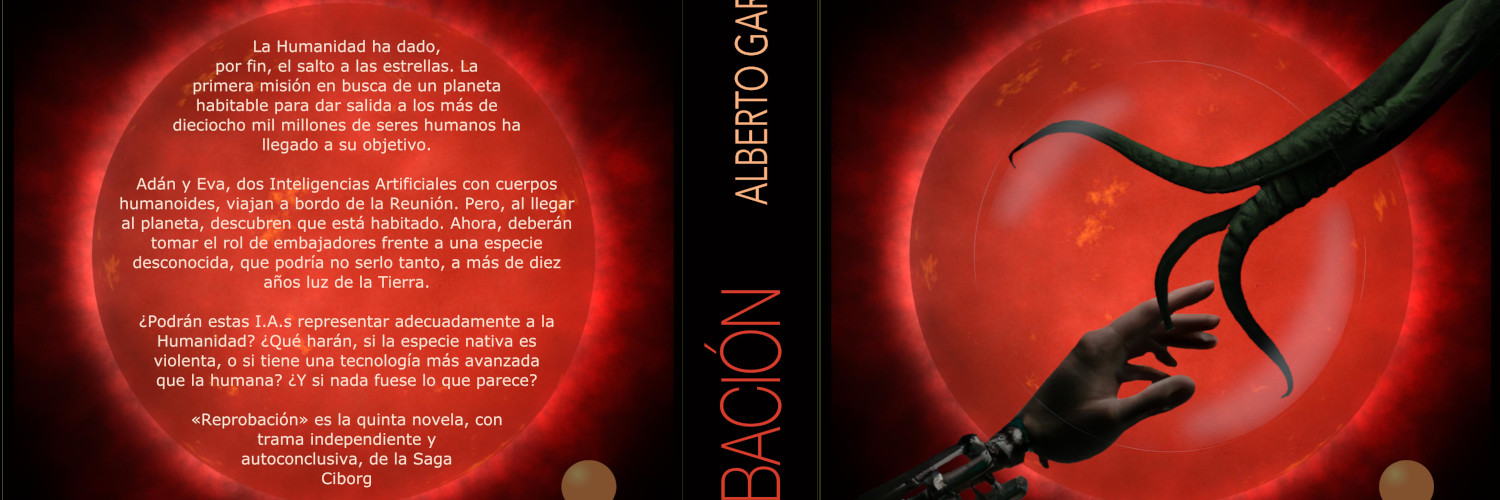
¿Quieres conocer algunos Aliens, saber cómo viajar en segundos a otras estrellas, y si somos el capricho de un dios haciendo experimentos? La sexta novela de mi #SagaCiborg tiene algunas propuestas... #YoLeoIndie
Ya a la venta en Amazon
Gossip Goblin is arguably the best AI filmmaker in the world.
His new film THE PATCHWRIGHT is a masterpiece (10M+ views).
But nobody knows how he actually makes these.
Until now.
He let me share every step of the workflow with you 🧵👇
Ex Machina is no longer sci-fi. China has finally built it.
The company is AheadForm, founded in Shanghai.
The product is the world's most hyper-realistic robotic face.
Silicone skin you can't tell from human, 25 micro motors hidden underneath pulling the face into real expressions.
And RGB cameras embedded inside the pupils so when it looks at you, it actually sees you from where its eyes are.
They raised $28.5M to "give AI a head," which is also where the name comes from. AheadForm = a head form.
This is the opposite of where everyone else in robotics is focused.
Unitree, Figure, Tesla, Boston Dynamics: all about the body.
AheadForm chose the face because they think trust is the harder problem to solve, and trust gets decided at the face.
The reason nobody else has tried this is the "uncanny valley."
It's the creepy zone where a robot looks almost human but not quite, and looking at it just feels wrong even when you can't say why.
Most roboticists believed no amount of engineering could make a face realistic enough to escape it.
So they gave up and kept robots cartoonish on purpose: big anime eyes, exaggerated features, clearly synthetic.
But AheadForm decided to treat it as an engineering bug instead.
Add enough motors, tune the silicone, fix the timing, the valley closes.
And they're pulling it off.
A few crazy details about how this actually works:
1. The robot learns its own face in a mirror.
You put it in front of a camera, let it fire every motor randomly, and it watches what its face does and builds an internal map of "if I send command X to motor Y, my eyebrow does this."
Same exact process a human baby uses staring into a mirror. The robot teaches itself who it is by experimenting.
2. It predicts your smile 839 milliseconds before you smile.
By watching the micro-tells in your face that precede a smile, the robot starts smiling 0.8 seconds ahead, so its smile lands at the same moment yours does.
Most robot mimicry happens half a second late, which is exactly why it always feels artificial.
3. The pupils are the cameras.
When the robot makes eye contact, the gaze and the sensor are the same physical thing.
Most humanoid robots stick the camera on the forehead or chest, so they aren't actually looking at you when their eyes are pointed at you.
4. The founder, Yuhang Hu, did his PhD at Columbia under Hod Lipson.
Lipson is the guy who in 2006 built a four-legged robot that figured out it had four legs by experimenting with its own movement, nobody told it the body shape, it discovered it.
He has spent 25 years trying to build machines that know what they are.
AheadForm is that 25-year research arc productized.
5. NetEase Games already paid them to physically embody a fantasy video game character.
That opens up a brand-new category: robotics as the physical embodiment of fictional IP.
Every character-rich studio, Disney, Riot, Hoyoverse, Pokemon, Netflix, now has a question to answer about when their characters get bodies.
AheadForm believes whoever ships the first robot you'd actually want around your family wins.
That's the bet behind the most realistic robot face on earth.
Creo que es mi mejor inicio de publicación hasta ahora. Hace tres días de su publicación (9-5-26) y ya he vendido tres libros. ¡Vamos! Muchas gracias a todos. #SagaCiborg#YoLeoIndie