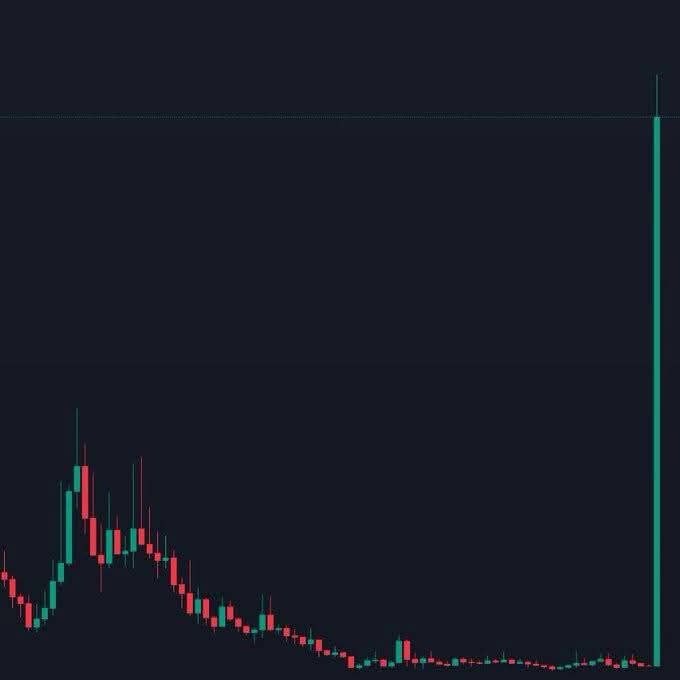
A golden retriever casually became a Google Maps celebrity.
Maru lives on Jukdo, a tiny island in South Korea, and followed a Google Maps photographer around while Street View images were being captured.
He ended up appearing in more than 1,000 photos across the island.
📷: Google Maps
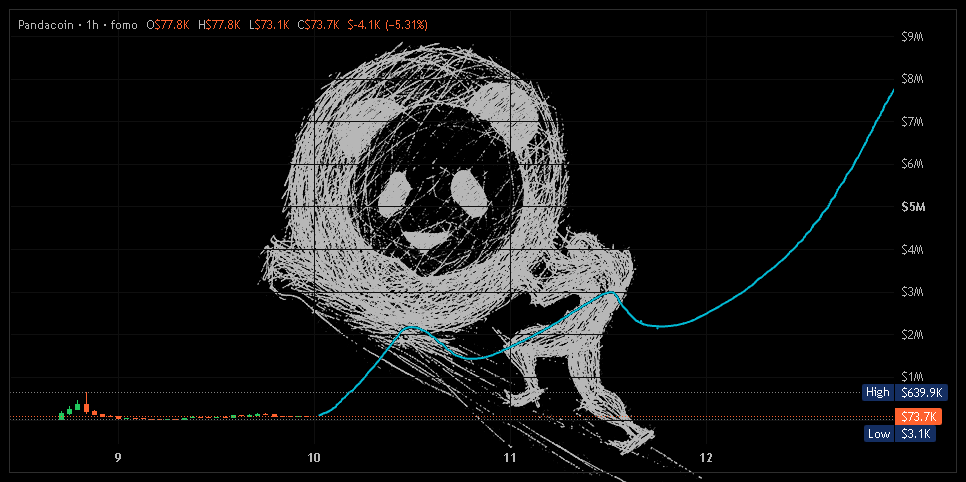
The next ticker! solana:2bN9YoTKiejNonS4Q1EjhypvRfndZLEiYJZUHLwYpump
2bN9YoTKiejNonS4Q1EjhypvRfndZLEiYJZUHLwYpump
Community is growing, Dev is active, Solid narrative.
Join us as we grow and reach to Millions then Billions.
To the moon and beyond we go! 🐼🚀💎
Join the X community chat and lets work together! 💪🏻 while we keep growing strong as a community! 🐼
We sending the PANDA higher! 🚀
solana:2bN9YoTKiejNonS4Q1EjhypvRfndZLEiYJZUHLwYpump
A forgotten legend is waking up.
Pandacoin – the original Asian Dogecoin🪙🚀
Time for the real revival. 🐼
solana:2bN9YoTKiejNonS4Q1EjhypvRfndZLEiYJZUHLwYpump
CA: 2bN9YoTKiejNonS4Q1EjhypvRfndZLEiYJZUHLwYpump
Samsung open-sourced a method that shrinks 13B parameter LLM into less than 1 GB.
It's called "LittleBit"
Instead of storing AI weights as standard numbers, they used latent factorization to crush them down to extreme sub-1-bit levels.
In some configurations, they hit 0.1 bits per weight.
But here is where the architecture gets crazy.
When you compress an AI this much, you can stop doing math.
Instead of forcing the hardware to do heavy floating-point multiplication, LittleBit replaces the core computation with a bitwise XOR operation.
It swaps complex matrix math for basic sign flips.
The results rewrite the rules of model deployment:
• Unlocks a massive 11.6x inference speedup relative to standard FP16 models.
• Radically reduces memory footprint and loading bandwidth.
• Maintains robustness in extreme sub-0.5 bit regimes where previous compression methods catastrophically fail.
This is not a clever optimization.
It is the blueprint for running massive, state-of-the-art AI locally on cheap, resource-constrained devices.