12. Bottom line:
Slow play on the green is driven by:
• Excess movement
• Multiple angles
• Indecision
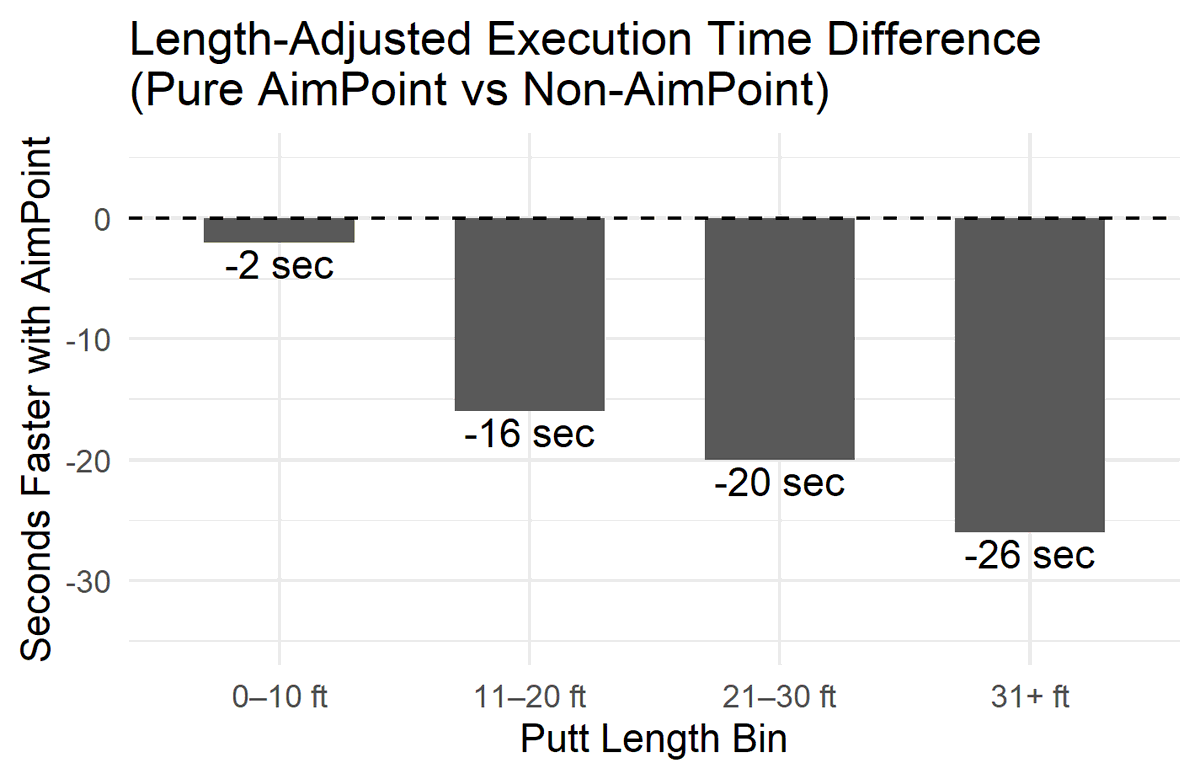
• Resets
Behavior drives pace.
If you want faster play, change the mechanics.
11. Within the same players:
On short putts → small time difference.
On long putts → AimPoint advantage widens dramatically.
Structure scales better as uncertainty increases.
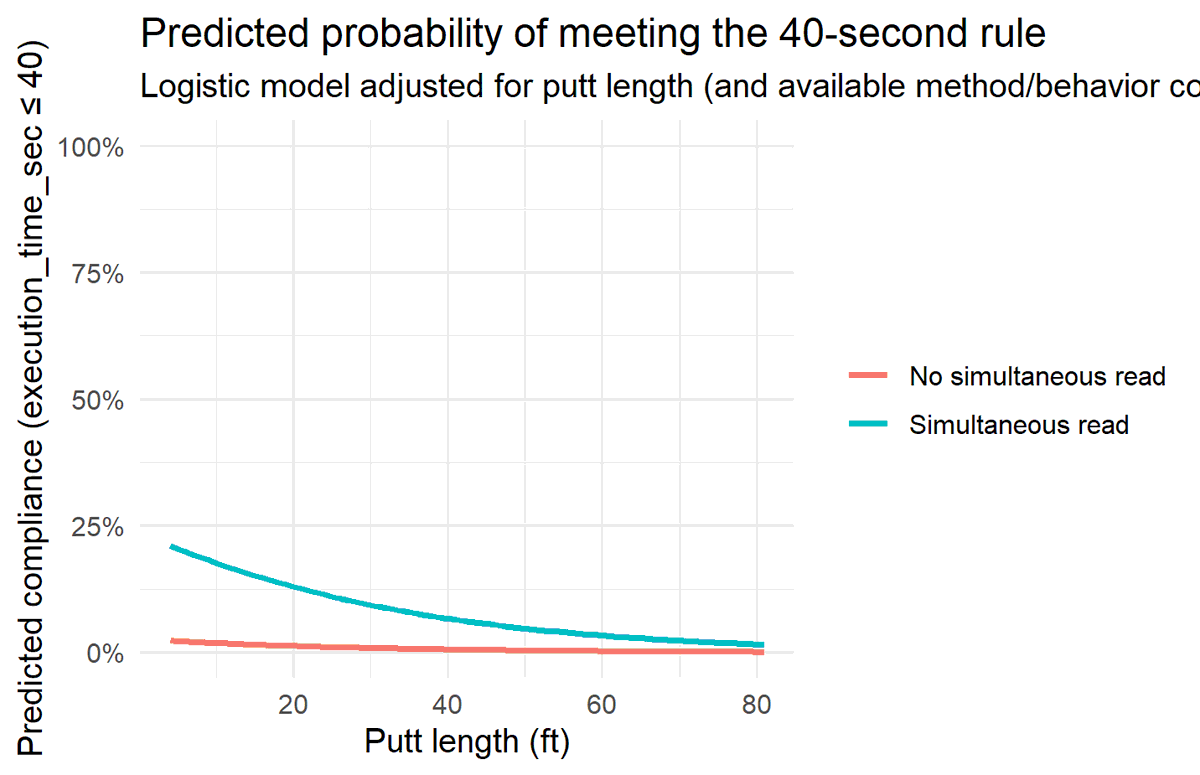
10. There is a compliance lever.
Simultaneous reading.
Read during another player’s turn:
• ~9–10 seconds faster
• Nearly 5x higher compliance
Without it, compliance on longer putts is nearly zero.
9. Now the uncomfortable truth:
Over 90% of putts longer than 3 feet exceed 40 seconds.
Non-compliance is the norm.
Blaming one green-reading system is mathematically indefensible.
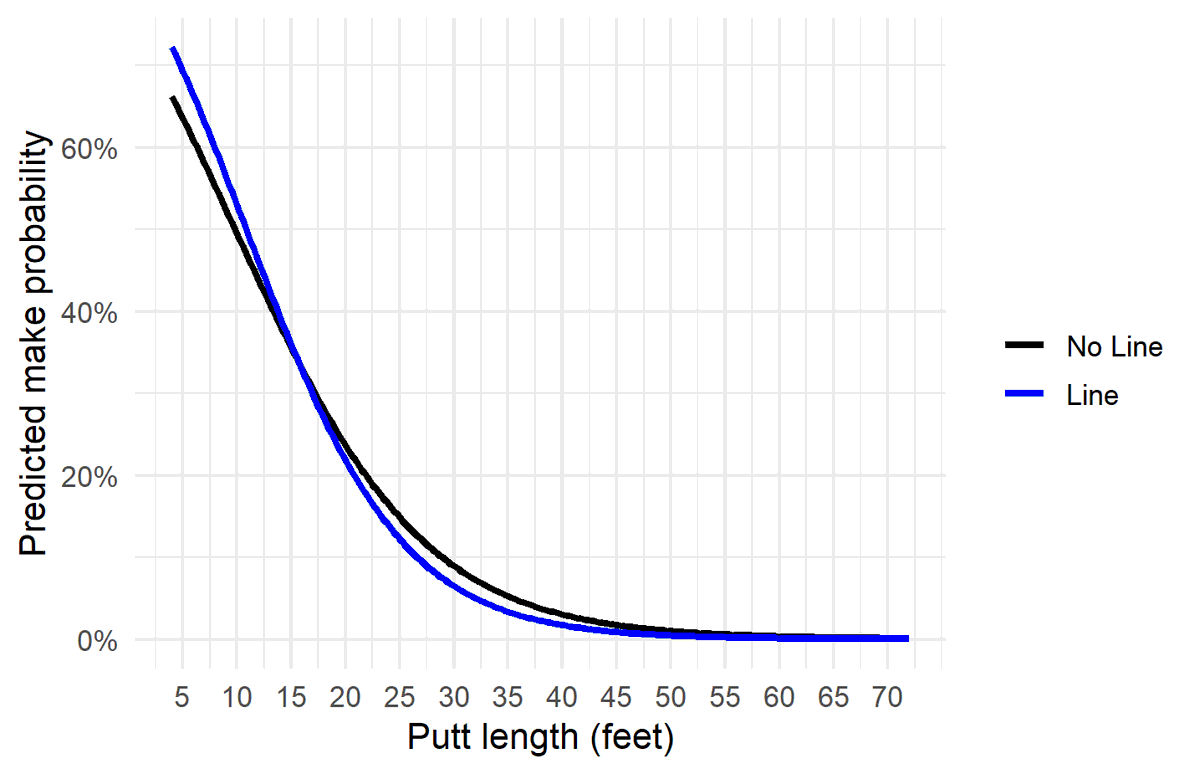
8. Ball alignment?
Adds ~5–6 seconds per putt.
Once distance is controlled, make-rate improvement is minimal outside short putts.
Measurable time cost. Limited scoring gain.
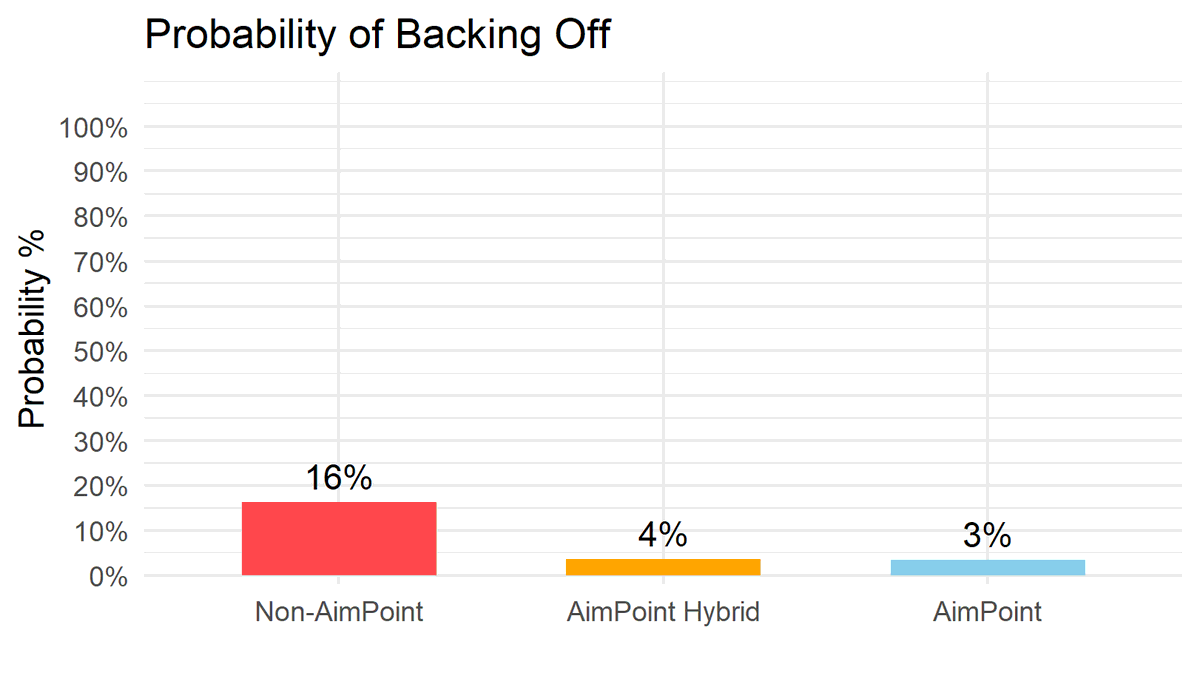
7. Back-offs matter.
One reset adds ~6 seconds.
Non-AimPoint players back off 4–5x more often than AimPoint players.
Resets signal indecision—and they add time.
6. Up-the-line visuals are a bottleneck.
Non-AimPoint players use them ~69% of the time.
Pure AimPoint: 0%.
They carry the largest visual time penalty in the dataset.
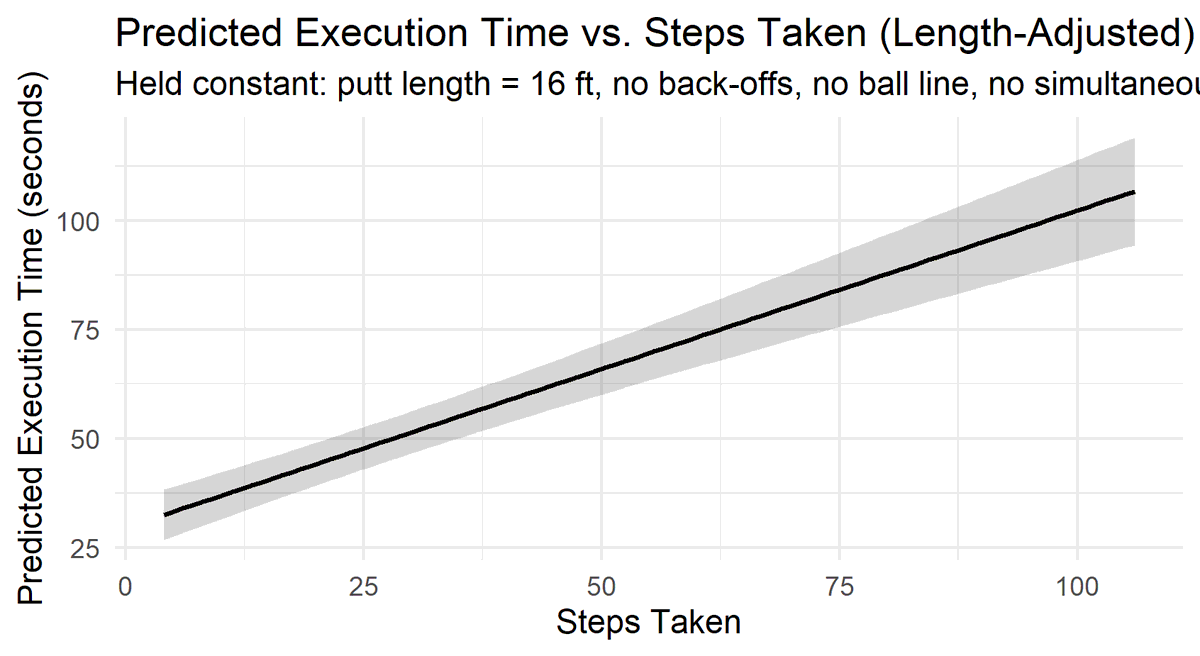
5. After adjusting for putt length:
Fastest → Pure AimPoint
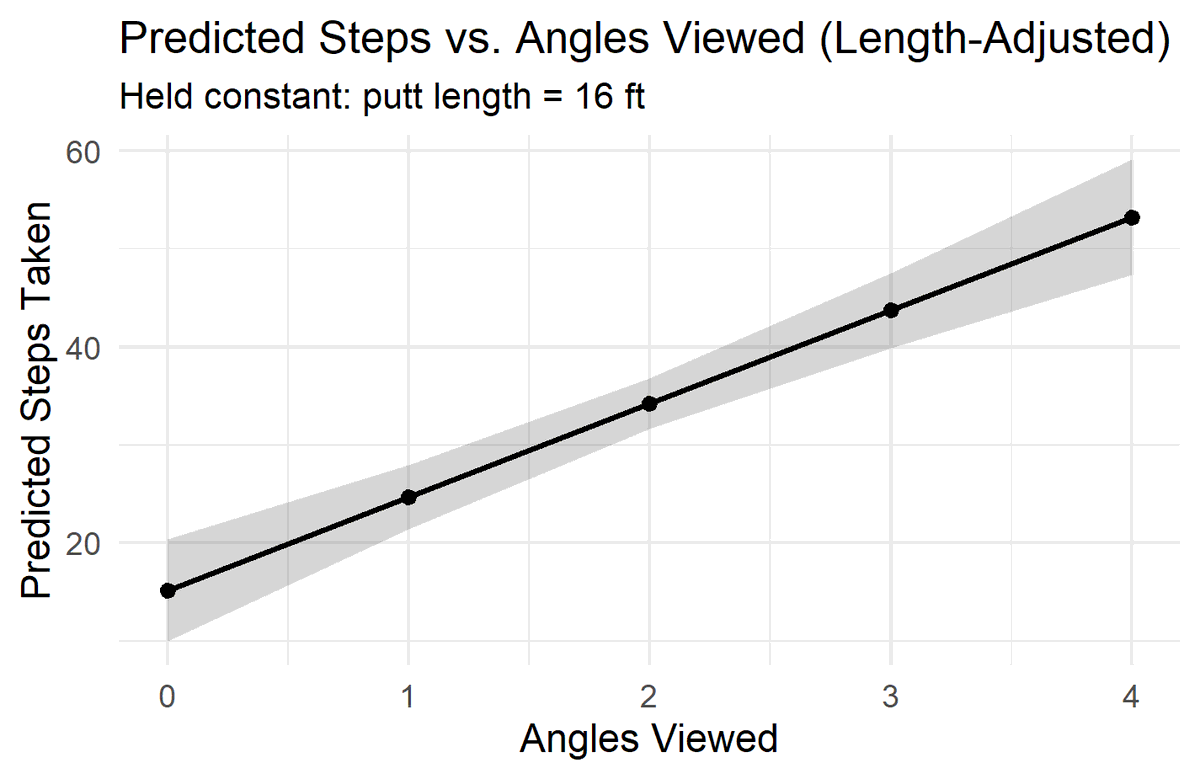
AimPoint reads reduce movement by reducing view angles and speed up the read and execution time.
4. Viewing angles are expensive.
Each additional angle adds ~9 seconds to read time.
Three angles vs one?
You’ve nearly doubled your read time.
Multiple angles are a structural delay.
2. First: where is time actually spent?
Average breakdown:
• Total Execution time: ~63 sec
• Read time: ~38 sec
• Setup: ~14 sec
• Over the ball: ~10 sec
Standing over the putt is NOT the problem.
The read phase consumes nearly all available time.
1. People think structured green-reading slows play.
We measured it.
~200 PGA Tour putts.
Full execution time tracked. All behaviors recorded.
The data says something very different.
If you think AimPoint creates more footprints on the green than a traditional read, I recommend you actually count the difference. “Normal” reads create at least 5 times more footprints than AimPoint. It’s not even close.