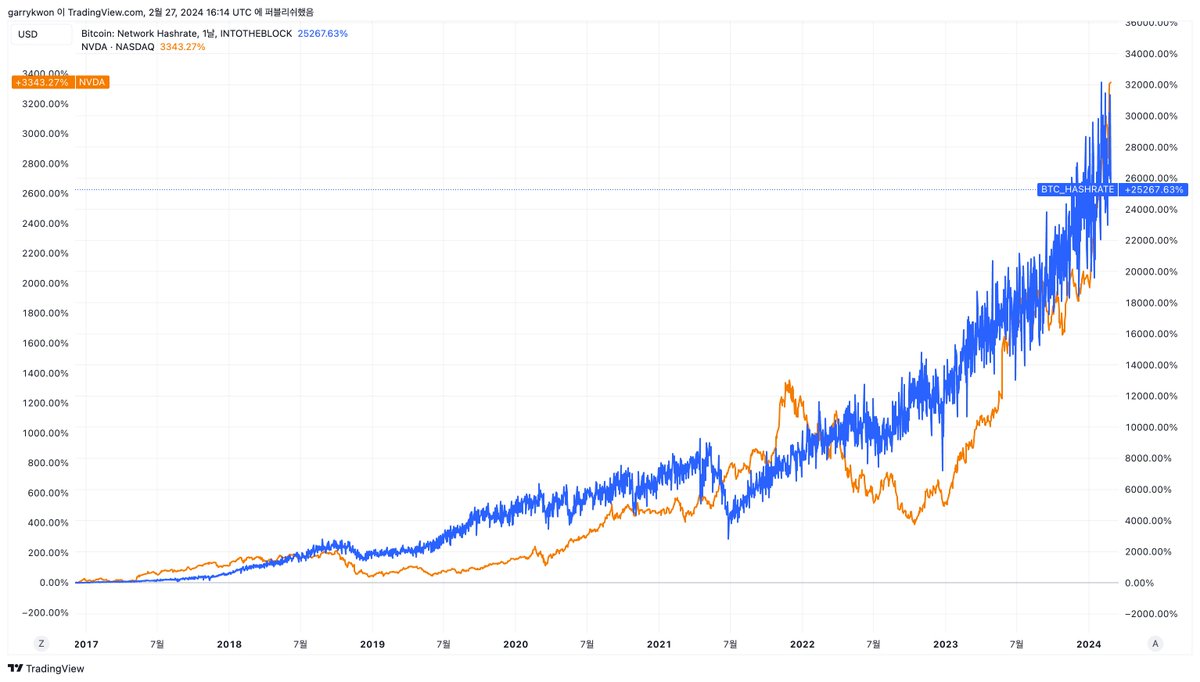
On-Chain and #CEX spot volume of $BTC hasn't exploded yet. There's two different scenario when price goes up without the increase of trading volume. This time I bet on the probability that it continues rising curve. Still early to leave. (Not Financial Advice)
Job seekers in the U.S. and many other nations face a tough environment. At the same time, fears of AI-caused job loss have — so far — been overblown. However, the demand for AI skills is starting to cause shifts in the job market. I’d like to share what I’m seeing on the ground.
First, many tech companies have laid off workers over the past year. While some CEOs cited AI as the reason — that AI is doing the work, so people are no longer needed — the reality is AI just doesn’t work that well yet. Many of the layoffs have been corrections for overhiring during the pandemic or general cost-cutting and reorganization that occasionally happened even before modern AI. Outside of a handful of roles, few layoffs have resulted from jobs being automated by AI.
Granted, this may grow in the future. People who are currently in some professions that are highly exposed to AI automation, such as call-center operators, translators, and voice actors, are likely to struggle to find jobs and/or see declining salaries. But widespread job losses have been overhyped.
Instead, a common refrain applies: AI won’t replace workers, but workers who use AI will replace workers who don’t. For instance, because AI coding tools make developers much more efficient, developers who know how to use them are increasingly in-demand. (If you want to be one of these people, please take our short courses on Claude Code, Gemini CLI, and Agentic Skills!)
So AI is leading to job losses, but in a subtle way. Some businesses are letting go of employees who are not adapting to AI and replacing them with people who are. This trend is already obvious in software development. Further, in many startups’ hiring patterns, I am seeing early signs of this type of personnel replacement in roles that traditionally are considered non-technical. Marketers, recruiters, and analysts who know how to code with AI are more productive than those who don’t, so some businesses are slowly parting ways with employees that aren’t able to adapt. I expect this will accelerate.
At the same time, when companies build new teams that are AI native, sometimes the new teams are smaller than the ones they replace. AI makes individuals more effective, and this makes it possible to shrink team sizes. For example, as AI has made building software easier, the bottleneck is shifting to deciding what to build — this is the Product Management (PM) bottleneck. A project that used to be assigned to 8 engineers and 1 PM might now be assigned to 2 engineers and 1 PM, or perhaps even to a single person with a mix of engineering and product skills.
The good news for employees is that most businesses have a lot of work to do and not enough people to do it. People with the right AI skills are often given opportunities to step up and do more, and maybe tackle the long backlog of ideas that couldn’t be executed before AI made the work go more quickly. I’m seeing many employees in many businesses step up to build new things that help their business. Opportunities abound!
I know these changes are stressful. My heart goes out to every family that has been affected by a layoff, to every job seeker struggling to find the role they want, and to the far larger number of people who are worried about their future job prospects. Fortunately, there’s still time to learn and position yourself well for where the job market is going. When it comes to AI, the vast majority of people, technical or nontechnical, are at the starting line, or they were recently. So this remains a great time to keep learning and keep building, and the opportunities for those who do are numerous!
[Original text; https://t.co/zbIhZHfCC0 ]
Get ready to check your Bags 💰
For the next 24 hours, we're dropping $AABL to OG Members who share their Bags link below 👇
Follow @abblecoin and RT this to qualify for the drop
https://t.co/FUQr6rTv9n
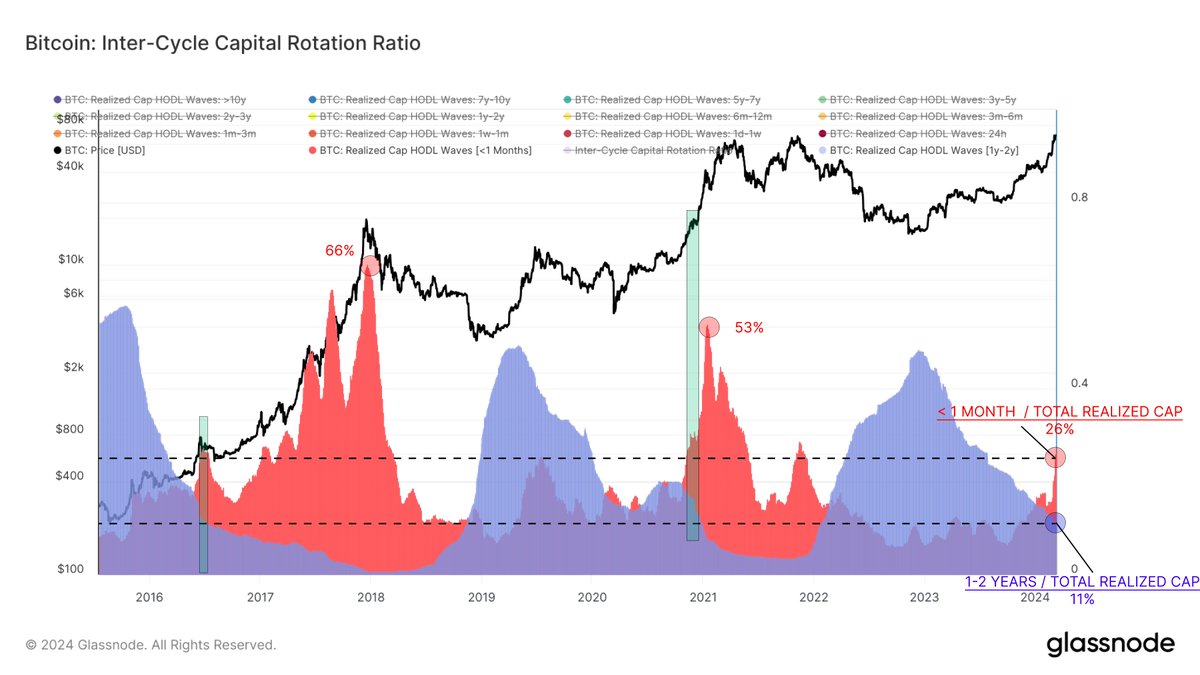
WHERE ARE WE IN THIS CYCLE?
Looking at the cyclical capital rotation between new and old investors (by comparing the realized cap (capital) held by <1 month-holders 🟥 against the 1-2 years-holders 🟦), we can spot the top-heavy intervals in the cycle.
Historically, the short-term holders (<1 month) accumulated up to 53%-66% of the total floating capital in the #bitcoin ecosystem.
Currently, the <1 month-holders hold 26% of the total realized cap, while the 1-2 years-holders🟦 still own 11%.
The equivalent intervals in 2017-2018 & 2020-2021 are highlighted here 🟩.
Introducing the Uniswap Extension 🦄
The first wallet to live in your browser’s sidebar.
No more pop-ups. No more transaction windows.
Waitlist opens today 👇
1/18) What is decentralization & how do we really measure it?
We will rate BTC, ETH, SOL, XRP, ADA, AVAX & TRX at the end!
Too many falsely use decentralization as a shield to justify their mediocracy!
These six principles measure decentralization (the distribution of power):
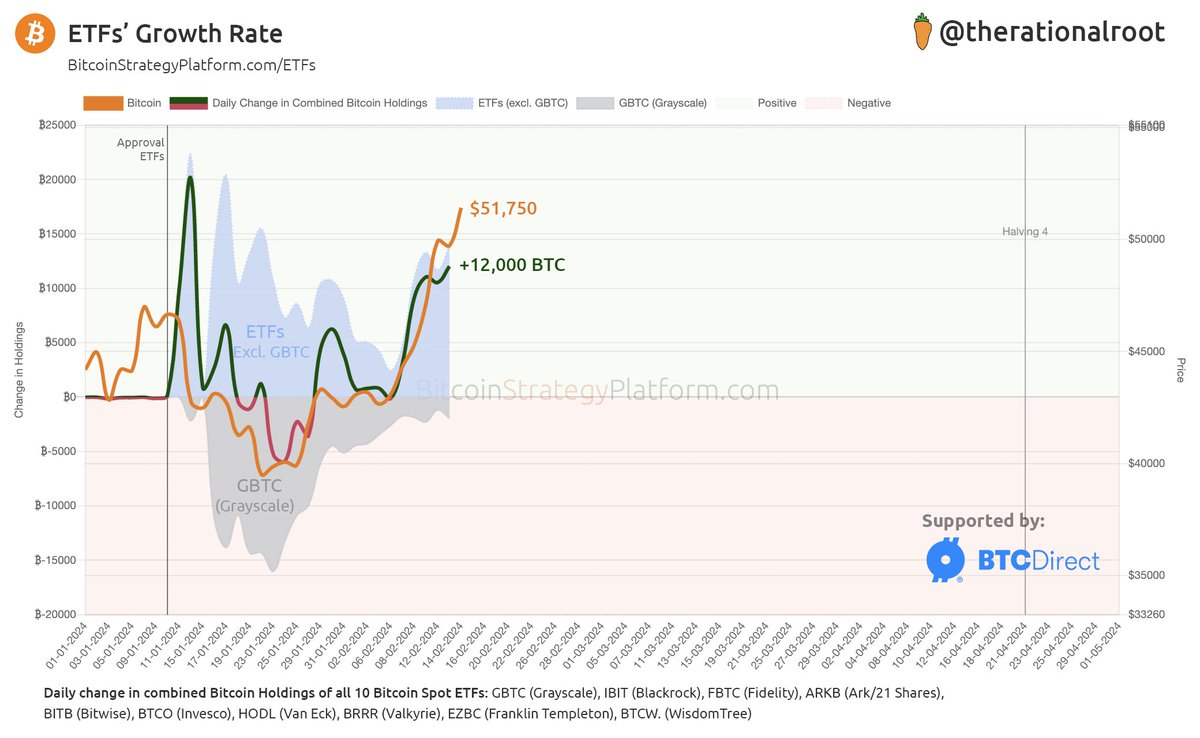
Enormous ETF inflows, net +12k #BTC were added yesterday.
- @BlackRock alone saw a 10k btc inflow, and now surpassed 100k btc in holdings 🤯.
- Biggest outflows were from Grayscale (1.9k) and Invesco (~500 btc).
- Three consecutive days over +10k net inflows.
Follow me for more ETF news 👊
On-Chain and #CEX spot volume of $BTC hasn't exploded yet. There's two different scenario when price goes up without the increase of trading volume. This time I bet on the probability that it continues rising curve. Still early to leave. (Not Financial Advice)
On-Chain and #CEX spot volume of $BTC hasn't exploded yet. There's two different scenario when price goes up without the increase of trading volume. This time I bet on the probability that it continues rising curve. Still early to leave. (Not Financial Advice)
On-Chain and #CEX spot volume of $BTC hasn't exploded yet. There's two different scenario when price goes up without the increase of trading volume. This time I bet on the probability that it continues rising curve. Still early to leave. (Not Financial Advice)
On-Chain and #CEX spot volume of $BTC hasn't exploded yet. There's two different scenario when price goes up without the increase of trading volume. This time I bet on the probability that it continues rising curve. Still early to leave. (Not Financial Advice)
On-Chain and #CEX spot volume of $BTC hasn't exploded yet. There's two different scenario when price goes up without the increase of trading volume. This time I bet on the probability that it continues rising curve. Still early to leave. (Not Financial Advice)