Along with the options below, you can call Poison Control, or even just call the pharmacy that gave you the meds— they often have resources for safe disposal. Don’t just flush down the toilet unless directed to do so— that med can contaminate local water resources. #StoreMedsSafe
Interested in learning more about the Trainees for Child Injury Prevention (#T4CIP) program and how you can get involved? Visit https://t.co/dlJ5rrctoI for more info, follow @T4CIP_ here and @t4cip on IG, Threads, and LinkedIn! #StoreMedsSafe
Join @T4CIP in an hour for a #StoreMedsSafe webinar, 2-3 p.m. ET! Hear from experts Dr. Hannah Hays, Dr. Kevin Osterhoudt, and Dr. Wendy Stephan. Moderated by Dr. Kiesha Fraser Doh. Register: https://t.co/IG7JvlGHLw
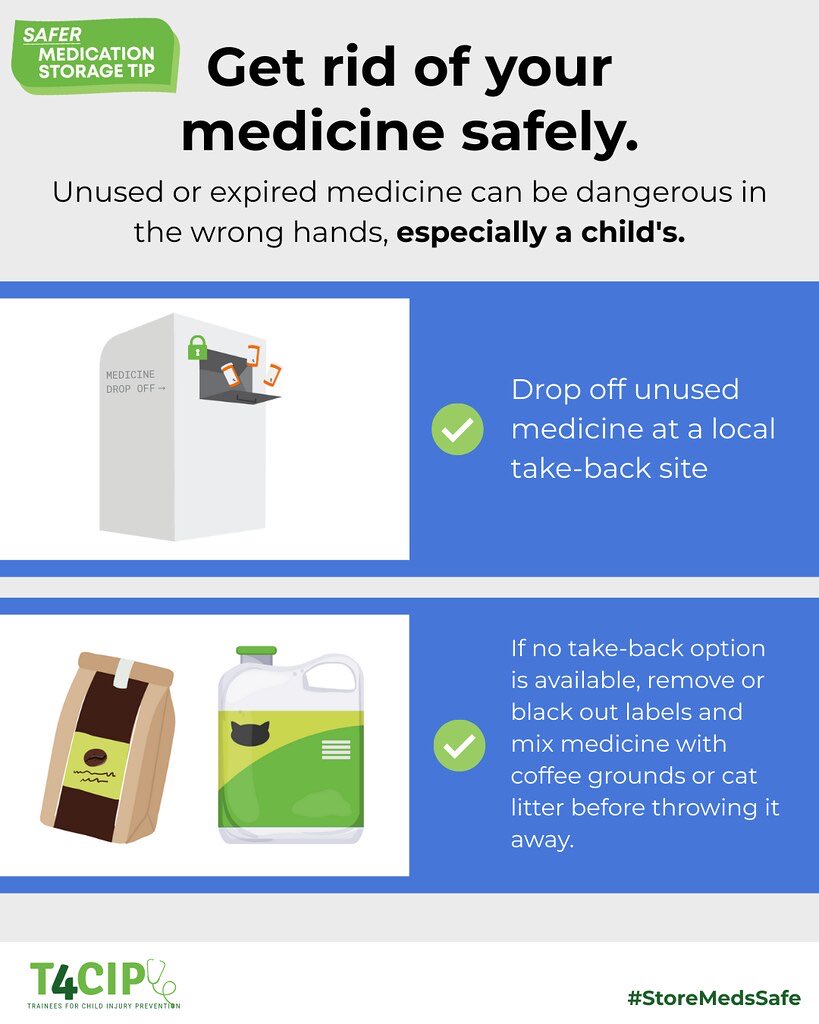
Local take-back programs are the safest way to dispose of unneeded or expired medicines. Agencies like police departments and waste/recycling often host events, so check with your local government for options near you. #StoreMedsSafe
Poison Centers are excellent sources of information when a child is exposed to a potential poison! Poison Help Line: 1-800-222-1222 #StoreMedsSafe@T4CIP_
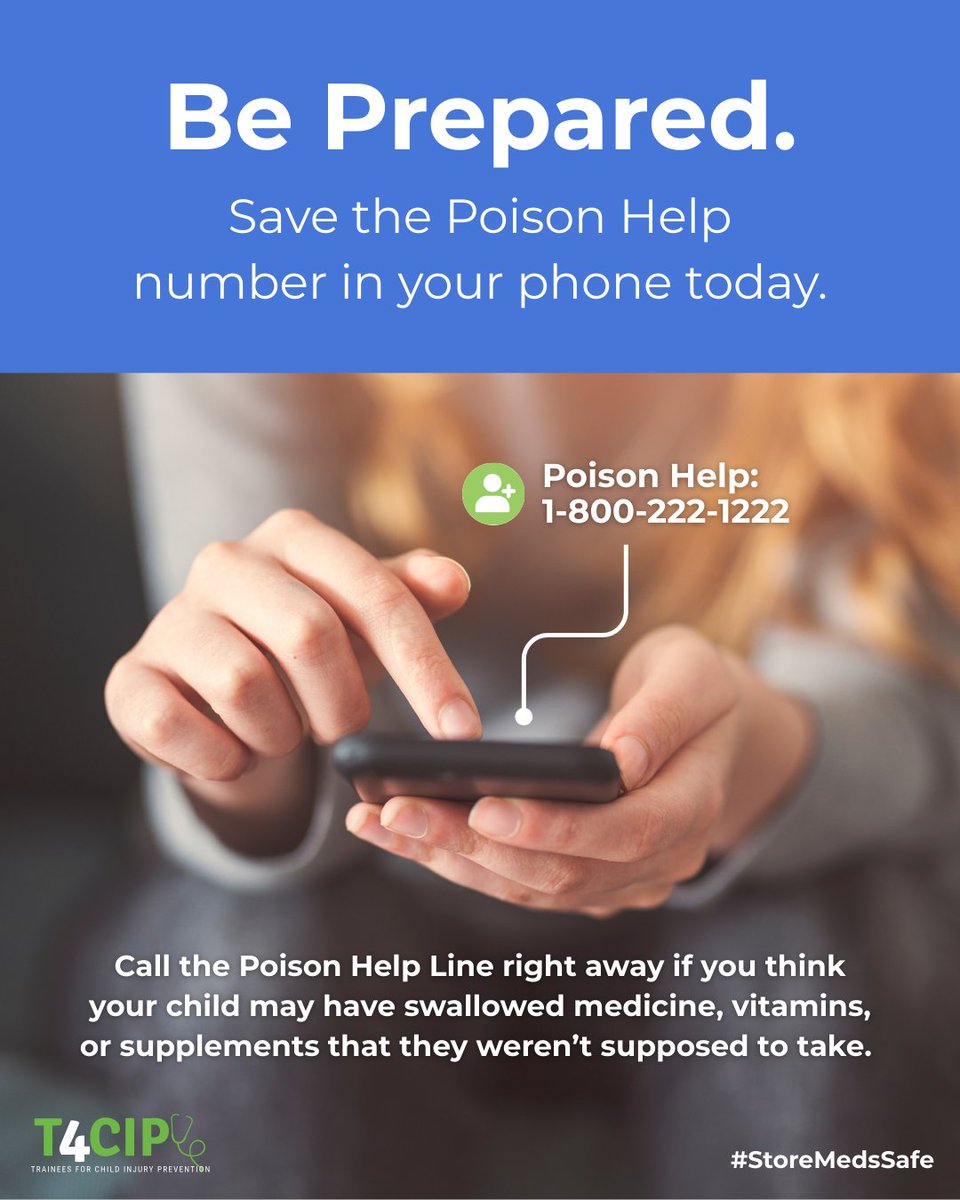
Save the Poison Help number in your phone today: 1-800-222-1222. Call them right away if you think your child may have swallowed medicine, vitamins, or supplements that they weren’t supposed to take. #StoreMedsSafe#PoisonHelp@PoisonCenters
Poison control centers receive thousands of calls a year about medicine exposures to children. To make sure you are ready in an emergency, add the toll-free, nationwide number for poison control into your phone: 1-800-222-1222. #StoreMedsSafe
A7. Frame the conversation like a routine safety check. Use supportive language and know what resources are available (like handouts, lock box giveaways, etc.). Asking your institution to include info on how to #StoreMedsSafe in After Visit Summaries can also help.
Our medicine safety toolkit has tons of original materials and links to trusted resources to share with the people you serve or care for: https://t.co/aNEHRyrrha #StoreMedsSafe
Children are natural explorers. Studies show that in 2 out of 3 medication exposures, the medicine was left
in a place a child could reach it. The best way to prevent poisoning is to put away each medication every time you use it. #StoreMedsSafe
@T4CIP_ A10: In our emergency department we have begun distributing the Poison Help Line phone number. This is one small but meaningful step to keep our children safe. #StoreMedsSafe
A5. Here is a great video from one of our @T4CIP_ trainees, Hunter Holsinger on how to safely dispose of unused or expired medications. Love the cute pic of him when he was young to get the video started! #StoreMedsSafe
Used or expired medicine can be dangerous. Drop it off at a local take-back site or, if that’s not an option, remove or black out labels and mix medicine with used coffee grounds or cat litter before throwing it away. #StoreMedsSafe@T4CIP_
@T4CIP_ A3: Families often store medications in easily accessible locations, such as nightstands, desks, closets, or unlocked cabinets. These places may offer more convenience but are unsafe due to their open access to. #StoreMedsSafe
Do not store medications in purses, nightstands, unlocked bathroom cabinets, on countertops, or in the refrigerator, Out of sight is not enough because kids can climb and reach. @T4CIP_#StoreMedsSafe Tambien en Espanol:
Parents and caregivers: the best place to store medicines is in a lockable cabinet that your kids
can’t reach or a lockbox stored up, away, and out of sight. A lock protects everyone in the
house from unauthorized access. #StoreMedsSafe
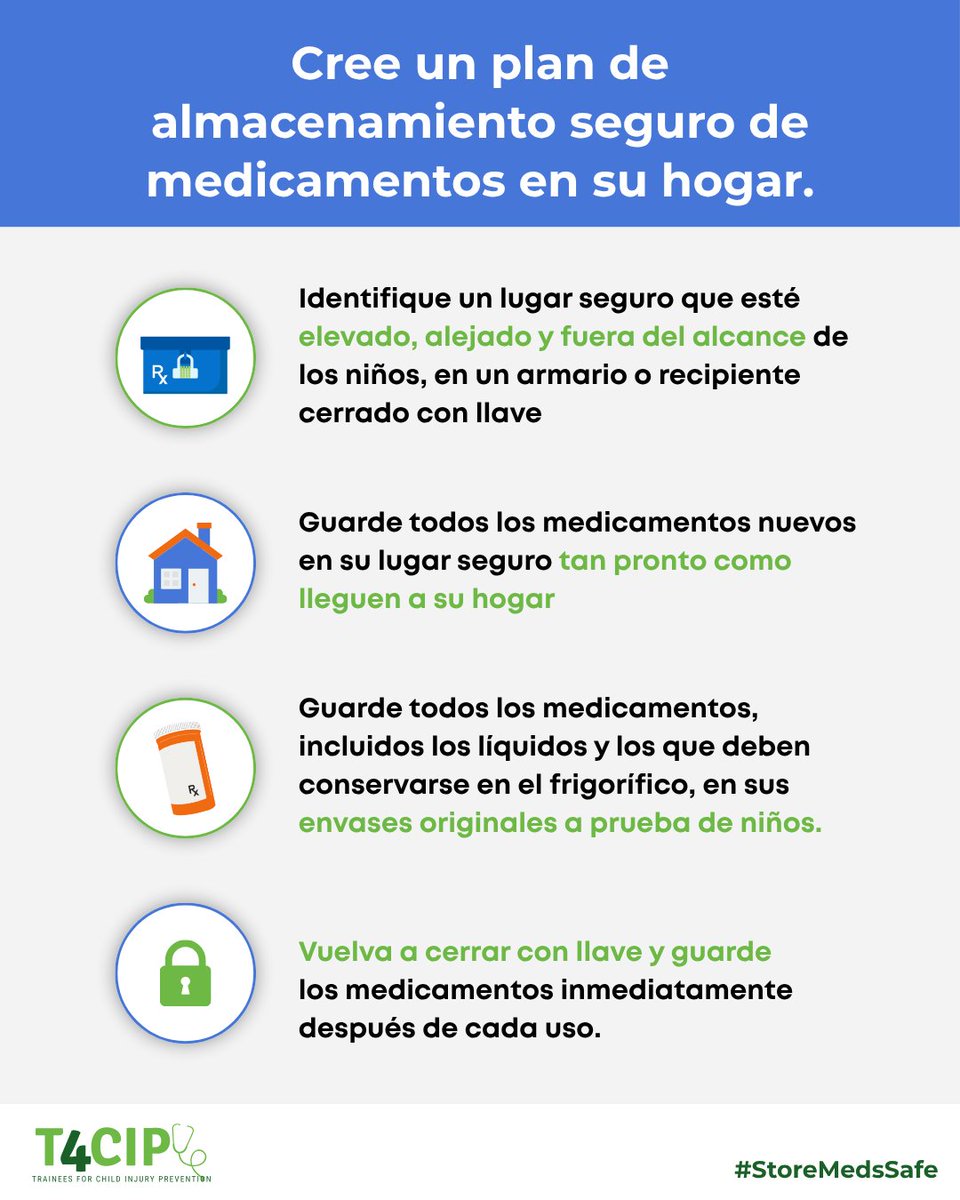
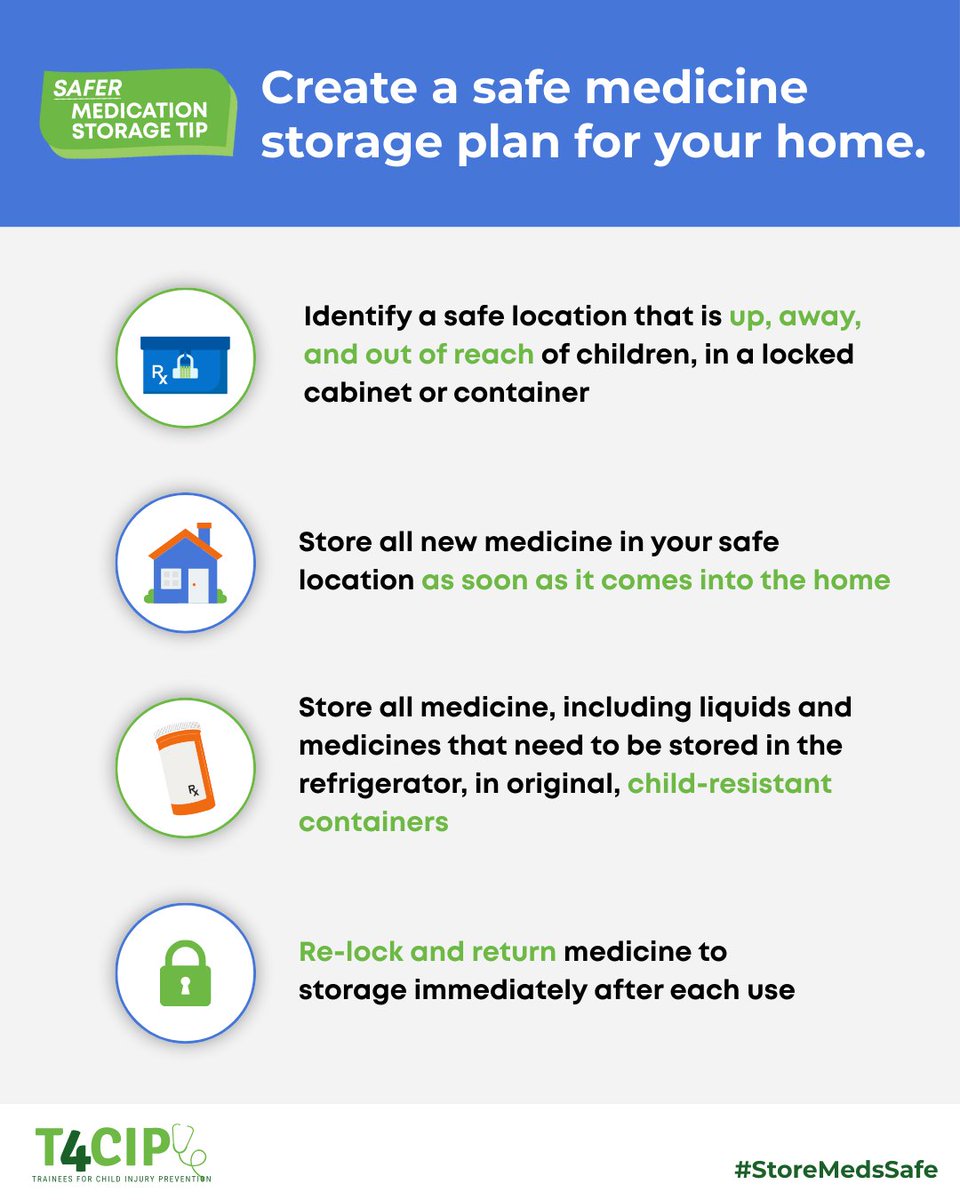
Store all medicine up, away, and out of reach of children, as soon as it comes into the home. Store all medicine in their original, child-resistant containers, and re-lock and return meds to storage immediately after each use. @T4CIP_#StoreMedsSafe
Medicine #SafeStorage means storing all medicine up, away, and out of reach of children. Kids are curious and need our help keeping dangerous items out of their sight and reach. #StoreMedsSafe
@T4CIP_ Poisoning is one of the most common sources of injury among children. It often occurs in the home to children younger than 6 years old, peaking at around 2 years when kids are gaining mobility. They love to explore and put things in their mouth! @T4CIP #StoreMedsSafe