Principal at Alchemy Planning + Land Use. Over $1BN of mixed-use and multifamily development entitled in Los Angeles. CHIP, Density Bonus, and ED 1 specialist.
A few general and personal stats on the City of Los Angeles Citywide Housing Incentive Program (CHIP):
CHIP took effect on 2/11/25 and since that time, a total of 111 applications have been filed with the City Planning Department, comprising 9,201 units, including…
For this to happen, the Howard Jarvis Taxpayers Assoc. needs to pull their initiative on or before 6/25.
If you're banking on HJTA, I urge you to remember:
1. Twitter isn't reality. Look at how the L.A. Mayoral vote went.
2. AB 736 would take effect in January. HJTA wouldn't provide relief for another two years.
Transfer tax legislation is now in print. Needs to be voted on by the legislature of course.
-Would cap TT's at 1.5% in majority of cases including LA and Santa Monica.
-Carve out for cities that (a) currently have TT's above 1.5% AND (b) those higher TT's are used to fund a cities general fund as distinct from special taxes. General fund TT's for those cities would be capped at 3%.
https://t.co/eCahC3jHlX
@mattyglesias In Los Angeles, they don’t even allow housing developers or anyone that works to advocate for housing developers from making political contributions. Opponents of housing development free to donate at will.
RAND: Measure ULA blocked 9,000+ new homes and cost LA $452M in forgone revenue.
Fewer homes mean higher rents for everyone.
Targeted reform could produce 19,000 more homes while preserving 72% of revenue.
https://t.co/Be2oNqtiEp
@Rafamonsta@JohnGonzalesLA1@otter401@moseskagan Do you have a code section or policy you are referencing? If you demo RSO units and build a new building within five years, the market units will be set at market rents, but increases limited per RSO. This applies whether tenants are evicted or the RSO units are vacant.
@CohenSite DB is generally better if the density increase needed is small, and necessary if in an area not eligible for MIIP. I’m curious how many are opting for DB in areas that are eligible for MIIP.
@JohnGonzalesLA1@Rafamonsta@otter401@moseskagan …on-going RSO obligations until a few days before the final City Council vote on the RSO update, leading to the intro of this motion and work on a report that was never made public.
@JohnGonzalesLA1@Rafamonsta@otter401@moseskagan I haven’t looked at the numbers for 2026, but the CHIP increased the allowable density and height significantly in low-density RD1.5 and R3 areas, resulting in more redevelopment of sites with 2-, 3-, and 4-unit buildings, especially. City Council were not aware of these…
@otter401@moseskagan …impact of these regulations on new construction feasibility and considering exempting more new buildings from RSO regulations, but the report was never released.
@otter401@moseskagan Following up on John’s comment, I reviewed all proposed MIIP projects in LA and found that appx. 30% were replacing existing RSO units, resulting in the new building being subject to RSO rules, unless they provide at least 20% LI units. Nithya called for a report to review the…
@TheAthletic@nytimes Building owners will be less likely to commission murals in the future if they will need to worry about lawsuits from the artists decades in the future.
RAND just dropped the most comprehensive study yet of Measure ULA.
High-value transactions 31%🔽. Apartment production 30%🔽. Buildings that sold passed the tax through to tenants as higher rents. ~$452M in lost revenue to city, county & schools. ~16,000 construction jobs lost.
Fantastic post by @jessezwick . A must read for those interested in housing in LA.
I've also read through the Rand paper and recommend it as well. As an apartment developer I often get nervous when I sit down to read academic papers that analyze and make recommendations for my industry because the writers do not practice real estate development and often get a lot wrong to my never ending frustration.
Not so in the case. @jason_m_ward and the team from Rand have put forth a thoughtful proposal for reform. The housing developer community believes that a 15 yr exemption from the date of final CofO and a 1%-1.5% transfer tax cap thereafter strikes the right balance to stimulate new housing investment and development and commercial real estate activity too. The Rand paper proposes a 2% cap. That's higher than what we feel is appropriate but we're in the same range. It certainly would be a substantial improvement over the current ULA tax of 5.5%.
That said, and as the Rand paper states, the game has now moved to Sacramento and a possible state wide legislative fix to transfer taxes in exchange for the Jarvis proponents agreeing to pull their ballot measure by the June 25th deadline. We should know in just a few weeks whether this is successful.
@CohenSite@otter401 Wow! That is the least impressive landmark I have ever seen! It was previously occupied with a 1920s filling station with no important associated people or events.
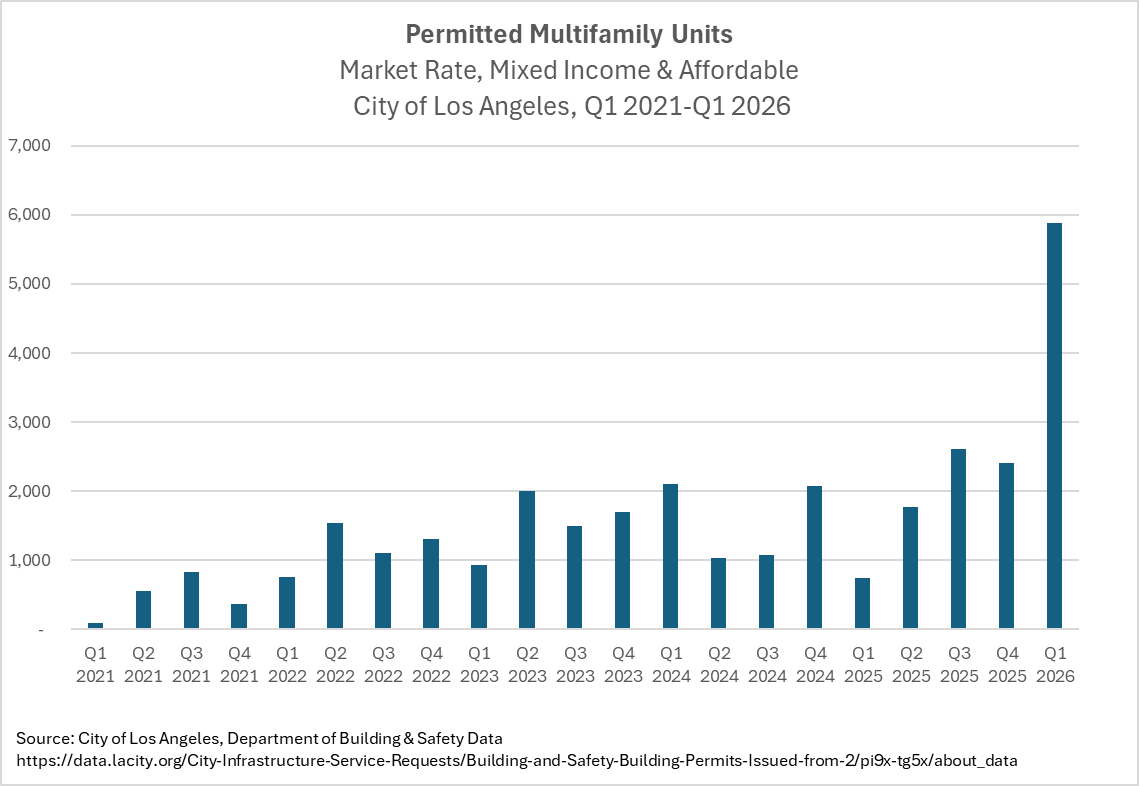
Measure ULA's defenders are citing Q1 permitting data as "proof" multifamily development is "back."
But remember: a building permit is not a housing unit. It's an option to start construction.
And the data they're celebrating is actually evidence of distress. Let me explain.