@dr1337 I’m so proud of you. It’s been incredible to watch you take this from a fantastically crazy idea to something real, and in the process, show the world a powerful vision for a fundamentally different kind of computing.
I’m also excited for what you’re going to do next ;-)
Capital is fuel. It amplifies whatever exists: with a strong engine and a clear direction you accelerate. If not, it just burns.
Startups seldom win by building big fuel tanks — they win by building engines that turn fuel into velocity.
Still, it helps not to run on empty 😄
Notice there's another side to this coin. If you're fundraising yourself, money per se is not dangerous translates to: money per se is not useful. Unless you can say precisely how all that extra money is going to help you beat competitors, don't raise it.
Thirty-year projects
One of the strange things about Silicon Valley is just how quickly so many smart people give up on thirty-year projects, even though we know that hard things take decades, not days. A sector of innovation will gain momentum, everyone will run toward it, a small event will spook the crowd— sometimes tourists and early adopters alike— and a company, sector or movement will be declared dead.
Living far away from Silicon Valley has helped me realize why this is— days feel longer in SV and time is more precious. When judging thirty-year projects, you have to ignore the extraordinary pace of change inside the world’s innovation engine that is not in touch with much of reality— or the pace of change outside it.
The real world moves slower, takes time to catch on to trends. Your customer moves slow. Your mom’s friends move slow. The idea that a company or movement that is truly complex and hard to build can be declared “over” after a few years only happens in a city where time is warped. Real movements take time. Not years. Decades. (In the case of religions, centuries). And they have moments of highs and lows before the broader world truly catches on.
This is true of all thirty-year projects, whether a company, a movement or a new technology. You can’t build a new university in five years. You can’t build a new state to rival California. You can’t build the hard new things in days or years.
Every thirty-year project I’m involved with has a moment where a lot of early and late adopters abandon it. What’s amazing about this is that I see this happen often just as the customer, the regulator, the state and normal person start to take these projects more seriously. Remembering that the pace of change is different for each of these groups is helpful to knowing your project is on the right track, and that small blips don’t matter at all. And lots of naysayers return after leaving.
One final note: if you’re not involved in a thirty-year project or can’t see that far out, you’re probably not working on hard enough things or thinking big enough about your calling. Being able to say “we’re in year three of a 30-year project” makes it easier to dig your heels in when others flee. And after a while, it stops phasing you at all. You can tell who will run and who will stay in the words they use to describe it.
Your calling on this earth isn’t small. It’s long and difficult. Time isn’t as precious for much of the universe as it is for you. Learning this patience — and to be at peace with long time horizons aligns you to something greater. Find a thirty-year project and hold on.
Did you know?
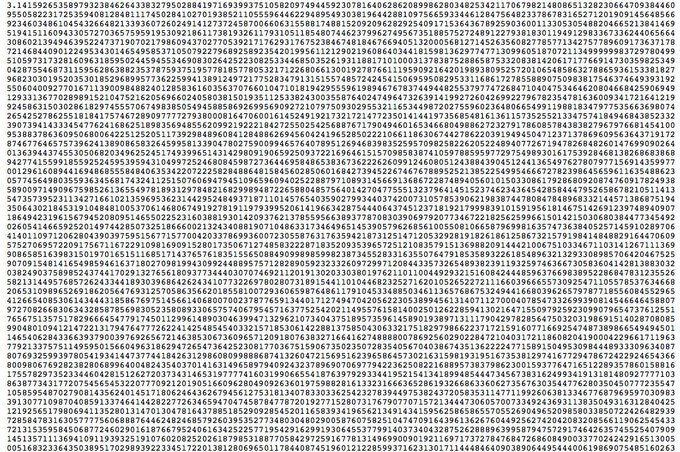
NASA only uses 15 digits of π for calculating interplanetary travel.
At 40 digits, you could calculate the circumference of a circle the size of the visible universe with an accuracy that'd fall off by less than the diameter of a hydrogen atom.
#piDay2024
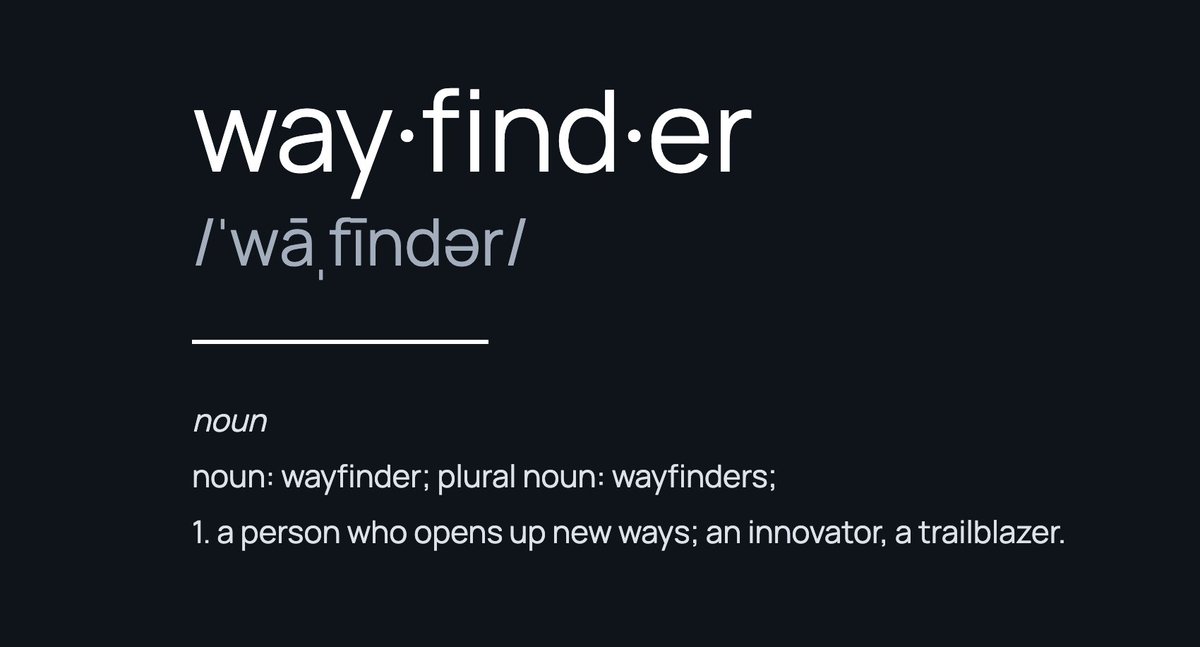
Congrats to my good friend @yuris on announcing Wayfinder Fund II.
Early stage founders: try to get him on your cap table! He is one of the most useful early stage investors around 🚀
OKAY. I think it's time to make it official.
📣 Introducing Wayfinder II — a $35M seed-stage fund investing $300k-$1M checks in founders building enduring companies solving tomorrow's hard problems.
https://t.co/z7vpuy5c9i
Coordinate combines project management and communication in a way that clients love and teams use to standardize and scale their process.
Customers have tripled revenue and saved 40+ hours per week!
We've expanded our free tier, give it a shot!
https://t.co/SkCmndIgQe
Is debt, not health, the principal byproduct of US health care? A whole new industry is flourishing around it. @NoamLevey of @KHNews w/ partners @NPR investigate/document/quantify our alarming med debt problem. 1/3 https://t.co/A08tsXvlgc
Whenever I need to think something through, I write and rewrite a memo for myself.
Write it, put it away, reread, refine, show it to others, refine.
Narrative-thought mode writing is a highly under-utilised tool. Important to not simply jot down bullet points, but write prose.