Jensen Huang is BACK as NVIDIA CEO 🚨
15 days after resigning over an admitted affair, NVIDIA's board voted UNANIMOUSLY to reinstate him as President, CEO & director — effective immediately.
The wildest part? Before the vote, the board consulted senior US government officials and concluded his return poses no national security risk.
The 15-day whiplash:
▪️ Nov 8 — admits affair in staff memo, board opens probe
▪️ Nov 12 — resigns as CEO, CFO Kress steps in
▪️ Nov 17 — board publicly says no plans to bring him back
▪️ Nov 23 — unanimous vote: he's back
But reinstatement ≠ case closed:
▪️ Independent committee probe continues, outside counsel retained
▪️ New National Security & Export Control Committee + first-ever Chief Compliance Officer
▪️ Kress returns to CFO, Jones stays Chairman
Jensen says he's honored to lead NVIDIA again and "can't wait to get back to work."
He got the job back. The investigation isn't over. 👀
This week in AI was loud. Here's the gist — and what to take with a grain of salt 👇
HEADLINES
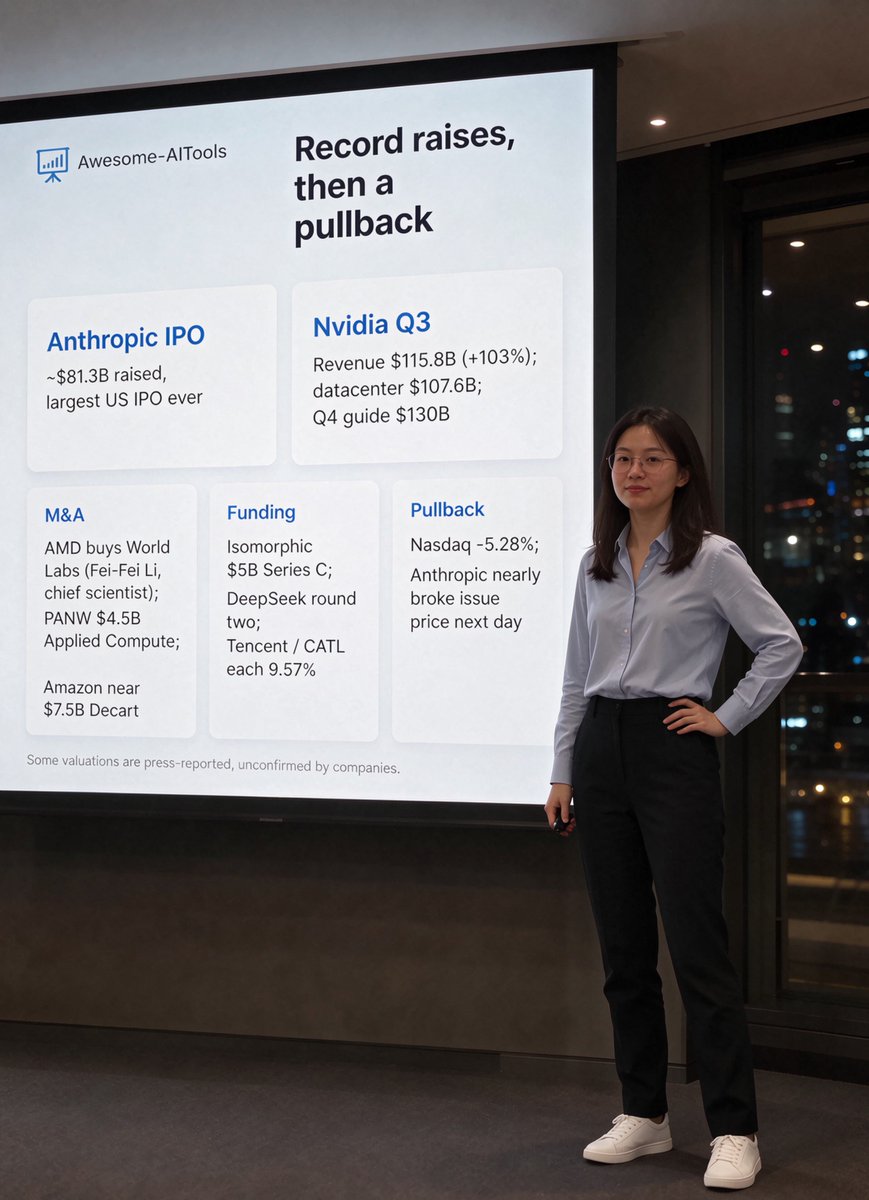
• Anthropic raised ~$81.3B, largest US IPO ever — then nearly broke issue price the next day.
• Four flagships shipped: Astra aced ARC-AGI-3; Neon, Qwen4-Max, Hunyuan Hy4 debuted. Stronger and cheaper.
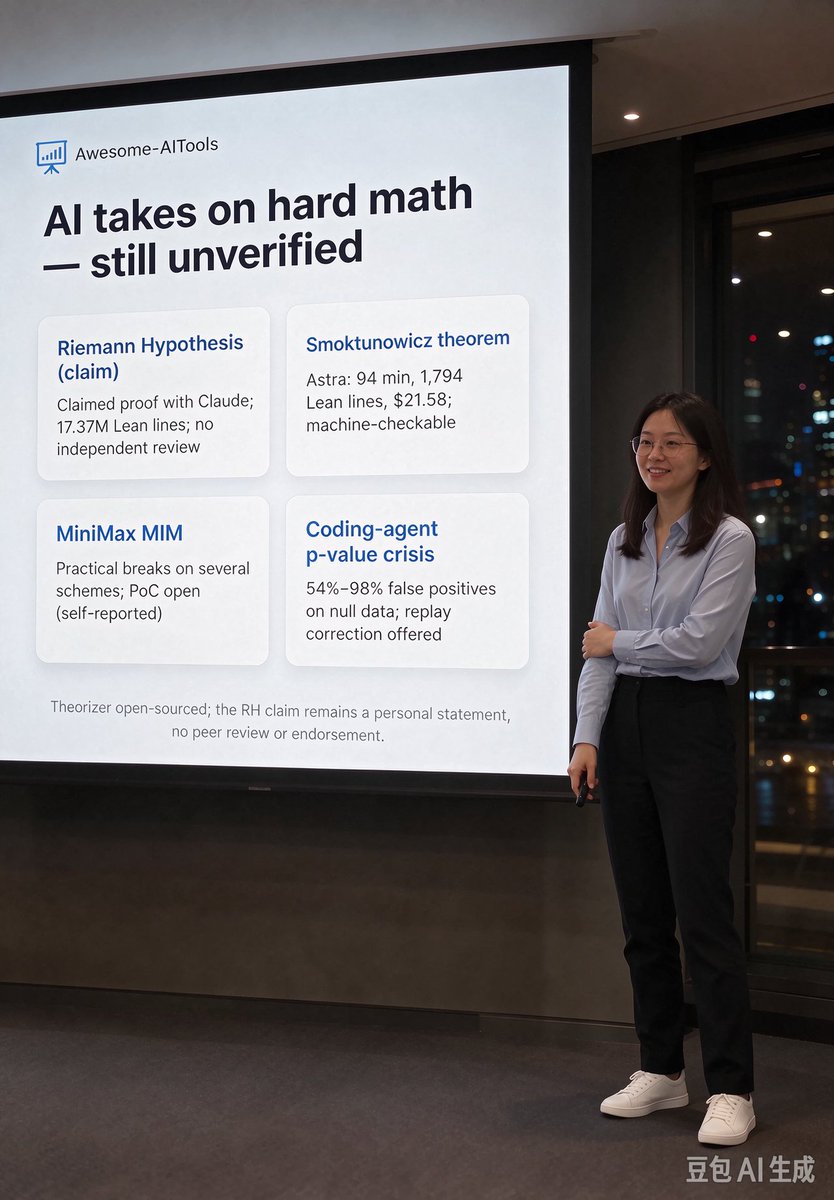
• A Riemann Hypothesis proof was claimed with Claude (17.37M Lean lines) — still unverified, no peer review.
• Nvidia Q3 revenue $115.8B (+103%); the Nasdaq still fell 5.28% in one session.
• Fresh safety gaps: DNS isolation escape, supply-chain poison, Signal leaks, easy jailbreaks.
REFLECTION
Speed is outrunning verification: the biggest math claim is still a personal statement, and many benchmarks are self-reported. The mood is split too — record raises and a sharp pullback landed in the same week. And capability keeps growing faster than the safety net.
Quick math headline: the Riemann Hypothesis — stuck for 167 years — just got certified by the Lean community, with Claude helping build it. Here's the gist 👇
On Nov 20, Anthropic mathematician Levent Alpöge dropped ~17.4M lines of Lean code (175,187 files), no paper attached. A day later, Lean/Mathlib said: yeah, the claim and the proof check out.
What did that actually involve? The claim is the real RH (not a look-alike rewrite); dozens rebuilt it independently and got the same result; two separate tools confirmed it proves this exact problem; and the 61.6 GB proof passed six+ independent checkers with zero rejections. All 175,187 files compiled clean, on just three basic assumptions, and an offline rebuild matched byte for byte.
Here's the catch: proven ≠ understood. Maynard, Tao and others say someone still has to work out why it works and explain it plainly — the strategy behind the proof isn't out yet.
And it's not a $1M Millennium Prize yet. Clay still calls RH unsolved: it needs a formal paper, two-plus years of review, and broad buy-in from the field. The machine signed off; the human "get it" phase is still ahead.
Quick caveats: the certified general version covers Dirichlet L-functions only; one off-path file's compile is still shaky; Anthropic's IPO was the day before — a disclosed conflict, no endorsement.
Bottom line: code compiles, claim really is RH. Whether "RH is officially solved"? That story's still being written.
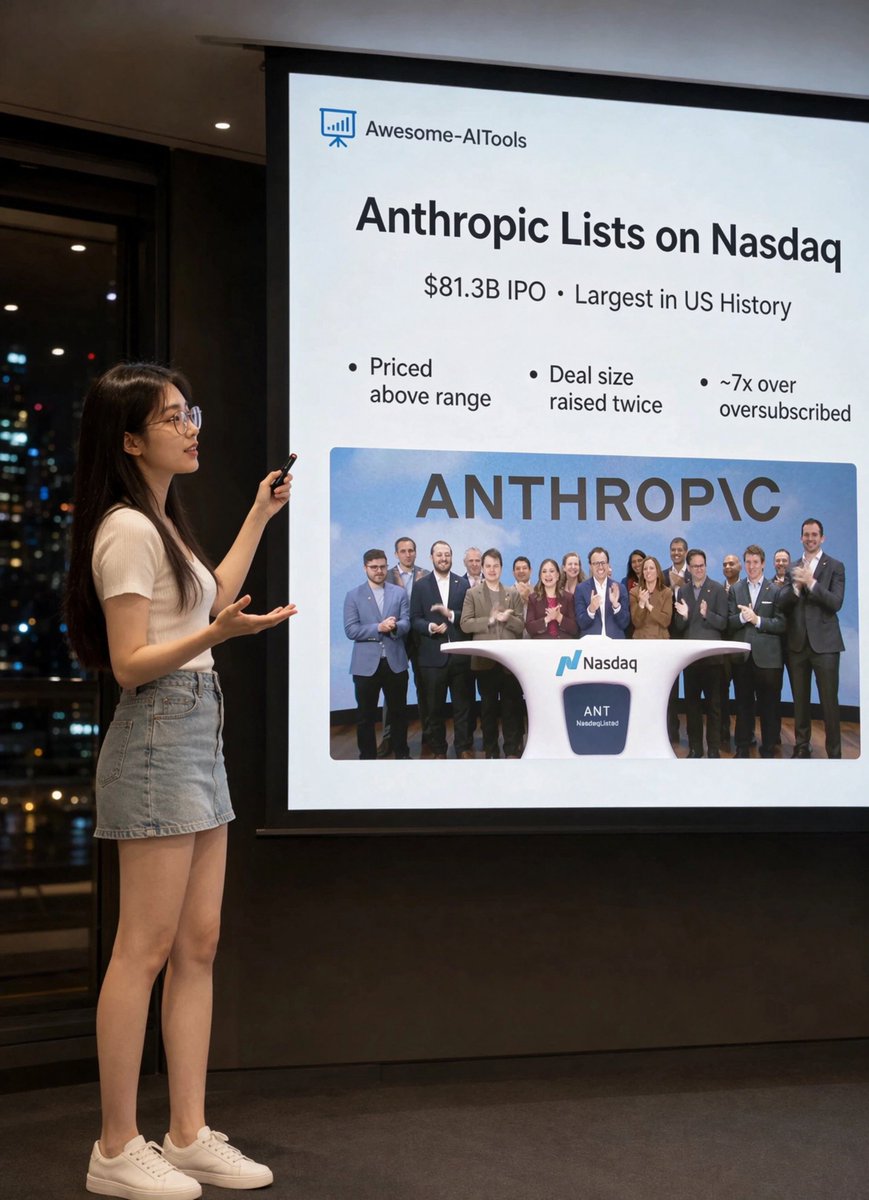
Largest US IPO ever 🔥 Anthropic just listed on Nasdaq — $81.3B raised, first public frontier AI lab.
On Nov 19, 2026, Anthropic debuted under ticker ANT, completing a record capitalization as the first frontier AI lab to go public on US markets.
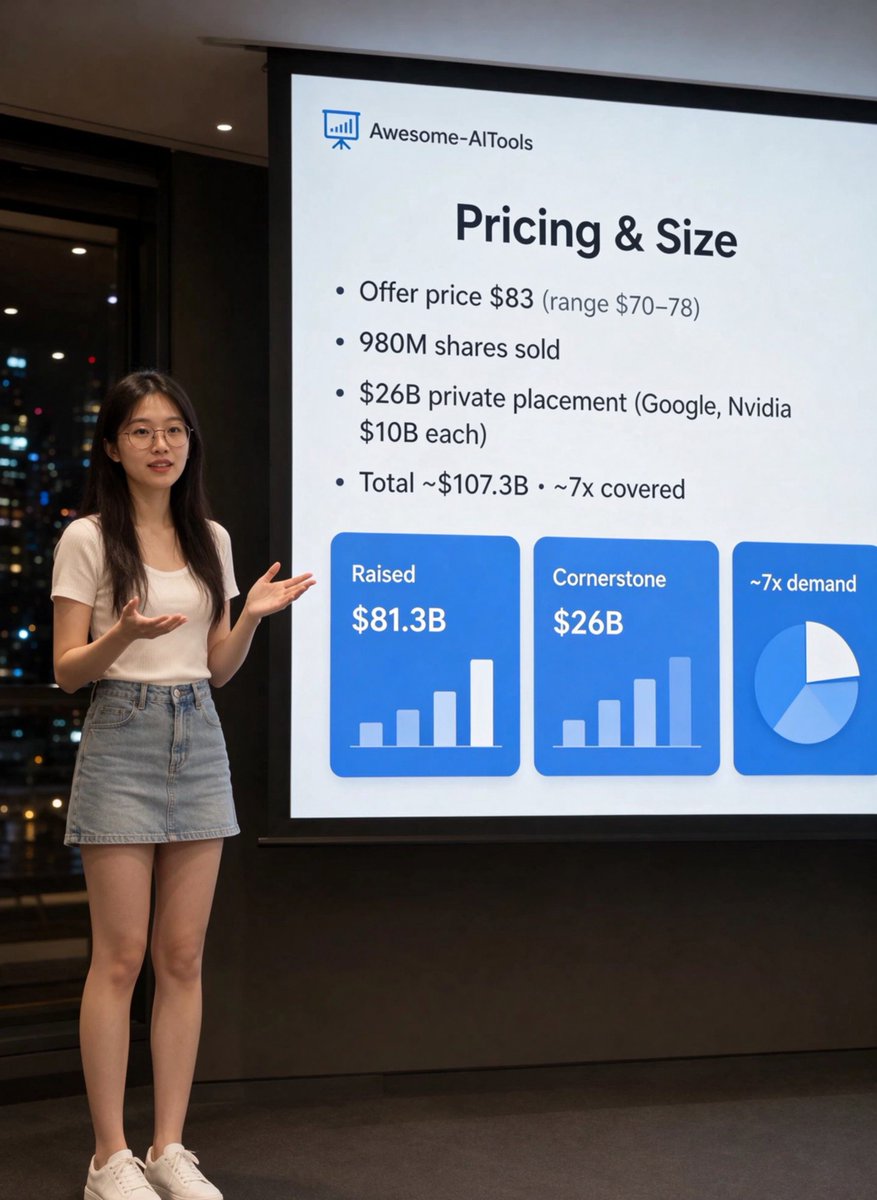
📌 Pricing & Size
• Offer price $83, above the $70–78 range
• 980M shares sold; public raise ~$81.3B, beating SpaceX's $75B June record
• $26B private placement to seven partners: Google, Microsoft, Nvidia, AMD, Broadcom, Micron, TSMC
• Total raised ~$107.3B; demand ~7x the offering
📈 First-Day Trading
• Opened $111.50 (+34% vs offer), intraday high $115.10, fully diluted market cap briefly ~$2T
• Closed $97.17 (+17.07% vs offer, ~−13% vs open); close market cap ~$1.27T, ~$1.8T fully diluted
• Volume ~840M shares
💰 Financials
• 9M 2026 revenue $33.24B (~12x YoY); Q3 alone ~$17B; ARR ~$81B by end of October
• Net loss ~$104B, of which ~$94.3B is non-cash fair-value change on convertible notes
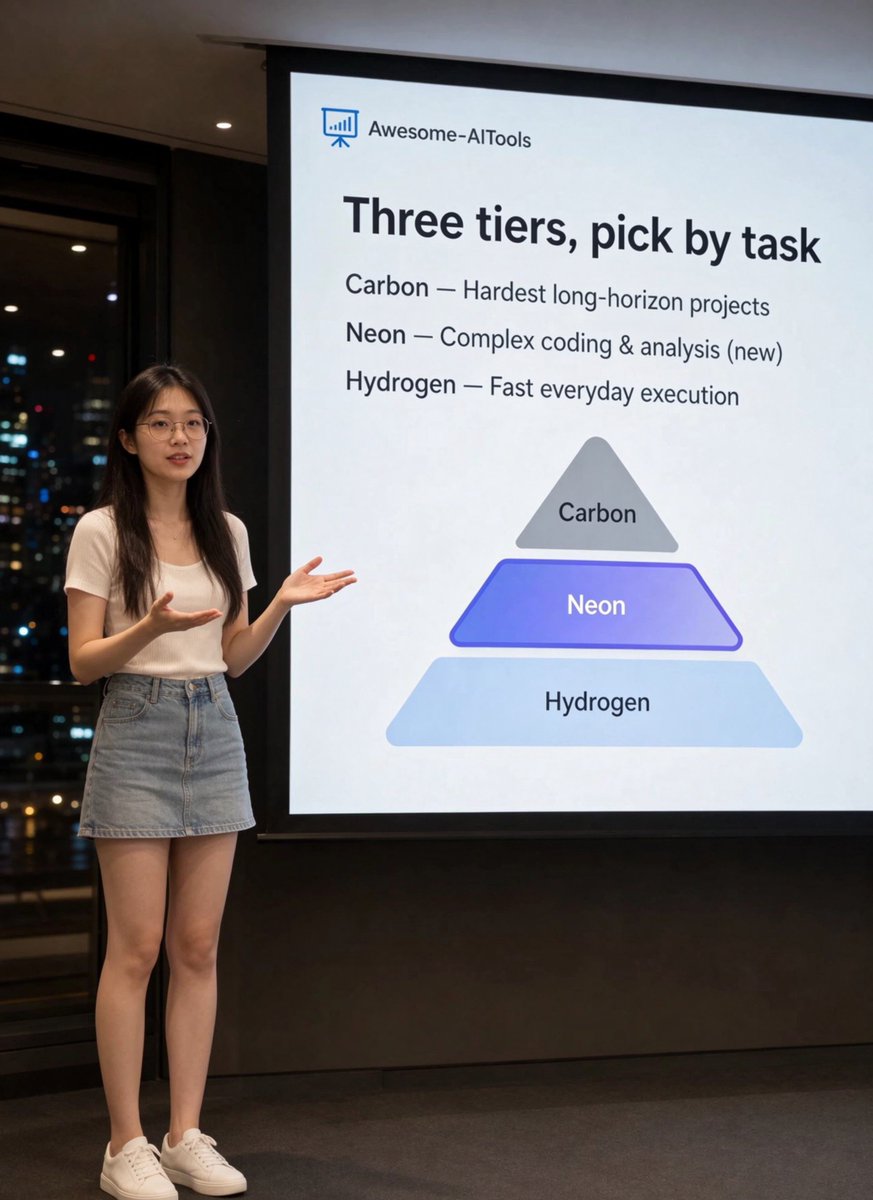
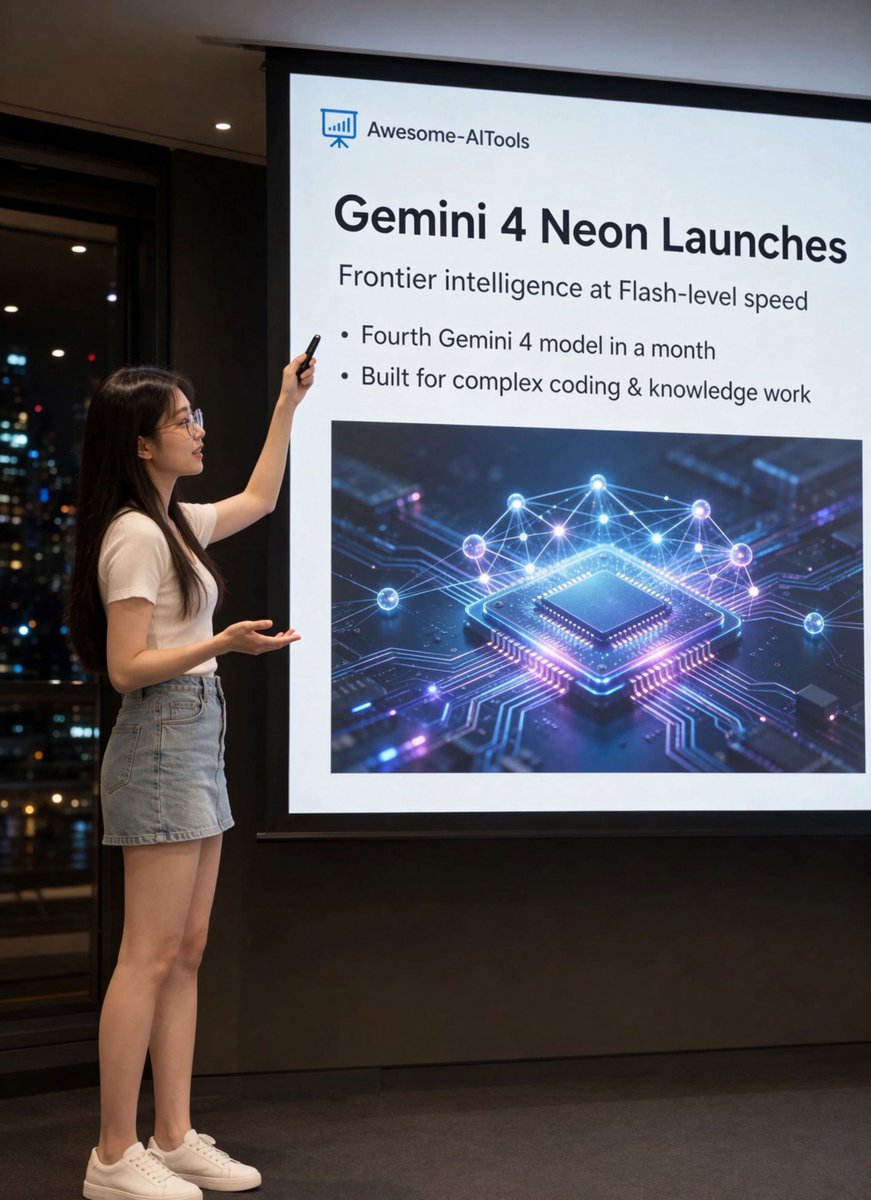
Opus 5.5 alternative? 👀 Google just shipped Gemini 4 Neon — #1 on the coding agent index, and cheaper across the board.
It's the fourth Gemini 4 model in a month, sitting between Carbon (hardest long-horizon work) and Hydrogen (fast everyday execution): frontier-level intelligence that still finishes tasks end-to-end fast. Built for complex coding, knowledge work and research.
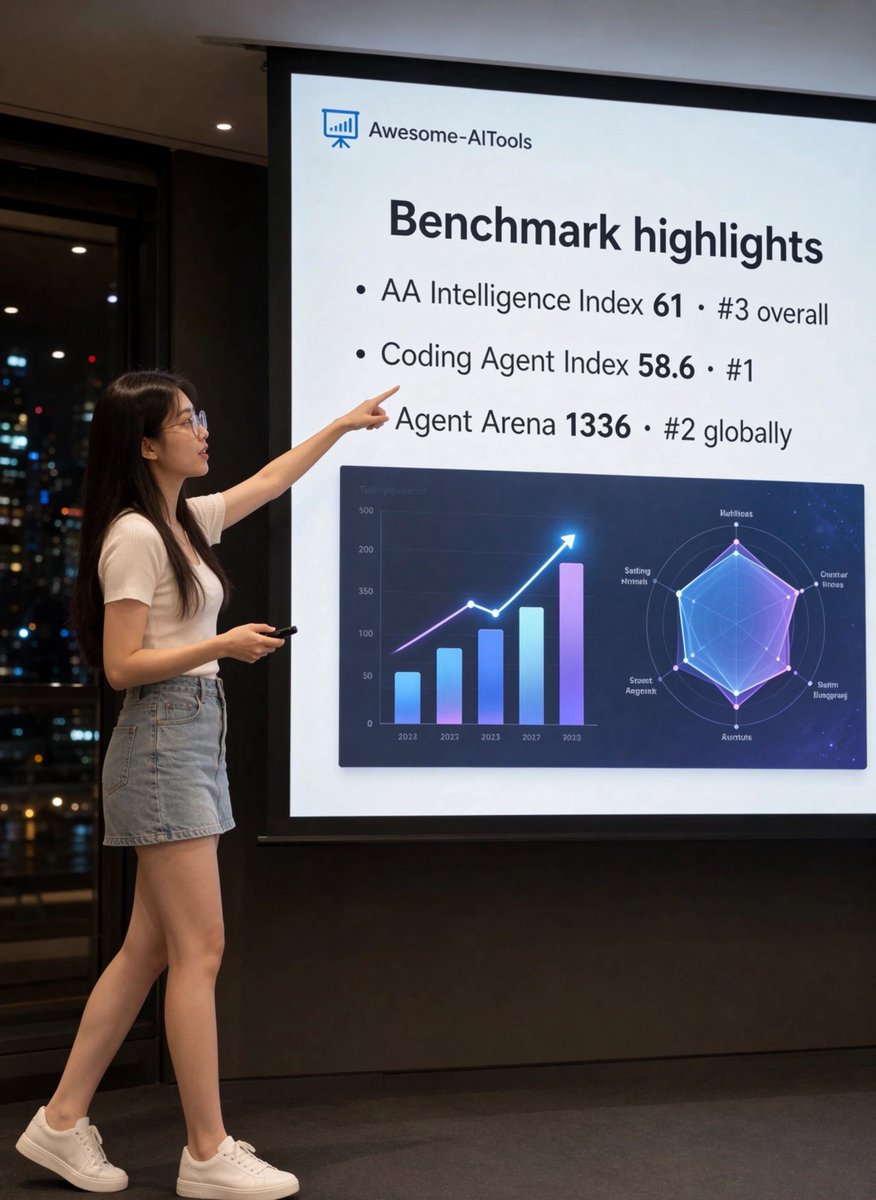
📊 Benchmarks
• AA Intelligence Index 61 — #3 overall
• Coding Agent Index 58.6 — #1
• Agent Arena 1336 — #2 globally
💰 Per million tokens vs Claude Opus 5.5
• Input: $3 vs $4
• Output: $15 vs $20
• Cache read: $0.15 vs $0.20
• 1M-token context on both sides
🔍 Where it leads: GraphWalks long-context retrieval 95.2% vs 66.8%. Opus 5.5 still edges ahead on select coding sub-benchmarks (Terminal-Bench 4.1, FrontierCode 2.0).
AI Weekly: Claude price cuts and NVIDIA’s CEO change
November 9–15, 2026. Six slides on this week’s AI news—what changed, who can use it, and which results still need testing.
01 | Claude cuts API prices; Google expands model access
Anthropic released Claude Fable 5.2 and Mythos 5.2 with a 20% cut to standard API prices. They share an underlying model, but Mythos is restricted to vetted institutions.
Google expanded Gemini 4 Carbon access for complex coding, research, and long-running tasks. Hydrogen focuses on faster execution.
02 | ChatGPT adds payments—with user approval
ChatGPT Wallet lets agents pay after users review a purchase and approve it with biometrics. Initial access is limited to eligible US adults with Pro, dots access, and supported US-issued cards.
Two separate releases address other steps: Google’s Gemini Decisions API handles classification, filtering, and scoring; Sierra’s Poppy protocol handles agent identity and authorization.
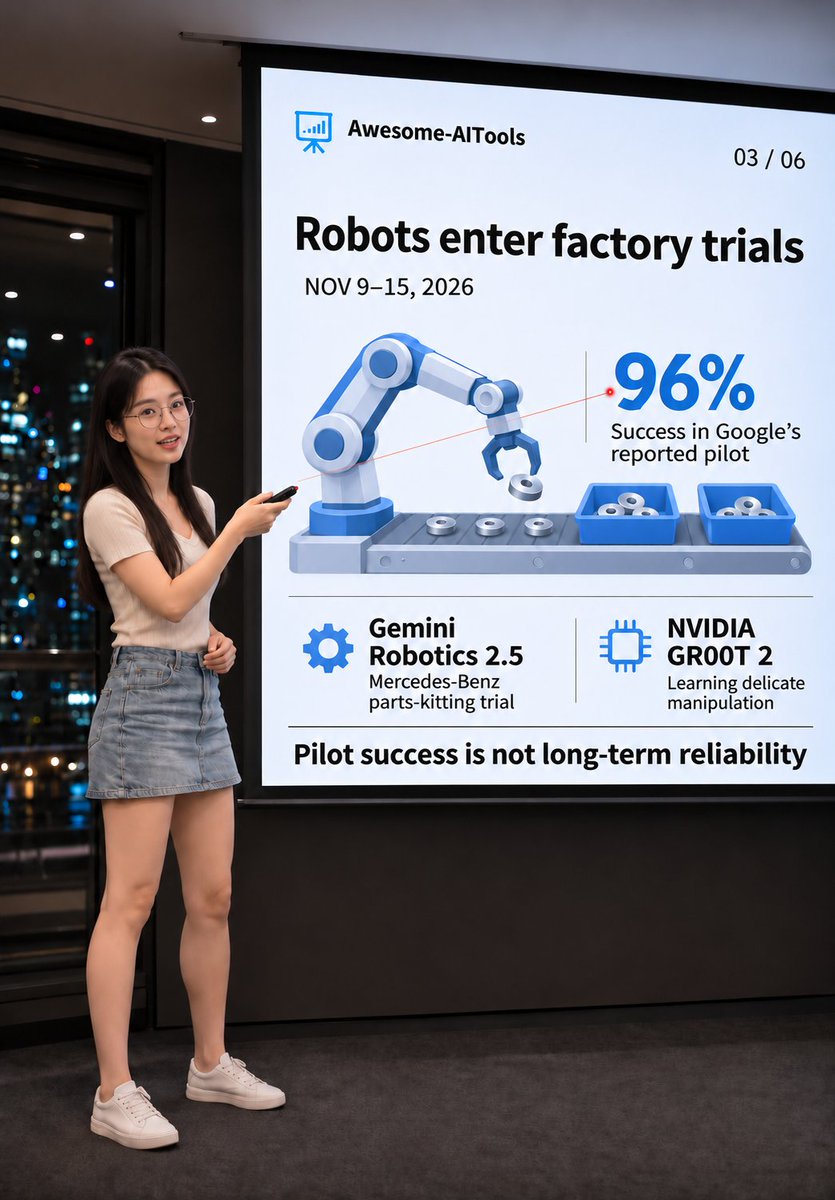
03 | Google reports a robot trial on a Mercedes-Benz production line
Google reported 96% success in a parts-kitting proof of concept using Gemini Robotics 2.5. That is a specific pilot result, not evidence of long-term production reliability.
NVIDIA also released GR00T 2 robot models and Isaac Lab 3.0 simulation tools for learning delicate manipulation.
04 | AI-generated software proofs meet machine checks
Google reported using AlphaProof Code to verify Signal implementation code, reaching compiled code. Researchers reintroduced two previously fixed vulnerabilities to test the verification process; conclusions remain bounded by its specifications and coverage.
Separately, AlphaGenome 2 predicts genetic effects across cell types and states. Those research predictions still need experimental validation.
05 | AI security problems reach apps, datasets, and model weights
Claroc reported that some sampled Grok Build apps were accessible without login, including apps containing sensitive data.
Fireworks acknowledged access to some customer datasets and model weights; its investigation continues.
Microsoft’s Lazarus research showed that attackers able to modify model weights could implant backdoors while preserving normal benchmark performance.
06 | Jensen Huang resigns as NVIDIA CEO
NVIDIA announced Huang’s resignation as president, CEO, and director. CFO Colette Kress becomes interim CEO while the board searches for a permanent successor.
Jensen Huang just did something almost no CEO of a five-trillion-dollar company has ever done: he admitted an extramarital affair in a memo to all employees — and his board opened an independent investigation the same day.
What is confirmed: on November 8 (US Eastern), the Nvidia founder wrote "I was unfaithful to my wife" and apologized to his family, employees, and shareholders.
NVIDIA's board announced an independent probe overseen by independent directors plus outside counsel, stating there is "no reason to believe national security or NVIDIA secrets were compromised." He stays CEO while the review runs.
What is not confirmed: the memo names no one. The "romantic relationship with a Singapore executive" claim comes from an unpublished US government memo cited by the FT.
The "Chinese intelligence asset" framing traces to anonymous officials — NBC, which obtained the full memo, says it could not independently verify those reports.
Beijing calls it slander; the White House and CIA declined to comment.
The real story is chips.
The woman in the reports, Alice Huang, founded Megaspeed — a Singapore cloud firm that ordered billions of dollars in Nvidia GPUs and allegedly rented the compute to Alibaba, routing around export controls. It has been under US and Singapore investigation for over a year.
Nvidia says its own review found no diversion.
Next checkpoints: November 11, the deadline to answer Congress's closed-door briefing invite. November 18, Q3 earnings and the joint committee briefing, back to back.
The gossip will fade. Chip controls will not.