Some learning doesn’t look like learning.
It happens in small acts of trust. In routines that quietly build independence.
We’re learning to step back just enough, so he can step forward, in his own time.
That’s how life skills start to stick.
#LifeSkills #NeurodiverseParenting #StrengthBasedSupport #FutureReady #Neurodiversity
Challenging Stigma: When Advocacy Meets Resistance
Sometimes the hardest part of advocacy isn’t explaining what’s needed, it’s facing resistance from the very systems meant to help.
When support is treated like a favour, not a right, families and young people end up having to prove what should already be seen.
For many neurodiverse students, school systems respond to behaviours—missed cues, shutdowns, refusals—but not to needs. Support plans exist. Training exists. But if the mindset hasn’t shifted, change stalls at the surface.
This isn’t about blame. Most teachers and staff want to do the right thing. But they’re working inside systems that often lack time, tools, or permission to act differently.
Challenging stigma means staying clear-eyed about these patterns—and holding onto the belief that better is possible. Not by shouting louder, but by showing what works. Backing strengths. And refusing to lower the bar on what belonging looks like.
#NeurodiverseYouth #EducationThatFits #StrengthBased #AdaptiveLearning #ChallengingStigma #Neurodiversity
Unchecked violence against civilians has fractured the cornerstone of humanitarian law.
Years of violations without consequence have eroded the rules meant to protect us all.
The upcoming UN General Assembly will test whether we can change course, or let these protections crumble further.
#ProtectionOfCivilians #HumanitarianLaw #UNGA80
Support at school doesn’t start with programs. It starts with awareness.
For many neurodiverse kids, what helps isn’t always visible. Strengths can be subtle. Needs can be masked.
The more we share those patterns with educators, the more likely they are to be seen, understood, and reinforced.
#NeurodiverseParenting #EducationThatFits #StrengthBasedSupport #AdaptiveLearning
Flexibility Doesn’t Always Look Flexible
For some neurodiverse kids, structure is flexibility.
Repeating a route. Lining things up. Needing the same socks. These aren’t always signs of rigidity — they’re ways of feeling safe, in control, or ready to face something uncertain.
We’ve stopped treating structure as something to dismantle. We try to understand what it offers him first. We ask, “What’s the purpose of this pattern?” That shift alone has brought more calm than any quick fix.
What looks like inflexibility might just be a different form of resilience.
#NeurodiverseParenting #StrengthBased #RoutineMatters #Parenting #Neurodiversity
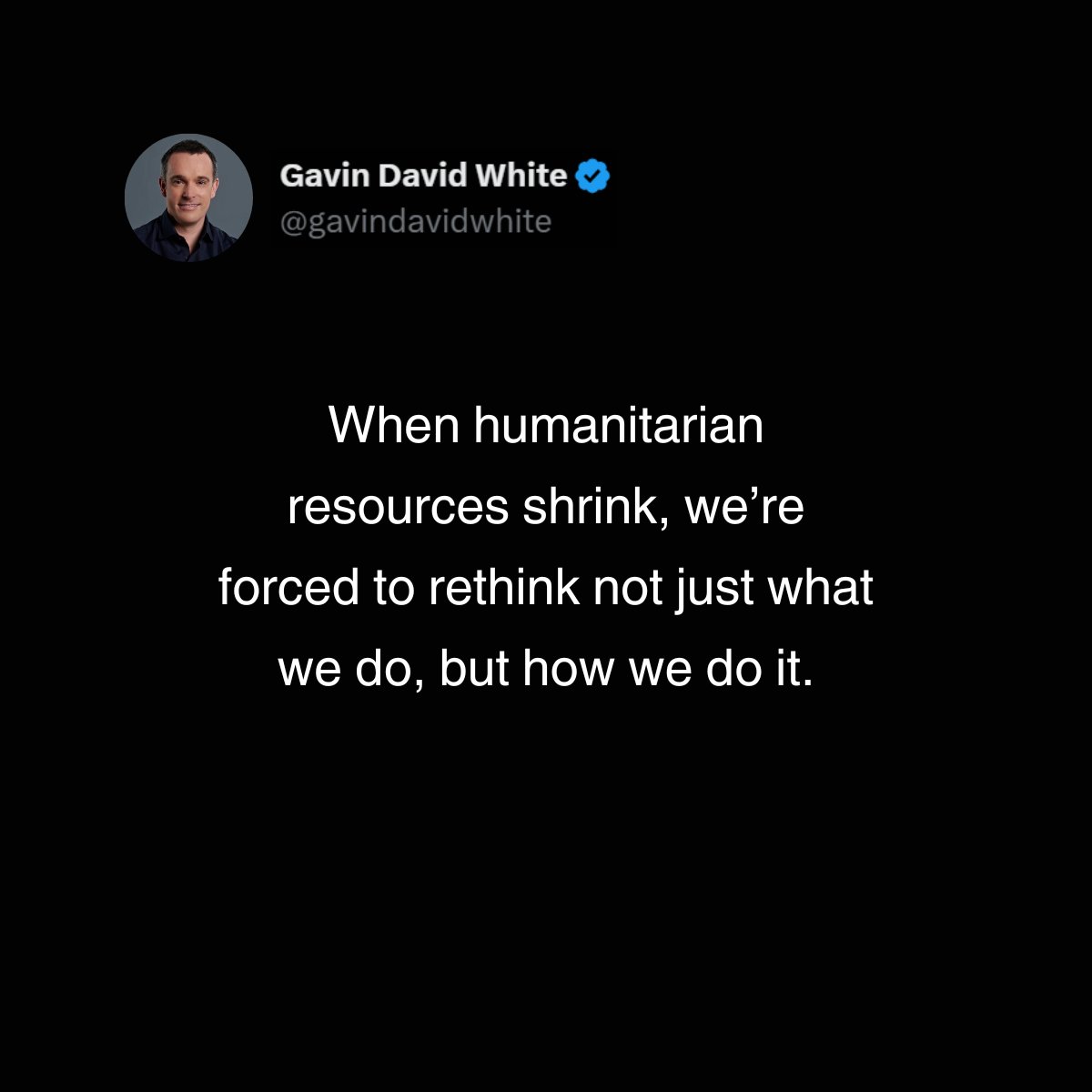
When humanitarian resources shrink, the question isn’t just what we do, it’s how.
The Humanitarian Reset is a chance to put locally led response at the centre of action. Decision-making shifts closer to those living through crisis, with priorities set at country level by humanitarian coordinators and local actors, guided by communities’ perspectives.
Progress since the 2016 World Humanitarian Summit has been slow: direct funding to local and national actors rose from 3.7% in 2019 to 6.8% in 2023, then slipped to 5.5% in 2024 (FTS). The Reset can change that — but only if it moves beyond efficiency to build genuine local leadership.
That means sustained investment in capacity, governance, and protection systems so local actors can manage funding at scale. It means donors providing predictable, flexible funding, and international agencies partnering to complement, not override, national capacities.
The opportunity: make locally led response the organising principle of humanitarian action, and measure success by the capacity, resilience, and leadership of the communities we serve.
#HumanitarianReset #Localization #LocalLeadership #HumanitarianAid #UNat80
In Zaatari Camp, near the Syrian border, a football league gave refugee girls more than a game.
It took time, trust, and collaboration with parents to make it possible. Pitches were built, teams formed, and slowly expectations shifted. Girls who had never been encouraged to play were stepping forward.
Football became more than sport, it was confidence, connection, and healing in motion.
Recovery doesn’t only happen in classrooms or clinics. Sometimes it starts on the pitch, when shared effort turns into pride.
#Refugees #YouthDevelopment #SportsForChange #CommunityResilience #SocialImpact
Gen Z is paying attention, and it’s costing them.
A recent report finds 6 in 10 feel overwhelmed by global events. It’s not just a mental health issue. It’s a participation issue.
We need systems that support capability, not just crisis.
🔗 https://t.co/cKoMGqhCEZ
#YouthMentalHealth #GenZ #SystemsChange
Zaatari Camp became one of the most visible symbols of the Syrian refugee crisis.
Many families had fled from Dara’a, where student-led protests were met with a violent crackdown. Children arrived carrying not just loss, but the sudden absence of routine, play, and connection.
The humanitarian response focused on stabilisation, protection, health, food assistance, education, shelter. But recovery also needed something quieter: a way to reconnect, heal, and regain a sense of self.
That’s where football came in. A league formed across the camp’s 12 districts. What set it apart was the full participation of girls, something that hadn’t always been possible before. Expectations shifted slowly, through trust and repetition.
Supporting coordination across partners and communities, I saw how something as ordinary as sport became a tool for recovery. One of the standout teams is pictured here, focused, joyful, and proud.
It worked because so many were part of it: parents, volunteers, partners, donors. That collaboration made space for more than sport. It made space for healing.
#Refugees #PsychosocialSupport #YouthDevelopment
Social confidence doesn’t always look like joining in.
Sometimes it’s a glance held longer. A shared rhythm. Sitting side by side.
For our son, connection starts with proximity—not performance.
And when we slow down, we start to see it building. Quietly.
#NeurodiverseParenting #SocialConnection #StrengthBased
Not all strengths stand out.
Some just quietly hold things together: memory for places, rhythm, deep focus.
For us, strength awareness didn’t start as a strategy. It started by noticing what helped our son move through the world.
These weren’t milestones. They were clues.
#StrengthBasedParenting #Neurodiversity #FutureSkills
Advocacy isn’t always loud.
Sometimes it’s interpreting cues, adjusting environments, pre-empting things no one else sees.
But in helping our kids regulate, we often forget ourselves.
Self-care isn’t a luxury. It’s preparation. If we want to keep showing up, we need to last the distance.
#NeurodiverseParenting #ParentingWithPurpose #StrengthBasedSupport
On #WorldYouthSkillsDay, youth empowerment is in focus. But for many neurodiverse learners, the systems around them still don’t reflect how they grow or engage.
Learning environments continue to reward speed, speech, and routine compliance. AI tools and digital platforms offer potential, but only if designed for diverse learning profiles.
In the US, 85% of autistic adults are unemployed. In the UK, it’s over 78%. That’s not a lack of ability. It’s a lack of fit.
Skill-building isn’t just about training programs, it’s about rethinking the environments young people move through before those programs begin.
The question isn’t whether teens are 'ready', It’s whether our systems are.
#NeurodiverseYouth #EducationThatFits #FutureSkills #YouthLead #AdaptiveLearning #WorkLifeReady
Bridging learning gaps with localized AI
Mainstream tools miss context.
Ferby, a nonprofit-built AI bot, supports 5M+ students in India, offline, multilingual, project-based.
Quietly effective tech, built for real learners.
#ResponsibleTech#FutureSkills#EducationThatFits
🔗 https://t.co/6eQh5bZJtD
Designing Tech Education That Actually Fits
What does it mean to make computing education truly inclusive—not just accessible, but aligned with how neurodiverse students process, engage, and thrive?
A new review of computing education research calls for a shift:
— Defining challenges → recognising capabilities
— Patching systems → rethinking what inclusive design really means
— Studying students → working alongside them
The goal isn’t just access—it’s quality.
And that starts with design grounded in real cognitive diversity:
• Tools that adapt to different ways of thinking
• Learning environments built around strengths
• Collaboration with learners, not just research about them
If we believe digital skills matter, then how we teach them matters too.
For anyone working at the intersection of education, skills, and social equity, it’s worth a read.
https://t.co/x1fC9D3HMw
#EdTech #Neurodiversity #ComputingEducation #InclusiveLearning #DigitalSkills #EducationThatFits
Some strengths show up before we even know what they are.
Our son could swim before he turned 3—calm, focused, at ease.
That same awareness now shows up in how he moves, focuses, and remembers.
These aren’t workarounds. They’re footholds.
#StrengthBasedParenting #NeurodiverseYouth #FutureSkills
If your EdTech only works in perfect conditions, it’s not built for the real world.
Refugee educators are showing what responsive, inclusive learning actually looks like, no broadband, no branding, just tools that work.
🔗 https://t.co/uiBD4p050K
#EdTech#EducationCrisis #RefugeeEd #AdaptiveLearning
When AI Supports Human Impact
In many crisis zones, mental health support is limited, not from lack of will, but from lack of capacity.
That’s where AI can help, if it’s designed with care.
Multilingual chatbots offering early support. Tools that ease admin for overstretched staff. Not to replace care, but to hold space until it’s possible.
The aim? Free up time to listen, not just log. Protect energy, not just systems.
🔗 https://t.co/Y8RMh7iXDm
#HumanitarianTech #AIForGood #RefugeeResponse #CrisisSupport #MentalHealth #ResponsibleAI
“The problem isn’t potential. It’s fit.”
For neurodiverse teens, it’s not about ability—it’s about access.
Rigid systems overlook strengths. Adaptive tech and strengths-based instruction show a better path forward.
Full reflection ↓
https://t.co/F8enNIhE6n
#AdaptiveLearning #Neurodiversity #EducationPolicy #EducationThatFits
Learning in crisis - what refugee education teaches us about the future of EdTech
Emergency EdTech isn’t just a stopgap, it’s a testing ground for what actually works.
EdTech Hub’s June review shows how low-bandwidth, field-adapted solutions helped keep learning alive in crisis settings. Differentiated strategies, teacher mentoring, and hybrid formats, sometimes delivered by radio, sometimes in WhatsApp groups, built continuity where traditional systems stalled.
This is more than a contingency plan. It’s a reminder that right-sized tech, when paired with human support, can reach learners often left behind: displaced youth, children with limited connectivity, or those navigating trauma.
Offline-first doesn’t mean outdated, it means responsive. The most resilient solutions are designed to work under pressure, in real contexts, with the tools communities already trust.
#Agility #ResponsibleTech #EducationThatFits #Refugees #FutureSkills
https://t.co/cPUwUH4ENz