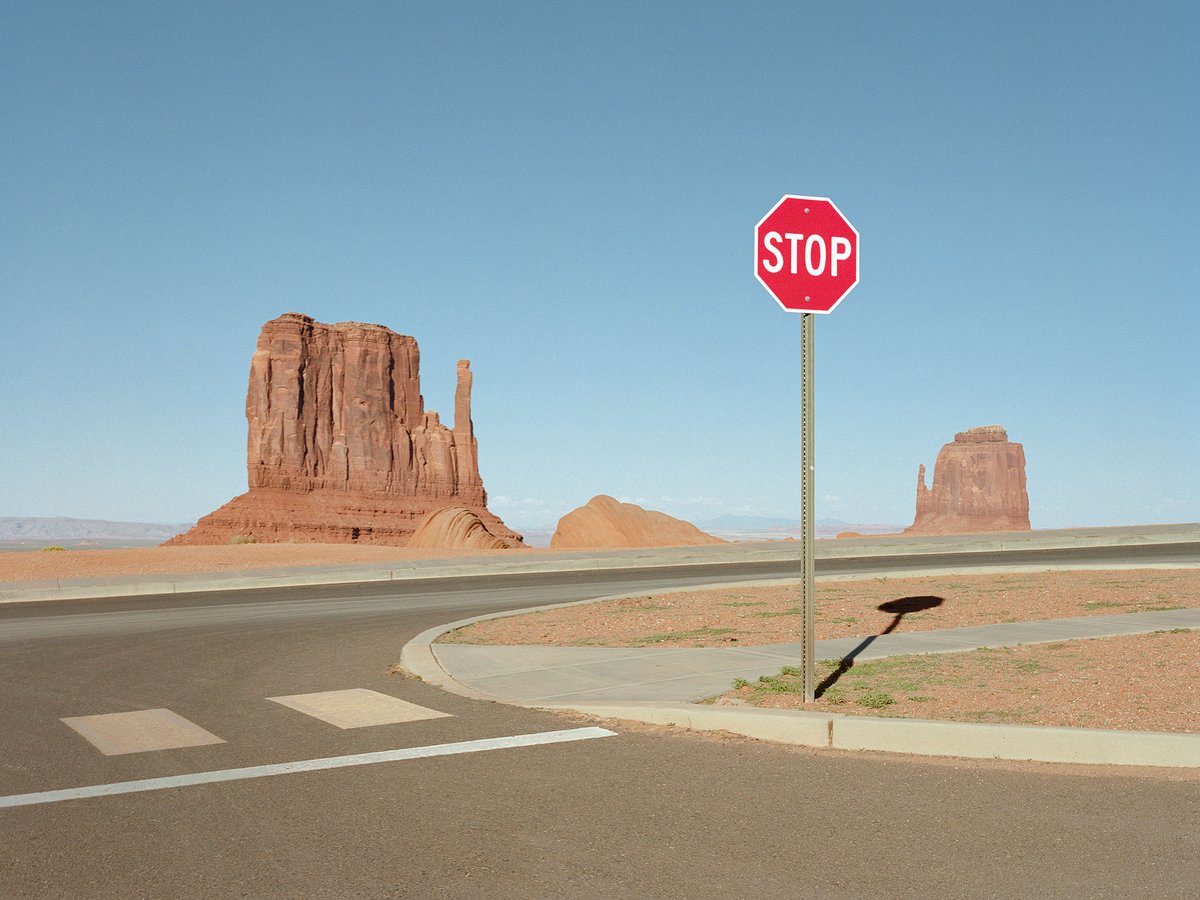
This photo went viral with zero credit. So let's fix that - I am the photographer.
"Stop," Utah / 2016
From the series Shaped by the West. Also released as a book in three editions (sold out as of writing), exhibited from New York to Paris.
Prints available if interested.
California's "DELETE Act" authored by @SenJoshBecker (D-Menlo Park) officially takes effect today, Aug. 1, nearly three years after California Gov. @GavinNewsom signed it into law.
Data brokers collect, buy, sell, and share your personal information—often without you ever interacting with them directly. Starting today, registered data brokers must begin processing your deletion requests submitted through California's DROP system. With one request at https://t.co/rtpGUC4dFY, Californians can ask hundreds of data brokers to delete their personal information. More than 340,000 Californians have already signed up, per Becker.
Here's our story as it aired on @FOX40.
BREAKING: Trump's Kennedy Center just canceled its free public tours for the first time in 50 years — because an 87-year-old volunteer told the truth about its Trump-era collapse.
An 87-year-old tour guide told the OBVIOUS truth about the Kennedy Center. Donald Trump's response was to punish everyone.
For the first time in five decades, the John F. Kennedy Center for the Performing Arts has paused its beloved free tour program — and the timing makes the reason unmistakable. The move came directly after longtime volunteer Sandy Weiswasser gave a candid interview to the New York Times describing exactly what Trump's takeover has done to America's national theater.
According to the NY Times article she was quoted in, “Once she was among 140 volunteer guides who gave tours in 10 languages to up to 400,000 people a year. Last week on her Monday shift, only five out of more than a dozen tour guides showed up, and only three people took a tour.”
"This place used to be really thriving and busy and crowded," the 87-year-old Weiswasser told the Times. "Now it's a black hole."
That's it. That's the offense. An elderly volunteer, describing what she's personally witnessed after decades of service, told a reporter the honest truth. Days later, the Kennedy Center's director of the volunteer program quietly announced a "temporary pause" on tours — the exact outcome three separate volunteers had privately worried about before the memo announcing the pause was even circulated, anticipating retaliation.
Petty vindictiveness is who Trump is. Not content with seizing control of one of America's most beloved cultural institutions, purging its board, and driving away artists who refused to perform under his takeover, he's now apparently willing to punish an entire volunteer program, silencing public access to the building itself, because one honest 87-year-old described what everyone can already see.
And remember, this is the same Kennedy Center Trump previously tried to shut down entirely for two years under the guise of "renovations," after his own name change proposal drove away performers in protest. His name was eventually scraped off the building's wall — and now the facade remains hidden under a massive tarp, a fittingly literal metaphor for an institution being suffocated from within.
America's national theater used to belong to everyone. Now it's become a monument to one man's ego and his intolerance for even the gentlest criticism, even from an 87-year-old grandmother simply telling visitors what she's seen with her own eyes.
Please like and share.
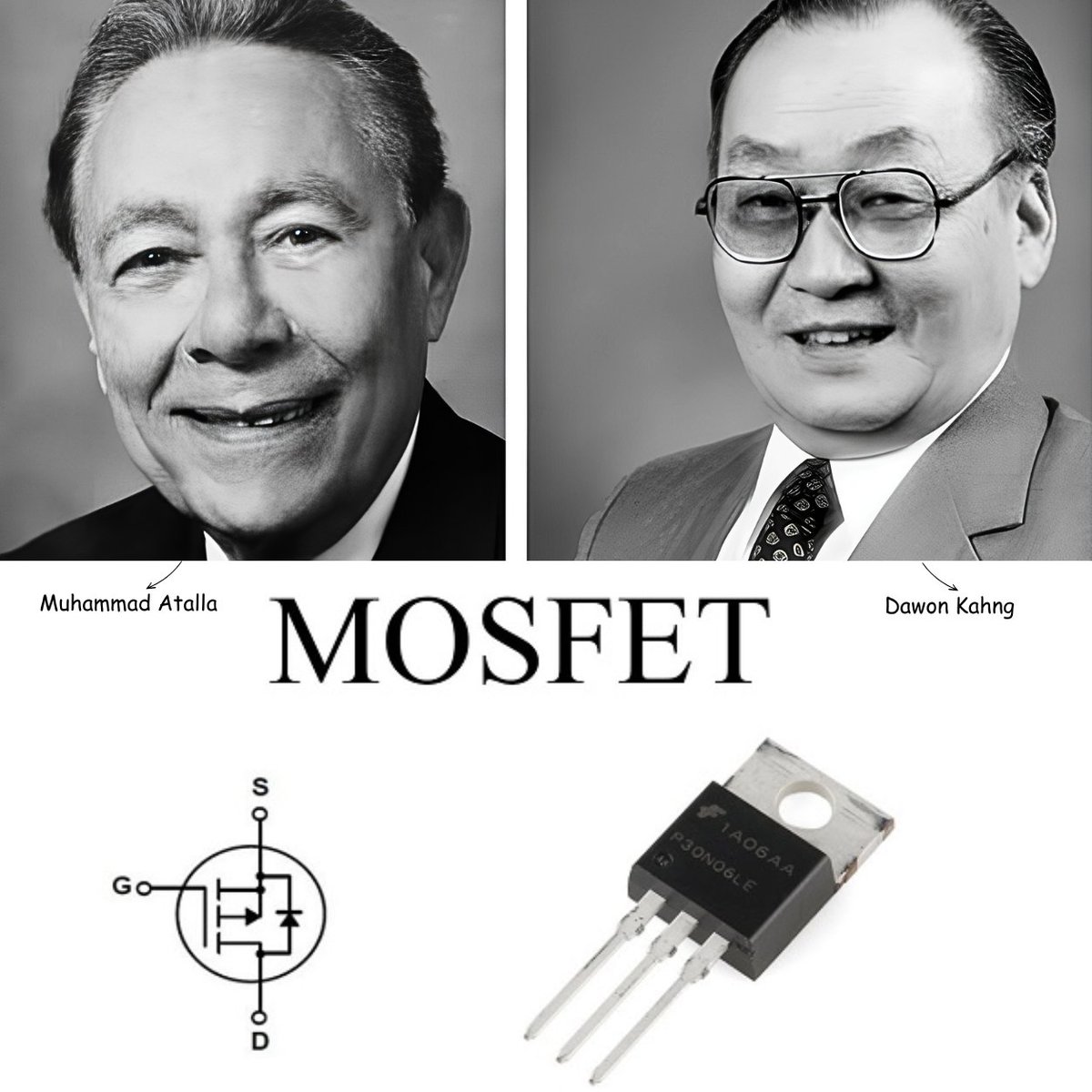
The most manufactured device in human history was not invented by Edison, Tesla, or Steve Jobs. It came from Mohamed Atalla and Dawon Kahng, two scientists whose own employer failed to see what they had created.
Atalla was born in Port Said, Egypt.
He moved to the United States, earned his PhD, and joined Bell Labs in 1949.
At the time, scientists were trying to make smaller and more reliable electronic switches from silicon.
But they kept running into the same problem.
The surface of silicon trapped electrical charges. This made it difficult to control the electricity flowing through it.
Atalla spent years studying that surface.
He eventually discovered that growing a thin layer of silicon dioxide over silicon could protect it and allow electricity to be controlled properly.
It sounded like a small improvement.
It became the foundation of modern electronics.
In 1959, a young Korean scientist named Dawon Kahng joined Bell Labs after completing his doctorate at Ohio State University.
Atalla asked him to use this new method to build a type of transistor scientists had imagined for decades but had never managed to make work.
Kahng succeeded.
The device had three simple layers: metal, oxide, and silicon.
That is where its name came from.
The metal-oxide-semiconductor field-effect transistor.
Or MOSFET.
Think of it as a microscopic switch.
It can turn electricity on and off. Put enough of these switches together, and they can store information, perform calculations, display images, run software, and process almost everything a computer does.
Atalla and Kahng had found a way to make these switches small, cheap, and easy to place together on a chip.
They showed their invention to Bell Labs.
The company saw a slow device that solved no urgent problem in its telephone network. It decided not to pursue it.
Kahng tried to explain what they were missing.
In a 1961 memo, he pointed out that the device was easy to manufacture and could be packed into integrated circuits.
Bell Labs still placed it on the shelf.
Researchers at RCA and Fairchild Semiconductor understood its potential and continued developing it.
By 1964, the first commercial MOS devices had arrived.
Then the entire industry began to change.
MOSFETs required less power and took up less space than the transistors used before them. Manufacturers could place thousands on one chip, then millions, and eventually billions.
They entered calculators, memory chips, personal computers, digital cameras, phones, cars, satellites, medical equipment, and almost every other electronic machine.
Modern AI chips contain billions of them.
Every time you unlock your phone, start your car, open a website, send a message, or ask an AI a question, huge numbers of MOSFETs switch on and off to make it happen.
By 2018, the Computer History Museum estimated that humanity had manufactured 13 sextillion MOS transistors.
That is 13 followed by 21 zeros.
No other human-made device has been copied more often.
Atalla and Kahng never became household names.
Their invention became so common that it disappeared inside everything.
The next time your phone turns on or an AI answers you in seconds, remember the two scientists who made it possible.
Mohamed Atalla and Dawon Kahng.
@hofnpopper@Y2John84 I maybe saw it the day after in this small art house theater in San Francisco. It was a 11pm showing and the theater was packed. And during this scene people were freaking out. Didn't know at that time that we were experiencing a whole new horror genre.