The Hollow Men
American capitalism is rotting from the head down. We have replaced the "Owner-Operator"—the risk-taker-with a new, parasitic class of corporate bureaucrat: The Risk-Free Insider.
By "Insider," I am not referring to a specific title. I am referring to the entire administrative state that has captured the modern corporation. This includes the Directors who exist solely to collect fees, the Executives who exist solely to collect bonuses, and the Managers who exist solely to hire consultants.
These are the hollow men of the boardroom. They are masters of PowerPoint. They wear the right suits. They say the right buzzwords about "governance" and "ESG." But they are mercenaries fighting a war with someone else’s ammunition.
In a functioning economy, authority is tied to liability. If you make a bad decision, you lose your own money. That fear of loss is the only thing that keeps a business honest. It forces you to cut waste, obsess over the customer, and stay late to fix what is broken.
Today, we have severed that link.
We have rigged the game so that heads, the Insider wins; tails, the shareholder loses.
If the stock goes up, the Insider collects a massive performance bonus. If the stock crashes due to their own incompetence, they are fired with a "Golden Parachute" worth tens of millions. They are gambling with the house’s money, and they never leave the table poorer than they arrived.
This looting starts in the boardroom.
We have normalized a "Country Club" culture where directors are selected based on social profiling rather than their ability to build a business. The modern board member is often a professional tourist—paid an average of $350,000 a year.
Let’s be brutally honest about what that number represents. The average director is paid nearly five times the GDP per capita of the United States. They earn more for attending four quarterly lunches than the vast majority of Americans earn in five years of hard labor.
And for what?
Most of these directors are "over-boarded," sitting on three or four boards simultaneously. They treat directorships as a gig economy for the elite. They fly in, rubber-stamp a compensation package they didn't read, and fly out. They collect checks from companies they do not understand, do not use, and certainly do not love.
They are not there to ask hard questions. They are there to be collegial. They are there to protect the other Insiders.
And what happens when these boards hire executives who also have no personal capital at risk?
We get the Delegation Economy.
When a Risk-Free Insider faces a crisis—bloated expenses, a broken supply chain, or a stale product—they do not roll up their sleeves. They hire a consultant. They pay a strategy firm millions of shareholder dollars to produce a 100-page deck telling them what they already know.
This is not management. It is intellectual money laundering.
They use shareholder capital to buy an insurance policy for their own careers. If the plan fails, they can blame the consultants. They delegate the work because they are terrified of the responsibility. They would rather preside over a slow, comfortable decline than risk a bold mistake.
While American Insiders are busy optimizing their severance packages, our global competitors are optimizing their products. They are not slowed down by bureaucracy. They are not waiting for a slide deck. They are outworking us.
If we continue to fill our C-suites with administrators instead of operators, we will lose our edge. We will see iconic American franchises hollowed out by fees, managed for the benefit of the Insiders, while the true owners—the shareholders—are left holding the bag.
The time for polite governance is over.
If we want to save the American economy from mediocrity, we must demand a return to the "Owner’s Mentality." We need leaders who treat shareholder capital with the same reverence they treat their own savings. The era of the Risk-Free Insider must end.
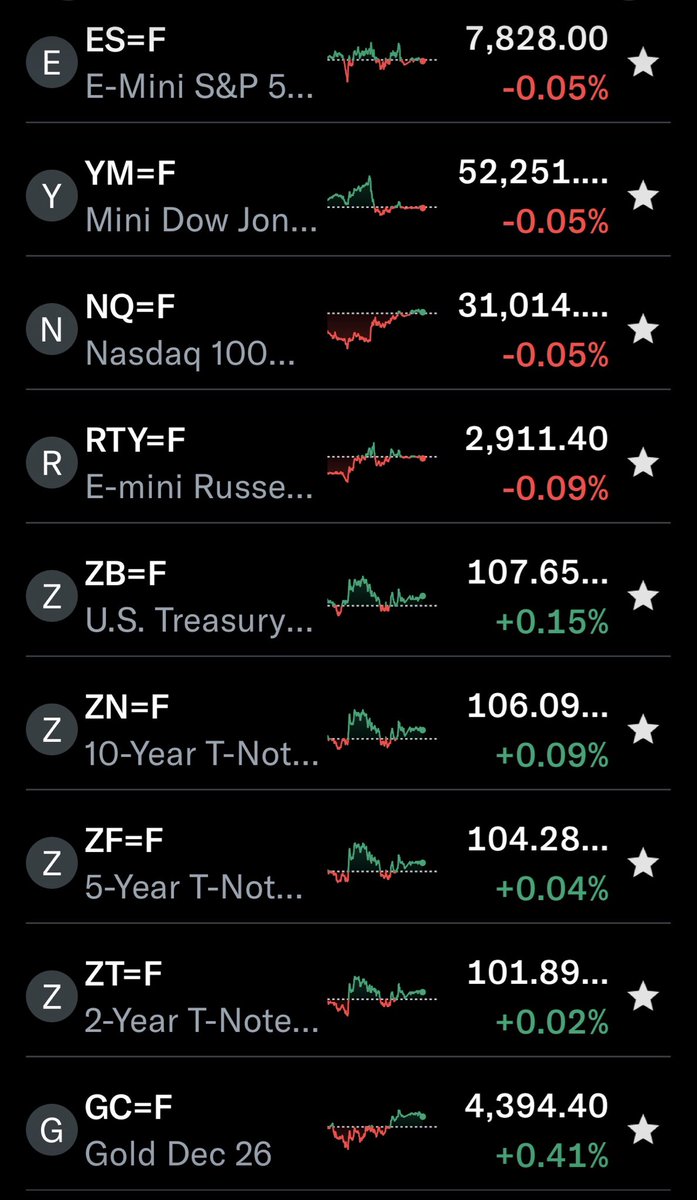
What does the FUTURES hold into the second half of the week???
$SPY $QQQ SPX NDX
◈ COMPOSITE SYNTHESIS
Regime state: Both NDX and SPX sit above their nearest gamma flip → long-gamma / mean-reverting for the front expiry — dealer hedging should lean toward selling strength and buying weakness inside the printed bands, favoring range-bound chop over trend continuation while this holds.
Fragility differential: NDX carries ~4x more flip cushion (0.49% vs 0.12%) than SPX. SPX is the weaker link — a move of just ~10 points flips it into short gamma, where hedging flow would start amplifying rather than damping a selloff. NDX has more room before that switch trips.
Momentum cross-check: NQ=F -0.04% vs ES=F +0.01% — essentially flat, with a slight relative underperformance in tech vs broad index. Not enough directional thrust on its own to challenge the long-gamma read; momentum is a tiebreaker here, not a driver.
Working read: Neutral-to-mildly-bullish, range-bound regime, with SPX the earlier trip-wire to watch. A break below 7,750 (put wall) or 30,700 (NDX put wall) is the level pair that would most likely confirm a genuine regime flip to short gamma rather than noise.
On the AI front, the trade has been dead money for more than 3 months now. The metrics I am following (token expenditures and GPU lease rates) are all flat to down. The price of memory (DRAM) seems to be the only thing that is still going up. 🧵(1/2)
NQ=F and ES=F NATH! 🚀🚀🚀
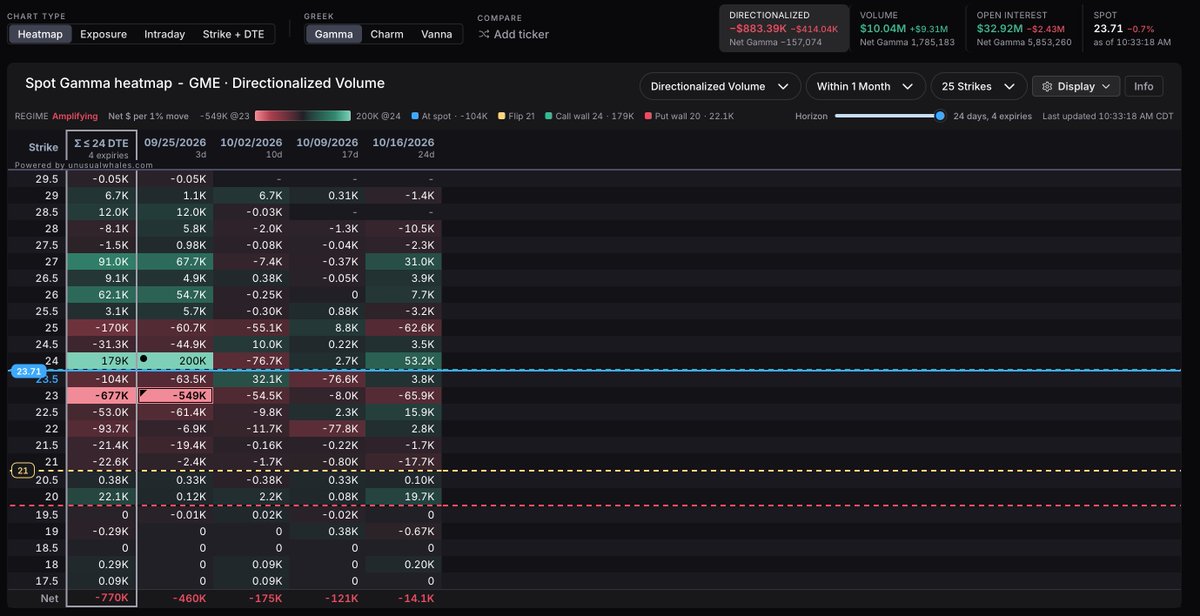
$GME $SPY $QQQ
Regime change? This post is too long for X, here’s all the deets on my substack: https://t.co/MSF5a3KJ4B
TLDR: How to read the open
SPY and QQQ holding the overnight bid while DIA lags is Monday’s message on a delay. Asia did not veto it — Korea, China, and Australia opened green; Japan was shut. So the fade, if it comes, has to come from yields, oil, or a China leak — not from a weak Nikkei print.
The setup is simple:
• Nasdaq is extended after a record close.
• The 10-year only just ducked back under 5%.
• Thursday is the catalyst. Another AI press release is not.
A hold in semis with yields contained keeps the bid. A 10-year bounce back through 5%, or a hawkish chip/tariff leak out of the Xi meetings, is what turns mixed futures into an actual fade.
Monday was the celebration. This week is the negotiation.
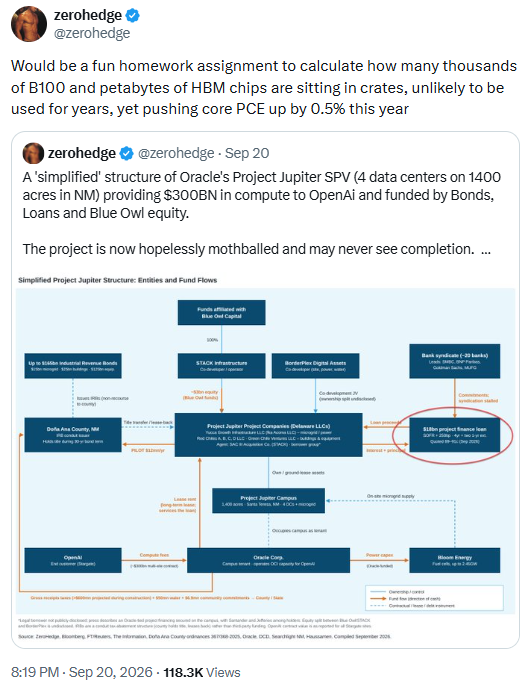
@zerohedge#s $ORCLE CDS and other data, make it make sense!!!
WHY is their rating at BBB- if everything is fine and dandy??
Thanks for your homework @edzitron
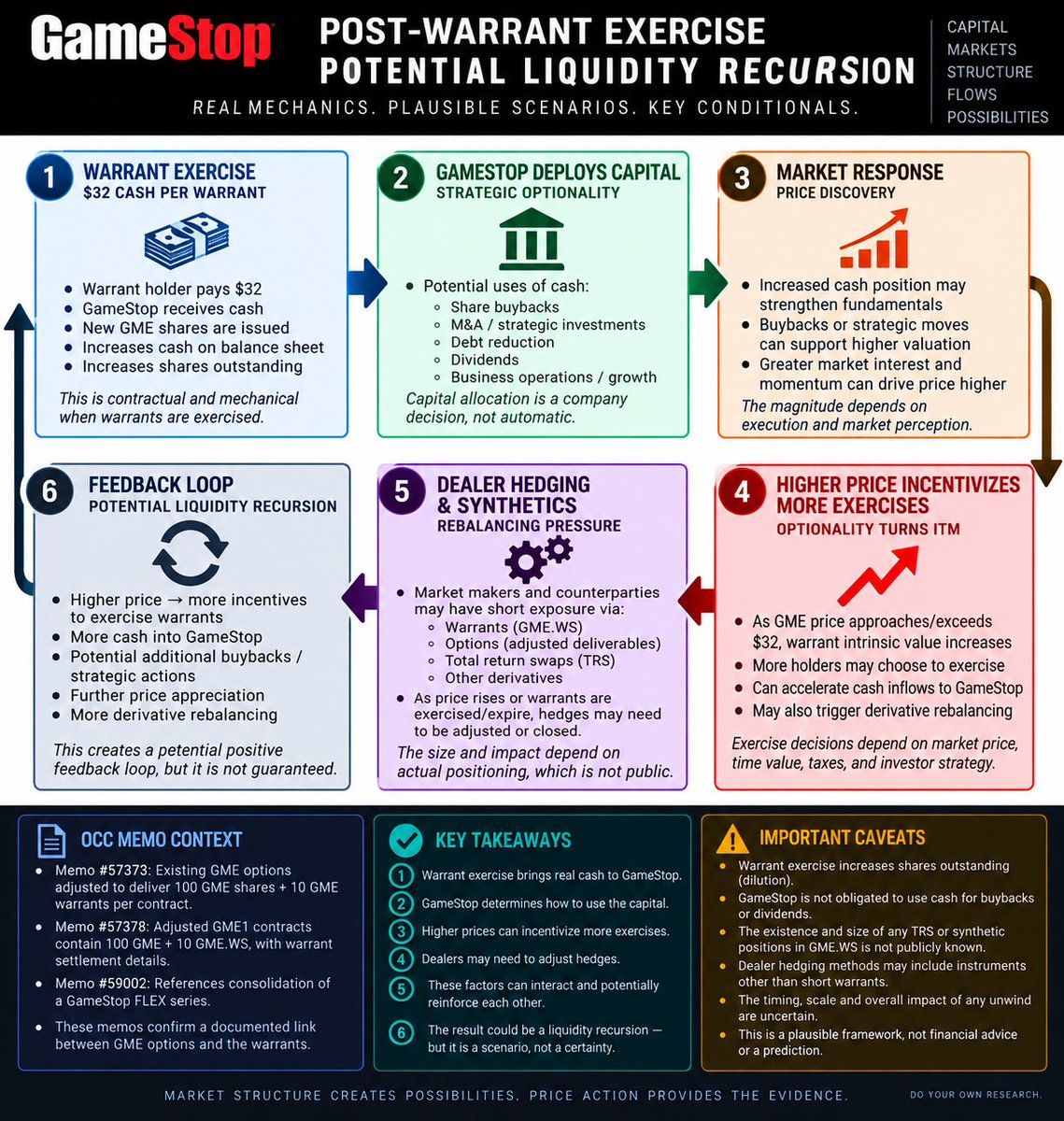
$GME - Cash hits balance sheet.
💵📃
More capital creates more choices.
Buybacks, acquisitions, debt reduction, dividends, growth.
Market reacts first.
Derivatives react next.
Capital can start moving through multiple layers instead of one lane.
Higher prices make warrants more attractive to exercise.
Exercise brings more cash.
Dealers may rebalance hedges tied to warrants, options, swaps, or other derivatives.
Market structure can create recursion when enough pieces line up.
Nothing here promises an outcome.
Everything here is a framework built on real mechanics.
Price confirms.
Capital compounds.
Liquidity follows where pressure grows. 👀📈
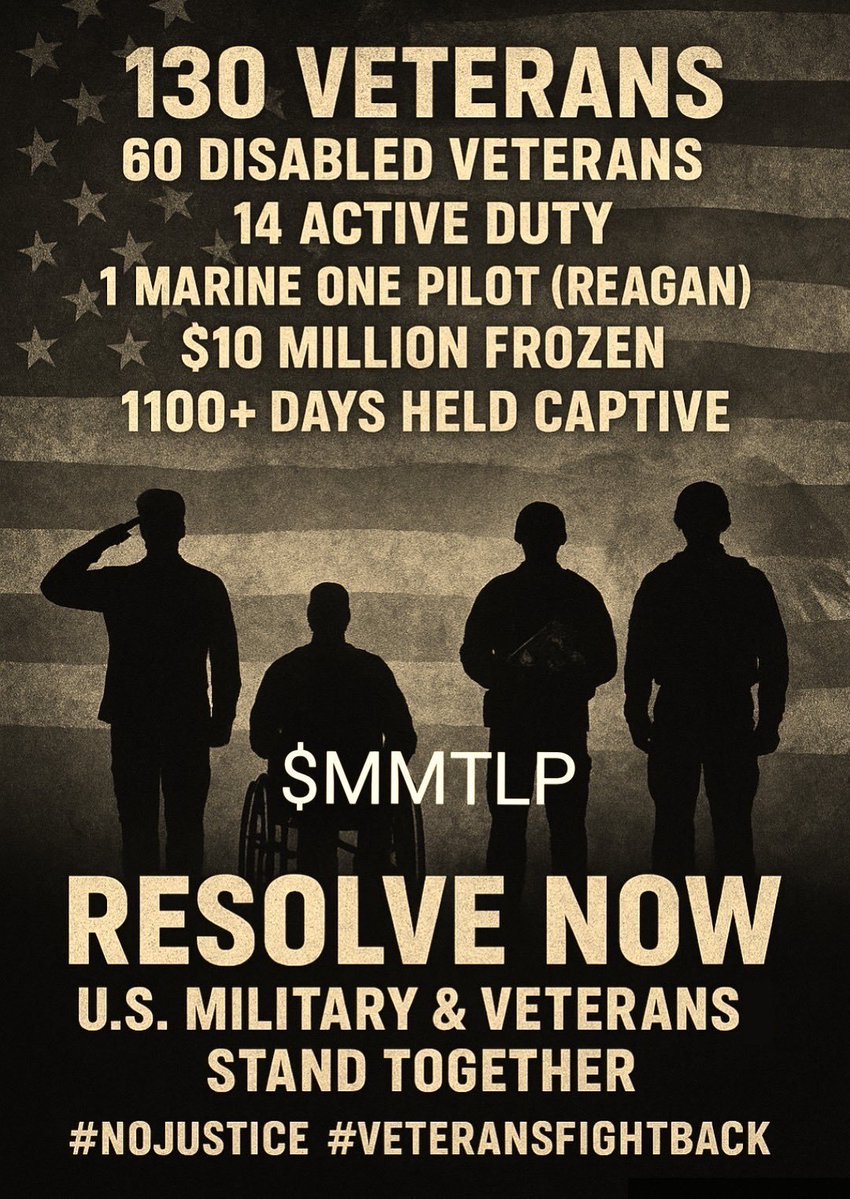
@busybrands@RepRalphNorman throwing combat disabled veteran and Senate candidate @ThomasMurphy4SC out of his Gubernational kick off event for seeking answers on MMTLP. What is Norman covering up?
@busybrands Also this statement on their SEC filing are lies???
LINK https://t.co/OuUSSYD49P
“Successful drilling in the Orogrande Prospect
Results to determine Orogrande drilling program”
Can someone correct this Timeline: $MMTLP the spin-off was announced November 23, 2022?
and completed December 20, 2022, with Next Bridge common stock distributed to holders of Meta's Series A Non-Voting Preferred Stock (the MMTLP shares) — after which Next Bridge became an independent, privately-held reporting company.
Worth noting: Next Bridge isn't fully private in the "no SEC oversight" sense — it's an SEC reporting company, just not listed on any exchange, so its shares don't publicly trade. Gregory McCabe, through McCabe Petroleum Corporation, became a significant shareholder — holding 27.8% of outstanding common stock as of December 2023 — and later took over as Board Chairman, after a series of merger and contribution agreements that consolidated 100% ownership of the company's core Orogrande Basin project in Texas.
@FINRA@The_DTCC@OptionsClearing
65,000+ investors, including #Veterans and #Disabled Veterans have been trying to get @SECGov attention for the past 1150 days to get support to help resolve a U3 halt on ticker $MMTLP frozen by @Finra and @SECGov
#VETERAN families have been suffering for OVER THREE YEARS now, because CORRUPT REGULATORS refuse to DO THEIR JOB to protect #Veterans. Don't worry, we're not going away until this is resolved.
We have experienced bankruptcies, divorces, severe depression, dissolution of small businesses, Veteran PTSD, and sadly, we have had shareholders take their own life. Yet, regulators hide under "absolute immunity" like a absolute cowards.
How do you live with yourselves? #finrafraud #mmtlpfiasco
Imagine you're at a bar, and you tell everyone you're selling a rare beer you don't even have. But, you say, "Hey, I'm just doing this to keep the bar's beer market lively, so it's cool." This is what market makers do with stocks. They're allowed to sell stocks they don't own because they're supposedly 'facilitating liquidity' - making the market flow smoothly.
Now, here's the fucked up part:
You're not actually buying the beer you're selling; Market makers can make money off selling stocks they don't own, banking on the fact they'll buy them later at a lower price or betting on the stock's price to go down.
No one forces them to actually deliver.
Let that sink in.
If you're selling beer you don't have, at some point, you'd need to cough up the goods or you'd be fucked. But in the stock market, market makers have a lot of leeway. They might not ever need to actually deliver the stocks they sold short, or they can just keep rolling over their positions, making money off the difference in price.
This can screw over actual investors and if you're an investor who genuinely believes in a company and wants to hold its stock, these market makers can drive down the price with their short selling, potentially costing you a fortune if the stock price drops because of their actions.
BUT THE TRUTH OF THE MATTER IS Regulation is a joke, I mean take a look at the beef between @VivekGRamaswamy and the @SECGov.
—The rules are set up in a way that lets market makers do this under the guise of 'market making', which is like saying it's okay to lie because it keeps the conversation going.
So, in simple terms, this regulation allows market makers to play a game where they can't lose, or if they do, it's on someone else's dime. It's like giving someone a license to steal, but in a way that looks legit on paper. And when people like @bleedblue18 or others in the $MMTLP community on @X call it out, they're saying, "Hey, this system is rigged, and it's not fair to the average Joe who just wants to invest."
#MMTLP #MMTLPARMY #MAGA $GME $AMC