Lessons from "To kill a Monkey" by Kemi Adetiba.
1. Your certificate may not put food on the table even if you have first class in this country. Except luck finds you.
2. You cannot outgrind a bad system. The system will force you into slavery for a peanut salary.
3. Suffering
The richest man in the world in the 1960s said the way back from $0 starts with 1 uncomfortable step. It's free, it takes no skill, and most people would rather stay broke than take it.
Aristotle Onassis said that if he ever went flat broke, he wouldn't look for a job or a loan. He would go wherever wealthy people gather, a restaurant, a club, a yacht club, and simply sit in the same room with them. No meetings, no pitching, not even a conversation. Kevin Trudeau says Onassis learned it inside a secret society.
The reason sounds strange, until you remember how Walt Disney started.
Disney was flat broke when he started telling people he was going to build a city. He couldn't even pay his rent. To anyone listening, it made no sense: a man behind on rent, describing a whole city of his own. That city became Disneyland.
That's what Onassis would have been after in those rooms. Sit long enough near people who think in big numbers, and your own idea of what's possible starts to stretch. But a big dream and a dream world are different things: one builds Disneyland, the other just makes you delusional. So the room has to be full of people who have actually made money, not people who only talk about it.
The plan was never about getting a seat at their table, only about being close enough to hear how they think.
Somewhere tonight, a broke 24-year-old is nursing a $6 coffee in a 5-star hotel lobby, listening to strangers talk about deals worth millions.
Find your lobby this week, and save this post for the day you need the push.
One book I recommend you read this weekend is The Death of a Salesman by Arthur Miller.
In The Death of a Salesman, Miller tells the story of Willy Loman, a man who spends his life chasing financial success and the approval of others, believing they will guarantee his worth and secure his family's future. As his career declines, he struggles with the painful gap between the man he hoped to become and the man he has become.
A man can spend decades working, sacrificing his comfort, and making sure his wife and children never lack anything. But when his financial circumstances change and he can no longer provide as he once did, the same people he sacrificed for may begin to treat him differently. The respect fades, the complaints increase, and his worth suddenly seems tied to the money in his pocket.
Willy's story raises an uncomfortable question: if a man spends ten years providing for his family, should two difficult years erase everything he has done? Does financial failure make him a failure as a person? Must a man keep earning money to deserve affection, peace, and respect?
Perhaps one of the saddest things that can happen to a man is to spend his life proving his worth through what he provides, only to discover that people have forgotten his worth beyond it.
Read the book. It offers a sobering reflection on family, identity, ambition, and the burden of tying human worth to financial success.
After spending a long time in the finance and investing space, I’m now building an AI-powered investing platform.
We’re looking for a product designer to join the founding team. The role is unpaid for now.
If you’d like to build with us, send me a DM.
Africa’s biggest debtors to the IMF:
→ Egypt: about $10.7 billion
→ Côte d’Ivoire: about $5.65 billion
→ Ghana: about $4.08 billion
→ Kenya: about $3.88 billion
→ DR Congo: about $3.31 billion
→ Angola: about $3.04 billion
→ Ethiopia: about $2.85 billion
Nigeria isn’t on the list. It finished repaying its $3.4 billion COVID-era IMF loan in 2025.
But before we celebrate, Nigeria’s total public debt was ₦159.28 trillion at the end of 2025. We didn’t stop borrowing. We just stopped borrowing from the IMF.
Owing the IMF isn’t the only kind of debt. It’s just the kind that comes with conditions.
Major cheat code in life: Be the one who reaches out. Text first. Call first. Plan first. Initialize first. Most people wait to be chosen. Be the chooser. Connection requires initiative. Friendship requires effort. Love requires action. Stop waiting to be picked. Start picking. Initiative is attractive.
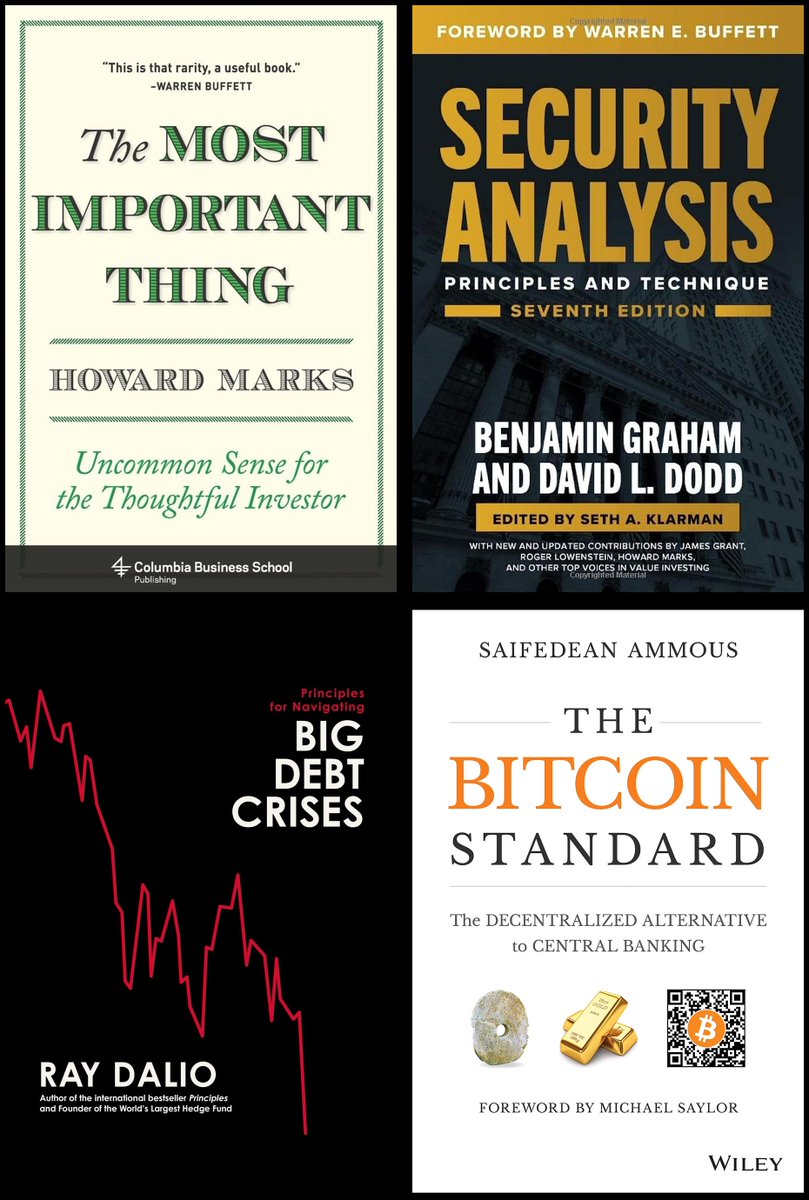
“In my whole life, I have known no wise people (over a broad subject matter area) who didn't read all the time – none, zero.”, said Charlie Munger.
15 books recommended by Charlie Munger:
1) Influence by Robert B. Cialdini
I have been reading your comments on the post that I made this morning.
The post is basically pointing at a real pattern a lot of people notice: plenty of attractive, educated, financially independent women in that 24–30 range who aren’t getting married (or aren’t getting the kind of marriage interest they expect), and then asking why the money and looks aren’t enough.
A few things are usually happening at once:
First, a lot of these women are competing for a smaller pool of men who meet their standards.
Once a woman is making good money, has a degree, and is used to a certain lifestyle, she usually wants a man who is at least roughly at her level or above on income, education, status, or all three.
That pool is smaller than the total number of men, and those men often have options. Many of them are either already taken, dating casually, or less interested in locking down a high-earning, career-focused woman in her late 20s.
The “beautiful and has money” part doesn’t automatically solve the status-matching problem.
Second, a lot of men in that age range still prefer (or at least feel more comfortable with) women who seem more traditionally oriented toward family, even if the man himself is also working.
When a woman is heavily career-driven, some men read that as lower interest in having kids soon, less willingness to compromise on location or lifestyle, or higher conflict over domestic roles later.
Whether that reading is fair or accurate in any individual case is another matter; the perception is common enough that it shrinks the pool of men who are actively trying to marry her.
Third, the window matters. Twenty-four to thirty is still prime years for a lot of women, but many of the men who are in a position to marry seriously (stable job, some money saved, less chaotic lifestyle) are a bit older or are still sorting themselves out.
By the time those men are ready, some of the women in this group have already spent years dating and filtering hard, and their remaining options feel narrower.
Independence removes the old financial pressure to settle, which is good in many ways, but it also means more people stay single longer while waiting for something that checks every box.
The “so what is the problem?” framing was me assuming the only variables that should matter are looks and money.
In practice, people still select for compatibility on values, lifestyle, personality, and future plans. When those don’t line up easily, the money doesn’t override it.
On solutions, it depends who is involved.
If the goal is more of these women getting married to men they actually like, the practical levers are mostly on the expectations side: either expand the range of men they’re open to (income, age, lifestyle, personality type), or get clearer and earlier about what they’re willing to trade off (career pace, location, domestic division).
Some do this; many don’t want to.
On the men’s side, the ones who want high-earning wives usually need to be high-earning or high-status themselves, or they need to be unusually good in other areas (stability, character, sex, etc) that compensate.
There’s no clean fix that makes “beautiful + making her own money” automatically equal “high marriage demand from the men she wants.”
The incentives and preferences on both sides have shifted, and the numbers reflect that.
End.
Google Pay finally launched in Nigeria today. Tap your Android phone and pay. But only if you bank with FirstBank, GTBank, UBA or Zenith. OPay, Moniepoint, Kuda and PalmPay, the apps millions of Nigerians actually use every day, weren't invited.
Meanwhile South Africa got Google Wallet four years ago. Four years. And we have about 5.9 million POS terminals in this country, yet the tap only works where the shop has a contactless one. Most of the time the POS agent just collects your card, or you send a transfer and show the alert.
Nigeria built one of the fastest instant transfer cultures in the world by itself. Market women, okada riders and mallams at the corner all take transfers. Global tech is only now arriving to sell us convenience we already figured out.
When Nigeria is the market, everybody wants to launch. When Nigeria builds its own solution, nobody notices.
God will literally sit you down and break you to humble you, then will isolate you to build you. Then give you back everything 10x to prove to you He’s real and everything is for a reason. Dear son, Keep your trust in Him.