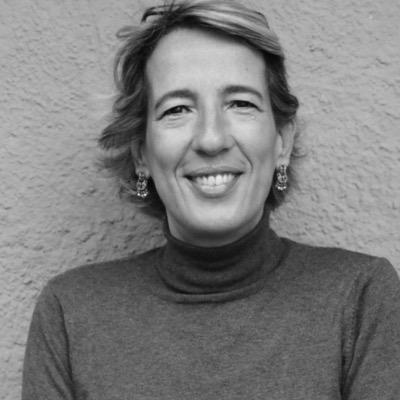
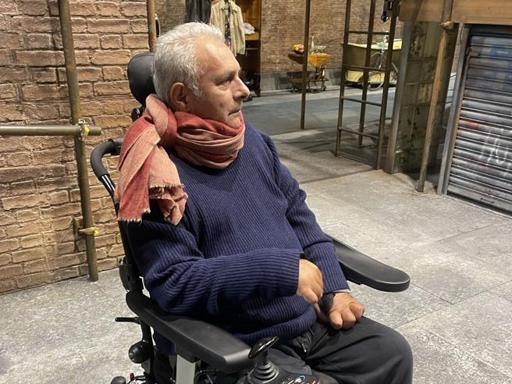
Lo scrittore apre le porte della sua casa londinese a «la Lettura». Il 5 dicembre compirà 70 anni e il 26 saranno due anni dall'incidente che lo ha paralizzato. Lo racconta in un libro («In frantumi», @libribompiani) e nell’intervista di @manzon_federica https://t.co/rXKiqHYGLB
L’incipit in anteprima del nuovo libro di @Hanifkureishi, l’attesa per @LuccaCandG, i consigli della redazione su cosa leggere, guardare, ascoltare nei prossimi sette giorni: oggi arriva la newsletter de «la Lettura» https://t.co/ZF9ufhgbgM
DESOLATION ROW
I don’t know if this has ever happened to you. But it has certainly happened to me. I have entirely lost my appetite. I cannot eat more than two or three mouthfuls of melon, or of pain aux raisins. Sometimes I have some chocolate or a protein drink and all day a little bit of water. But otherwise my appetite is dead.
I have felt nauseous most of the time and have vomited. When I see my sons tucking into a massive salmon and cream cheese sandwich I am shocked by how much they manage to consume. Friends bring me the most delicious food they can think of to try and tempt me, but there is not a particular taste I am looking for. All food repulses me. But because I have been living in a hospital since Christmas, it wouldn’t be surprising that I have become disillusioned, and no longer read the papers or watch the news.
I have no desire to watch movies or comedy shows. In the evenings, before Isabella leaves me, she always reads to me from my friend David of Bromley’s blog, and then several delicious pages from Elton John’s autobiography, which always cheers me up before the long fear and desolation of the night, that I have to go through alone. It isn’t surprising, since I am so depressed and ill, that my libido has died. At least one more discouraging thing.
I found out in Rome that the doctors there have been giving me a small amount of anti-depressant. I didn’t ask for them, and I didn’t particularly want them, but I discovered they were on my pharmaceutical agenda.
Here, in this new hospital, they have doubled the dose, since I didn’t much notice I was taking them anyway. Asking around my friends, it turns out that at least 50% of them have been, or currently are on, some kind of anti-depressants. Some have been running major institutions on them.
One friend has been taking them for twenty years, because he has reproachful thoughts after midnight, and has no intention of giving the meds up. Other friends have been off and on them for most of their lives. They all ask me what particular variety I am taking but I can never remember the name or pronounce it. I never wanted to take them since I have my own cure in psychoanalysis twice a week. One friend said “anti-depressants get you to the party and psychoanalysis enables you to enjoy the party once you get there”.
I avoided them because I didn’t want to mess with my brain, which I require in order to be a writer. But I am beyond that now. I am suffering more than I deserve.
I cannot believe that I have been living on a dementia ward for three weeks, because that is where they have been able to find a room for me. It is worse than a bad joke. The cries and howls are very disturbing. Previously I had led a lucky life; I had all the luck in the world. Now it has run down. I spend as much of the day as I can with friends. People are still keen to visit me. I have given up writing for conversation. I can no longer make things up for a living - it seems too artificial in the face of this absurdity - and I have to say that the conversation has been a lot of fun. I like listening to others. People’s generosity and kindness has overwhelmed me.
In circumstances like this you really find out who your friends are, and how loving people can be. I wish I had been kinder; and if I get another chance, I will be.
Hanif xx
BACK
It was my first time travelling as a disabled person and I was keen to see what the experience would be like. The day had come; after six months, I was making progress, leaving at last, going back to London, my home city, for more treatment.
My heart sank. Outside the hospital in Italy, I saw they had sent what looked like a builder’s van to pick me up and drive me to the airport. It was rackety and old and looked a bit small. The driver put up a shaky ramp, got behind me, and tried to shove me inside the van. No one has ever described me as being tall, but it was clear I would not fit. My head would not go under the top of the van.
I wondered the previous day why Isabella had insisted on measuring me twice, unless it was for my coffin. My friends discussed removing my cushion to reduce my size, but there was no way they could remove it while I was sitting on it. And there was no way that I could fit into the van without serious damage to the vehicle or to my head.
At last another van arrived and we got to the airport. If you are disabled, they put you on the plane first, which is, as you can imagine, a hell in itself. We were delayed for nearly two hours before take-off and then another hour when we arrived in London.
My condition meant I was also last off.
I had to wait for the entire plane to disembark, and as I was sitting at the front on an aisle seat, many of the passengers shoved me as they passed, looking down at me pityingly. Then, because of the steps down off the plane, I was disembarked on the other side of the aircraft on a sort of motorised twizzle-stick.
Four hours later we were in a taxi going over Hammersmith flyover. I could practically see my house from where we were. It was heart breaking; I just wanted to go home and not to another hospital. But I had no choice. I should have wept.
We were in A&E late into the evening, and there was the usual despair and abuse. I am now in a side room of this hospital. It is a relatively new building but now looks rather dated, a bit like a 1990s shopping centre. The nurses are cheerful and as sweet as they were in Italy. But in Italy everyone was white. Here, the only white faces I see are those of Isabella and my friends. The accents are multifarious.
Several of the doctors and nurses are Indians, who have recently come to the UK after Brexit to help prop-up the NHS. There are also Africans, Afro-Caribbean, Thais, Filipinos, Irish, Poles and so on. The only person here who speaks standard, middle class English, is me. A tone of voice I taught myself in my early twenties, having grown up half-cockney in the South London suburbs, which was full of East Enders who left their neighbourhoods after being bombed in the blitz.
The side room I am in is off a dementia ward. I am being isolated here for a common, hospital infectious disease. Friends can come and visit but I’ve been told I cannot leave the ward or even my room because I am a danger to other patients. The dementia patients are noisy at night and tend to cry out in distress, and several of them try to abscond the ward and have to be restrained.
My spirits are very low. I haven’t been as depressed as this for a long time. My health is not improving, I am getting worse. Since I haven’t received any physiotherapy my hands feel more rigid than before and my legs feel immovable.
There is a rotation of friends who visit throughout the day and some of the early evening. They keep me occupied with gossip. I’m afraid of being alone and I’m afraid of wearing out the good will of others.
I’ve been told I can leave the hospital for walks if I wear a mask. So, we go out into the street, Isabella pushing me in a shaky wheelchair with no barriers for my feet and in which I’m constantly falling forward. Isabella is terrified that she will tip me into the traffic.
She’s even more terrified when she hears that I am planning on making a breakout tomorrow.
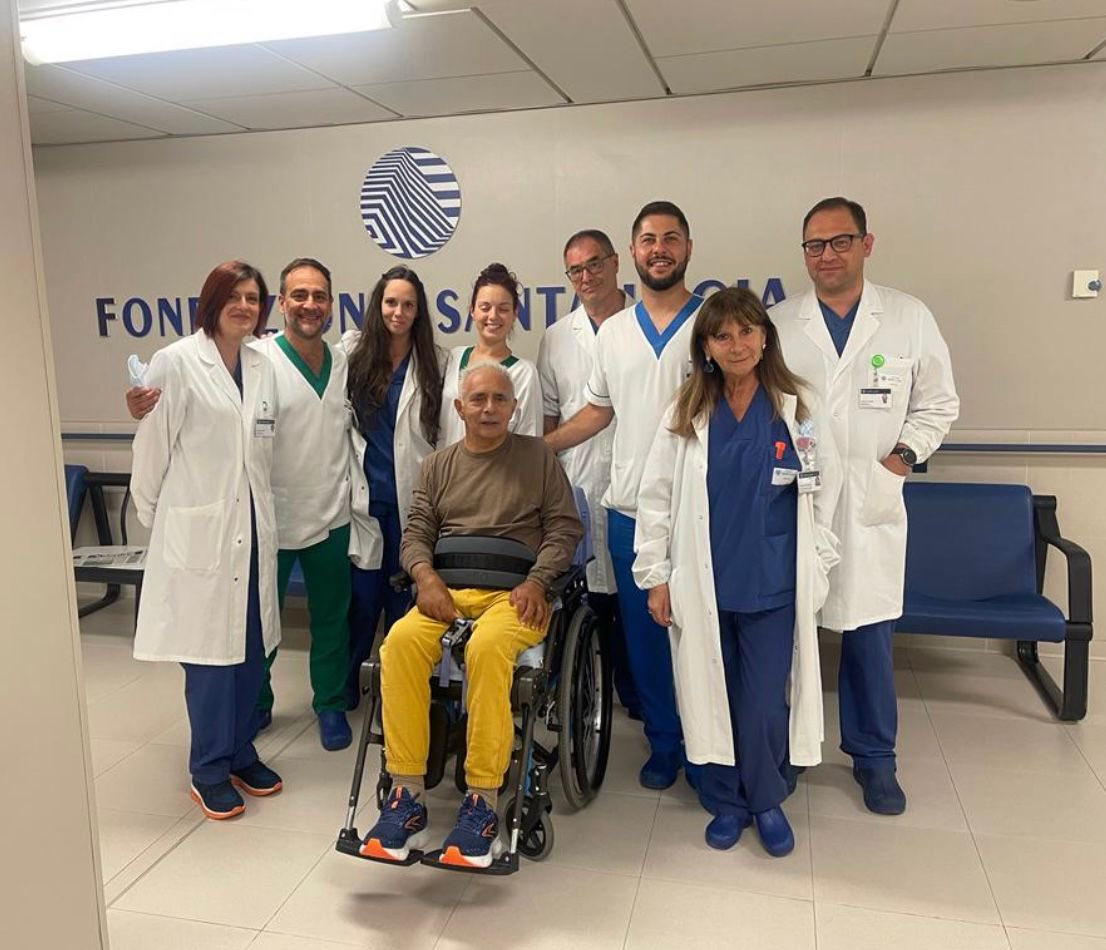
I will be returning to London after six months of hospitalization in Rome at the @SantaLuciaIRCCS. I have been treated with professionalism and kindness by all the personnel of the Neurorehabilitation Unit 1. I am grateful to Italy’s national healthcare system for providing free cure and rehabilitation for me and for all other patients.
Dear Readers,
It is my pleasure to announce WORDTheatre’s benefit performance of my work. This Sunday at The Crazy Coqs, London (June 18th).
Get your tickets here: https://t.co/A5GyTAFVOi
If you can’t make it but want to help, here is a link to my Substack page. Become a paid subscriber today and help keep this show on the road.
https://t.co/kiQhTw7s2S