Our report for March 2026 is out, with the main news being that gccrs will be presenting a talk at Rustconf 2026! We look forward to the event!
https://t.co/YYbuzqOQtK
Here is our report for the first month of 2026, with an interesting little dive into a name resolution problem we fixed this month :)
https://t.co/LC5ODiVyoy
Hi everyone! Here is our last report for the year 2025 and a small update from the team. Thanks again for a very fun 2025 and we look forward to do it all over again :)
https://t.co/8DhCgL5IT3
https://t.co/7pI9wZ8D7T
Short report for the month of August and a recap of the work done this summer - we're full steam ahead working on compiling core and the kernel's crate!
New report for the month of May: https://t.co/bQbqegzy6J
We are making good progress on core and plan on begin testing the Rust code in the kernel at the end of the summer!
Monthly report for the month of March: https://t.co/SVU9dOOQdj
Which mentions some of the work done for supporting specialization in `core` :)
We've upstreamed 600 commits to GCC this month and will continue to do so until 15.1 releases!
Here is our monthly report for February, with more explanations of the features we are currently working on. See you all in Paris tomorrow for Rust In Paris 2025!
https://t.co/KkzAIpPndu
First monthly report of the year with some code snippets of our two main targets (Rust-for-Linux and Rust's core crate) to show the importance of the milestones we are working on:
https://t.co/hlOfgC61Za
Here is our monthly report for the month of December 2024, which includes a small technical dive into the handling of auto traits and the desugaring of for-loops:
https://t.co/zVeem9dXZH
New monthly report for November is out, with a slight dive into type-system fun :) and most importantly contributions from the rustc_codegen_gcc folks!
https://t.co/OSSUbYqhRB
We have written a short technical dive into how we currently reuse Rust components within gccrs, a compiler written in C++, and how we will continue doing so in the future, eventually compiling them using our own compiler. https://t.co/EWm4ciCCab
After 7 years, there will finally be another "Rust All Hands" event where all members of the Rust project come together in person to collaborate on the future of Rust. 🎉
The All Hands will be part of @Rust_NL's "Rust Week 2025" in Utrecht, Netherlands.
https://t.co/zAP2ksV7k6
We have also uploaded our engineering document for the upcoming years of work: https://t.co/Fuwi3IHn4j
This outlines future milestones we will be tackling. The goal is to help us picture when gccrs will start being useful for projects such as Rust-for-Linux or embedded software.
The monthly report for August 2024 is out: https://t.co/qyG6WU0xSw
GSoC is now over, with amazing work from our three students @thisisjjasmine, @bald_chimaev and @_mmahad. They all want to continue working on the project in their free time, which makes us super happy ❤️
As a reminder, here are their Github profiles: please follow them and sponsor them if you can ❤️
https://t.co/nCeBzaEQgR (@thisisjjasmine)
https://t.co/3ujPGxpVVX (@bald_chimaev)
https://t.co/gyAWfzXtMj (@_mmahad)
As a reminder, gccrs uses the polonius-engine Rust crate to do its borrow-checking. This is an old version of the polonius borrow-checker, and not the one being currently developed, but we follow the work closely and aim to help integrate it and crate-ify it as soon as possible!
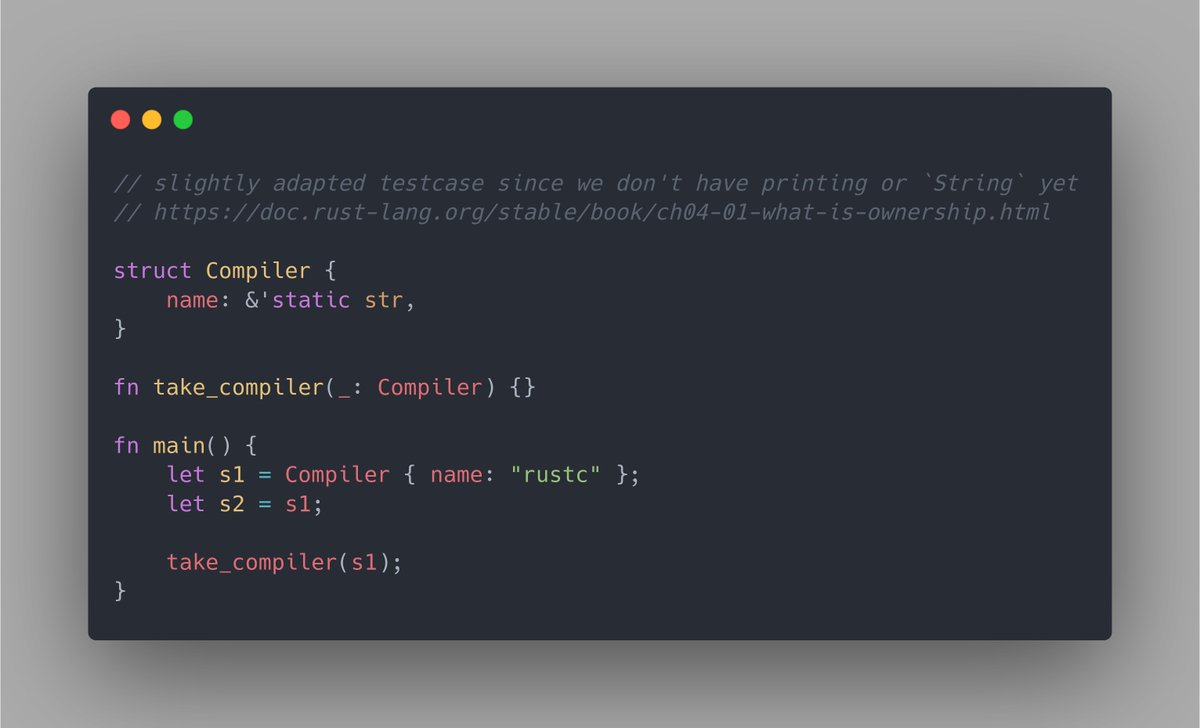
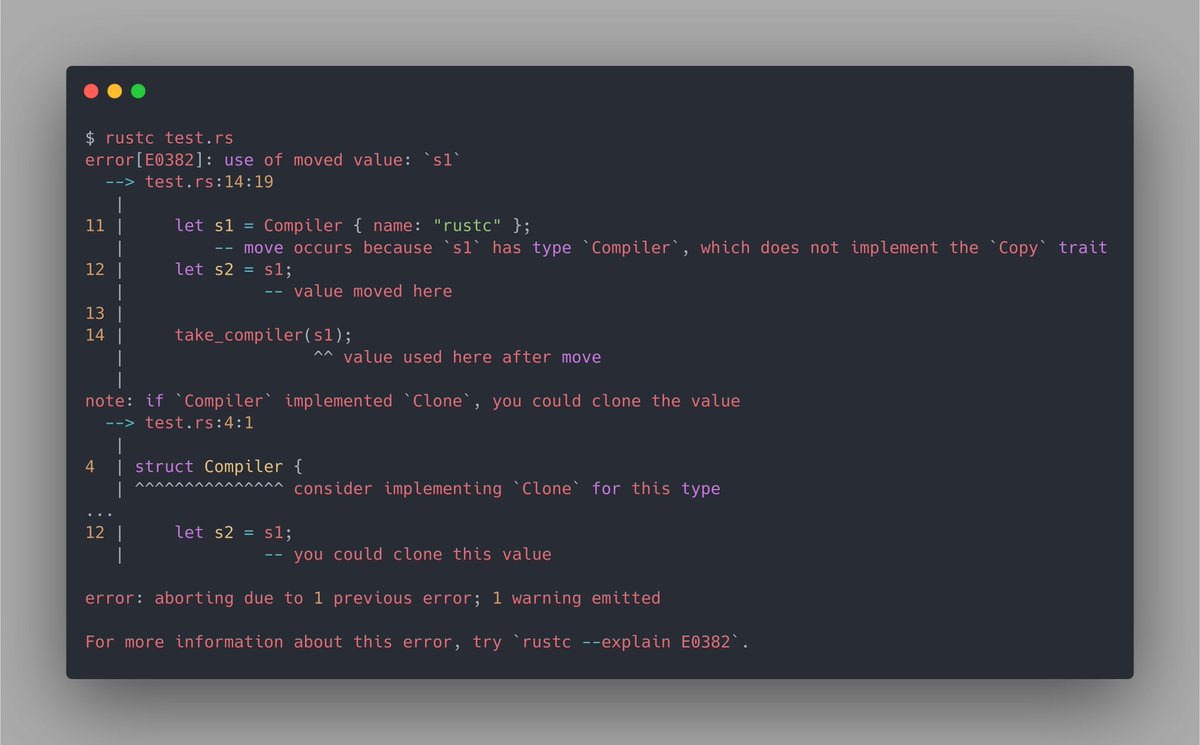
GSoC is over, and thanks to our wonderful students we now have a lot more features and tooling which will help the compiler in the long run. One of those user-facing features is the proper handling of borrow-checker errors, which now have helpful error messages and proper locus!
Of course, we are still nowhere close to how good and helpful rustc's errors are. If anyone is interested in adding helpful hints to our borrow checker errors, please get in touch! This is not critical at the moment, but this is something we'd love to work on