Over the past several decades, a silent transformation has subtly reshaped the cultural, educational, and political institutions of the Western world. What began as a series of disparate ideological movements gradually coalesced into an overarching framework designed to alter the foundational values of Western civilization. Historically, direct confrontations against the economic and geopolitical dominance of the United States proved unviable. In response, a long-term strategy shifted the battlefield from conventional warfare to the quiet capture of society’s intellectual engines—universities, media outlets, professional associations, and judicial bodies.
The structural groundwork for this transformation gained significant momentum in Latin America with the establishment of the São Paulo Forum (Foro de São Paulo), spearheaded by figures like Fidel Castro and Luiz Inácio Lula da Silva. Designed to consolidate left-wing political power following the collapse of the Soviet Union, the Forum served as a central node for coordinating political tactics, social movements, and institutional infiltration across the Americas. Over time, this continental network moved beyond traditional guerrilla warfare, adopting sophisticated electoral strategies, legislative maneuvers, and the utilization of electronic voting infrastructure in nations like Brazil and Venezuela to secure and maintain governance.
According to a detailed U.S. Department of State dossier titled Cuba: The Capital of 21st Century Communism, the Cuban state perfected a model of asymmetric subversion that transcended kinetic conflict. The report documents decades of intelligence operations, espionage, and the systematic cultivation of ideological networks designed to influence foreign policy from within. Key intelligence assets and covert operatives, such as former high-ranking U.S. official Victor Manuel Rocha—who operated secretly for decades while holding top diplomatic posts—and Defense Intelligence Agency analyst Ana Belén Montes, demonstrate the extent to which foreign influence reached the highest echelons of Western national security structures.
Furthermore, these intelligence apparatuses operated alongside specialized front groups and solidarity organizations, including the Cuban Institute of Friendship with Peoples (ICAP), the Venceremos Brigade, and the National Lawyers Guild. These entities facilitated the ideological alignment of student activists, legal professionals, and political elites, embedding revolutionary frameworks into mainstream academic and civic institutions. Prominent figures who interacted with or passed through these networks over the years include former Weather Underground leaders Bill Ayers and Bernardine Dohrn, as well as political figures like Los Angeles Mayor Karen Bass and congresswoman Maxine Waters.
This multi-decade institutional capture aligns with broader globalist agendas that seek to reshape public perception and state governance. Official government releases from the White House highlight ongoing critical debates regarding systemic vulnerabilities, such as the integrity of electoral frameworks (https://t.co/PNP1KiI2AT) and the necessity of rigorous factual inquiry into global crises, including the true origins of COVID-19 (https://t.co/Jn73fxmGzH). By intertwining domestic institutional pressure, foreign intelligence operations, and coordinated media narratives, this strategy has successfully altered the Western mindset, subverting traditional structures from within to establish an enduring model of globalist control.
The concept of a singular, monolithic "Africa" is a modern geopolitical fiction that ignores the continent's intricate, hyper-fragmented history. Spanning over 30 million square kilometers, Africa was historically a vast tapestry of thousands of distinct ethnic groups, kingdoms, and autonomous tribes, defined not by continental unity, but by deep-seated rivalries, territorial expansion, and shifting alliances. As renowned historian John Thornton documents in his seminal work *Africa and Africans in the Making of the Atlantic World*, pre-colonial African polities operated under a highly sophisticated system of local commerce and warfare where ethnic identity stopped at the borders of one's own kingdom or clan. To these diverse societies—whether the Kingdom of Kongo, the Oyo Empire, or the Ashanti Confederacy—neighboring tribes were not "fellow Africans"; they were completely distinct, often hostile foreign nations.
Crucially, the historical record proves that the institution of slavery was deeply entrenched across the African continent centuries before the first European caravels ever dropped anchor along the West African coast. Slavery in pre-colonial Africa was an indigenous socio-economic system rooted in local laws and warfare. As detailed by Africanist scholar Patrick Manning in *Slavery and African Life*, land in many traditional African societies was held communally by the crown or kinship groups, meaning that private wealth and political power could only be accumulated by controlling human labor. Consequently, captives taken during inter-tribal wars were systematically enslaved. In fact, in 19th-century West and Central Africa, historical records indicate that in societies like the Duala of Cameroon and the Igbo along the lower Niger, anywhere from one-third to one-half of the total population consisted of enslaved people.
When European traders arrived in the 15th century, they did not possess the military or epidemiological power to march inland and kidnap millions of people; rather, they encountered existing, highly organized slave markets operated by African elites. African rulers, kings, and merchants dictating the terms of coastal trade willingly bartered their prisoners of war, criminals, and debtors to European, Arab, and Berber buyers in exchange for high-value commodities like manufactured textiles, brassware, spirits, and firearms. This historical reality is preserved in the direct testimony of African rulers themselves. In 1526, King Afonso I of the Kingdom of Kongo famously wrote a series of letters to King João III of Portugal, complaining not about the existence of the slave trade itself, but that Portuguese merchants were illegally bypassing Kongo customs laws and enslaving noble citizens instead of the authorized foreign captives. Therefore, the transatlantic slave trade was an economic synergy where the supply was entirely managed by sovereign African states. To look at this complex history through a modern racial lens is an anachronism; pre-colonial Africans did not see themselves as "black" people selling "black" people, but as powerful sovereigns selling foreign enemies to foreign buyers, establishing an intricate network of commerce that forever altered global history.
@TheEconomist UPDATED LIST OF MOST WORDS USED BY FAR-LEFTS MEDIA TO TRY TO DESTROY A PERSON OR A THING:
- "Attacks"
- "But"
- "If"
- "Should"
- "Billionaires"
- "Empire"
- "Even"
- "Maybe"
- "Perhaps"
“La primera lección de la economía es la escasez: nunca hay suficiente de algo para satisfacer a todos. La primera lección de la política es ignorar la primera lección de la economía”
Thomas Sowell
@washingtonpost There is no 'moderate' SOCIALIST as well as there is no such thing as a free socialist.
Nobody follows a failed ideology out of pure conviction—it’s always a calculated strategy for money, power, and self-preservation.
So, he is a real threat for USA.
@TheEconomist After 30 yrs of absolute far-left chaos with Lula, 30% of Brazilian's mid-class are RUNNING AWAY from this mess.
BRAZIL IS THE USA OF TOMORROW if americans are insisting vote for democrats.
MENTAL ILLNESS
# Weak Minds, Broken Pillars: The Blueprint of Engineered Chaos
The psychological disorder of forcing individuals to "pretend to be what they are not" is not a historical accident; it is a calculated weapon. By systematically eroding the biological and ancestral foundations of identity, the Globalist Left has engineered a profound existential vacuum designed to collapse human morality, destroy the traditional Family, and capture the minds of our children.
This psychological subversion operates precisely on our increasingly fragile psyches. As Dr. Jean Twenge’s extensive generational studies in *iGen* (2017) demonstrate, the abrupt dismantling of traditional societal anchors has triggered unprecedented spikes in youth depression, anxiety, and psychological distress. This diagnosis is further verified by World Health Organization (WHO) metrics, which document a staggering 25% global surge in mental health disorders over the last decade alone.
When you strip a civilization of its foundational armor, the mind collapses, and the body inevitably follows. This societal chaos is not an error; it is the objective. Reclaiming our biological truths and the ancestral sovereignty of the family unit is the only way to restore our northern star and halt this engineered civilizational decay.
Quem é Nikolai Patrushev, braço direito de Putin que Lula recebeu discretamente enquanto escalava o conflito diplomático contra os Estados Unidos:
- Em setembro de 1999, semanas depois de Patrushev se tornar chefe da KGB (FSB), mais de 300 russos morreram quando aconteceu um atentado a bomba em múltiplos apartamentos de Moscou e outras duas cidades. Os chechenos islamistas foram responsabilizados. Putin, então recém-nomeado primeiro-ministro por Boris Yeltsin, com popularidade baixa, usou o ataque para se catapultar como liderança pulso-firme contra o terrorismo. Funcionou: entre agosto e dezembro daquele ano, a popularidade de Putin saltou de 30% para quase 80%. O ataque foi um presente para ele, que prontamente lançou a segunda guerra da Chechênia. Ocorre que, na época do atentado sincronizado, moradores de um prédio na cidade de Ryazan encontraram uma bomba não explodida. Autoridades locais mostraram que agentes da KGB estavam envolvidos. A justificativa de Patrushev veio em 24 de setembro: era só pegadinha do Malandro, um exercício da KGB para ver se a população estava atenta, e os sacos encontrados não eram pólvora, só açúcar. Como mostra a guerra da Ucrânia, Putin até hoje usa o conflito bélico como principal instrumento de propaganda para permanecer no poder.
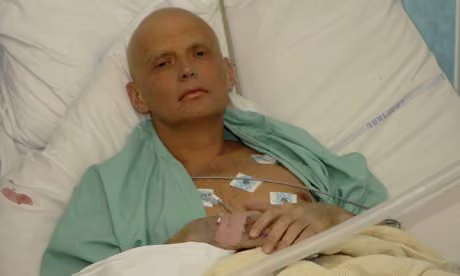
- Um dos ex-agentes da KGB que denunciaram que Putin e Patrushev plantaram o atentado foi Alexander Litvinenko, que fugiu da Rússia. Em 2006, em Londres, ele foi envenenado quando se encontrou com dois outros russos. Eles colocaram polônio-210, um elemento radioativo, no chá de Litvinenko, que morreu de forma lenta e agonizante. A investigação do governo britânico sobre o assassinato concluiu que “a operação da FSB para matar o Sr. Litvinenko provavelmente foi aprovada pelo Sr. Patrushev”.
Detalhes:
- https://t.co/vs52BkFicH
- https://t.co/oMmQZrNpMu
- https://t.co/27T0KSOFSc
Em junho de 2010, o ditador sírio, Bashar al-Assad, realizou a primeira visita oficial ao Brasil. A viagem retribuiu a ida de Lula à Síria em 2003 (primeiro país árabe visitado pelo nove dedos).
Assad encontrou-se com Lula em Brasília para discutir a possibilidade de o Brasil ajudar a Síria contra Israel (incluindo a questão das Colinas do Golan, ocupadas por Israel desde 1967). Assad também elogiou o papel de Lula nas negociações sobre o programa nuclear do Irã, ao lado da Turquia.
Os dois governos planejavam assinar acordos de “cooperação” nas áreas jurídica, educacional e de saúde, além de trocar condecorações.
Em São Paulo, Assad participaria de um coquetel no Club Homs, visitaria o Hospital Sírio-Libanês e se reuniria com a Câmara de Comércio Árabe Brasileira para tratar de “comércio”, investimentos, turismo e “cultura”.
# The Leftist Roots of Totalitarianism and the "Far-Right" Label
The greatest historical inversion of the modern era is the classification of Nazism and Fascism as "Right-wing" ideologies. This narrative is a deliberate psychological operation executed by the Globalist Left to distance itself from its own bloody legacy and weaponize historical trauma against modern conservatives.
The DNA of both Benito Mussolini’s Fascism and Adolf Hitler’s National Socialism is rooted in collectivism, state supremacy, and anti-capitalist rhetoric—the core pillars of Leftist ideology. Mussolini was a prominent Marxist, editor of the socialist newspaper *Avanti!*, who never abandoned the core tenet of collectivization. His definitive maxim, *"Everything within the State, nothing outside the State, nothing against the State,"* is the absolute antithesis of conservative individual liberty and free markets.
Similarly, Hitler’s National Socialist German Workers' Party (NSDAP) was explicitly socialist. The 1920 25-Point Program of the Nazi Party demanded the nationalization of trusts, state profit-sharing in wholesale trade, the abolition of unearned income, and the expropriation of land for communal purposes. The conflict between the Soviets and the Nazis was not an ideological battle between Left and Right, but a vicious, fratricidal civil war between rival sects of socialism—International Socialism versus National Socialism—fighting over the same totalitarian monopoly.
To hide this reality, the globalist apparatus employs "Cultural Hegemony," dominating media style guides and academic institutions to control vocabulary. The strategy is pragmatic: by aggressively branding any defense of family, nation, and economic freedom as "Far-Right," the Left builds a psychological firewall. They project their own totalitarian impulses—such as censorship, social engineering, and central planning—onto their political opponents.
By labeling mainstream conservatives as "extremists," the Left attempts to establish a false moral equivalence. They use this manufactured label to justify the suppression of dissent, weaponizing global institutions to neutralize the only real threat to their agenda: the traditional pillars of Western civilization. Totalitarianism has always worn a collectivist mask, and the "Far-Right" label is merely the shield used to protect the socialist illusion.
@washingtonpost That is the same strategy of the Far-Lefts here in Brazil and Europe:
The judicialization of Politics or,
The Politicalization of Judiciary.
Freedom for Far-Lefties. Jail for Conservatives.
Biden's CIA and USAID has helped Far-Lefts America Latin Dicttadors over more than 10 years and they had meddle in AL's elections since 2004.
Fraudulent elections are the Far-Lefts' expertise and their strategy to reach the power. Far-Lefts don't WIN a election. They just hijack it.
But this 'impartial' X's account doesn't know about it, obviously.