The most expensive part of a hospital bill may never touch the hospital at all.
A patient admitted for care has no way of knowing whether the price on a medical consumable reflects its actual cost or a markup fixed long before it ever reached the ward. That gap in information is, at its core, a public health issue.
A survey of hospital consumables in Maharashtra found an IV infusion set with a trade price of ₹11.05 carrying a printed MRP of ₹325 ; a markup of 2,841%. A syringe procured at ₹6.75 carried an MRP of ₹57.20. A catheter procured at ₹29.41 carried an MRP of ₹310.
These are not elective purchases. Patients cannot compare prices, seek alternatives, or question a number printed on a box while receiving care and the MRP itself is often fixed upstream by manufacturers and distributors, disconnected from the trade price by a wide, unexplained margin. The result is a system where the party bearing the cost has the least information to evaluate it.
The regulatory gap is structural: scheduled medicines are capped under the Drugs (Prices Control) Order, 2013. Most medical devices and consumables are not leaving both the pricing and the information around it almost entirely unmonitored.
A review of these findings and clear guidelines on the permissible gap between trade procurement price and declared MRP have been recommended to the Department of Pharmaceuticals and the NPPA ; a step toward closing not just a pricing gap, but the information gap patients are left to bear alone.
#PublicHealth #GoodGovernance #Leadership #TukaramMundhe
https://t.co/Ye9CVzr8qU
#SundayMusings
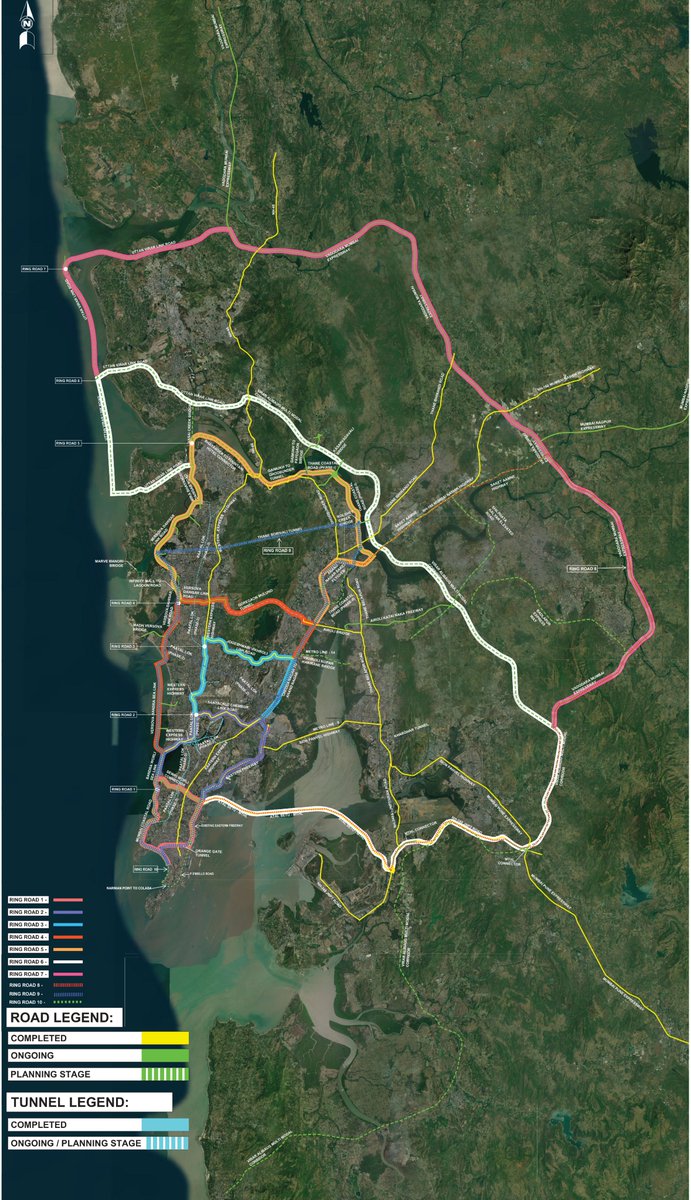
A new way of looking opens a new world. In this case, it's 1,139 km of ring roads across Mumbai — with almost none of it requiring a brand-new highway.
For decades, Mumbai has moved north–south. East–west is where the hours disappear.
The usual answer is another mega-road, built from the first kilometre to the last.
But there is another way: look at what already exists, what is being built, and the missing stitch — a connector, tunnel or sea link — that can turn separate projects into a network.
That is how the rings appear.
Not as 10 fresh highways. As 10 loops created by making infrastructure speak to itself.
Take the Santacruz–Chembur Link Road. Its final 1.4 km looks small on paper. In the network, it completes about 10.3 km of signal-free east–west movement between the two express highways.
The missing link is the project.
The ring is what it unlocks.
Ten orbits, conceived:
Ring 1 · ~27 km · Coastal Road–Sewri Worli–Eastern Freeway–Orange Gate
Ring 2 · ~34 km · Sea Link–WEH–SCLR–EEH–Eastern Freeway
Ring 3 · ~67 km · Sea Link–WEH–JVLR–Eastern Freeway Extension
Ring 4 · ~98.4 km · Versova sea link–GMLR/northern coastal–eastern spine
Ring 5 · ~119.6 km · Dahisar–Bhayandar–Ghodbunder/Thane Coastal–ANS
Ring 6 · ~185.6 km · Mira–Bhayandar–Alibaug–Virar–Thane–eastern spine
Ring 7 · ~273.5 km · Uttan–Virar–Vadodara Mumbai Expressway–Atal Setu
Ring 8 · ~197 km · Atal Setu–Eastern Freeway–ANS–VME–NH-4B
Ring 9 · ~110 km · Coastal chain–Thane Borivali Tunnel–east
Ring 10 · ~27 km · Pethe Marg–P D’Mello/Wadi Bunder–Eastern Freeway–Sewri Worli
Together: about 1,139 km of orbit.
The same road can sit in more than one ring. Ring 1 and Ring 10 are both inner loops of roughly 27 km. Same scale. Different stitch.
And “conceived” is not “commissioned”. A network can fail because of one link nobody owned.
That is the practical insight: one finished missing link can raise the value of several projects that came before it.
There is a second opportunity here: public transport.
Carving BRTS out of an already jammed road asks people to change habits before the alternative has earned their trust.
These rings create new 3+3 corridors. Once a road is ready, a lane can be dedicated to buses where demand justifies it — so people shift because the bus is faster and more reliable, not because the car has simply been squeezed out.
The goal is not just faster vehicles. It is more people moving more seamlessly — and time returned to families.
See the system. Fund the stitch. Build the missing link.
Then let the loop — and the bus — prove what it can do.
A different way of looking opens a different city.
#MumbaiInMinutes #RebootingMumbai #ReshapingMMR #MMRDA #UrbanMobility #SystemsThinking #PublicTransport
Scan the QR to join AISA
Join the movement and to continue this struggle for education and democracy that brought a government of dictators to its knees
IF NOT US, WHO?
IF NOT NOW, WHEN !
I will be joining the CJP members in Delhi on 6th June if nothing changes by 5th June. Any self respecting Minister should resign if things go so wrong... Not to mention the effect on millions of young lives and in fact the future of India.
#CockroachJantaParty #CJP #SonamWangchuk
Please share; No copyright
VTTQT Airbus AirIndia plane took off from Nagpur-Mumbai and in 10 minutes its Right engine made an unbearable noise heard inside the cabin. It lasted for 45 mins. Landed with our hearts in our mouth. @VishnuNDTV@airindia@DGCAIndia@RamMNK
Something strange is happening in India's stock markets
In 2025, 63% IPO money raised didn't go to companies, but went to promoters and private equity
And this is not by accident, I spent weeks digging SEBI filings to understand how IPOs are rigged, here's what I found
1/12
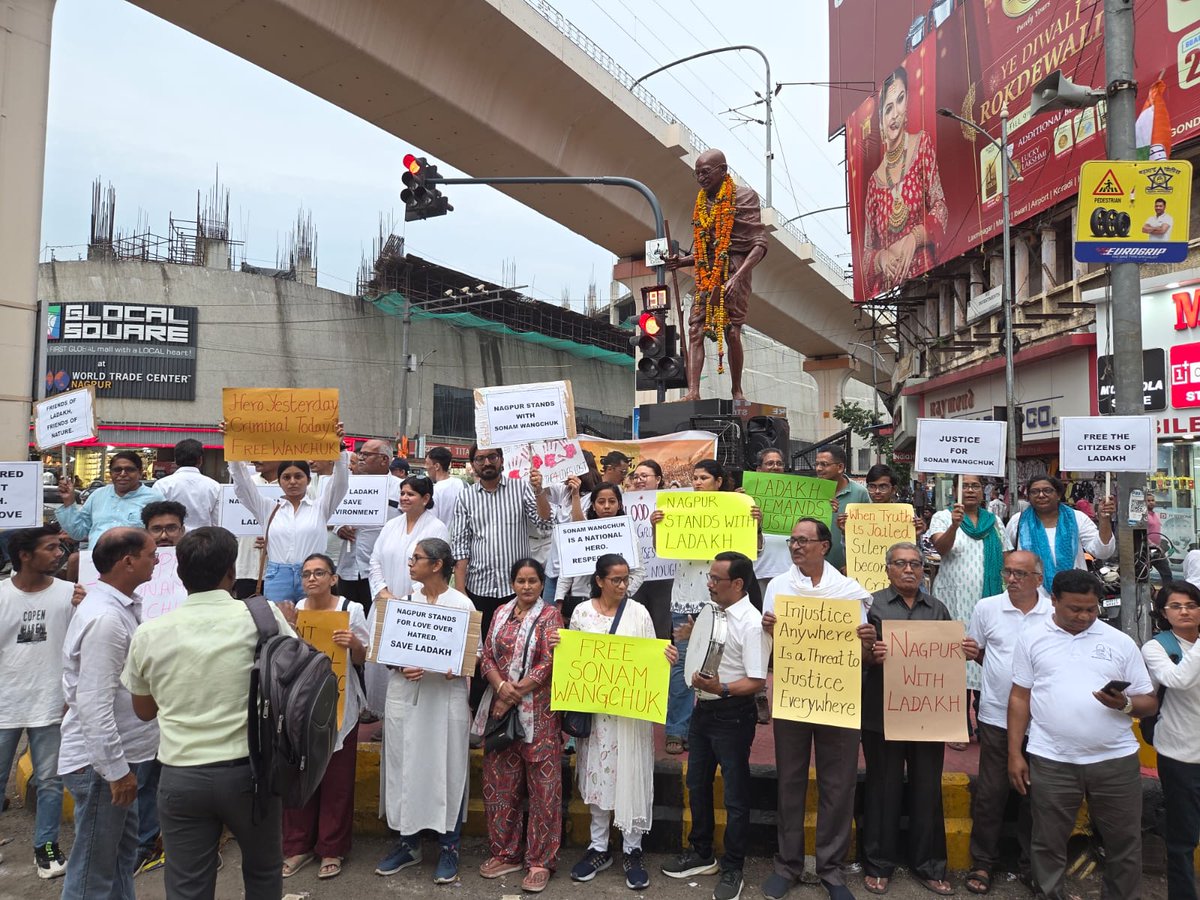
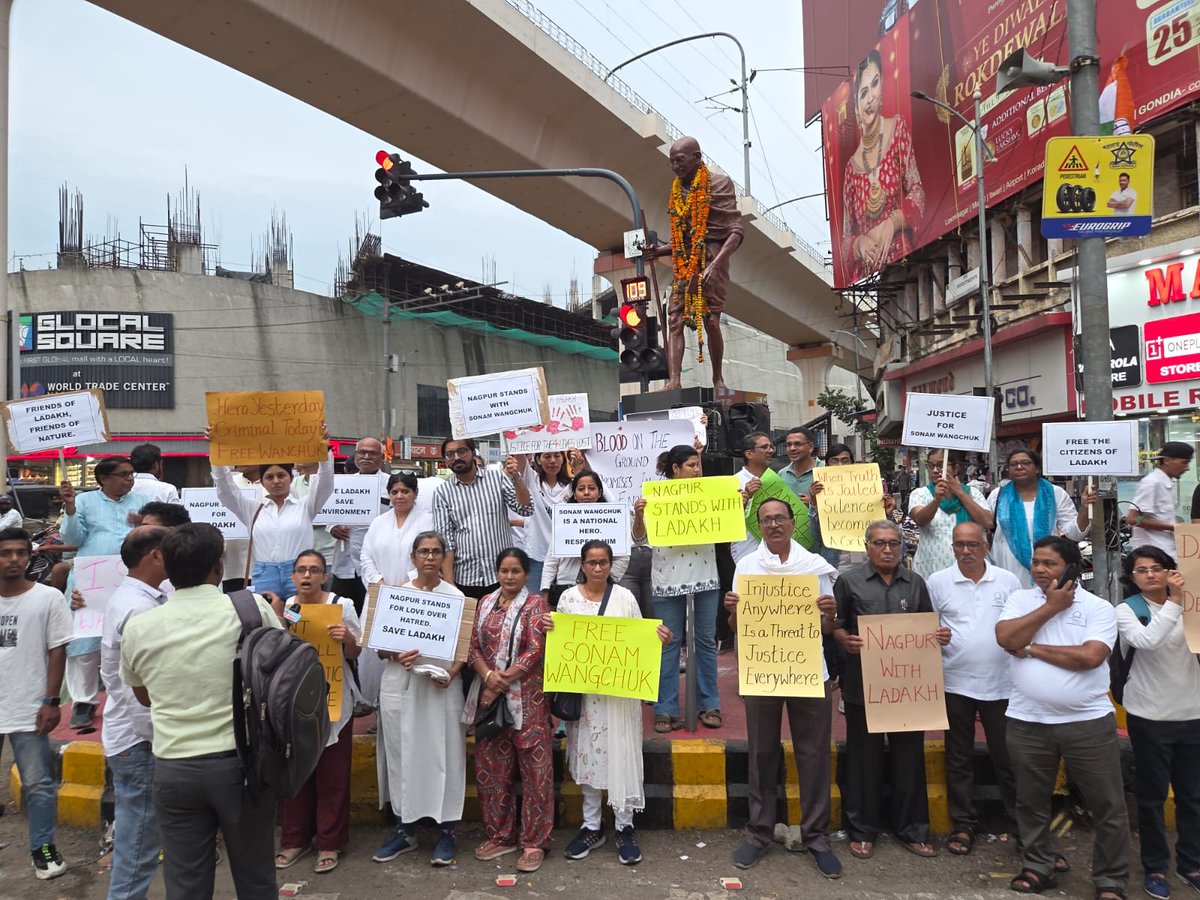
Support for Sonam Wangchuk In Nagpur: Greens of Nagpur and concerned citizens united in a Peace March demanding justice for Sonam Wangchuk, visionary scientist and climate activist imprisoned for standing up for Ladakh Statehood and environment. His voice cannot be silenced. #StandWithSonamWangchuk #PeaceMarch #nagpurnews #nagpursupportswangchuk @Wangchuk66
I have sent this representation for the immediate release of Shri Sonam Wangchuk to the President of India, Prime Minister of India, Home Minister, Law Minister of India, and the LG of Ladakh, with a cc to DC Leh.
The ‘law of unintended consequences’ seems to be operating stealthily in the prevailing tariff war unleashed by the U.S.
Two examples:
The EU may appear to have accepted the evolving global tariff regime, responding with its own strategic adjustments. Yet the friction has nudged Europe to rethink its security dependence, leading to higher defence spending in France and Germany. In the process, Germany has moderated its fiscal orthodoxy, which may well catalyse a resurgence in Europe’s major economies. The world could gain a new engine for growth.
In Canada, long hampered by notorious internal trade barriers between its provinces, steps are now being taken to dismantle them, bringing the country closer to a common market and enhancing economic resilience.
Both these ‘unintended consequences’ could become long-term positives for global growth.
Shouldn’t India too seize this moment to shape a virtuous consequence for itself? Just as the 1991 forex reserves crisis triggered liberalisation, can today’s global ‘Manthan’ over tariffs yield some ‘Amrit’ for us?
Two strong steps we can take today are:
1. Radically Improve Ease of Doing Business
—India must go beyond incremental reform and create a genuinely effective single-window clearance system for all investment proposals.
—While states control many investment regulations, we can begin with a coalition of willing states aligning with a national single-window platform.
—If we demonstrate speed, simplicity, and predictability, we can make India an irresistible destination for global capital in a world seeking trusted partners.
2. Unleash the Power of Tourism as a Forex Engine
—Tourism is one of the most underexploited sources of foreign exchange and employment.
—We need to dramatically accelerate visa processing, improve tourist facilitation, and build dedicated tourism corridors around existing hotspots, offering assured security, sanitation, and hygiene.
—These corridors can serve as models of excellence, encouraging other regions to emulate and raise national standards.
And a broader action agenda to build on these pillars:
Liquidity & Support for MSMEs; Infrastructure Investment acceleration; A Manufacturing Push, via enhancement and expansion of the scope of PLI schemes; Rationalise import duties so that duty on manufacturing inputs are lowered and assist in improving our competitiveness.
Let the unintended consequences we create be the most intentional and transformative ones of all.
We cannot fault others for putting their nations first. But we should be moved to make our own nation greater than ever.