Remembering the time my dumbass cat snuck out and I chased him out to the alley and he was like evading me and it was late at night and I was worried he’d run off and get lost or hurt. I was chasing him around this car mad as hell and then suddenly we heard this noise and both
Let me trace the timeline here because nobody's connecting it.
Step 1: Scrape the entire internet. Every book, every article, every conversation, every piece of art, every forum post. Do it without asking. Do it without paying.
Step 2: Train a model on all of it. Call it "artificial intelligence."
Step 3: Go to BlackRock's Infrastructure Summit and announce: "We see a future where intelligence is a utility, like electricity or water, and people buy it from us on a meter."
Step 3 is where you sell people's own knowledge back to them. On a meter.
They took the collective output of human thought, compressed it into a model, and now they want to charge you by the token to access a version of what you and everyone you know already created.
One Reddit user put it perfectly: "They stole all this data from us, the people, our life's work, creativity, art, by devouring the internet and blowing through all copyright laws. Now they want to sell it back to us in the form of a utility."
Imagine if someone photocopied every book in the public library, burned the library down, and then opened a subscription service for the copies.
That's the metered intelligence business model.
And they're pitching it to infrastructure investors as though they invented water.
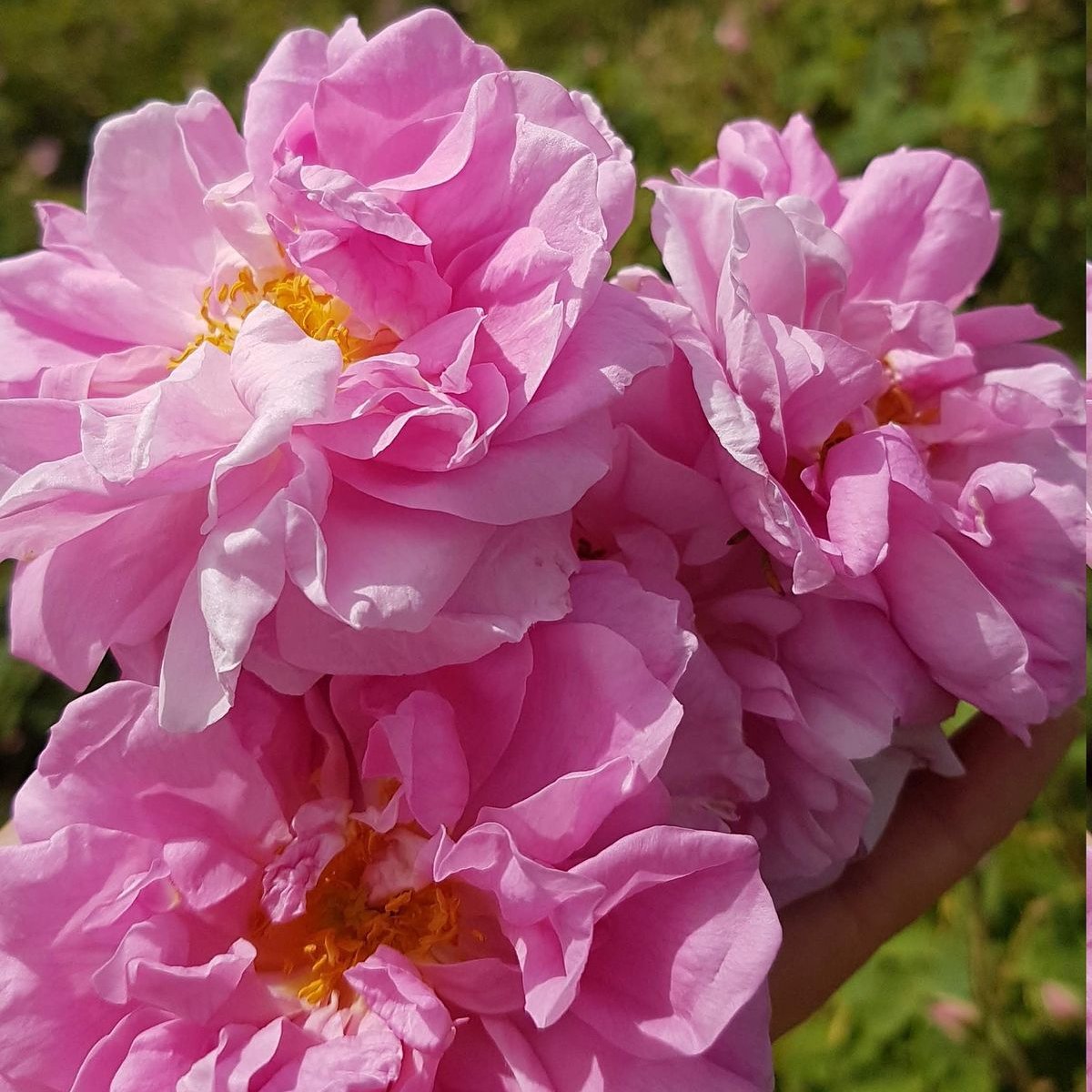
🌹🏵️Rose Oil Thread🏵️🌹
🧵
Bulgarian Rose Oil (Rosa Damascena) is known for having the highest vibrational frequency of all essential oils, measured around 320 MHz,
significantly higher than most other oils (often 52-100 MHz range) and human baseline (around 66 MHz), which gives it immense therapeutic power for emotional balance, stress relief (lowers cortisol), skin health, and elevating overall body frequency.
Boomers five years ago: “I DO NOT CONSENT TO MY IMAGE OR POSTS BEING USED BY MARK ZUCKERBERG FOR META, FACEBOOK, INSTAGRAM, OR WHATSAPP TO SELL MY DATA. Like and share if you agree!”
Boomers today, for some reason: “hey I just uploaded all your baby pictures to ChatGPT and you and all your cousins look like penguins isn’t this cute I’m uploading all the grandkids next”
I was at a doctor’s appointment once and the nurse asked me what I had eaten that day I said “uhh just a coffee and a donut” and she looked at me and said “like a cop?” and she honestly ate me up so bad I will never forget her.
What a quote from Carl Jung:
"What is to come will be created in you and from you. Hence look into yourself. Do not compare, do not measure. No other way is like yours. All other ways deceive you and tempt you. You must fulfill the way that is in you."
In 1935, two American doctors examined seven women's ovaries and saw small lumps. They called them cysts and named the disease after them. They were wrong. It took 91 years to fix.
What we called PCOS is now Polyendocrine Metabolic Ovarian Syndrome (PMOS), announced today in The Lancet by an international panel of doctors and patients. The renaming followed more than a decade of consensus work and 22,000 patient and clinician survey responses.
The lumps Stein and Leventhal saw were never cysts. Modern imaging shows they were follicles, the tiny sacs inside the ovary that grow and release an egg each month, frozen partway through by a hormonal imbalance. PMOS is a multi-system disorder centered in the endocrine system, the body's network of glands that produces hormones like insulin (controls blood sugar), cortisol (the stress hormone), and thyroid hormones (set the body's metabolism). The ovary trouble flows downstream from there.
The naming choice is not academic. When doctors hear "ovary" in a diagnosis, they look at the ovary. "Metabolic" and "endocrine" send them to the whole body.
PMOS affects roughly 1 in 8 women worldwide, more than 170 million people. The WHO estimates 70% have never been diagnosed. Among those who do, 1 in 3 wait more than 2 years, and nearly half see 3 or more doctors first. The CDC reports more than half of women with PMOS develop type 2 diabetes by age 40, a risk 5 to 10 times higher than women without the condition. Around 37% have clinically significant depression, compared with 14% in women without it. Anxiety runs at 42% versus 8.5%.
A label born from a 1935 look at seven ovaries is finally going away. The new diagnostic guidelines roll out fully in 2028. By then, a woman walking into a clinic with these symptoms should hear questions about her blood sugar and her mood alongside her cycle. Those are the parts of the disease the old name hid for 91 years.