🦁 Ansems Dog
called by 1@TheLionCalls
🪙 | 𝗦𝗼𝗹𝗮𝗻𝗮
Ansem is the hottest meta in the market right 5so check out his dog called $ZEUS.
It's a new launch but chart looks pretty solid and it looks like it has stabilized so I'll advise you find a good entry here. DYOR though.
https://t.co/MtmEao1s5X
#ansem #bitboy #crypto #iran
📉 #Bitcoin is slipping ahead of the Fed decision as traders reduce risk and prepare for potential volatility.
With markets also focused on Kevin Warsh's debut, key levels could come under pressure as macro uncertainty takes center stage.
👉🏼 Read more: https://t.co/2yYSjOWa4i
If you told me a few years ago that people would be discussing 24/7 trading for SpaceX exposure, I would've assumed we were still a long way off.
Yet here we are.
Think we are still early though, and still plenty of things to prove, but the pace at which RWAs are becoming actual products instead of just narratives is hard to ignore.
💡 $BTC remains in focus as ETF outflows weigh against ongoing strategy-driven buying ahead of key CPI data.
For traders, the tug-of-war between institutional flows and macro uncertainty is setting the tone for near-term volatility.
⬇️ Read more: https://t.co/2cZaKY2Dfd
$DOGE currently at 0.0889$.
As I've been stating multiple times any buy below 0.095$ is a good one if you believe market will ever recover.
I don't usually buy spot on meme coins, mostly trade them buy as I've shared publicly I now own some spot.
They forgot about the OG, I dont
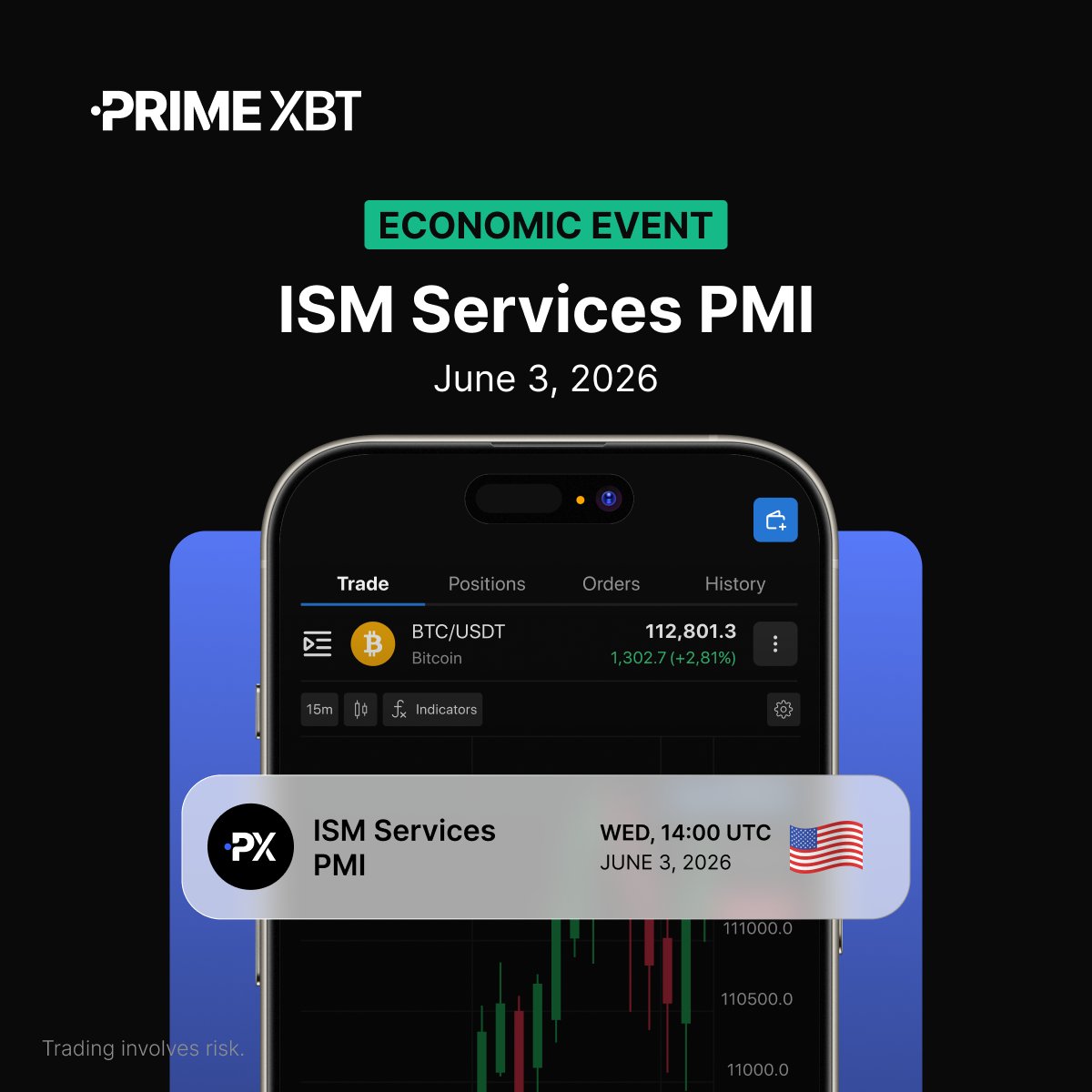
🇺🇸 US ISM Services PMI arrives at 14:00 UTC
ISM Services PMI is expected to rise to 53.8 in May, up from 53.6 in the prior month.
Attention will be on the prices paid sub-component, which registered 70.7 in April, marking the highest reading since May 2023, pointing to increasing inflationary pressures.
Markets to watch: #USD #USDJPY #XAUUSD #DJIA #SPX
𝗡𝗩𝗜𝗗𝗜𝗔'𝘀 𝗡𝗶𝗻𝗲𝘁𝘆 𝗣𝗲𝗿𝗰𝗲𝗻𝘁 𝗣𝗿𝗼𝗯𝗹𝗲𝗺 (𝗔𝗻𝗱 𝘁𝗵𝗲 𝗖𝗵𝗶𝗽 𝗧𝗵𝗮𝘁 𝗙𝗶𝘅𝗲𝘀 𝗜𝘁)
This morning in Taipei, Jensen Huang stood on the GTC stage and unveiled RTX Spark
▫️ Twenty Arm cores designed with MediaTek
▫️ Blackwell GPU with 6,144 CUDA cores
▫️ 128 GB of unified memory
▫️ 1 petaFLOP of AI performance, all on a single TSMC 3nm package
Laptops from Dell, HP, Asus, Lenovo, MSI, and Microsoft are coming this fall. Jensen called it the reinvention of the personal computer. The market took the headline at face value and bid the stock up
If you only read the headlines, this is the story of NVIDIA picking a fight with Intel and AMD. If you read NVIDIA's filings, it is the story of the most valuable company in the world quietly deciding it cannot stay this concentrated forever
𝗧𝗵𝗲 𝗻𝘂𝗺𝗯𝗲𝗿 𝘁𝗵𝗮𝘁 𝗱𝗿𝗶𝘃𝗲𝘀 𝗲𝘃𝗲𝗿𝘆𝘁𝗵𝗶𝗻𝗴
Strip away the marketing and one statistic explains every move NVIDIA has made in the last twelve months. In fiscal 2026, NVIDIA generated $215.9 billion in revenue. Roughly $193.7 billion of that, around 90 percent, came from a single business line: data center. Gaming added $16 billion. Automotive added $2.3 billion. Do you see the problem?
That is a phenomenal position to be in while the AI capex cycle is running hot. It is a less comfortable one when you remember that two unnamed customers accounted for 39 percent of revenue in a single quarter last year. Concentration risk like that does not show up in the share price right now because Jensen keeps shipping Blackwell faster than hyperscalers can plug it in. But the question quietly forming behind every NVDA earnings call is the same. What happens when the data center cycle catches its breath
RTX Spark is the answer Jensen is building before that question gets loud. Well at least he thinks it is Time will tell
𝗪𝗵𝘆 𝗽𝗲𝗿𝘀𝗼𝗻𝗮𝗹 𝗰𝗼𝗺𝗽𝘂𝘁𝗲𝗿𝘀, 𝗮𝗻𝗱 𝘄𝗵𝘆 𝗻𝗼𝘄
The PC CPU market is roughly a $200 billion industry, by Jensen's own framing on stage today. AMD and Intel between them own essentially all of the x86 portion of it, with Apple holding the high end of consumer notebooks and Qualcomm beginning to chip away at Windows on Arm. NVIDIA has never sold a CPU into a consumer laptop. Until today
The opening here is not random. Intel is bleeding share. Mercury Research has Intel's unit share of client CPUs at 70.4 percent in Q1 2026, down from 75.9 percent a year earlier. The revenue share gap is wider still: AMD has climbed to 31.4 percent of client CPU dollars, with even higher share in the premium desktop segment where margins live. Intel admitted on its own earnings call that it cannot meaningfully counterpunch until late 2026 or 2027 at the earliest. (They do have the Trump factor though)
That is the window. NVIDIA is walking through it with a chip that does not try to win on traditional benchmarks. It tries to win on a different axis entirely: local AI
𝗧𝗵𝗲 𝘁𝗵𝗶𝗻𝗴 𝗝𝗲𝗻𝘀𝗲𝗻 𝗶𝘀 𝗮𝗰𝘁𝘂𝗮𝗹𝗹𝘆 𝘀𝗲𝗹𝗹𝗶𝗻𝗴
Read the spec sheet for RTX Spark carefully. 128 GB of unified memory is not a number you ship for spreadsheets and web browsers. Neither is 1 petaFLOP of AI compute. The pitch underneath the chip is that large model inference, and increasingly large model training, are about to move out of the cloud and onto the device in front of you. Agents. Agentic. All things Agent
This is a real shift if it happens, and a fantasy if it does not
The case for it is straightforward. Agentic AI workloads, assistants that watch your screen, take actions on your behalf, hold long context windows about your work, are expensive to run on someone else's GPU and slow if every keystroke has to round trip to a data center. Local execution solves latency, privacy, and unit economics in one move. Microsoft sees this clearly enough that Satya Nadella is sharing the stage with Jensen at Build tomorrow. They needed to save Co-pilot anyway
The case against it is that not every user wants a workstation under their desk. Most consumers will never train a model. Most will not even realise they are running one. The market for laptops that can actually exploit 128 GB of unified memory is probably narrower than NVIDIA's slide deck suggests, at least for the first few generations of product
But that does not have to matter. NVIDIA does not need every user to train models locally for RTX Spark to work. They need enough developers, enough enterprise buyers, and enough premium consumers to want a machine built for the next workload before the rest of the industry has one. Apple did exactly that with the M1 in 2020. Five years later, it changed the shape of the entire laptop market
𝗧𝗵𝗲 𝗜𝗻𝘁𝗲𝗹 𝗽𝗮𝗿𝗮𝗱𝗼𝘅
One detail makes this story stranger and more interesting. Last September NVIDIA invested $5 billion in Intel common stock at $23.28 per share, and the two companies announced a multi generation custom CPU partnership. Intel was going to build x86 RTX SoCs for consumer PCs and custom NVLink Xeons for data centers
Eight months later NVIDIA stood on a stage and unveiled a direct competitor to that exact product, on Arm, on TSMC silicon, not on Intel's fabs. The collaboration has not been cancelled. The official line is that x86 RTX SoCs are still on the way. But the message to investors is unmistakable. NVIDIA wants both the Arm and the x86 sides of the consumer PC roadmap, and is willing to compete with its own equity stake to get them
That is not a hedge. That is a company making sure it owns whatever wins
𝗪𝗵𝗮𝘁 𝘁𝗵𝗶𝘀 𝗺𝗲𝗮𝗻𝘀 𝗳𝗼𝗿 𝘁𝗵𝗲 𝘁��𝗲𝘀𝗶𝘀
NVIDIA bears have spent two years waiting for the data center growth rate to break. It has not. Forward guidance for Q1 FY27 is $78 billion, up from $44 billion the year before. The Blackwell and Rubin order book is reportedly north of $500 billion. That cycle is not breaking this year, and probably not next year
What RTX Spark does is buy NVIDIA an answer for the year after it does break. Even if local AI never becomes the universal default Jensen pitched today, a meaningful share of the $200 billion PC CPU market is a credible next leg. Five percent of that market at premium pricing would add roughly $10 billion in revenue at gross margins that should hold close to NVIDIA's existing 75 percent. That is a Gaming segment built from scratch, before Spark has even broadly shipped
The data center music will eventually slow. It has not yet, but it will. Today, Jensen showed the market what he plans to play next
DYOR
RR2 Capital