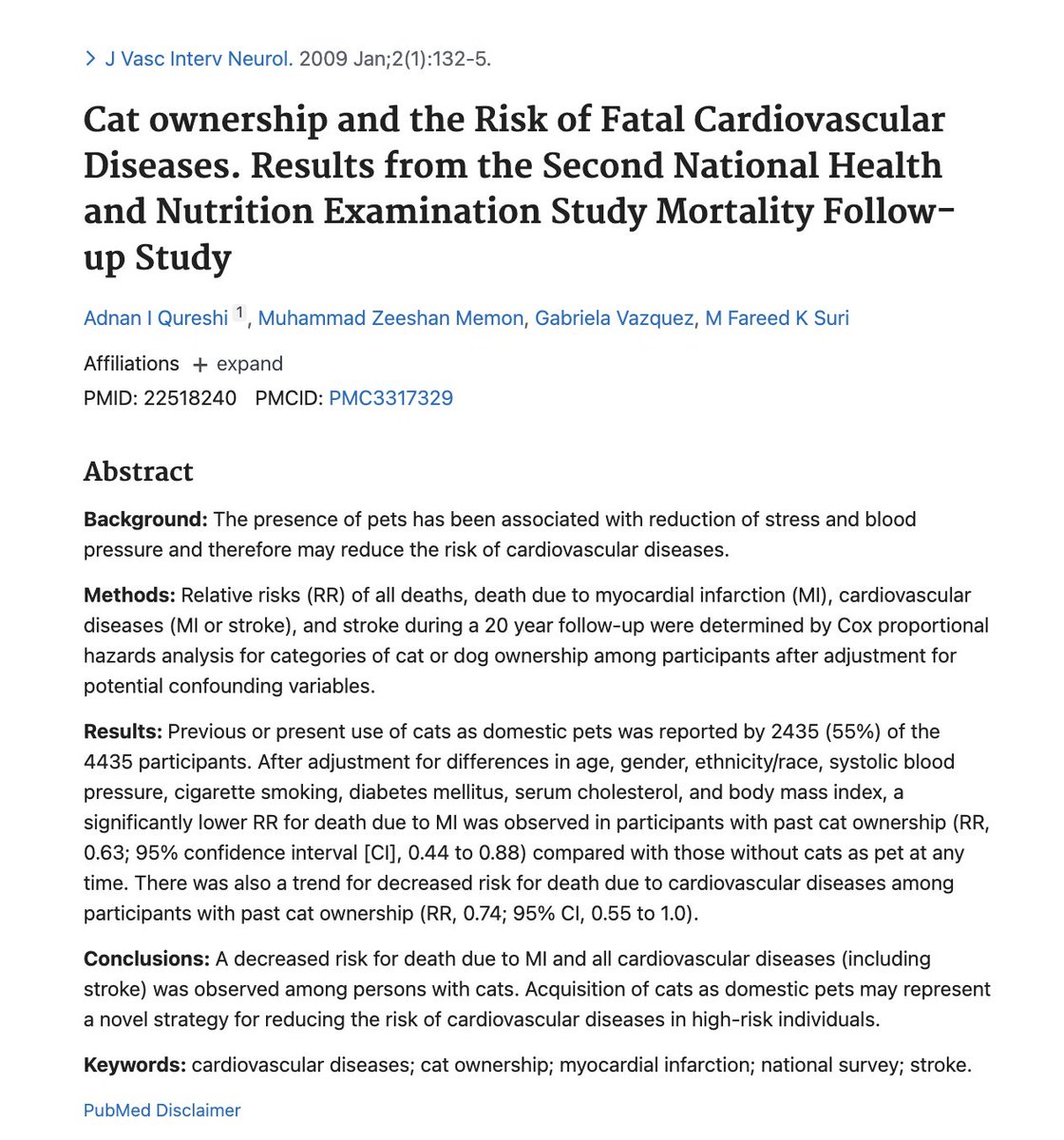
Cat owners have a 30 percent lower risk of dying from a heart attack. A study published in the Journal of Vascular and Interventional Neurology analysed data from 4,435 adults followed over 20 years in the Second National Health and Nutrition Examination Study and found that people who had owned a cat at any point had significantly lower cardiovascular mortality.
The study was led by Adnan Qureshi at the University of Minnesota. He found that cat owners had a 30 percent lower risk of death from myocardial infarction and a lower risk of death from all cardiovascular diseases combined, after adjusting for age, sex, race, blood pressure, cholesterol, diabetes, smoking, BMI, and income. The effect held across every subgroup tested.
The mechanism is likely stress reduction. Cats, unlike dogs, do not need to be walked, which removes the exercise explanation. What they do provide is companionship, tactile contact, and a calming presence that lowers the baseline stress level in the home. Studies on pet interaction have shown that stroking a cat lowers cortisol and blood pressure within minutes, and those small daily reductions compound over years.
The study could not determine whether it was the cat that produced the benefit or whether people who choose to own cats have personality traits that independently protect against heart disease. But the size of the effect, 30 percent, and the length of follow-up, 20 years, made the finding hard to dismiss as coincidence.
A cat does not exercise with you, does not cook for you, and does not remind you to take your medication. It sits on your chest and purrs, and the 20-year data says that is enough. https://t.co/suc69ZN5tM