this account consists of:
- my own attempt at genetics, daily logs, 'genetic diary'
- random attempts of other populations qpadm
- source-based deep dives into populations
- interesting stories related to genes, populations, and the science of it
always open to correction
INQUIRY: Shum Laka samples should not be the primary sample used to model people with primarily west african ancestry and should be calibrated with other samples
'african hunter gatherer' is usually a broad term for san, mbuti and aka pygmies (basically populations before the bantu expansion)
i then played around with DNAgenics' g25 generated (disclaimer, g25 is not entirely accurate) coords and used two calcs, one brought up Baa01
UNSOLVED MYSTERIES:
why would a sample in qpadm reject the original 'onge' source but present as onge in certain g25 runs?
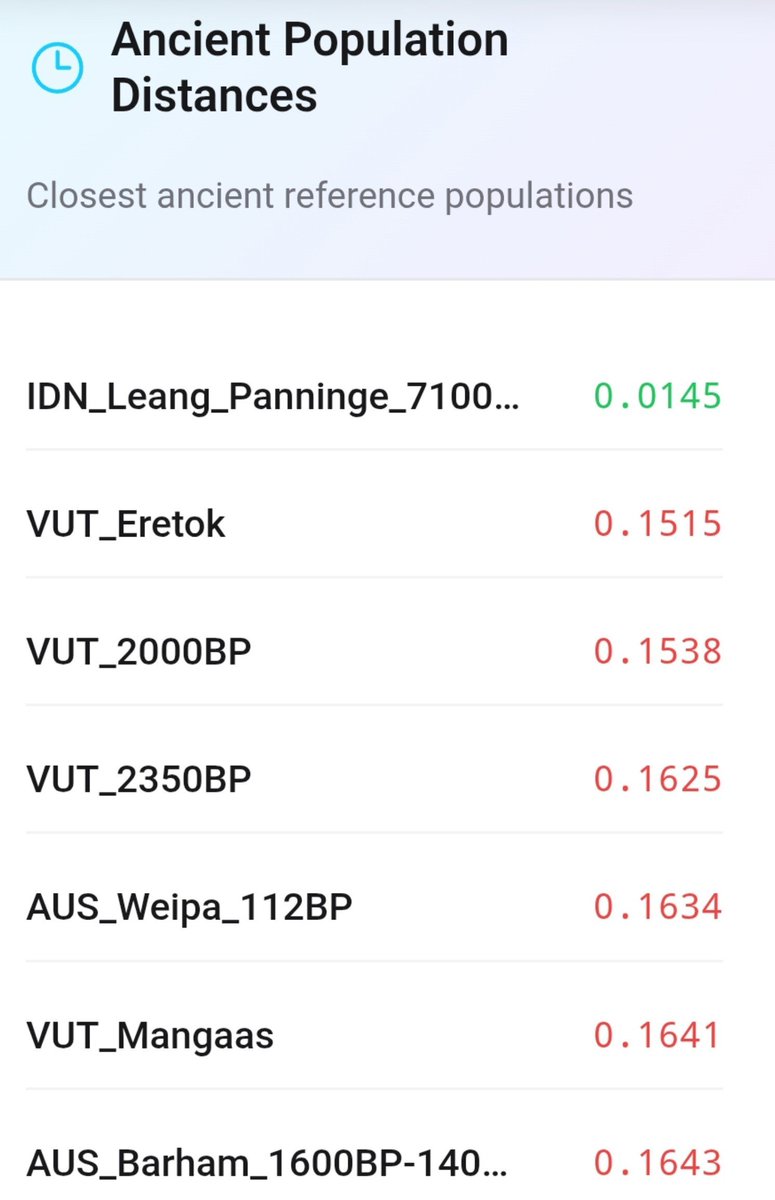
(yes, i am aware of the low distance, it's just amusing)
On Yayoi-Emishi-Ainu🧵
1. Yayoi people ≈ merger of Western Jōmon & mainland groups
2. Emishi & Ainu ≈ primarily derived from Eastern Jōmon +additional components (Okhotsk etc.)
3. Emishi & Ainu are NOT identical, but share partial direct ancestry: Satsumon; Pre-Proto-Ainuic?
WHY AM I SO AGAINST THE OVERRELIANCE OF HAPLOGROUPS? & bonus, information about my own haplogroup.
if you've ever traversed down the world of online population genetics, you'll find yourself split into two, or rather three camps.
a) people who focus on autosomal dna
On the formation of Yayoi people:
They arose by the merger of (western) Jōmon & mainland groups. Some Yayoi-affilated samples had very high Jōmon ancestry (55–95%), others ranged 15–35%; including in IA Korea. Many also carrying yDNA D1a; evidence for fusion, not replacement.