La Universitat de Lleida ha lliurat avui els premis extraordinaris de graus i màsters corresponents al curs acadèmic 2024-2025 i de doctorat dins la convocatòria 2025 per a tesis defensades durant el curs 2023-24. https://t.co/UyvkMfcSio
This “study” looks serious.
It has an abstract, authors, even affiliations.
But read it carefully - it’s pure satire.
And it brilliantly exposes one of the biggest flaws in bad science: confusing correlation with causation.
“Over 90% of autistic children consumed breast milk or formula milk.”
Sounds alarming - until you realize:
over 90% of all children consume breast or formula milk.
That’s not a discovery.
That’s basic biology.
The fake authors - I. M. Amoron, U. R. Gullible, N. O. Control - mock real-world habits of pseudoscientific papers: no controls, no confounders, no significance, but big claims.
Exactly how misinformation about vaccines, food, or chemicals spreads.
And then there’s this gem: 👇
A “Letter to the Editor” mourning the loss of a control group that only consumed saline. “We are beside ourselves.”
Dark humor - but also truth.
You can’t always test nutrition or medicine by comparing it to… nothing.
Both jokes share one message:
Bad science isn’t funny when it drives public fear.
It’s what happens when people demand “gold-standard” trials without understanding how science actually works.
The moral? You can always find a “correlation” if you look hard enough.
Correlation is easy.
Causation is hard - and that’s why science demands evidence, not coincidence.
So next time you see a viral “study” that blames something ordinary for a complex condition…
ask two questions:
Was there a control group?
Did they prove causation - or just correlation?
If not, congratulations - you just passed your first course in critical thinking.
Humor can be a powerful teaching tool.
These parodies remind us that critical thinking isn’t optional - it’s survival.
Because behind every “funny” fake study, there’s a real one being misused by someone who doesn’t get the joke.🧠
Thank you @IntegralAnswers for this example.
Ecomitos, de @rescodedios, molt recomanable! Dues frases clau:
“Nuestra sociedad es rica en líderes de opinión, pero pobre en líderes de conocimiento”
“creo que quien afirma que los árboles <<lógicamente deben tener sentido del gusto>> no debería andar por ahí libremente”
Everyone talks about the energy transition.
But few dare say the obvious:
If your grid isn’t low-carbon 24/7,
You haven’t transitioned.
It’s not about feelings. It’s about emissions.
It’s easy to look green at noon.
Solar is shining. Wind is blowing.
You post a nice graph on LinkedIn.
But what happens at 9pm?
When demand is high - and renewables drop?
Spoiler: you burn gas or coal.
A real transition isn’t about the peak.
It’s about the base.
It’s about the backup.
It’s about the whole system working all day, all year.
Green sometimes ≠ Green.
That’s why countries with 24/7 low-carbon electricity share two things:
🇫🇷 France → Nuclear.
🇸🇪 Sweden → Hydro & Nuclear.
🇨🇭 Switzerland → Hydro & Nuclear.
Engineering.
What doesn’t work?
👉 Overbuilt renewables with no firm backup.
👉 Politicians banning nuclear while importing coal.
👉 Energy debates driven by ideology, not physics.
It’s time to be honest:
If you shut down nuclear
→ You burn more gas.
If you block new hydro.
→ You stall clean growth.
If you delay grids & storage.
→ You waste renewable power.
No transition there.
24/7 low-carbon power isn’t optional.
It’s the foundation of everything:
🏭 Clean industry
🚘 Electric transport
🏡 Low-carbon heating
⚡ AI, servers, grids, cities
No electricity → no decarbonization.
We don’t need more targets.
We need systems that actually deliver.
The only energy transition that matters
is one that runs all the time,
without carbon.
No exceptions. No excuses.
So next time someone says “we’re 80% renewable” - ask: At midnight? In winter? During a wind drought?
Because climate doesn’t care about averages.
It cares about every single hour.
Bottom line:
✅ 24/7.
✅ At scale.
✅ Low-carbon.
That’s a real energy transition.
Everything else? A delay disguised as progress.
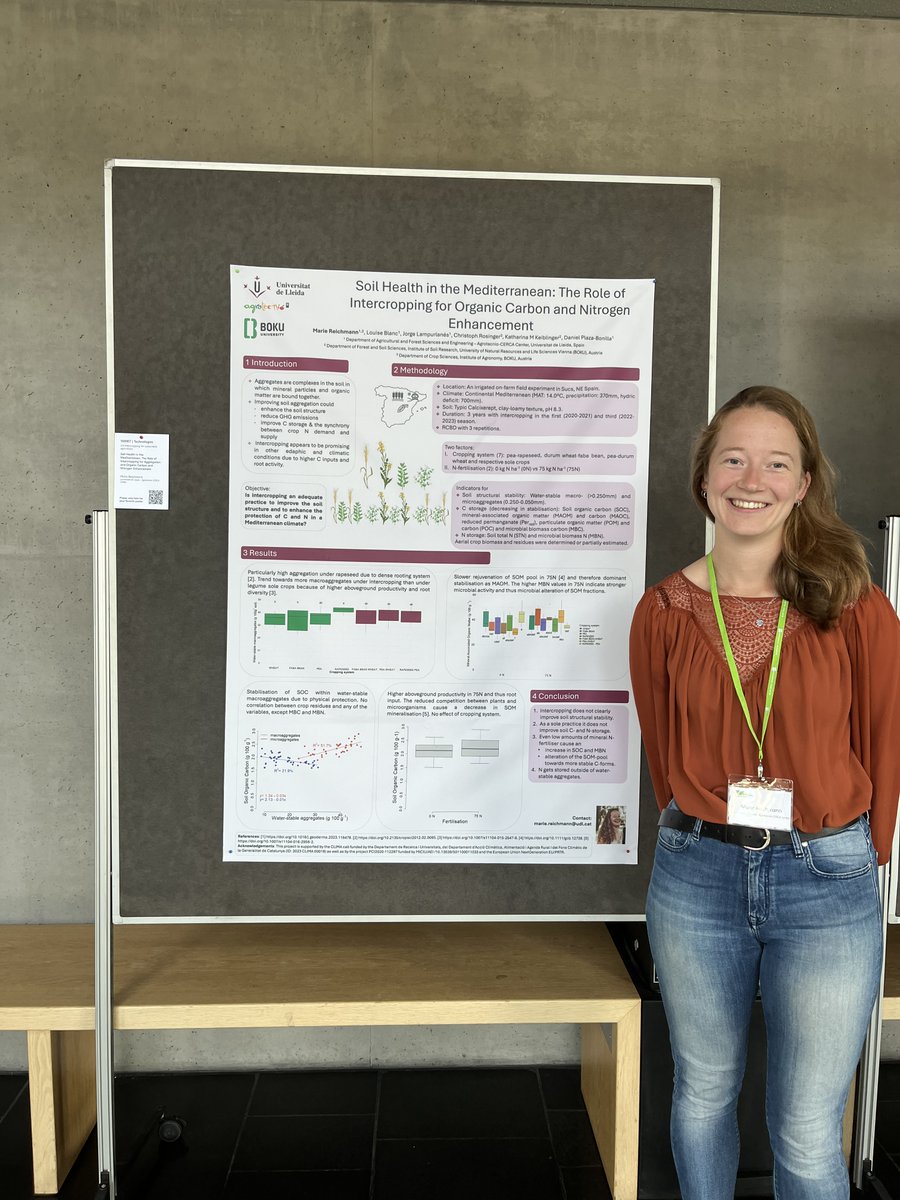
Very happy with the 1st publication of Marie Reichmann's PhD thesis in #AGEE
🎯 On-farm #Intercropping 🌾🌱 vs soil aggregation and SOC --> negligible effects in the short-term
#Biodiversify#LEGitimADA
1️⃣ Rapeseed-pea
2️⃣ Durum-fababean
3️⃣ Durum-pea
https://t.co/CwqQT9ssNn
Cuando escribí este artículo, llamando Ley de Aniquilación de la Naturaleza a la ley de restauración, algunos ecologistas se me echaron encima.
Hoy sabemos por qué: los grupos ecologistas recibieron subsidios de la UE para hacer campaña por estas leyes
https://t.co/004ylYqnx9
Glad to have our work quickly published in Field Crops Research #Q1_Journal
Sometimes publication happens faster than we expect! Thanks to all my co-authors⚡️
@DPlaza_Bonilla and @genis_simon
@JorgeLampurlanés
@LucieJeanMarius
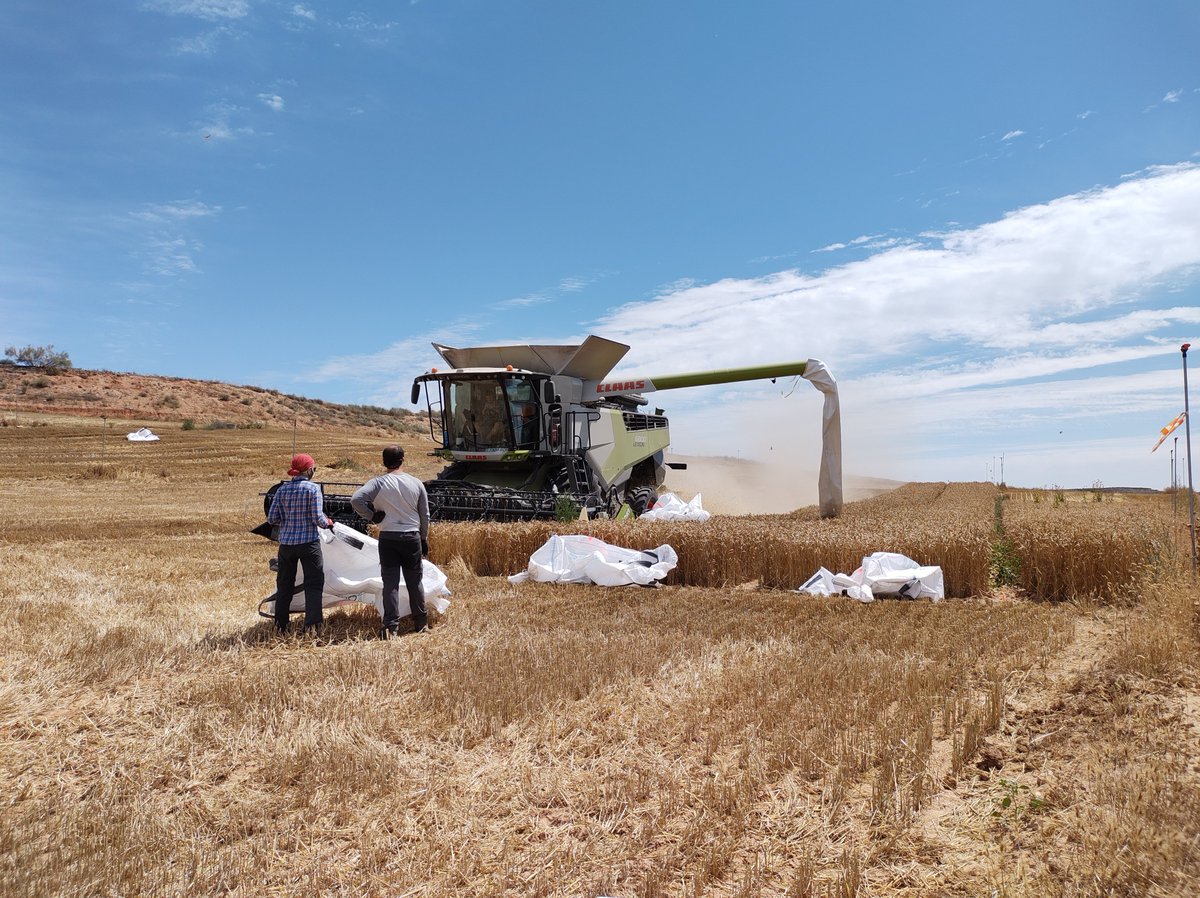
Thanks to ZALF for reporting on our research conducted in the Ebro Valley by the University of Lleida, with @DPlaza_Bonilla, @JorgeLampurlanes, @genis_simon, and in collaboration with @FerdaousRezgui from ZALF and @LaureHossard from INRAE.
We are:-
→ Richer.
→ Healthier.
→ Better fed.
→ Better educated.
Than ever before.
Now we just need to learn,
how to be nice to each other.
https://t.co/ZmD0QsYSOy
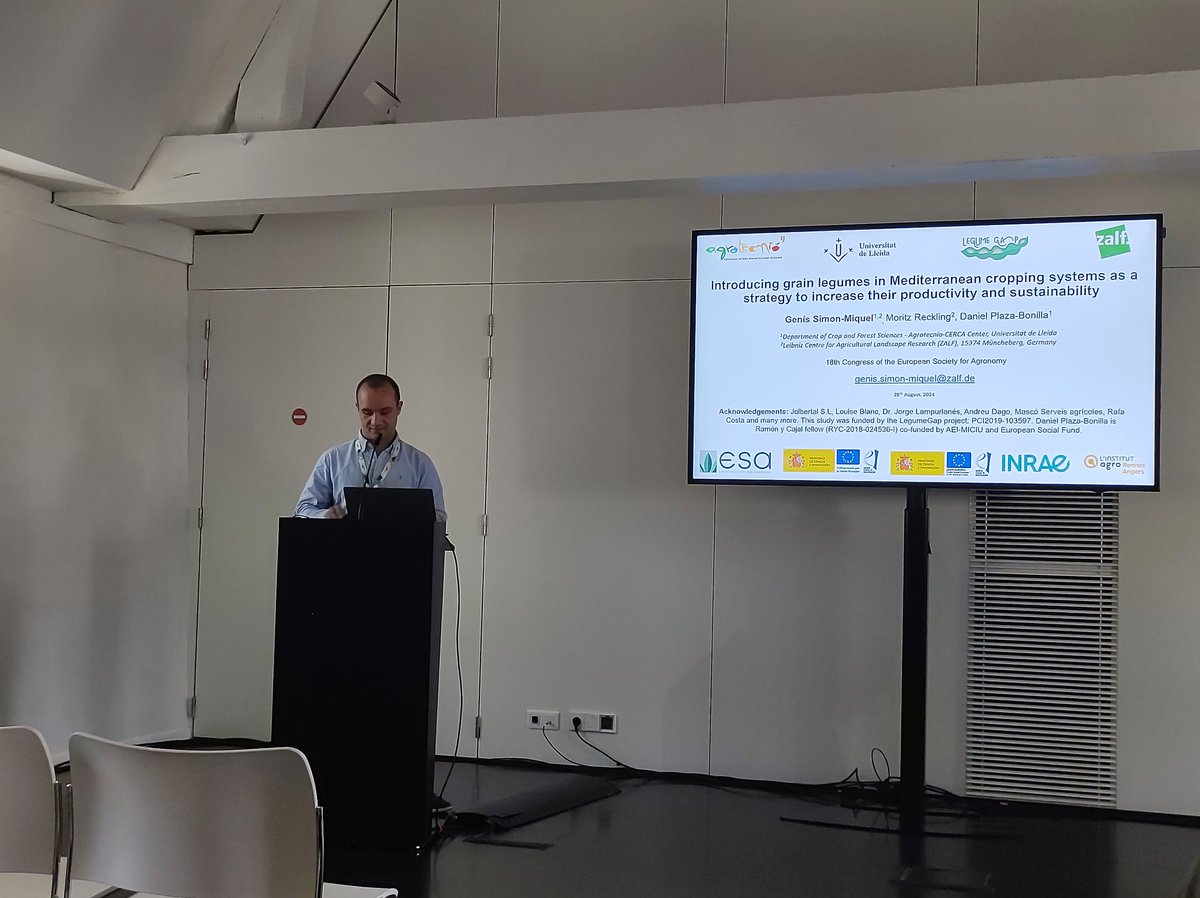
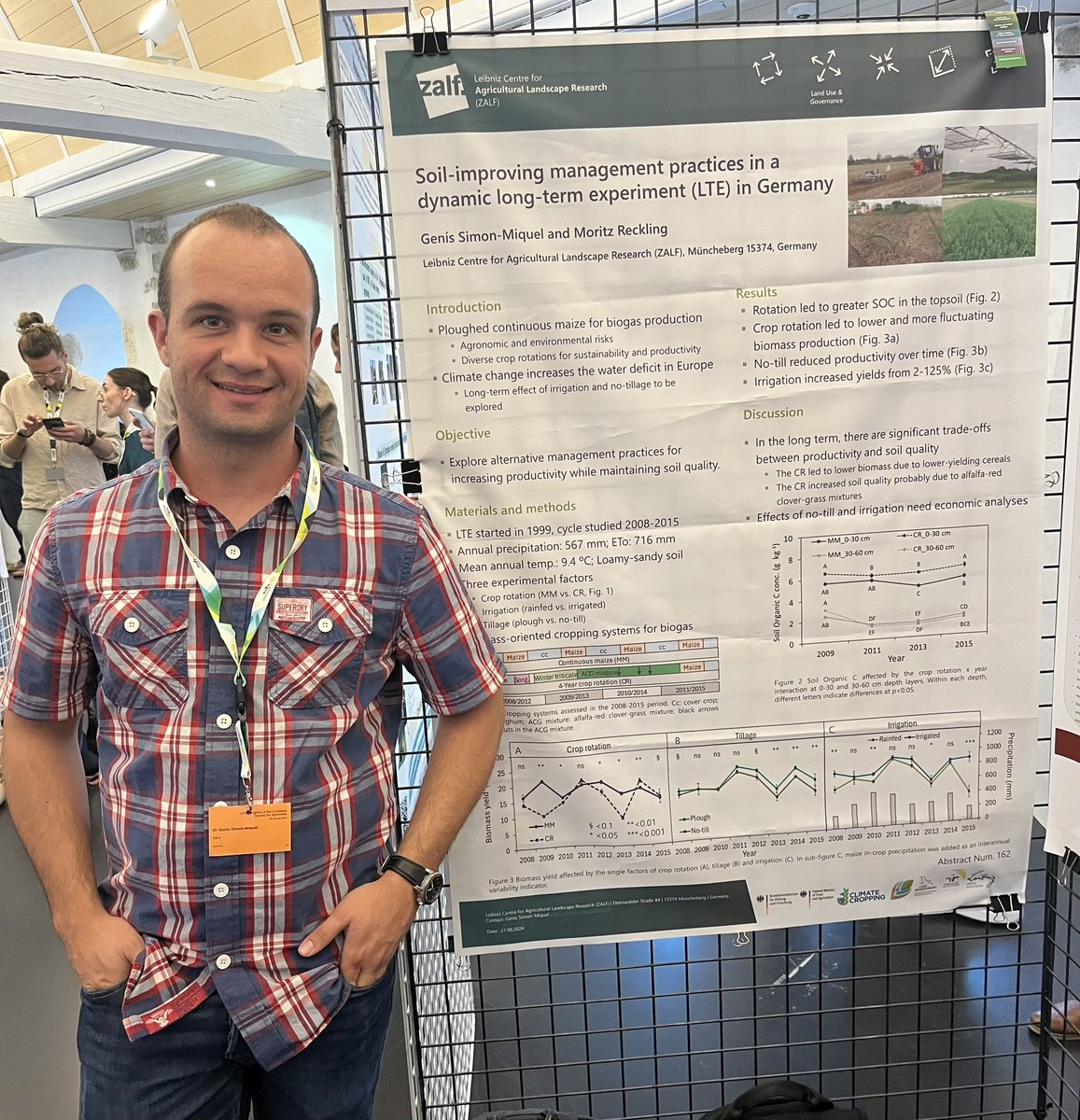
Glückwunsch an ZALF-Doktorandin Jennifer Thompson für den besten Vortrag der Konferenz #ESA2024! 🎉 Zudem präsentierten ZALF-Wissenschaftler*innen 11 Vorträge & 7 Poster. Mehr: https://t.co/cS5VErDAsQ 🌱🌾 #Agronomie#Mischanbau
An excellent presentation today (one of the best to date at the ESA) by ex-Lleida PhD graduate @genis_simon on some of his PhD results at Lleida. Now at @zalf_leibniz working with @moritz_reckling 👍👍