For FULL PATH haplotype statistics (iHS, XP-EHH, nSL, ROH), GraphPop uses bit-packed haplotype matrices (1 bit per haplotype, 87% memory reduction) with SIMD-accelerated kernels.
GraphPop, an analytical engine comprising 12 stored procedures inside a graph database. The core design separates import-time aggregation from query-time computation: per-population allele counts are pre-aggregated during a one-time import and stored as arrays on Variant nodes.
Useful links
About the knowledge graph: https://t.co/mJWe7RzhvN
Getting started / documentation: https://t.co/hL9yn2Y1Ab
Tips for testing
Ask complex, multi-step biological questions, and follow-up questions.
Challenge the system: “Why do you say this?” / “What evidence supports this?”
Check the “How this was answered” section to see query steps and report missing/incorrect links.
Explore “Dig Deeper” and any generated hypotheses—tell us what is useful vs. misleading.
Example directions:
Genome editing (gene → phenotype): “What phenotypes might result from knocking out gene(s) X?”
Synthetic biology (phenotype → gene): “How might we engineer Arabidopsis for trait Y using modern genome editing?”
Where to send feedback
Developer: Ehsan Estaji — [email protected]
PI: Jian-Feng Mao — [email protected]
As a plant biologists, are your tired of fragmented data and hallucinating AI chatbots?
PlantGraph is your AI assistant for Arabidopsis. Ask any complex question in natural language — get deep, multi-hop, fully traceable answers with zero hallucinations.
Try it: https://t.co/rJ55aBAzxe
One-sentence introduction
PlantGraph (https://t.co/rJ55aBAzxe) is an AI-assisted, evidence-grounded knowledge graph that unifies plant multi-omics databases and literatures so plant biologists can ask semantic questions and get traceable, reliable answers.
Note on scope
PlantGraph is currently Arabidopsis-centric; coverage for other plant species is under processing.
Why we built it
Plant biology workflows often involve:
(1) jumping between fragmented databases and a rapidly growing literature,
(2) iterating through discussions to reconcile evidence, and
(3) trying generative AI that can sound convincing but may be difficult to verify.
PlantGraph aims to address this by combining integrated resources with an assistant that retrieves supporting evidence, executes deep reasoning, and shows how answers were derived.
Did you know pioneering plant species on land colonization, such as the bryophyte M. polymorpha, are infected by RNA viruses and show similar/dissimilar antiviral defense programs to those found in crops and other vascular plants?. Check our work out! https://t.co/FVXpRd4Buk
SHOCKING: The autism rate in America has exploded to 1 in 31.
In boys, it’s even worse: 1 in 20.
And in California—where data collection is considered the best—the risk may be as high as 1 in 12.5 boys, likely reflecting a national trend.
This is a steep jump from 1 in 36 just two years ago, and RFK Jr. is vowing to uncover what’s driving this alarming rise.
“The ASD prevalence rate in 8-year-olds is now 1 in 31. Shocking. There is an extreme risk for boys. Overall, the risk for boys of getting an autism diagnosis in this country is now 1 in 20.
“And as high in California, which has the best data collection.
“So it probably also reflects the national trend—1 in 12.5 boys. This is part of an unrelenting upward trend. The prevalence two years ago was 1 in 36,” Kennedy lamented.
📢 Excited to share our work out now in @Nature! 📢
We present the phased pan-genome of the European tetraploid potato, based on 10 historical cultivars representing 85% of European potato diversity.
Learn more below!
🔗 https://t.co/JNuZEMWKxQ
1/7
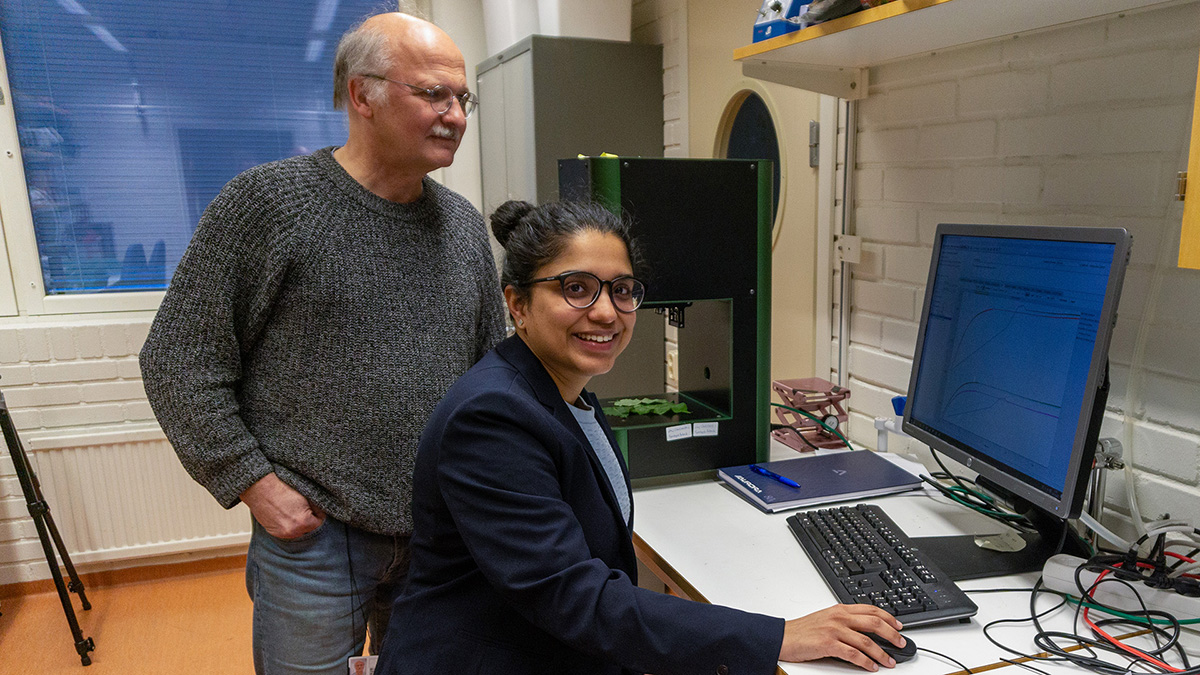
INTERVIEW - Light drives photosynthesis, but an excess can harm plants.
@SanchaliNanda used a novel instrument that monitors the stress levels of plants to gain new insights on their energy dissipation mechanisms.
Read more in this interview with her:
https://t.co/EcbYZgYoCF
PAPER - What is the rolle of low temperatures in regulating growth cessation before winter?
The Bhalerao group and collaborators identified a new role for ELF3 in growth cessation and in coordinating temperature and photoperiodic pathways.
Read more in @CurrentBiology 👇
🎆Do you have already plans for March 2025? Would you like to elevate your career and expand your scientific network?
Apply for the UPSC Symposium for Early Career Plant Scientists, visit us in Umeå and present your research @UmeaPlantSci!
📆Application deadline: 7 January
New funding for research on crop resilience and carbon capture!
@novonordiskfond has awarded a project grant to Peter Kindgren and a synergy grant to Totte Niittylä, Thomas Moritz @UCPH_Research and @AP_Mahonen. Congratulations👏!
Read more here 👇:
https://t.co/XoQ2Upk0TQ
VACANCIES - Are you interested in molecular biology, computational approaches and bioengineering?
Check out these PhD and Postdoc opportunities in the Wenkel lab @microProteins and become part of the interdisciplinary RESYDE project!
@UmeaPlantSci@umeauniversity#PlantSciJobs
Please RT: We’re hiring a PhD and a Postdoc to explore the exciting intersection of microprotein biology, bioengineering, and flower development. 🌺
Apply now: https://t.co/cPOL6GrzVj
Deadline: Jan 31
#PhD #Postdoc#PlantScience #ComputationalBiology#Microproteins#ERC#RESYDE
Postdoc Opportunity in Plant Development!
Join the ERC Synergy project RESYDE exploring symmetry breaking in flowers to uncover the evolution of floral architectures.
We're seeking talented postdocs to reshape plant development! Please get in touch if interested.
Are you looking for a postdoc and would like to be part of an ambitious research project on plant development?
Get in touch with Stephan Wenkel @microProteins and his colleagues from @HumboldtUni, @Sydney_Uni and @slcuplants and join the #ERCSyG project RESYDE!