Most traders have no idea what’s actually happening behind the tokens they buy.
That’s exactly why we’ve been building Ghost Labs for the past 3 months.
With Ghost Labs, you’ll be able to:
• Detect bundled launches and suspicious wallet activity.
• Uncover connected wallets that traditional bubble maps miss.
• Track high-PNL traders and see what smart money is buying.
• Analyze any Solana token before putting your money into it.
All in one place, completely free.
Our goal is simple: give everyday traders access to tools that were previously difficult to find or use.
This is just the beginning. 👻
https://t.co/Dvr3aNtQ84
Been working on https://t.co/7rBJZLqnxz for the past 3 months, building something genuinely useful for traders and holders.
Ghost Labs will be integrated directly into Phantom within the next week, giving everyday users free access to powerful trading tools and insights right inside the app.
Excited to see everyone here!
I’ll be showcasing Ghost Labs, a new platform we’re building with the goal of integrating directly into Phantom.
A lot more to come. Stay tuned. 👻
https://t.co/GkkqRa7MDl
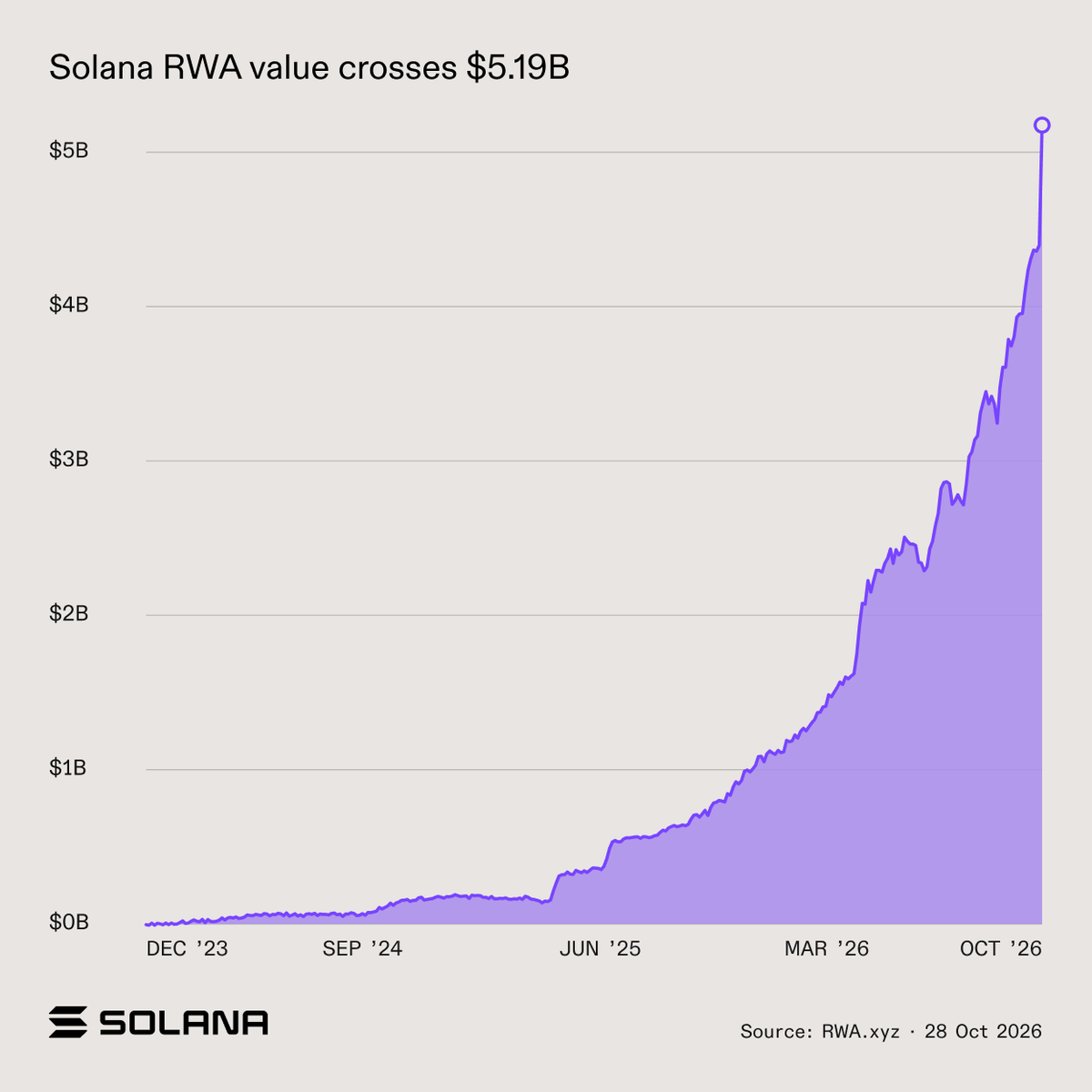
@SolanaFndn@AlliumLabs@coingecko@RWA_xyz a shared place to check token identities is useful infrastructure. showing the mint address and where classification data comes from can help wallets and users investigate lookalikes with more context.
firedancer’s bounty is open, with increased rewards through november 20. inviting independent researchers to test a validator client and sharing what the team learns is the kind of security work that helps solana mature alongside its speed.
The Firedancer bug bounty platform is live at https://t.co/SxvcrvKOM8! Now thru Nov 20th: 2x rewards across the board; 3x for Alpenglow.
We’re sharing our experience running a $1,000,000 bounty contest: how Firedancer’s security model works, notable bugs researchers found, what we learned, and some lessons about triaging AI-assisted reports at scale.
Read it here. https://t.co/Z5ivnggknD
@metaplex tokenization gets interesting when the token connects to clear ownership rights, custody and redemption. making those details easy to verify could give builders a much stronger foundation for real-world assets on solana.
@marcryptonio curious which constraint showed up first in the financial apps: account contention, transaction size, or something else? pairing a SIMD with concrete workload data makes the tradeoffs easier for the wider ecosystem to evaluate.
the ICE and trade[XYZ] plan points to a bigger role for onchain market infrastructure. subject to regulatory approvals, the proposed setup separates the technology layer from market operations and clearing. bullish on seeing how that model develops.
Intercontinental Exchange (ICE) and trade[XYZ] have announced their plan to use Hyperliquid as the infrastructure layer to deploy perpetual futures markets for US traders across crypto, equities, commodities, foreign exchange, and other real-world assets, subject to regulatory approvals. ICE operates NYSE and some of the largest exchanges and clearing houses globally.
In this structure:
+ Hyperliquid serves as the underlying technology infrastructure via HIP-3*
+ trade[XYZ] designs and implements the markets
+ ICE operates the regulated market and clearing structure
Existing trade[XYZ] HIP-3 markets will remain unchanged.
Hyperliquid is a neutral infrastructure layer with the goal of supporting large parts of the financial system. As with HIP-3, HIP-3* deployers are independent operators who use Hyperliquid as the onchain infrastructure layer for their own markets, while retaining control and responsibility over their deployment.
@JupiterExchange@BitGo staking through an existing custody workflow can remove a lot of operational friction for institutions. as access expands, transparency around validator selection and stake distribution matters for network resilience too.
@anza_xyz role-specific updates for feature gates and breaking changes are a solid piece of developer infrastructure. getting the right signal early makes it easier for validators and app teams to plan upgrades.
@unruggable_io excited to see more hardware wallet work for solana. clear transaction details on the device before signing can make self-custody easier to navigate without asking people to guess what they are approving.
@solana@redacted_j love the hacker house origin story. a room where builders can show rough demos, get feedback and solve problems together can turn an idea into something real much faster. excited to see what comes out of the london edition.
phantom’s referral feature gives people another way to share the app with friends. the bigger opportunity is pairing that reach with clear fees, understandable tools and a first experience people can actually navigate. bullish on making web3 easier to learn.
@solana@cesto_co@jasonrodrigues making an investment basket understandable matters as much as making it easy to access. bullish on products that help people see what they hold and how it changes over time.
@solana local currency stablecoins open up more than trading pairs. curious to see how native minting and redemption translate into payment flows that businesses can actually use day to day.
alpenglow is live and solana is targeting ~150ms finality. the exciting part isn’t just the number. faster confirmation gives builders more room to make onchain apps feel responsive from the first tap.
A man left Twitter to build a crypto wallet with no token of its own, and somehow turned it into a $3 BILLION company.
> Brandon Millman worked as a senior engineer at Twitter from 2013 to 2017.
> He moved into crypto and joined 0x, a project building infrastructure for decentralised trading on Ethereum.
> After spending years working on crypto infrastructure, he teamed up with Francesco Agosti and Chris Kalani to build something of their own.
> They wanted to make using crypto simpler.
> In 2021, the three started building Phantom, a wallet that initially focused on Solana.
> At the time, Solana was still growing, and Phantom was betting that more people would need a simple way to interact with its ecosystem.
> By July 2021, Phantom had raised $9 MILLION from investors led by Andreessen Horowitz.
> Then its user base started taking off.
> By September 2021, Phantom was adding around 100,000 users a week with just six developers and a couple of contractors.
> In January 2022, it raised $109 MILLION at a $1.2 BILLION valuation.
> Three years later, it raised another $150 MILLION at a $3 BILLION valuation.
> And it did all this without launching its own token.
> Today, Phantom is one of crypto's most widely used wallets, giving millions of people access to digital assets and blockchain applications.
Brandon left Twitter and bet on an emerging ecosystem to build a multibillion-dollar company.
Imagine if he'd just stayed at Twitter.