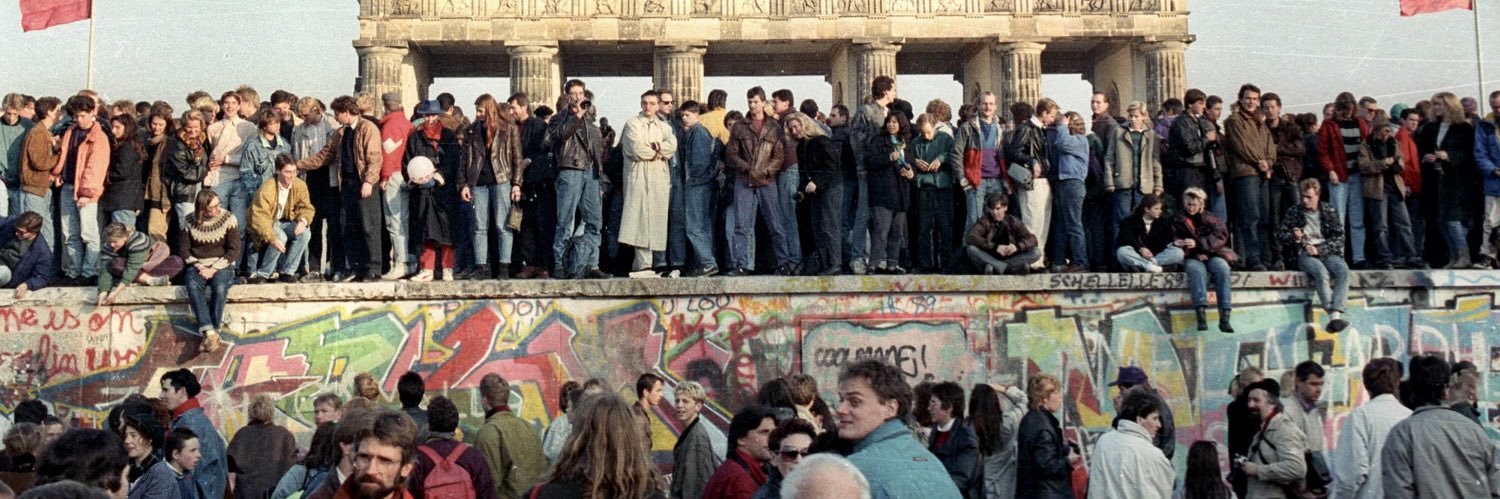
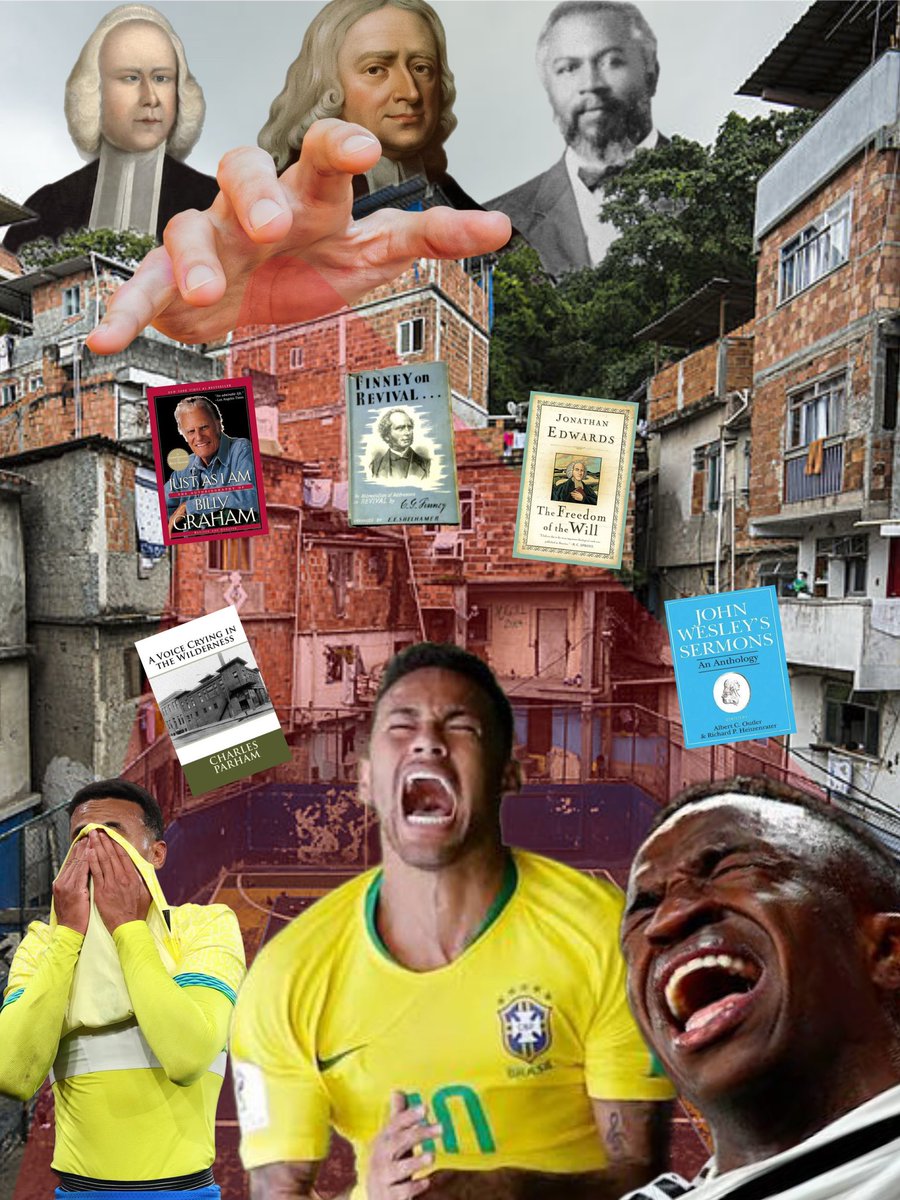
@DexertoMarvel Wait a minute! Are you telling me we’re toppling down statues of actual historical figures and raising monuments to fictional characters?
I mean, what in the world?!
Sobre a atuação da CIA e dos Estados Unidos para implementar o neopentecostalismo na América Latina:
Embora pareça teoria da conspiração, não é. Os Estados Unidos ativamente trabalharam, na década de 1980, para disseminar o neopentecostalismo na América Latina. O objetivo era, a princípio, barrar a Teologia da Libertação, uma corrente católica que incorpora elementos de esquerda e tem como princípio norteador diminuir as injustiças e desigualdades sociais.
O Relatório de Santa Fé (1980), produzido pelo Council for Inter-American Security, um think tank ligado à campanha do Ronald Reagan, afirmava que a política externa americana deveria "começar a contra-atacar (e não apenas reagir) a Teologia da Libertação". O documento tratava a Igreja como instrumento político e a corrente progressista como vetor de infiltração marxista na América Latina, que era disputada entre as potências bipolares da Guerra Fria.
Também é amplamente documentado o apoio de operações americanas a governos que perseguiram clero católico progressista, como a Guatemala sob Ríos Montt, El Salvador durante o assassinato de Romero e das freiras americanas, Nicarágua com o financiamento aos Contras (guerrilha armada).
Missões protestantes em solo latino-americano não foram raras. Ao contrário, se tornaram cada vez mais comuns e, por fim, começaram a influenciar a própria Igreja Católica, turbinando a já existente Renovação Carismática Católica (RCC), que incorpora elementos protestantes e neopentecostais. É na década de 1980 que começam a ganhar força os grandes movimentos da RCC no Brasil (como a Canção Nova e a Comunidade Católica Shalom), muito pela legitimação internacional que receberam (dos EUA, que impulsionavam práticas neopentecostais e queriam ocupar espaço na América Latina e, também, do Vaticano, que queria parar a Teologia da Libertação).
Aí surge uma competição entre Teologia da Libertação x Neopentecostalismo no Brasil e na AL. Quem ganharia?
Quem venceu foi a teologia da prosperidade, uma das partes importantes do neopentecostalismo.
Começa pela geografia. Um templo neopentecostal fica a três quadras, abre todo dia, e o culto acontece à noite, depois do turno. A paróquia católica fica a quarenta minutos de ônibus e celebra missa obrigatória aos domingos. O Brasil tem cerca de 1 padre para cada 10 mil católicos. A razão pastor/fiel do lado evangélico é uma ordem de grandeza menor. Onde a Igreja Católica não chega, alguém chega.
Aí, vem a hierarquia. Um homem sem escolaridade formal entra como obreiro, vira diácono, pode virar pastor. Ganha título, terno, microfone, autoridade sobre outras pessoas. Para o mesmo homem, a Igreja Católica exige seminário (3 anos de graduação em Teologia + 3 anos de graduação em Filosofia), latim e celibato obrigatórios.
Há também um efeito material que, inclusive, tá documentado por pesquisadores. A Cecília Mariz e a Elizabeth Brusco mostraram que a conversão pentecostal redireciona o salário do boteco para dentro de casa. O marido para de beber, para de bater, e a renda familiar sobe. No Brasil, em geral, mulheres convertem primeiro e trazem o marido depois.
E há, ainda, a rede de apoio. Emprego, empréstimo, creche, indicação, carona, doação de alimentos, escolinha dominical. Numa periferia onde o Estado não chega, a igreja neopentecostal chega.
A Teologia da Libertação, que era a frente católica mais próxima às perfiferias, oferecia um diagnóstico estrutural com promessa de longo prazo, mediada por organização política. As frentes católicas pediam que o pobre se reconhecesse como classe e agisse coletivamente. Numa favela dos anos 1990, entre desemprego, cocaína e milícia (que estavam em alta em toda a América Latina), venceu quem prometeu resolver hoje, não quem prometeu resolver coletivamente.
As missões neopentecostais vieram para a América Latina com o objetivo de substituir o catolicismo "marxista", mas acabaram rachando ainda mais a sociedade. Enquanto as classes econômicas mais privilegiadas continuaram católicas, as classes mais vulneráveis encontraram amparo no neopentecostalismo.
Só que aí a gente volta no ponto inicial, que eu fiz no meu primeiro post sobre isso: o catolicismo sempre foi comunitário, coletivo e, a nível individual, sempre exigiu responsabilização do indivíduo por seus erros, além de exigir a revolta com as coisas que são ruins na teologia da libertação. No catolicismo, você alcança a salvação confessando seus erros e tentando não cometê-los novamente.
A lógica neopentecostal que bebe da predestinação calvinista e de princípios arminianos é oposta a isso. Seus êxitos vêm do seu esforço (porque a teologia da prosperidade é arminiana e aceita a ascensão positiva pelo dízimo, pela fé e pelo esforço), mas suas falhas são "plano divino" (porque existem elementos de predestinação como mecanismo de cope para situações negativas). Exceto, é claro, quando a comunidade decide humilhar a pessoa: aí você fracassou porque teve pouca fé, pagou pouco dízimo e tem o demônio no corpo. Mas se você é pobre, se você perdeu o emprego, se seu marido é alcoólatra e abandona você e seus filhos... Tudo isso é plano divino, Deus já predestinou sua vida.
Sobre o futebol e a política:
A questão não é que jogador/político A ou B, lá em 1990, já usava camisa enaltecendo Jesus Cristo. O problema não é a fé individual dos jogadores.
A questão aqui é que o neopentecostalismo se dissemina social e culturalmente na América Latina e, principalmente, no Brasil. É uma maneira de pensar, uma maneira de construir imaginário coletivo e influenciar a sociedade.
O imaginário coletivo é cada vez menos responsável por suas falhas, confessa cada vez menos seus erros e se individualiza cada dia mais. Afinal, os meus êxitos ocorrem porque eu tenho muita fé em Deus; as milhas falhas ocorrem porque Deus sabia o que era melhor para mim e, assim, eu só me responsabilizo pelas coisas boas. As coisas ruins não são culpa minha, não me geram revolta, não me deixam desconfortável, não me tiram do lugar. Elas apenas são o que são.
É assim que a América Latina caminha.
The FIFA World Cup Round of 16 delivered extraordinary television audiences in the United States, but one number stood above all others: England vs. Mexico became the most-watched match of the tournament in the U.S., drawing 44.842 million viewers across Fox, Telemundo, and Peacock. That surpassed the 42 million who watched the United States face Belgium the following night and came remarkably close to the average audience for the NFL’s AFC and NFC Championship Games (47.4 million).
The figures reinforce a reality that has become increasingly evident over the past decade: Mexico is one of the biggest commercial driver of soccer television in the United States. The Mexican national team consistently delivers audiences that rival or exceed those of major American sporting events. Its appeal extends far beyond Mexican-Americans, reaching a broad Hispanic audience and an increasing number of general sports fans. For broadcasters, Mexico matches have become premium television properties capable of generating exceptional advertising revenue and attracting both English- and Spanish-language audiences simultaneously.
This commercial strength helps explain why the value of U.S. broadcasting rights for the 2030 FIFA World Cup is expected to increase dramatically, from approximately $485 million for the current cycle to projections approaching $2 billion. Networks recognize that marquee matches involving Mexico are among the tournament’s most valuable television assets, particularly in the world’s largest advertising market.
Mexico’s importance is even more significant when viewed in the broader context of American soccer economics. The United States is home to a huge Mexican origin diaspora. That demographic has long made El Tri a ratings powerhouse, regularly producing some of the highest television audiences for international soccer outside of the World Cup itself.
Beyond television, Mexico fuels the American soccer economy through ticket sales, sponsorships, merchandising, and tourism. Matches involving El Tri routinely fill stadiums across the 🇺🇸, often selling out venues with capacities exceeding 60,000 or 70,000 spectators. Few national teams anywhere in the world possess that level of commercial drawing power outside their own country.
https://t.co/LXYWNpZPwW
We have a new most-watched soccer game in U.S. history:
Mexico vs. England
21.7 million on Fox, 23.1 million on Telemundo.
More than 44 million(!) in total. Astounding.
Preliminary numbers, but for now, that tops USMNT-Belgium (perhaps because both teams showed up...)
EVANGELICALISM AND THE DECLINE OF BRAZILIAN FOOTBALL 🇧🇷
After yet another World Cup defeat Brazil is again soul searching - “Why has Brazil become so bad at one of the only things it still used to be good at?”
One of the most popular explanations among Brazilians this time is the rise of evangelicalism in Brazil, especially Pentecostalism. The argument goes that this has ‘spiritually’ undermined the Brazilian team. At the 2022 census about 27% of Brazil’s population over 10 identified as evangelical Protestants. In 2000 the percentage was 15.4% and in 1980 6.6%. A common explanation for this growth is that Pentecostal and evangelical churches were able to expand so rapidly over the past half century because they offered a new version of Christianity that prioritised close-knit local communities, energetic worship and a ‘message of personal transformation’ (and some also say in a derisive sense more ‘accessible’ ‘lower barrier to entry’ version of Christianity, with everything that entails) that especially resonated with ‘urban and lower-income’ Brazilians during Brazil’s comparatively economically and culturally stagnant recent history. In particular, with the kinds of demographics who lived in or adjacent to Brazilian favelas that football wunderkinds used to be drawn from
This is a kind of version of the other main explanation I have heard for Brazil’s decline; that it lost its swag, its samba, its Latin flair - or ‘duende’. You can’t really empirically prove these claims of course and both arguments (see more of this other argument below) make different root claims but the commonality they share is that Brazilian football used to have a kind of playful Latin - maybe you could say Catholic - magic to it. It was very flashy and improvised but it was also a sort of highly skilled dance that you ‘flowed’ with, it was almost liturgical. (Argentina for instance a team that still has a bit more of this)
The Evangelical argument extends into how it has affected social dynamics in the favelas too. I can’t really speak on how accurate these claims are but apparently it has made families more cautious and less communal, less inclined to ‘let kids go out and play’ ie play football with other favela kids - the focus is instead on ‘staying safe’ and ‘individual hard work at school’. For the players from this new milieu that still do get selected for top-flight football then the effect is it makes them more individualistic, less inclined to cooperate, less likely to see it as ‘a group dance’ and more inclined instead to ‘just charge in’ etc
This is what they say! You are free to buy into that however much you want. Possibly a lot of this is just ‘cope’ so-called from a country that maybe too much ties its entire identity to football. Does seem to me that part of the finger-pointing too is you can spin it as a kind of neo-colonialism, in a cultural sense. That it comes from America, from the West. You can see quite extreme left wing Brazilian accounts repeating this claim so you do have reason to be a little sceptical in that
In any case the decline is obviously multi-causal - you can also point to the rise of European football, lack of money, bad tactics or coaching, changing tactics worldwide that no longer favour Brazil, everybody else is just that good now etc. On the right, you will hear too that the decline is related to the decline of the Brazilian nation generally ie greater incompetence all round. It isn’t just that lost their Latin - or Catholic - flair, it is that they became more ‘Third World’. Evangelicalism in this sense then would be less a problem of Calvinist Predestination Teutonic Weberian Protestant Work Ethic Protestantism - more a problem of, in the extreme, Sub-Saharan African village church with a corrugated iron roof Evangelicalism
Either way there is a general feeling that the death of Brazil football represents the loss of a version of the national soul - that Brazil has now somehow changed for the worse
Since Sunday I’ve seen nothing but respect from Mexico fans - in the stadium, online, everywhere I’ve looked. Knocked out at home, at the Azteca, and the response has been pure dignity. What a football nation.
All the pre-match talk was about the altitude advantage. But that atmosphere is exactly why World Cups should go to real football countries more often - and it won’t be matched now they’re out.
Honestly: if England had lost that game, I’d have spent this week moaning about the officials and suspected home bias. Because we held on, I got to see exactly who Mexico are in defeat instead.
And it turns out we share a rival. If it all goes to plan on Saturday, we’ll try to beat them for you in the semis.
Gracias
Until England last night, Mexico had not lost a single game at Azteca stadium since 2013. I’m still buzzing from it… it was truly a fortress.
After coming back down from low-earth orbit to see the pyramids today, it all makes sense - that stadium was built to channel the same primal spirit of the Mesoamerican warriors.
Its brutal incline compresses the surging crowd into a single, seething organism - thousands of bodies are fused shoulder to shoulder, chest to back, breath to breath, hearts hammering in unison like war drums beneath the roar. It is more than intimidating. Even if you don’t fear God, you will fear the Azteca.
Sound and raw energy erupt like blood offerings to insatiable gods; each thunderous chant, each collective gasp amplified by the sheer mass of 80,000+ souls. I had to wear ear plugs throughout the game.
Estadio Azteca is a middle finger to the entire concept of safetyism, engineered much like the Temple of the Moon itself with its steep, vertigo-inducing incline.
Walk the rows and your feet balance on maybe twelve inches of concrete, barely enough to plant a stance, while a pathetic little lip at the edge does nothing except to further destabilize you.
One wrong shift, one over-enthusiastic high-five, and you’re plummeting like a human sacrifice toward the pitch below. @MrWinMarshall called it mutually assured death. Every person trying to exit the row had to be held in a mutual trust exercise lest he be lost to gravity.
The Mexican fans played their part. Rowdy as hell - boos raining down like arrows, beer (I hope) flying in downward arcs. I didn’t mind because it was all part of the game - they were channeling the warrior ethos that once made empires tremble.
It felt dangerous, electric, and alive in an ancient way. Yet the second the final whistle blew, the same crowd turned gracious and warm as they urged us to take down Argentina next. That duality is pure Aztec too - fierce in battle, honorable in spirit.
With only a small pocket of support (at most ten percent of the vast arena), the English voices were utterly swallowed by the thunderous tide of home devotion. Yet still, they stood tall.
The resilience required to win here defies measure. It was courage forged in fire, a will that refused to bend beneath the weight of hostility and inevitability. Every single player gave everything for the Three Lions and for the nation. They did not merely survive the Azteca - they conquered it.
This is a victory to be cherished and a testament to the enduring spirit of Tuchel’s team. Let every English heart swell with pride.
Los hinchas ingleses se quedan cantando “HEY JUDE” en el Azteca y Bellingham, que estaba por irse al vestuario, se queda escuchándolos.
Los mira totalmente emocionado, los aplaude y LES TIRA UN BESO.
Ufff, momentazo. 🏴❤️
Can Mexico join UEFA or CONMEBOL so more teams can experience the Azteca?
It's completely wasted on the Yanks and the rest of the minnows they're forced to play against.
Mexico's Beautiful World Cup
And England's hard earned victory
Mexico fans congratulating England fans, hugging them and partying together is pure class. It's an admirable end to Mexico's magic moment, as a team and in the euphoria, in the World Cup. ↓
https://t.co/kp58sqCZAF