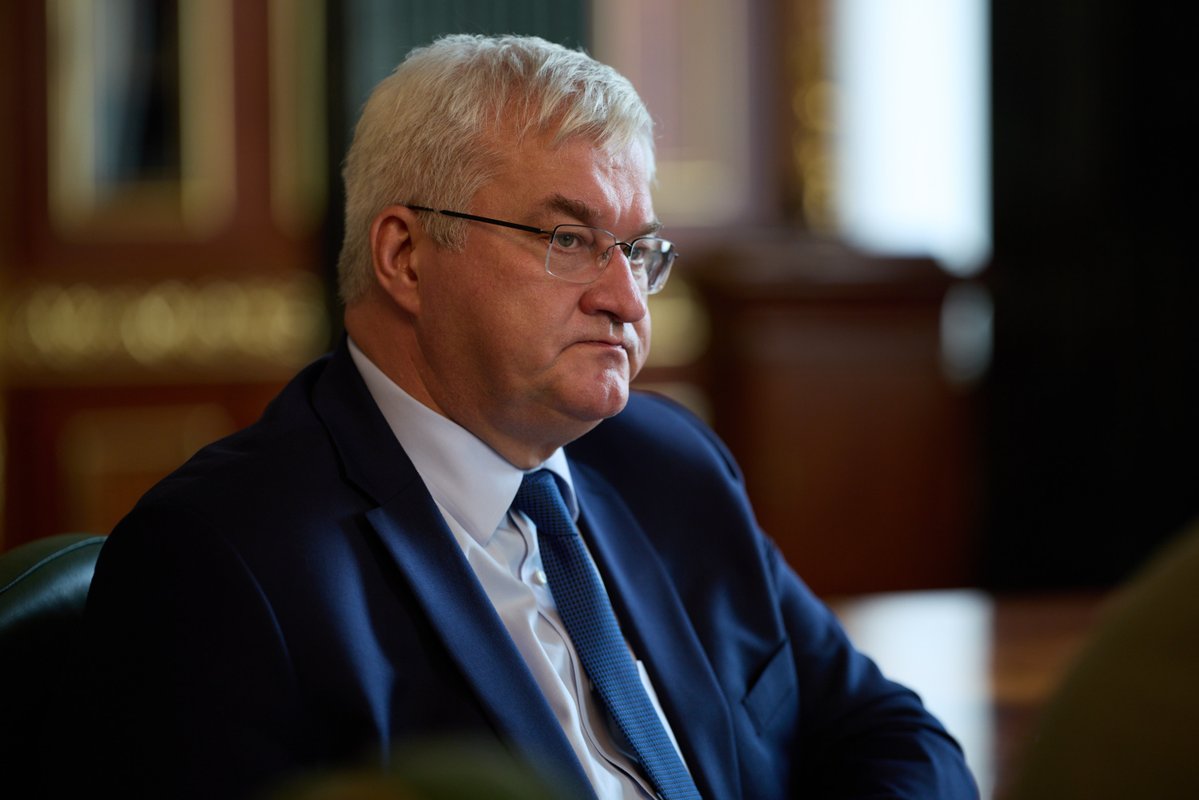
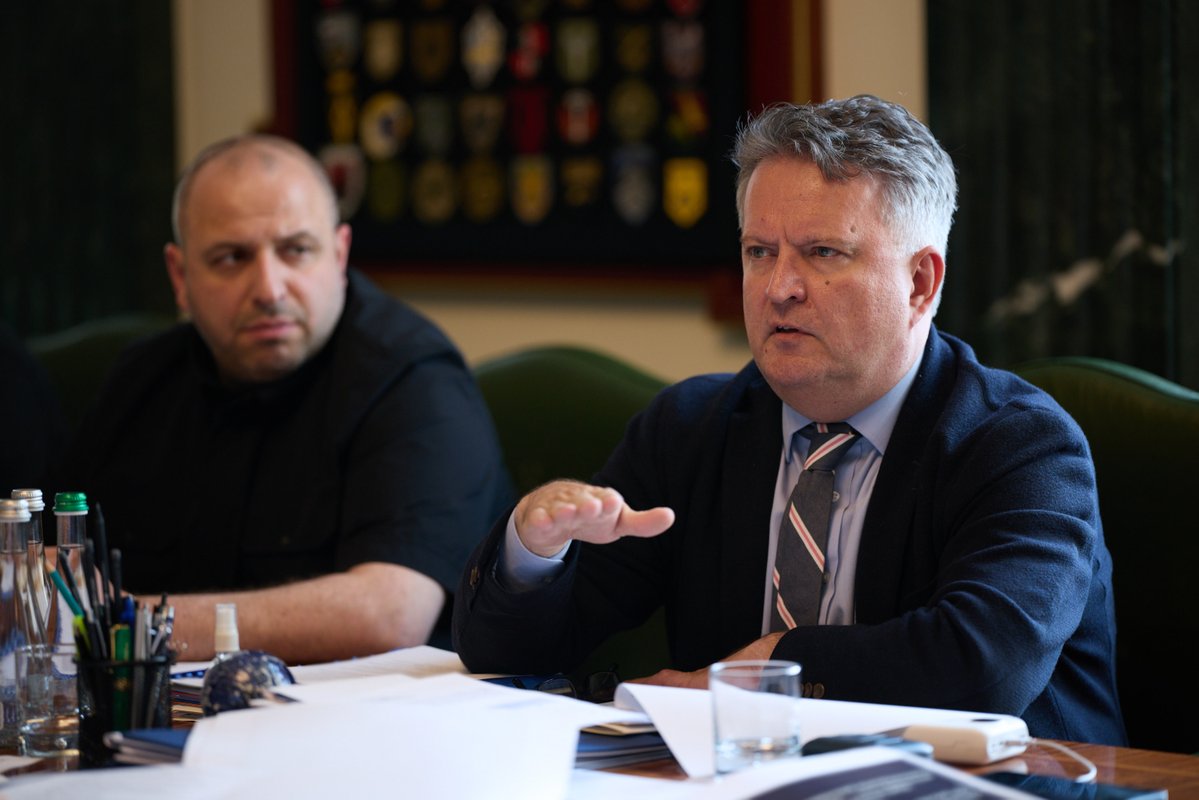
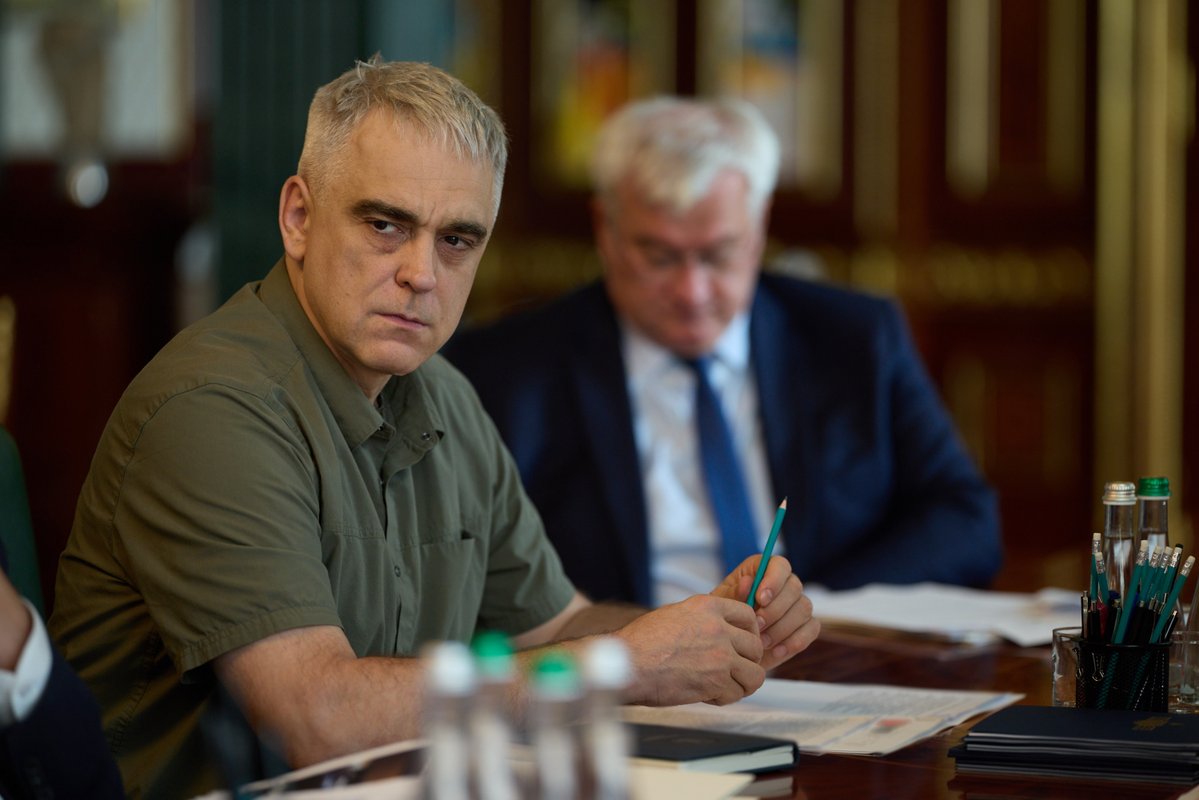
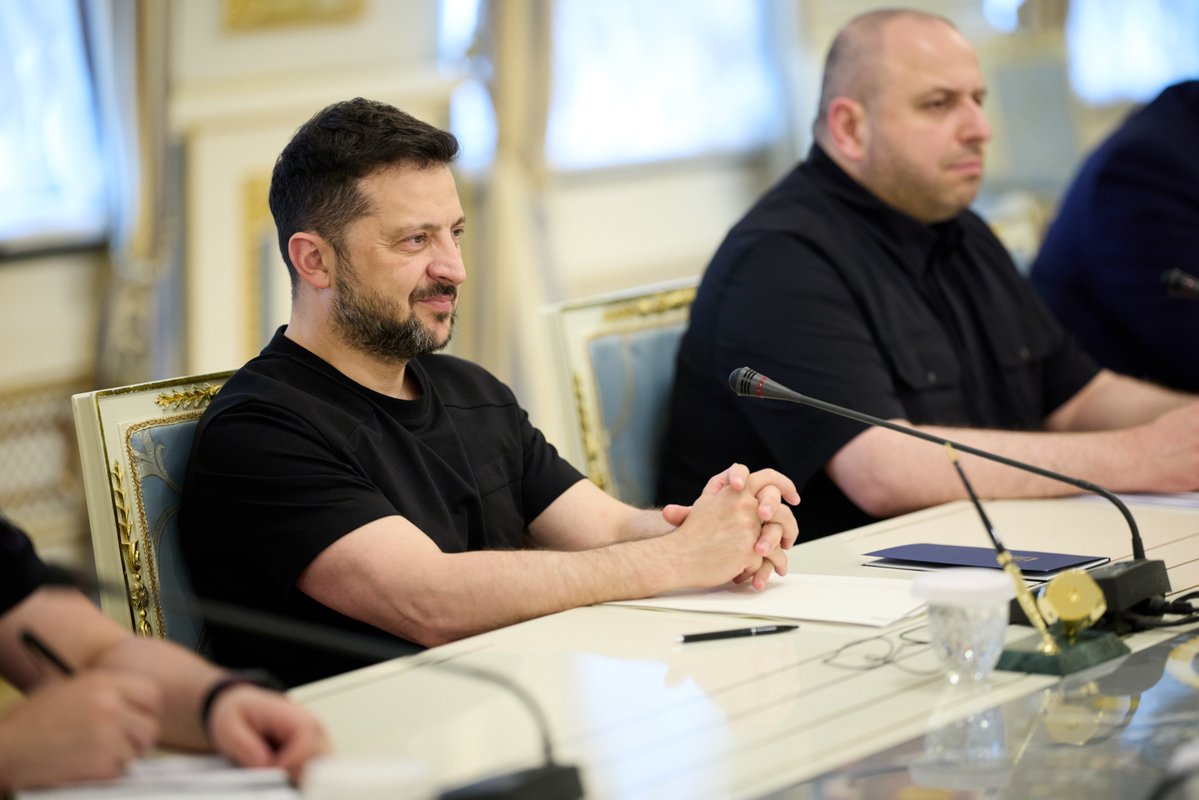
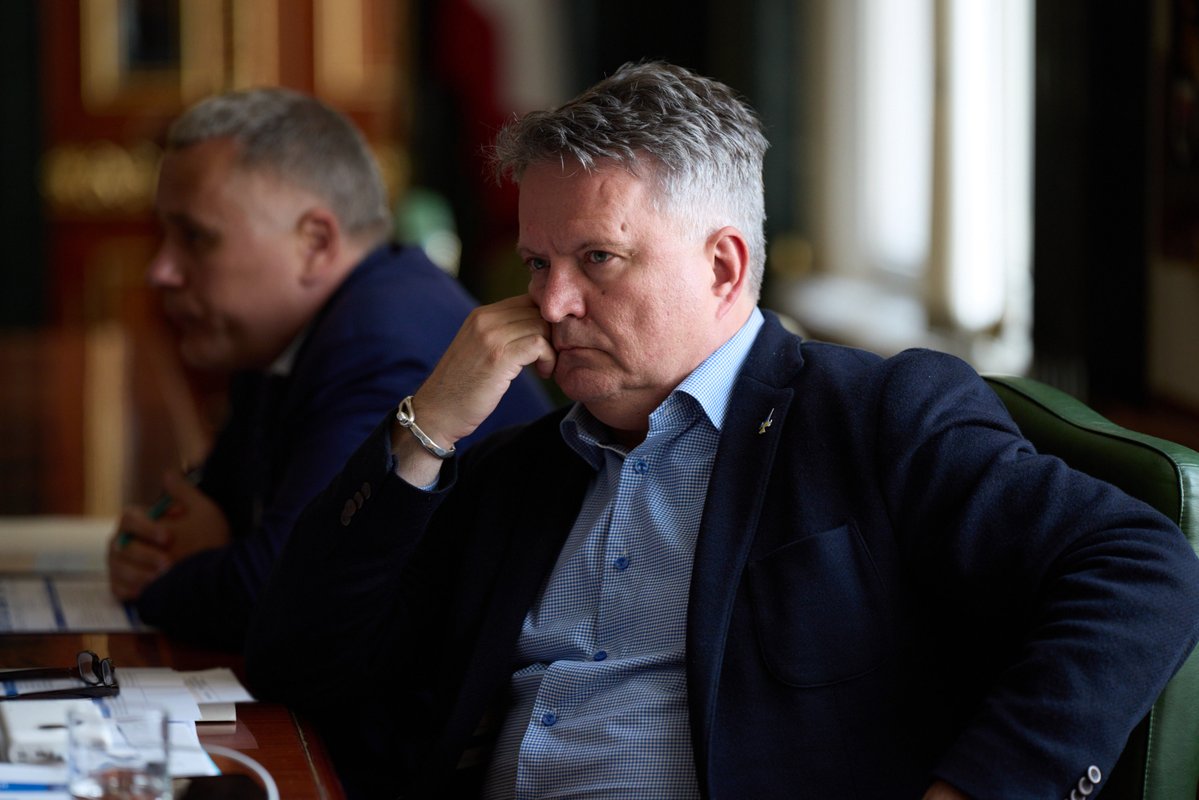
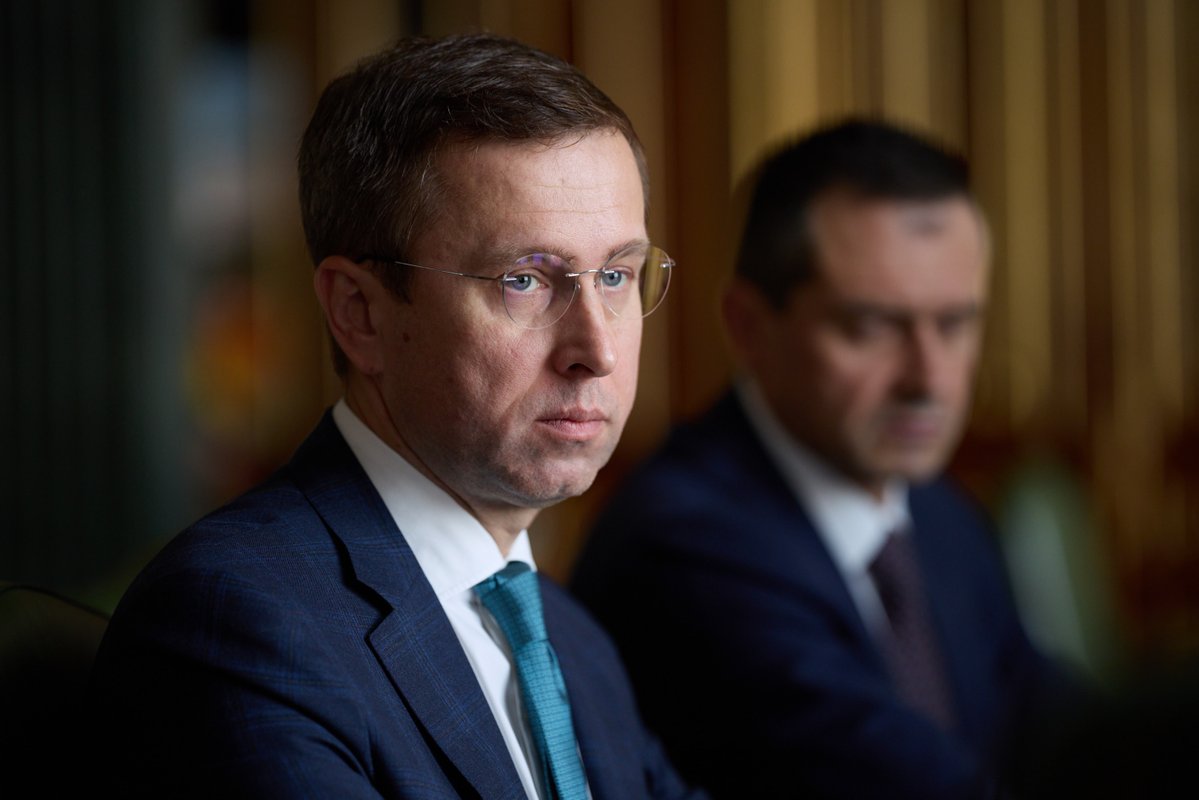
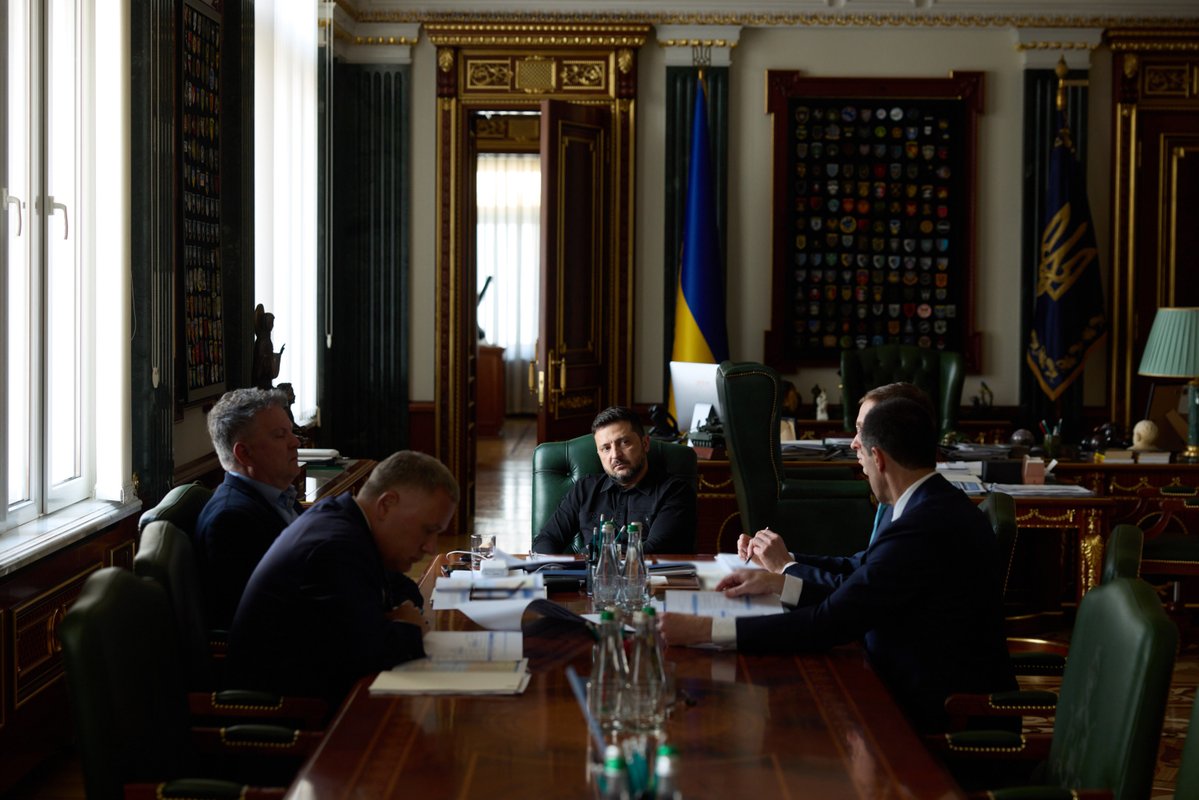
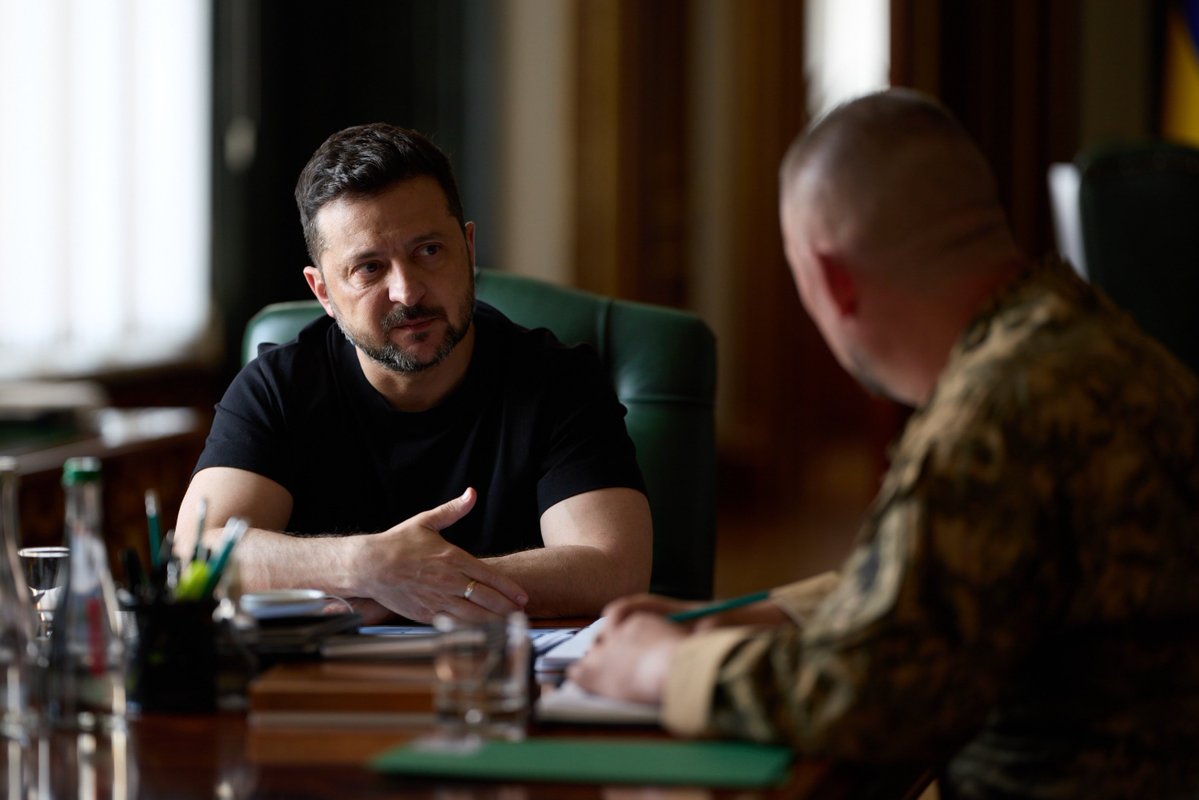
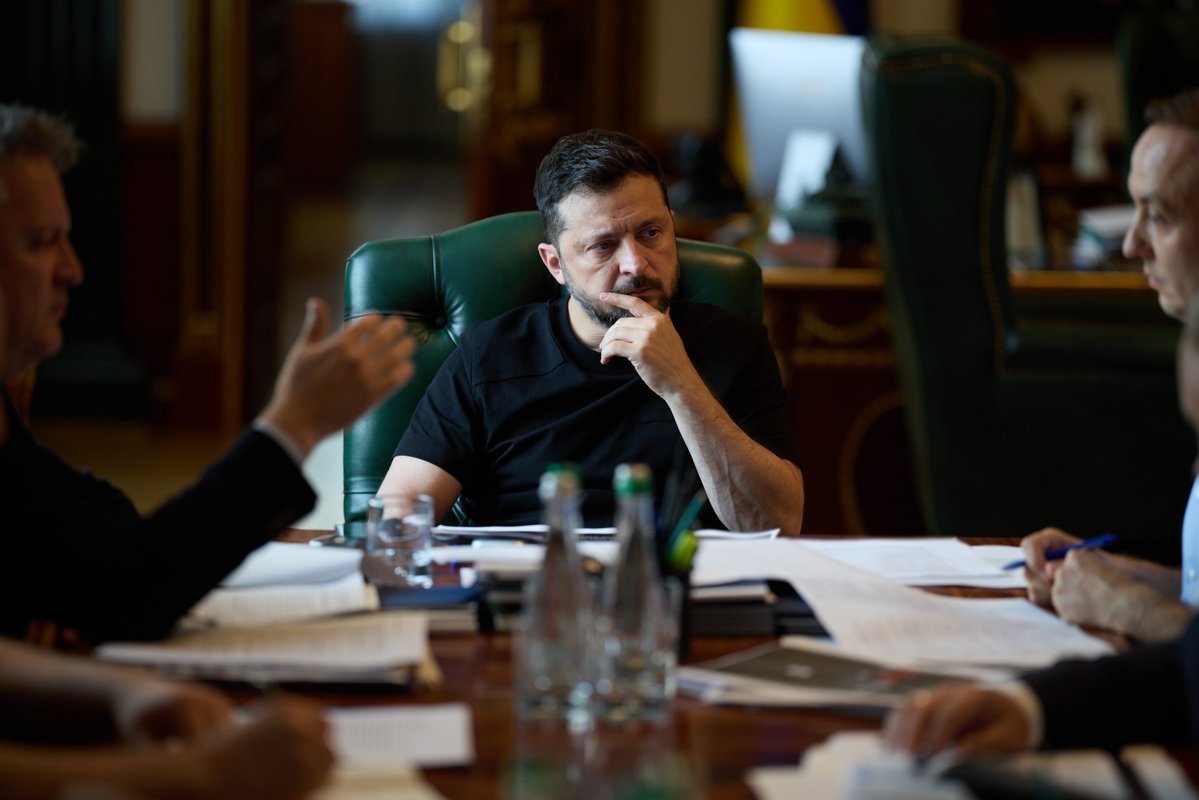
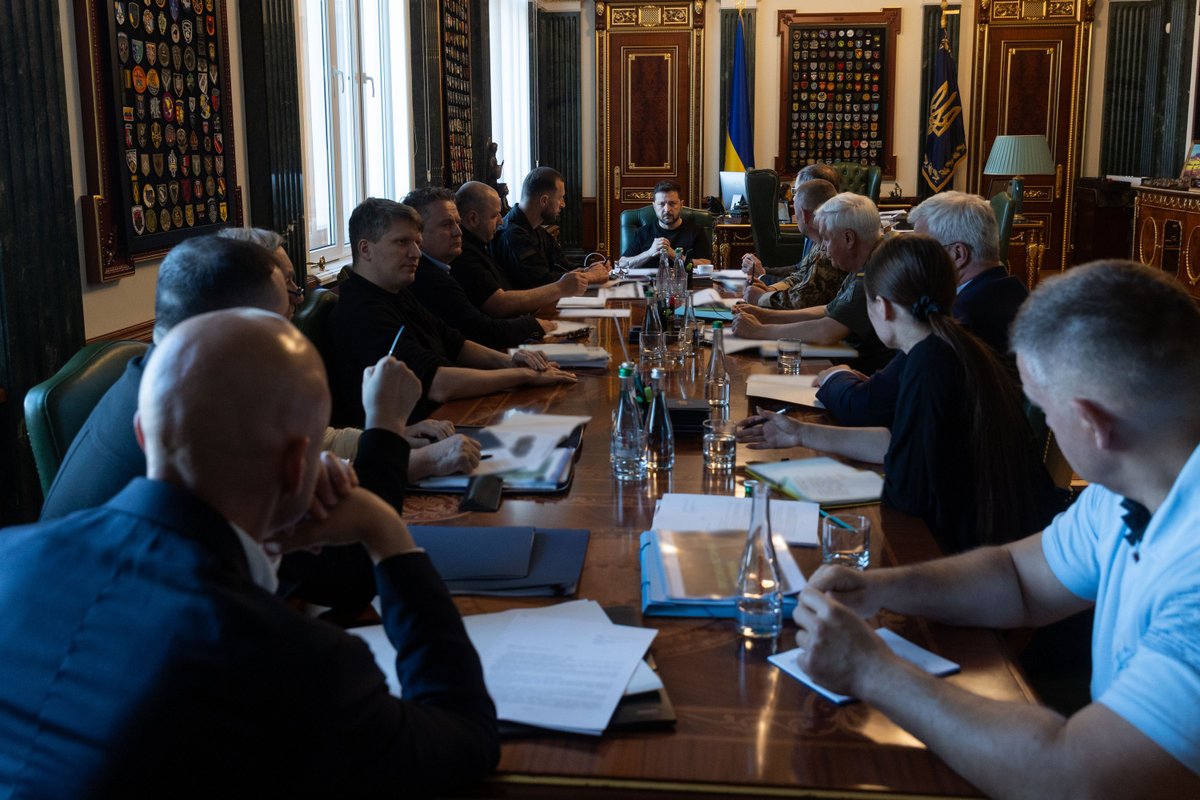
I held a coordination meeting on our sanctions – all types of sanctions against Russia for this war. The main task is not to give Russia time to adapt to the restrictions. We see that every Russian missile, every drone, and most other types of Russian weapons contain critical components from other countries, without which such weapons simply could not exist.
We also discussed Russia’s use of machine tools and technologies that Moscow is generations behind in and certainly could not have developed on its own. More pressure is needed to restrict such ties between the aggressor state and the rest of the world.
I have instructed that a clear plan be drawn up for a special sanctions operation that must significantly constrain Russia’s military industry – targeting specific companies in the areas we have identified. Every participant in the meeting received clear tasks. I expect them to be carried out in full. Glory to Ukraine!
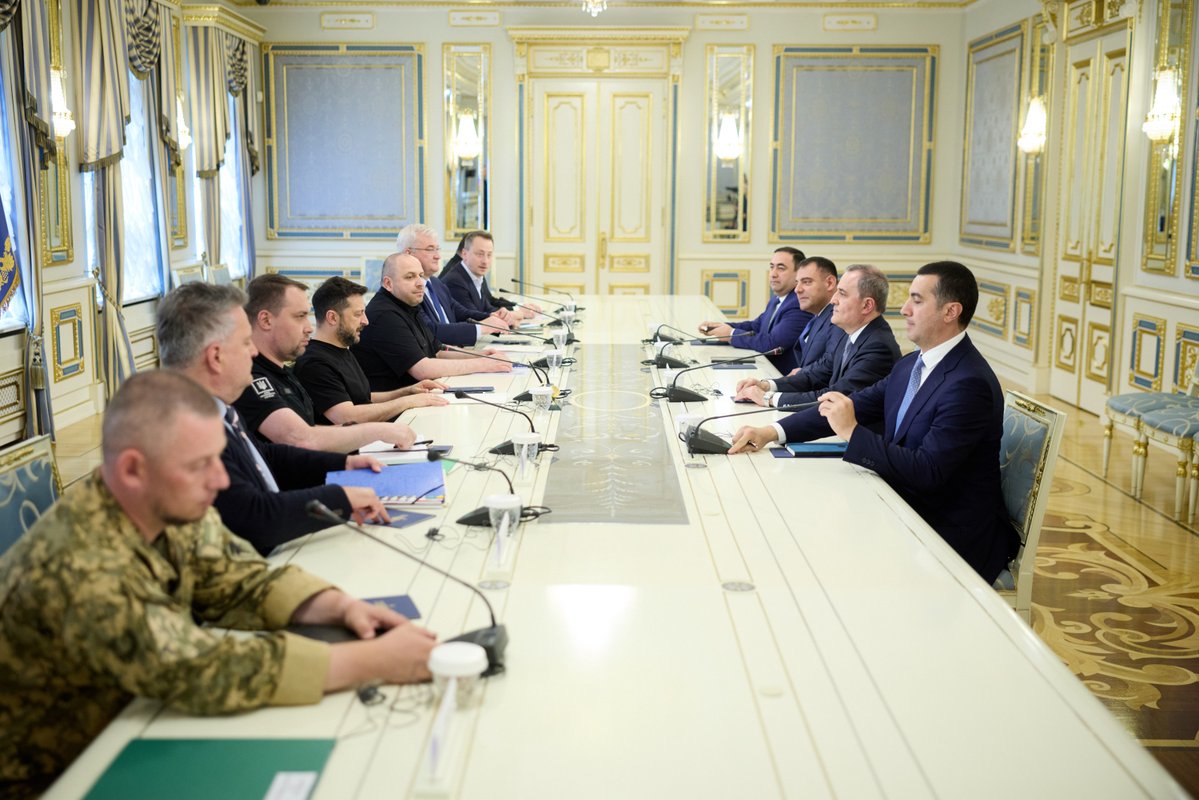
Прийняв міністра закордонних справ Азербайджану Джейхуна Байрамова. Пан міністр відвідує Україну вперше за час повномасштабного російського вторгнення. І розпочав свій візит з Ірпеня, де побував у школі, лікарні та реабілітаційному центрі, якому Азербайджан допомагає. Дуже вдячні за те, що в ці непрості дні для нашої країни, для наших людей знайшли можливість приїхати й підтримати нас. Дякую за солідарність із нашим народом.
Поінформував про постійні російські удари по Україні, ситуацію в Чорному морі та блокування Росією зернових коридорів. Обговорили дипломатичні контакти на високому рівні, оборонне співробітництво та економічну співпрацю в енергетиці, нафтогазовій галузі й сільському господарстві.
Вдячний Азербайджану за підтримку України, енергетичну та гуманітарну допомогу й конструктивний діалог.
I received Azerbaijan’s Minister of Foreign Affairs, @Bayramov_Jeyhun. This is the Minister’s first visit to Ukraine since the beginning of Russia’s full-scale invasion. He began his visit in Irpin, where he visited a school, a hospital, and a rehabilitation center supported by Azerbaijan. We are very grateful that, during these difficult days for our country and our people, you found an opportunity to come and support us. Thank you for your solidarity with our people.
I informed him about the ongoing Russian strikes on Ukraine, the situation in the Black Sea, and Russia’s blockade of the grain corridors. We discussed high-level diplomatic contacts, defense partnership, as well as economic cooperation in the energy sector, the oil and gas industry, and agriculture.
I am grateful to Azerbaijan for its support for Ukraine, its energy and humanitarian assistance, and our constructive dialogue.
As of now, the number one challenge is Russian strikes. The United States knows exactly what we need and that this is not about something abstract. This is about protecting lives. These are real people, individual lives. Air defense support is needed, and that requires political decisions. In Europe too. In the G7 countries too.
I held a meeting on the development of our ballistic capabilities and the implementation status of the FREYJA Anti-Ballistic Missile Program. The agencies involved reported on the current needs and the stages completed as of now. We set a schedule and designated those responsible for the elements of the programs that need to be accelerated. The National Security and Defense Council, the Prime Minister of Ukraine and the Ministry of Defense, the Foreign Intelligence Service, the Command of the Air Force of the Armed Forces of Ukraine, the Brave1 team, and the most technologically advanced teams in Ukraine’s defense industry are involved in this effort.
Developing one’s own ballistic capabilities and creating a new anti-ballistic system is a task that only a tiny minority of countries worldwide have managed to accomplish. Ukraine has this capability. Ukrainians have the necessary scientific foundation and expertise. We can state that our weapons manufacturers have also reached the required level. We expect Ukraine to achieve the necessary results in 2026–2027.
During the meeting, we discussed the key challenges, namely access to critical components, additional steps in technological cooperation with partners, and the localization of production. I thank everyone involved who delivers on everything they promise on time. I am also grateful to our partners who are helping and who have themselves joined our main defense programs. FREYJA is making progress, and that is important. Europe needs a shared and truly large-scale capability to defend effectively against any ballistic threats. We support and expect more of our partner countries that are capable of contributing to join the Anti-Ballistic Coalition.
We also discussed work with partners on PAC-2 and PAC-3 missiles. I expect results from the Ministry of Foreign Affairs and the Ministry of Defense in their communication with the partners that have already been identified and mentioned on numerous occasions. Glory to Ukraine!
The first track within the Anti-Ballistic Coalition is FREYJA. It should be our anti-ballistic system, open to the European partners who have helped us throughout this war and through all the challenges we have faced. We have the missiles and the launcher, but we're missing some components. We have brought together partner countries that have the specific elements we need.
We are open to partners. We will need both crucial components for this system and funding. Countries that do not have the relevant production capabilities but currently have Patriot missiles – and provide them, investing those missiles in our ability to defend our skies – are very welcome to join this Anti-Ballistic Coalition.
We must all take Europe into account and understand that there is a market – a very serious, multibillion-dollar miltech market. We understand that we are creating not only protection for Europe, but also a competition. There is Saab in Sweden, German companies, Lockheed Martin and Raytheon in the United States, and Leonardo, a very strong Italian company. We do not need competitors; we need those who will strengthen us and bring us closer together. When we speak about “systemic steps,” politics is extremely important here. The Russians will do everything to throw some kind of garbage into this process in order to delay the unification of these leading companies, which have the prospect of creating their own system.
From a discussion with Ukraine’s ambassadors. (1/3)
We have launched the Carpathian Initiative track. This is a new initiative. Why did this idea emerge? Because not all countries are ready to strengthen us with weapons, but they do want to stand with us on the humanitarian and security tracks and in the economic sphere. They are thinking about Ukraine’s recovery. This is also important. When neighboring countries think about recovery, it also reflects their faith in Ukraine – their belief that peace will come. And we will have peace. This is also an important signal.
The Carpathian Initiative brings together countries connected not only geopolitically and as neighbors. These are countries with shared economic and security interests, united by the beautiful Carpathian Mountains. It is about logistics, the economy, and security. We also saw culture and future tourism as part of it. I presented this idea to the Presidents of the European Council and the European Commission. They liked it very much.
We will launch this format in the fall. We are now discussing the dates. We have received a positive signal from the European Union. In the future, we will need programs for the Carpathians – covering funding, tourism, the economy, and security. And again, this is not only about the Ukrainian Carpathians. It includes Ukraine, Romania, Austria, Serbia, Hungary, Poland, Czechia, and Slovakia. This initiative is something around which all of us can unite. We need it.
From a discussion with Ukraine’s ambassadors. (3/3)
Today, many were shocked by yet another video of the drone “safari” Russians are carrying out against civilians in Kherson. A Russian drone deliberately hunted down a man selling vegetables and detonated right next to him. The Russians even admitted to the crime, showing zero regret and openly boasting about tormenting people. The man was wounded in the blast. Every single day, ordinary people in Kherson face these Russian "safaris."
The world must see this. It must see every piece of evidence that Russia has gone mad and that its soldiers take pleasure in killing and abusing civilians. Without pressure on Russia, the dismantling of its capacity for aggression, and real security guarantees, it is simply impossible to imagine the world being able to coexist with this evil. We must remain resolute in defending life. We must act and support life in ways that force Russia to seriously think about peace rather than expanding the range of its drones.
This is not just about Ukraine. Russia’s campaign against human life must be stopped here in Ukraine before it spreads further. Finland and Kazakhstan, the Baltic states and Poland, the countries of the South Caucasus, Romania, and Moldova—all should work together to ensure real security guarantees and bring Russia’s war to an end. Peace is needed, which requires cooperation among everyone in the world who truly values peace. Thank you to everyone standing with Ukraine!
I spoke with @MinPres Rob Jetten. I am grateful for his attention to Ukraine and his readiness to help. I informed Rob about the recent Russian attacks against our cities and communities, and I thank him for his sincere words of compassion and support. Almost every day, the Russians strike our people, sparing no ballistic missiles in their efforts to destroy lives. Air defense missiles are our main priority. We discussed how the Netherlands can support our defense now and as we prepare for winter. We greatly appreciate the willingness to work on finding solutions.
We discussed the diplomatic situation and the meetings in Washington last week. We also spoke about Ukraine’s integration into the European Union, efforts to open four more negotiating clusters, and the enlargement more broadly. Thank you!
Визначили напрямки для більш інтенсивної роботи з Євросоюзом. В цьому році вже були відкриті два кластери у перемовинах про вступ України в Євросоюз, і готуємося до відкриття ще чотирьох кластерів. З нашої сторони все зроблено, щоб рішення було позитивним. Разом із Прем’єр-міністром Сергієм Корецьким, новим віцепрем’єр-міністром з питань європейської та євроатлантичної інтеграції Всеволодом Ченцовим і профільними заступниками керівника Офісу Сергієм Кислицею та Ігорем Жовквою домовилися про три пріоритети, які надалі повинні бути реалізовані.
Перше: Україна працює саме на повноцінний вступ в Євросоюз, і ми розглядаємо це не тільки як політичне чи економічне завдання, а як завдання безпекове – і для нас, і для Євросоюзу. Саме зі вступом України в Євросоюз прибирається та геополітична невизначеність, якою Росія користувалася протягом кількох десятиліть, щоб сіяти дестабілізацію і України, і Євросоюзу. З іншої сторони, разом з українською силою Євросоюз набуває необхідних безпекових спроможностей, що дозволяє посилити європейський компонент євроатлантичної спільноти.
Друге: вже зараз маємо використовувати максимально всі можливості секторальної інтеграції України в Євросоюз. Україна має сприйматися всіма європейцями як невід’ємна частина звичних європейських процесів, і це має підштовхувати наш політичний рух і рішення лідерів та країн.
Третє: звісно, маємо будувати відносини на всіх рівнях таким чином, щоб Україна отримала необхідні пакети й рішення на підтримку стійкості на цю зиму. Відносини з Брюсселем і європейськими інституціями, столицями Європи, громадами в країнах Європи мають бути практичними – про те, що справді може підтримати захист життя в Україні. Розраховую на результати. Слава Україні!
We identified areas for intensifying work with the European Union. Two clusters in the negotiations on Ukraine’s accession to the European Union have already been opened this year, and we are preparing to open four more. Everything has been done on our part to ensure a positive decision. Together with Prime Minister Sergii Koretskyi, new Deputy Prime Minister for European and Euro-Atlantic Integration Vsevolod Chentsov, and Deputy Heads of the Office of the President, Sergiy Kyslytsya and Ihor Zhovkva, we agreed on three priorities that must be implemented.
First, Ukraine is working specifically toward full membership in the European Union. We view this not only as a political or economic task, but also as a security task – both for us and for the European Union. Ukraine’s accession to the European Union will eliminate the geopolitical uncertainty that Russia has exploited for several decades to sow destabilization in both Ukraine and the European Union. At the same time, with Ukraine’s strength, the European Union gains the necessary security capabilities, making it possible to strengthen the European component of the Euro-Atlantic community.
Second, we must take full advantage of all opportunities from Ukraine’s sectoral integration into the European Union right now. Ukraine must be seen by all Europeans as an integral part of normal European processes, and this must drive our political progress and the decisions of leaders and countries.
Third, of course, we must build relations at every level in such a way that Ukraine receives the necessary packages and decisions to support resilience this winter. Relations with Brussels and the European institutions, the capitals of Europe, and communities in European countries must be practical – focused on what can genuinely support the protection of life in Ukraine. I expect results. Glory to Ukraine!
Pavlo Palisa reported on the implementation of our defense agreements with partners. It is important that coordination is taking place every day. First, air defense. We are working with the American side and our partners in Europe to secure the necessary support packages for Ukraine. This is not easy, but we expect results. Air defense missiles are needed in our launchers – not in warehouses somewhere far from the real threats.
Second, work continues to localize in Ukraine the types of Western weapons we need. This area will be expanded significantly. I will not provide details for now, but I thank our partners in Europe for their readiness to support our resilience over the long term in precisely this way – through localization and joint defense production.
Third, during meetings in the United States as part of a recent visit, we agreed on several specific options for the use of missile systems and on expanding cooperation between our companies – Ukrainian and American. The relevant documents are being prepared, and communication between the companies is ongoing. General Palisa will coordinate this work with the Ministry of Defense of Ukraine, the American side, and Ukrainian manufacturers. Our warriors will have greater strength. Glory to Ukraine!
I expect the Prime Minister and the Government, together with the National Security and Defense Council of Ukraine, the General Staff, the Office team, and our communities, to identify the specific needs that Ukraine’s Ministry of Foreign Affairs, our ambassadors, and other representatives must work to meet.
This week, the NSDC will meet in a special format to assess how the resilience plans for our regions and communities are being implemented – or not being implemented, in which case those responsible will be held accountable. Based on this analysis, we will set specific tasks for our foreign policy.
Ihor Klymenko will become the new NSDC Secretary. He has exceptionally strong experience in coordinating the security sector, as well as in the work carried out last winter to strengthen our resilience and support our people. The NSDC will therefore be more closely involved in the Government of Ukraine’s work in this area.
From an address at the meeting of heads of Ukraine’s foreign diplomatic missions. (2/7)