GERT researches graphics, visual computing, and immersive tech 💻 🤖 🥽. We are also committed to teaching young people about CS through games, robotics & VR.
We're looking for a motivated self-funded PhD student to join me and Prof. Tatiana Kalganova at @Bruneluni
Topic: Telecontrol with XR for Remote Human-Robot Interaction. More details and how to apply:
https://t.co/9GMdY73Uwh
#PhD#XR#Robotics#HCI
Our new paper in Virtual Reality explores grasping across robotics & VR. 🤖🥽
In this paper, we propose a new framework for evaluating VR grasping through 3 dimensions: stability, plausibility & efficiency.
https://t.co/tXHw25vqpA
#VirtualReality#Robotics#Haptics#HCI
More than just soft-body deformation, our paper VR-Deform couples real-time VR interaction, haptic feedback, and physics-based simulation, and it is now published in The Visual Computer Journal.
https://t.co/RvM1c8NrGb
Introducing EgoVerse: an ecosystem for robot learning from egocentric human data.
Built and tested by 4 research labs + 3 industry partners, EgoVerse enables both science and scaling
1300+ hrs, 240 scenes, 2000+ tasks, and growing
Dataset design, findings, and ecosystem 🧵
Newton 1.0 is now generally available. 🙌
Take robot learning to the next level with:
🤖 Stable Articulated & Complex Mechanism Simulation – accurate, reliable machine modeling.
🖐️ High-Fidelity Hydroelastic Contact Modeling – realistic soft contact and touch-based interactions.
🧵 Deformable Body Simulation – simulate cables, cloth, rubber, and other elastic materials with VBD.
⚡ Accelerated Robot Learning at Scale – seamless integration with open simulation and learning frameworks, NVIDIA Isaac Sim and Isaac Lab for scalable workflows.
Learn how to integrate this open-source physics engine into your workflow: https://t.co/b0HmPpiEXv
#NVIDIAGTC
Physics-Based Simulation v1.0.3 is now live!
https://t.co/M0rlNj2ydC
This release features @zzigakovacic's awesome coding examples on MPM viscoplastic flow, PBD cloth and elastic bodies, and PBF!
Huge thanks to all!
#Physics#Simulation#Animation#ComputerGraphics#MPM#PBD
James Cameron on the original #Avatar prototype created by ILM and how their achievements on Fire and Ash pushed the series into a new age. Catch the full interview on @TheMoviePodcast feed and YouTube.
Avatar: Fire and Ash is now playing exclusively in theatres.
🚀 Newton Beta 2 and roadmap to 1.0 is out. SDF-based collisions & hydroelastic contacts for manipulation, cable-type deformables in VBD solver, stronger MuJoCo Warp integration and a new L-BFGS optimizer for IK solver are among major features of Beta. https://t.co/3S4nU02WsB
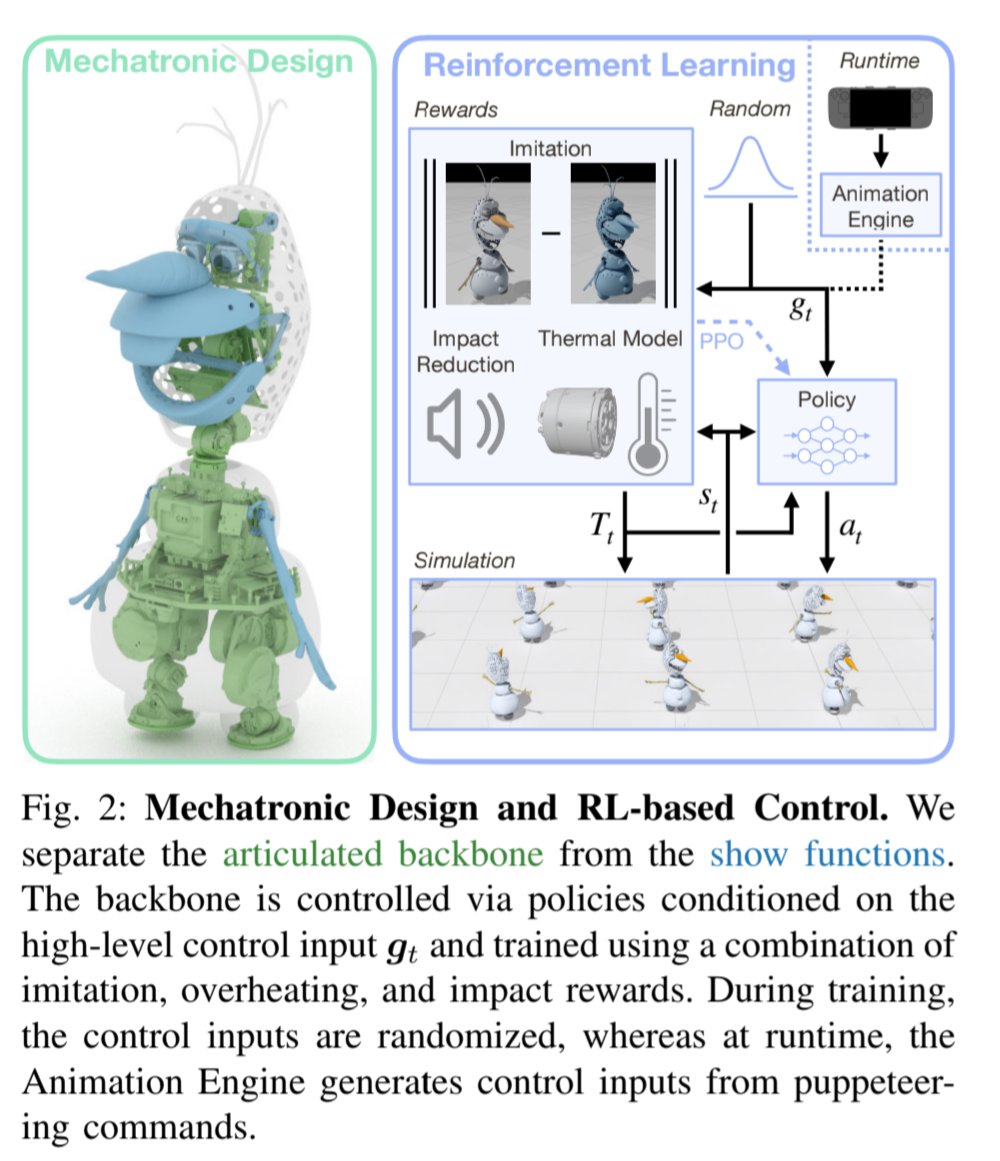
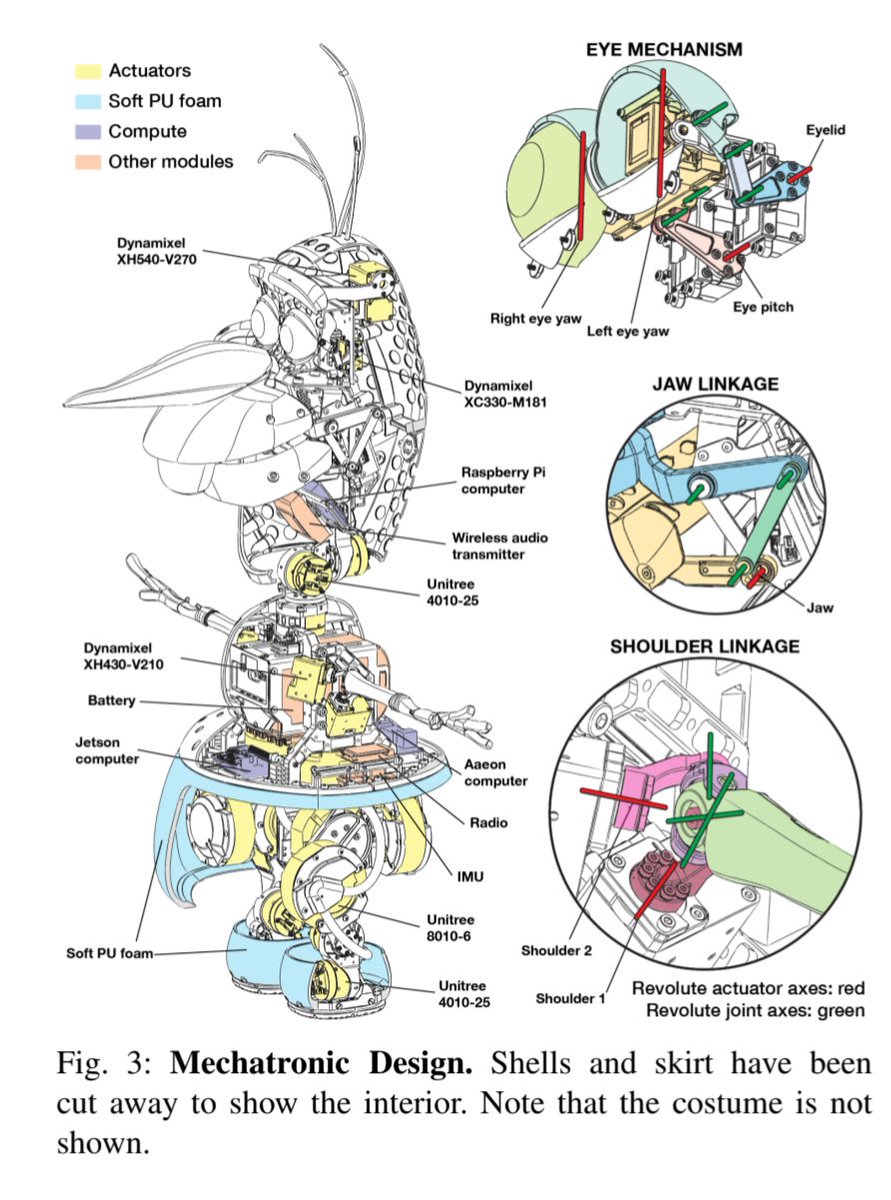
Disney Research shared a new look at the Olaf animated character, included a closer look at the inner workings of the robot, walk cycle, impact reductions, and how they track the character's performance.
We are so excited when other people build strong models. It's great for the field and great for NVIDIA.
That's why we're developing Nemotron openly.
I can't wait to see what Marin does next!
Video diffusion models have strong implicit representations of 3D shape, material, and lighting, but controlling them with language is cumbersome, and control is critical for artists and animators.
GenLit connects these implicit representations with a continuous 5D control signal describing the direction and intensity of a point light source.
This enables single-image near-field relighting of an image using a video diffusion model. We use a ControlNet-like approach and show that, with a small amount of synthetic data, GenLit generalizes to complex real-world images.
Given a single image and the 5D lighting signal, GenLit creates a video of a moving light source that is inside the scene. It moves around and behind scene objects, producing effects such as shading, cast shadows, secularities, and interreflections with a realism that is hard to obtain with traditional inverse rendering methods.
GenLit shows that it is possible to get continuous control over implicit physical processes within a video model. I think this is just the beginning and promises to make such models much more practical for creators.
@sbharadwaj__ will present today at SIGGRAPH Asia Room: S423/S424, Level 4 @ 13:50 on 15 of Dec.
https://t.co/8fvLm8QUU7
How does the time- and shear-dependent viscosity influence the jet breakup intensity?
See our recent paper https://t.co/cBur6lFSaK.
Video: Gas-liquid interface colored by the structural integrity of the thixotropic fluid during primary breakup.
I built and ran these demos after @milesmacklin pointed me towards them during a conversation and I was blown away. worth watching this video and if you can actually playing with the demos / code. https://t.co/eQYrPBynHA
📣TEACHERS - Do you teach or support neurodiverse students?
We’d love to hear from you!
We’re exploring how to make the micro:bit and @MSMakeCode experience even more accessible for neurodiverse learners — and your insight can help guide this work. 💚