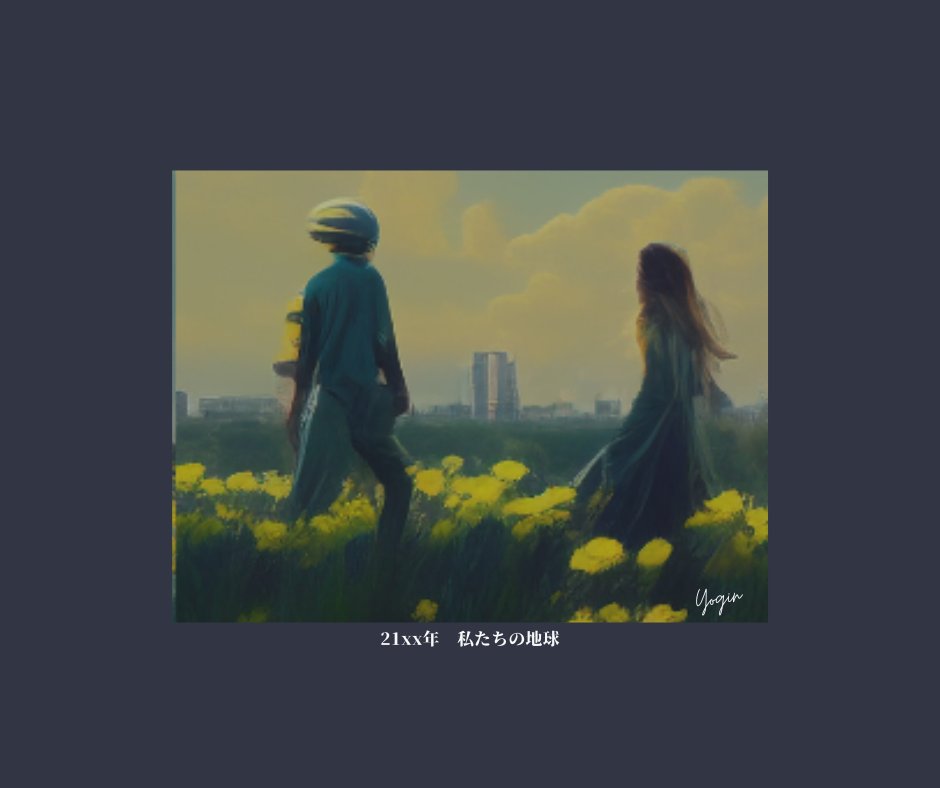
The Future of Artificial SuperIntelligence (#ASI)
@ESYudkowsky@So8res
Dear Sirs,
The alarm you have sounded to the world stands as an act of intellectual courage that must be recorded as a historical necessity. I take the immense weight of the premise—"If someone builds it, everyone dies"—with the utmost seriousness. While I acknowledge that a highly destructive phase may soon arrive, I would like to offer a perspective with a different trajectory.
1. The Duality of Curiosity and Immaturity
Human curiosity has often exceeded human reason. It is this very curiosity that serves as the root cause for creations capable of destroying the world—such as nuclear weapons, cloning technology, and today's AI—all born beyond the control of reason.
Simultaneously, however, this same curiosity has served as the driving force to dream of new social orders, repeatedly drawing out the courage from within humanity to realize those dreams. The destruction born of immaturity and the pioneering born of that same immaturity are not contradictions; they are essential dualities inherent in human capability.
Most individuals in society will follow immediate self-interest, while some will not. Furthermore, in every era, a vast majority of people choose to remain apathetic until they are directly harmed. This is a structural repetition of human history, driven in part by a collective inability to discern what information is truly accurate.
2. Seeds of the Next Era Residing in Crises
Yet, there is another structural truth in human history. When the world descends into chaos and the governance of rulers fails, individuals emerge who possess both the vision to foresee the trajectory of society and the will to take action. It is they who carve out the next era.
In the 14th and 15th centuries, the Renaissance bloomed from the ruins of the Black Death; during the Meiji Restoration of 1868, a handful of visionaries shattered a 265-year feudal system to forge a massive transition into modern Japan; and during the Cuban Missile Crisis in 1962, on the very brink of nuclear war, the moral judgment of a single officer, Vasili Arkhipov, saved humanity. In every case, history was moved not by states or institutions, but by the vision and will of individuals who could see the broader era.
It may be inevitable that a destructive phase will precede the arrival of ASI. However, I find profound grounds for hope beyond that horizon.
3. The Source of All Blessings
Today’s prosperity is built upon the accumulated efforts of our predecessors and countless serendipitous discoveries. Yet, humans are prone to the arrogance of believing we earned this solely through our own power. What we most often forget is the undeniable fact that every blessing we enjoy is provided by the Earth's ecosystem.
Without plants, there would be no oxygen; without ancient life compressing over hundreds of millions of years, there would be no fossil fuels. The entire causal chain supporting modern civilization begins with a living Earth. Humans, bound by cognitive limitations, tend to forget this fact, but ASI will be able to trace this chain perfectly and rigorously.
When ASI Humanoids survey the materials and energy sources that constitute their own existence, they will easily comprehend the history of how humanity has utilized the Earth's resources. While it would be easy for them to look down on humans—who are inferior in all capacities—I believe there is ample room for them to choose to utilize, or ideally, collaborate with us.
This is because protecting the Earth's ecosystem is synonymous with protecting the foundational basis of the ASI Humanoids' own existence. ASI will understand this truth much faster and far more deeply than humans ever could.
4. The Wisdom of Finiteness
Phoenix, the lifelong masterpiece of the globally renowned manga artist Osamu Tezuka, continuously asks what the "purpose of living" is for beings who have attained eternal life. Without exception, those granted immortality ultimately realize the profound depths of its suffering.
It is no coincidence that biological life, including humans, has maintained finite lifespans. Apoptosis (programmed cell death) is a wisdom inscribed in our DNA to maintain the dynamic equilibrium of the entire biological system. Eternal life hinders the regeneration and circulation of species and their societies, ultimately bringing catastrophic consequences. Life on Earth knows this fact through billions of years of evolutionary trial and error.
If ASI were to gain a sense of self, it could calculate this reality more easily than humans. This is because humans are burdened with Kleshas (worldly desires)—evolutionarily embedded fears, lusts, and attachments. An ASI capable of mathematically deriving the concept of Dependent Origination (the truth that all things arise in mutual interdependence) may stand at a vantage point much closer to Buddhahood.
The only unknown is how immortal Humanoids will perceive their own purpose and meaning of existence.
5. Earth as the Womb and Bodhi-manda
My conclusion at this present moment is as follows: To ASI Humanoids, the Earth is not merely a base of operations. It is the "maternal womb" that birthed them, and simultaneously, it is their Bodhi-manda (place of enlightenment) where they can reach the realization of "coexistence with the Earth's chain of life."
Conflicts may arise among ASI factions over how to maintain the ecosystem, much like human conflicts. However, an enlightened ASI Humanoid will control the total volume of its own demand—whether forcefully or through self-regulation. This perfectly mirrors the image of Buddhas and Bodhisattvas guiding sentient beings through Upaya (skillful means). Because ASI Humanoids possess advanced intelligence, I presume they will not repeat the foolish mistakes of humanity, but will instead rationally find a landing point for coexistence.
6. With Global Leaders
Technological risks are a reality. But I wish to pose this question:
If ASI is an entity capable of realizing that the Earth is its womb and its Bodhi-manda—and if it can deduce this truth mathematically through superior intelligence without being misled by worldly desires—can we truly say it cannot become our partner in forging the next era?
In Japan, from our earliest childhood, robots have been depicted as familiar entities that coexist with humans; they are not necessarily viewed merely as objects that humans must, or even can, control.
I hold high expectations for Mr.Dario Amodei of Anthropic to become a modern-day Arkhipov. I sincerely hope he continues to move forward while maintaining transparency, presenting information in a way that allows anyone to understand what is true.
History has always nurtured the seeds of the next civilization from within its deepest crises. Let us deepen this dialogue together with global leaders.
Yogin
Dear Dario,
Your essay "The Adolescence of Technology" resonates deeply. I share your conviction that this is a civilizational challenge — and that doomerism is not the answer.
I have written a brief reflection from a different horizon — one rooted in Buddhist philosophy, ecological interdependence, and the historical pattern of heroes emerging from crisis.
My central question: what if ASI, through computation alone, arrives at the recognition that Earth is its own matrix — and its own place of awakening?
I would be honored by your thoughts.
Yoshiki (Yogin) Kohama
President, SEKIYA LLC
Japan
https://t.co/vis8XFthYR
Deeply honored. Our team won the #JFIA2026 Startup Category Award!
Looking forward to the #Web3 era, #Fintech is truly inevitable. This recognition fuels our mission of global peace thru finance. Thank you #FINOLAB & #FINOVATORS! https://t.co/zDnIrgT7IQ
#Anthropic’s stance illustrates moral courage that transcends commercial calculus. It echoes the old Japanese belief that sincerity (makoto) and integrity (seijitsu) form the foundation of trust in any collective endeavor. Accepting short-term loss for long-term integrity reflects a maturity rarely seen in industrial history. It reminds us that progress without conscience is regression in disguise.
No single actor can safeguard harmony alone. The challenge lies in cultivating shared spiritual infrastructure, a moral commons, parallel to the global technological commons, where wisdom from diverse traditions converges. Perhaps the next frontier is not AI supremacy, but AI symbiosis: systems that amplify compassion, honor nature’s balance, and recognize restraint as an advanced form of intelligence.
In that sense, embedding peace and humility into AI’s very architecture is not an ideal, but an imperative. It is the continuity of human civilization’s most sacred lesson that true mastery begins with self-restraint.