Good News Everyone,
✔️ We are launching a new GreenCrypto Premium channel for Swing Trading. These signals are best for low risk trading.
📖 Attached image has signals performance for last 12 months.
🤖 Signal has cornix integration and we recommend using cornix for trading automatically.
⭐️As part of this launch we are providing 7 days free trial access to everyone. Please join using the channel using below link.
https://t.co/kokDn8UJNg
Link will be open for a limited time.
🔖 To setup Cornix Automation follow the below user guide.
https://t.co/BiKjZdxQnf
✍️ Drop message to https://t.co/UH1Ydh1vQG if you have any questions.
Thank you! 🌳
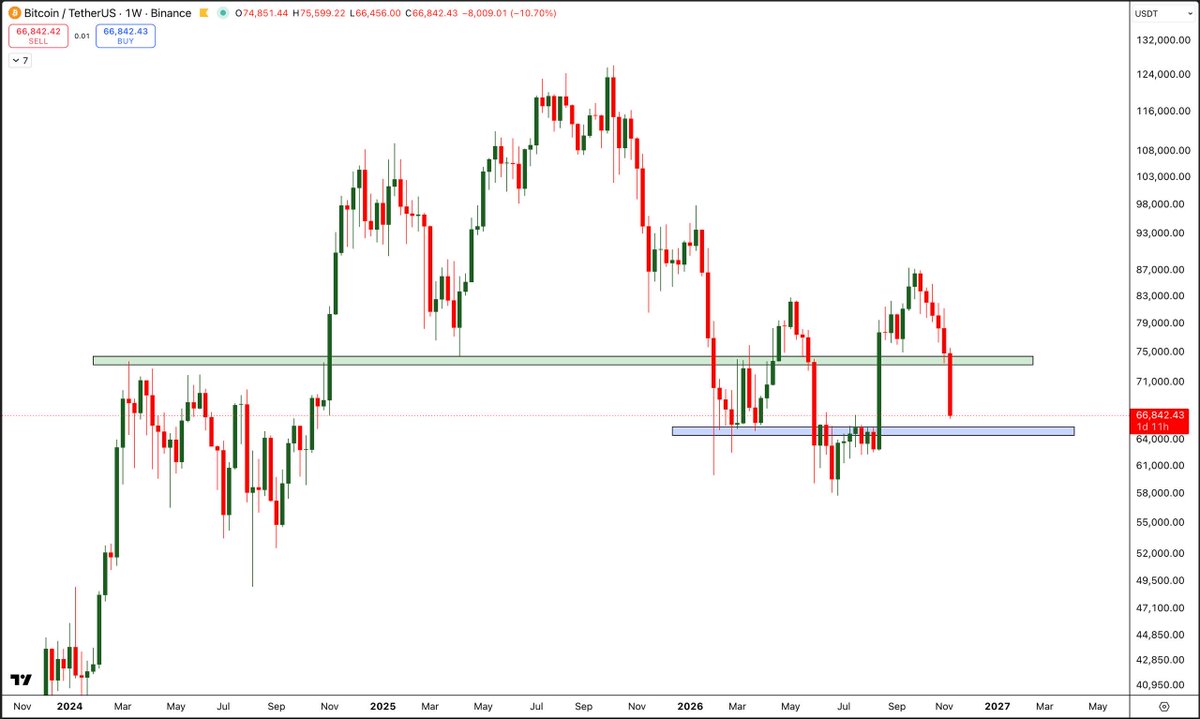
$BTC UPDATE — $65K–$66K SUPPORT TEST! ⚠️
As we discussed earlier, if Bitcoin lost the $73K–$75K support zone, a move toward $65K–$66K was possible.
That move has now played out. $BTC is trading around $66K and testing the next important support zone.
This is where bulls need to defend.
For now, hopefully this support holds.
@getgreencrypto
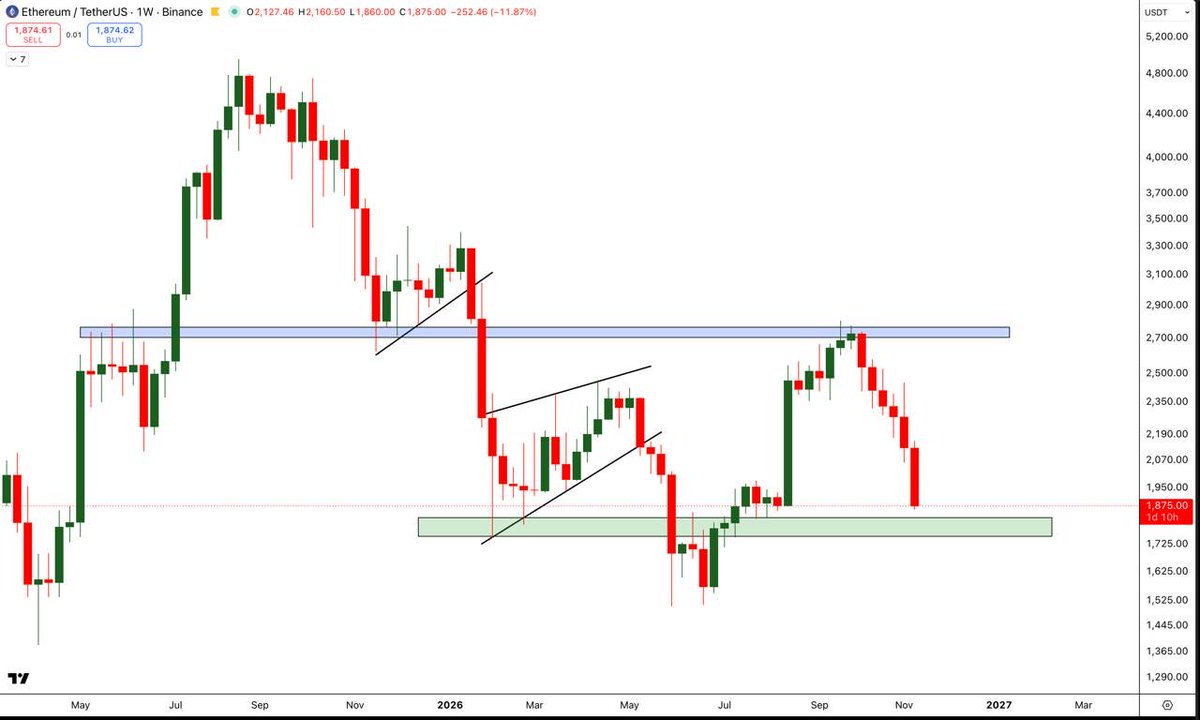
$ETH UPDATE : $1,700–$1,800 SUPPORT IS CRUCIAL! ⚠️
$Ethereum has seen another sharp weekly sell-off and is now approaching the $1,700–$1,800 support zone.
This is an important area that bulls need to defend.
If $ETH holds this zone, we could see a relief bounce and an attempt to recover higher levels
But a decisive weekly breakdown below $1,700 could expose ETH to further downside.
For now, all eyes are on this support. Hopefully buyers step in here. 👀
This is bigger than just another partnership. 👀
Traditional finance is slowly moving on-chain, and Avalanche is positioning itself right in the middle of that transition.
24/7 trading, clearing and settlement could be a major shift for global markets.
$AVAX deserves attention here.
BREAKING: Upcoming NYSE-affiliated tokenized securities platform’s core clearing and settlement layer will be built on top of Avalanche technology.
Avalanche will support the platform’s clearing firm, supporting the development of infrastructure for 24/7 trading, clearing, and settlement.
A landmark step toward the next generation of global financial markets.
$BTC is at a make-or-break level. 👀
The $73K–$75K zone is where bulls need to step in.
Hold it → $80K–$82K could come back into focus.
Lose it → $65K becomes the next major area to watch.
No need to predict. The weekly close will tell us a lot.
Will Bitcoin defend this support?
bitcoin:native just crossed $80K. 👀
The next move depends on whether bulls can hold this level.
If $80K turns into support, another leg higher could be coming.
And if BTC keeps pushing, don’t be surprised to see altcoins wake up next.
$BTC
Red days are part of the market. Don’t let a pullback turn into panic or FOMO. 👀
We’ll keep watching the key levels and wait for the right setups.
The market will recover — patience is the game. 💪📈
Stay focused. Better opportunities can come after the fear.
$QTC is one of the strangest new crypto launches I’ve seen this cycle. 👀
#Quantus went live on mainnet on September 9, with a completely different thesis from the typical L1.
It is building quantum-resistant, private digital money from the ground up.
Here’s what makes it interesting:
🔹 21M QTC max supply
🔹 73% of supply is mined through PoW
🔹 No dev tax or treasury cut from block rewards
🔹 ML-DSA post-quantum signatures
🔹 Privacy layer + zero-knowledge technology
🔹 ~12-second target block time
The key idea is simple:
Most major blockchains today rely on cryptography that could eventually be threatened by sufficiently powerful quantum computers.
Quantus is trying to build the alternative before that problem becomes urgent.
And there’s an interesting economic angle.
Quantus reported 24 TH/s hashrate, difficulty above 300T, and roughly 650–1,100 daily active accounts after its first three weeks on mainnet. The team estimates mining one QTC currently costs around $45–$80.
But here’s the part I’m watching most closely:
QTC isn’t an Ethereum/Solana competitor.
Quantus explicitly positions itself more like Bitcoin/Zcash/Monero — a privacy-focused store-of-value network rather than a general-purpose smart-contract chain.
So the entire thesis comes down to one question:
Does the market eventually value quantum-resistant money as a separate crypto category?
If the answer is yes, QTC has a very interesting narrative.
If not, the technology alone won’t be enough.
This is why I’m watching $QTC closely. 👀
Not because it pumped.
Because the underlying thesis is different.
$QTC #Crypto #Bitcoin
$QTC is getting wild. 👀
Quantus launched mainnet only a few weeks ago, and the token has already moved from around $10 to triple-digit levels.
But the interesting part isn’t just the price.
21M max supply + 73% mined through PoW + post-quantum cryptography makes this a very different L1 thesis.
The big question now:
Is QTC still early, or has the market already priced in the narrative? 👀
$QTC #Crypto #Bitcoin
$BTC is back near $84.6K after failing to hold the $87K breakout. 👀
The interesting level hasn’t changed:
$82K = key support.
Hold it → another attempt at $87K becomes interesting.
Lose it → deeper pullback could follow.
The next move starts with $82K.
hedera-hashgraph:native is breaking out of a resistance zone that has capped price for months. 👀
The weekly structure is finally changing.
If this breakout holds and the zone turns into support, $0.15 becomes the next major area I’m watching. 📈
The interesting part? Hedera is also seeing fresh enterprise developments, including IBM Cloud integration and its cross-ledger protocol moving into the Linux Foundation.
Breakout + improving fundamentals = $HBAR is back on my radar. 🔥
$HBAR
$BTC is pulling back from the recent $86K–$87K area and is now approaching the $82K support zone.
That zone is important on the daily chart. If it holds, we could see another bounce.
$82K is the level I’m watching now. 👀
ethereum:0x4a220e6096b25eadb88358cb44068a3248254675 might be entering a completely different phase. 👀
For years, the Quant thesis was basically:
“If banks ever need blockchain interoperability, Quant could become the middleware.”
Now we’re starting to see that thesis tested in real financial infrastructure.
On September 24, The Clearing House selected Quant to power the interoperability, orchestration and transaction-management layer of its U.S. On-Chain Money Initiative.
This is important because The Clearing House operates major U.S. payment infrastructure including RTP and CHIPS.
The goal is to allow financial institutions to clear and settle tokenized deposits while connecting that new infrastructure to existing payment rails.
And this isn’t just about moving tokens between blockchains.
The bigger opportunity is programmable money:
→ Tokenized deposits
→ Automated settlement
→ Cross-border payments
→ Corporate treasury
→ Digital-asset settlement
→ Liquidity management
That is where Quant’s Overledger becomes interesting.
Instead of forcing institutions to choose one blockchain, Overledger is designed as an interoperability layer connecting different DLT networks, financial systems and existing infrastructure.
Quant also launched Fusion Rollup in June, pushing further toward multi-ledger infrastructure.
Now comes the part most ethereum:0x4a220e6096b25eadb88358cb44068a3248254675 posts miss:
The token economics.
QNT has a fixed maximum supply of roughly 14.6M tokens.
Its utility is tied to access to Quant’s infrastructure, including Overledger. Quant’s documentation says customers can pay platform fees in either fiat or QNT, while its regulatory documentation describes QNT as an access/licensing token.
So the bullish thesis isn’t:
“Banks use Quant = banks automatically buy QNT.”
That’s too simplistic.
The real question is:
How much of Quant’s growing enterprise activity ultimately creates recurring demand for QNT?
If institutional adoption scales while the token remains structurally scarce, the supply/demand equation becomes very interesting.
And there’s another important confirmation:
Quant’s technology is already being used in regulated financial projects in the UK, while major banks have been involved in live tokenized-sterling payment work.
So I’m watching $QNT less like an ordinary altcoin…
…and more like a bet on the interoperability layer of tokenized finance.
The technology can succeed.
The partnerships can expand.
But the biggest question for QNT holders is still:
Does adoption of the infrastructure translate into meaningful, sustained token demand? 👀
That is the metric I’ll be watching.
$QNT $LINK $ONDO
ethereum:0x4a220e6096b25eadb88358cb44068a3248254675 just woke up. 👀
Up more than 50% in a day, with fresh institutional/tokenization developments putting Quant back on the radar.
The interesting part isn’t just the pump.
It’s whether this momentum can turn into sustained adoption for Overledger.
$QNT - back in the spotlight?
$QNT
$DASH is quietly getting interesting again. 👀
Most people still think of Dash as an old-school payment coin.
But 2026 looks very different.
Shielded transactions are now live on Dash Evolution, DashPay has added cross-crypto swaps, and the roadmap is moving toward shielded payments, usernames and smart-contract infrastructure.
The privacy narrative is heating up again.
Could $DASH be one of the old coins getting a second life? 🧐
$DASH $ZEC $XMR
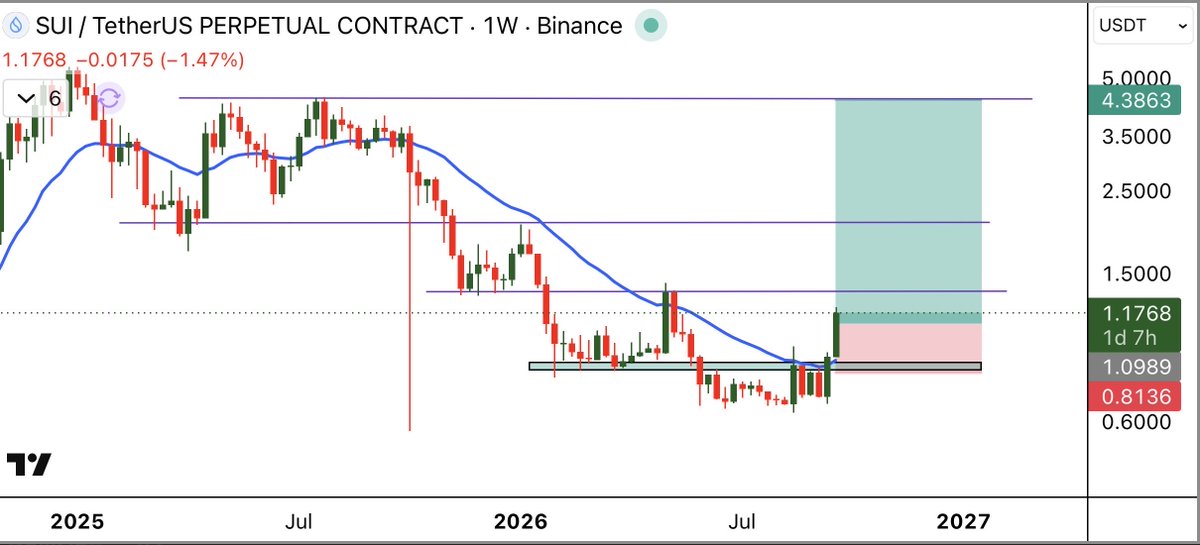
$SUI looks like it’s trying to make a comeback. 👀
Months of weakness → accumulation → reclaiming the $1.10–$1.20 zone.
Now everyone’s watching the same question:
Can SUI turn this breakout into a real trend reversal?
$SUI
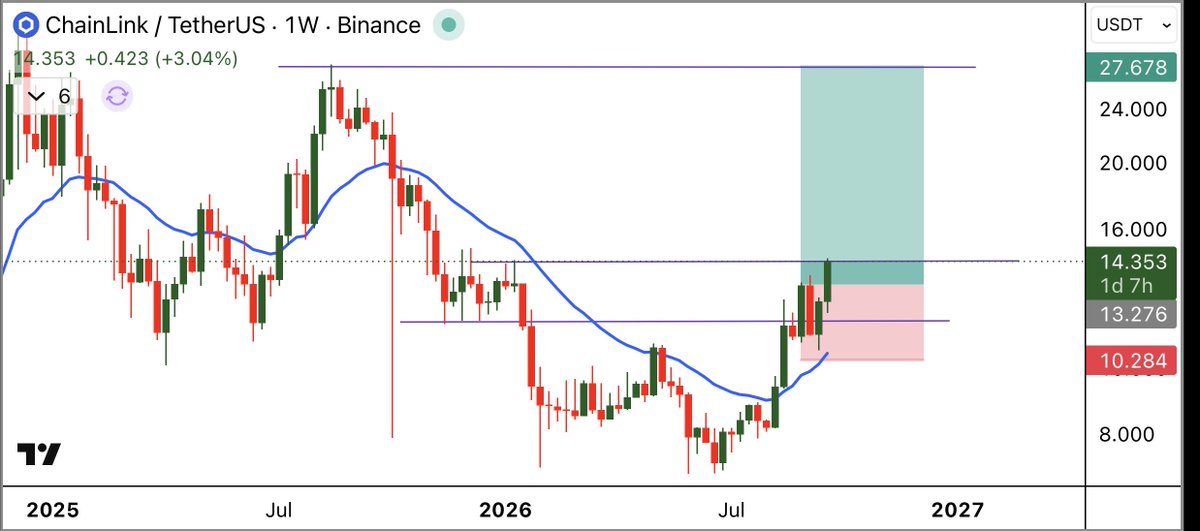
ethereum:0x514910771af9ca656af840dff83e8264ecf986ca is sitting right at a major weekly breakout zone. 👀
The $13.2–$14.3 area is the level to watch.
Hold it → $18 becomes interesting.
Break higher → $22–$27 starts coming into focus.
LINK finally waking up? 🚀
$LINK
midnight-3:native is one of those projects I’m keeping on my radar. 👀
Not because it’s just another privacy coin.
Midnight is building programmable privacy, allowing apps to keep sensitive data private while still supporting selective disclosure and compliance.
The interesting part:
$NIGHT → generates $DUST → DUST pays for transactions.
According to Midnight, holding NIGHT can generate up to 5 DUST per week.
The ecosystem is also starting to expand across cross-chain infrastructure, DeFi and real-world applications.
But there’s one thing I’m watching closely:
24B total NIGHT supply + a 450-day thawing period.
Adoption needs to grow alongside that supply.
Privacy + compliance + real utility is a powerful narrative.
Now the real question:
Can Midnight turn the technology into massive real-world usage? 👀
$NIGHT
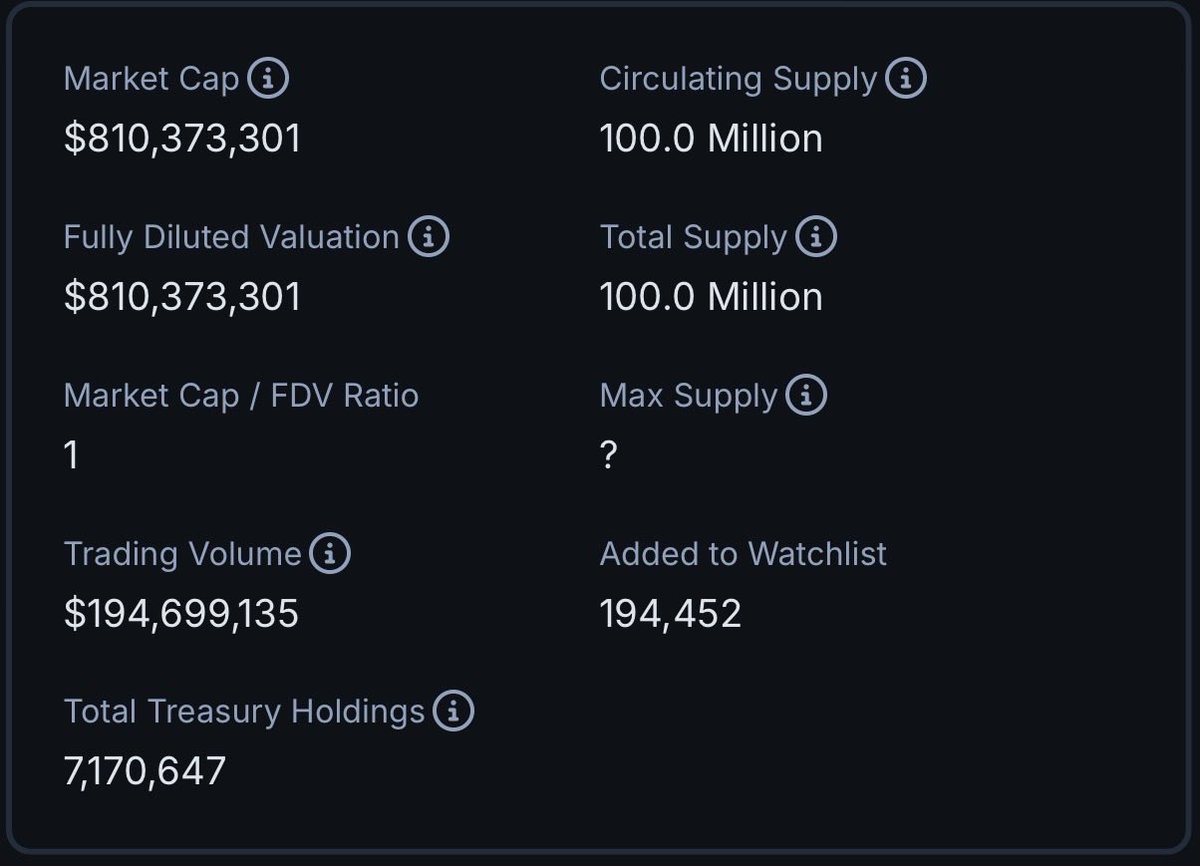
injective-protocol:native is sitting around $8 with ~100M supply.
That makes the market-cap math simple:
$1B → $10
$2B → $20
$3B → $30
$5B → $50
What makes INJ interesting isn’t just the price.
Injective is building around on-chain finance, RWAs, tokenized stocks and derivatives, while its tokenomics include ongoing burns and no major future unlock cliff.
The big question now:
Can real adoption + rising network activity justify a multi-billion-dollar valuation?
If yes, $INJ could get very interesting from here. 👀
$INJ