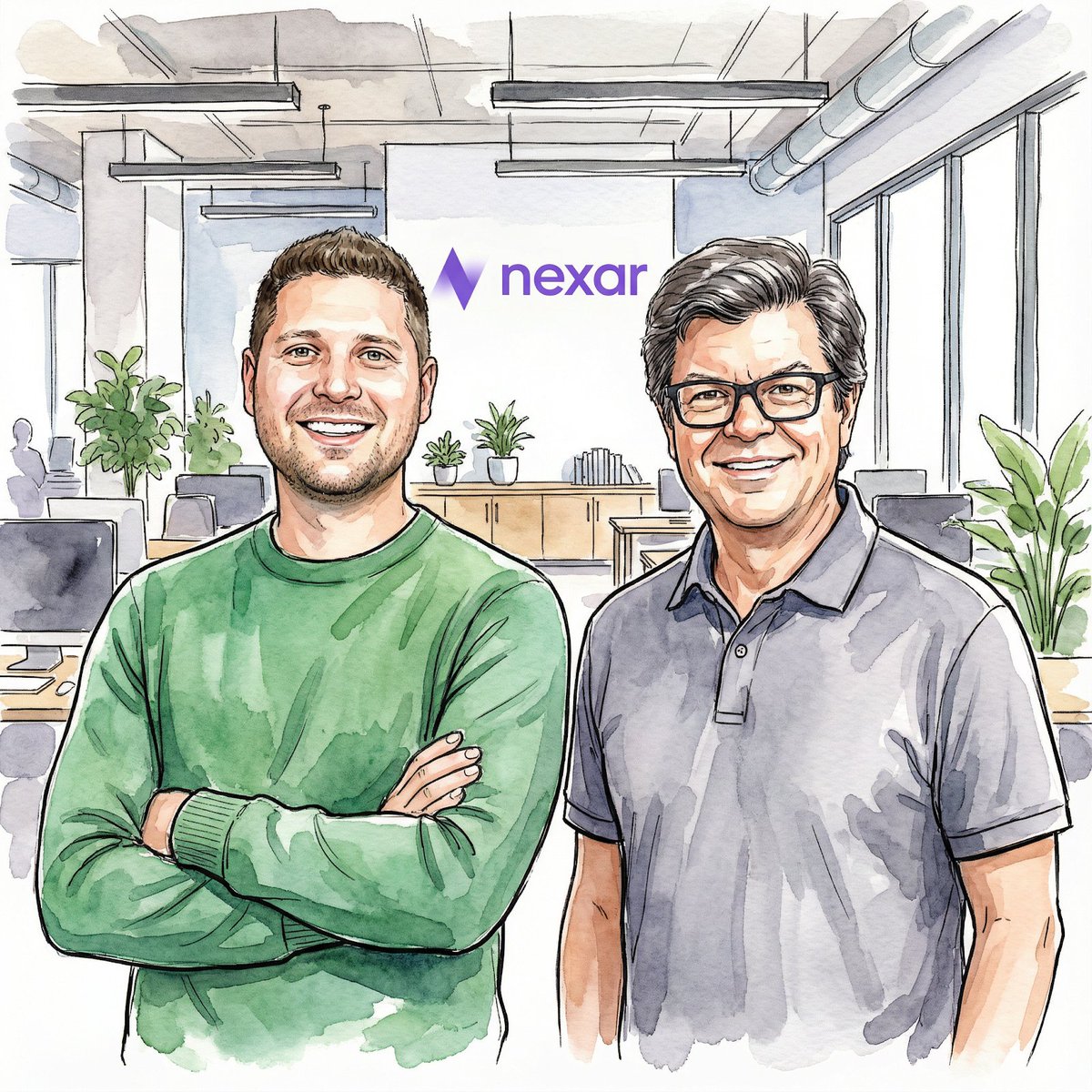
Nexar announces AI pioneer @ylecun is joining our Board of Directors as physical AI scales beyond the lab.
The era of simulation is ending.
Real-world learning is the new constraint.
VIsit here for the full press release:
https://t.co/Sy7SWpsQJm
Until today, "safer than a human driver" was a claim nobody could check. Today, @Lockton and Nexar made it a measurement.
Two AV systems driving the same boulevard at the same hour cannot be compared to each other. Each one's safety record exists only on its maker's terms. Its own miles. Its own disengagement counts. Neither can be compared to the human driver in the next lane.
The new framework measures AV systems against BADAS 2.0, our collision anticipation model trained on 2 million real-world driving events from public roads.
This means "Safer than a human driver" stops being a marketing line. It becomes evidence, on the record, that a third party can check.
When the claim has to clear an outside bar, the systems built to clear it get better. And when the systems get safer, the roads do too.
For the full release visit:
https://t.co/8CPgLuTEFe
About one in five fatal work zone crashes in the U.S. is a rear-end collision. A driver, doing everything he was told, hitting something that shouldn't have been there.
The problem usually isn't carelessness. It's mismatch. The cone isn't where the sign 200 feet back said it would be. The taper is sharper than the diagram. The driver does the right thing for the work zone they were briefed on, not the one they're actually entering.
Agencies face the same mismatch from the other side. The plan that went out at 7 a.m. has drifted by noon. Nobody has filed anything. The next inspection is Thursday.
That's the gap we're coming to ITS America to talk about. Continuous ground truth from 350,000+ in-vehicle devices covering 98% of U.S. roads, now available through IBM watsonx Orchestrate - so DOT teams see what drivers are seeing, inside the systems they already use.
The conference opens two weeks from today, right as summer construction hits full stride and the longer evenings push more work into the hours when the data says it's most dangerous.
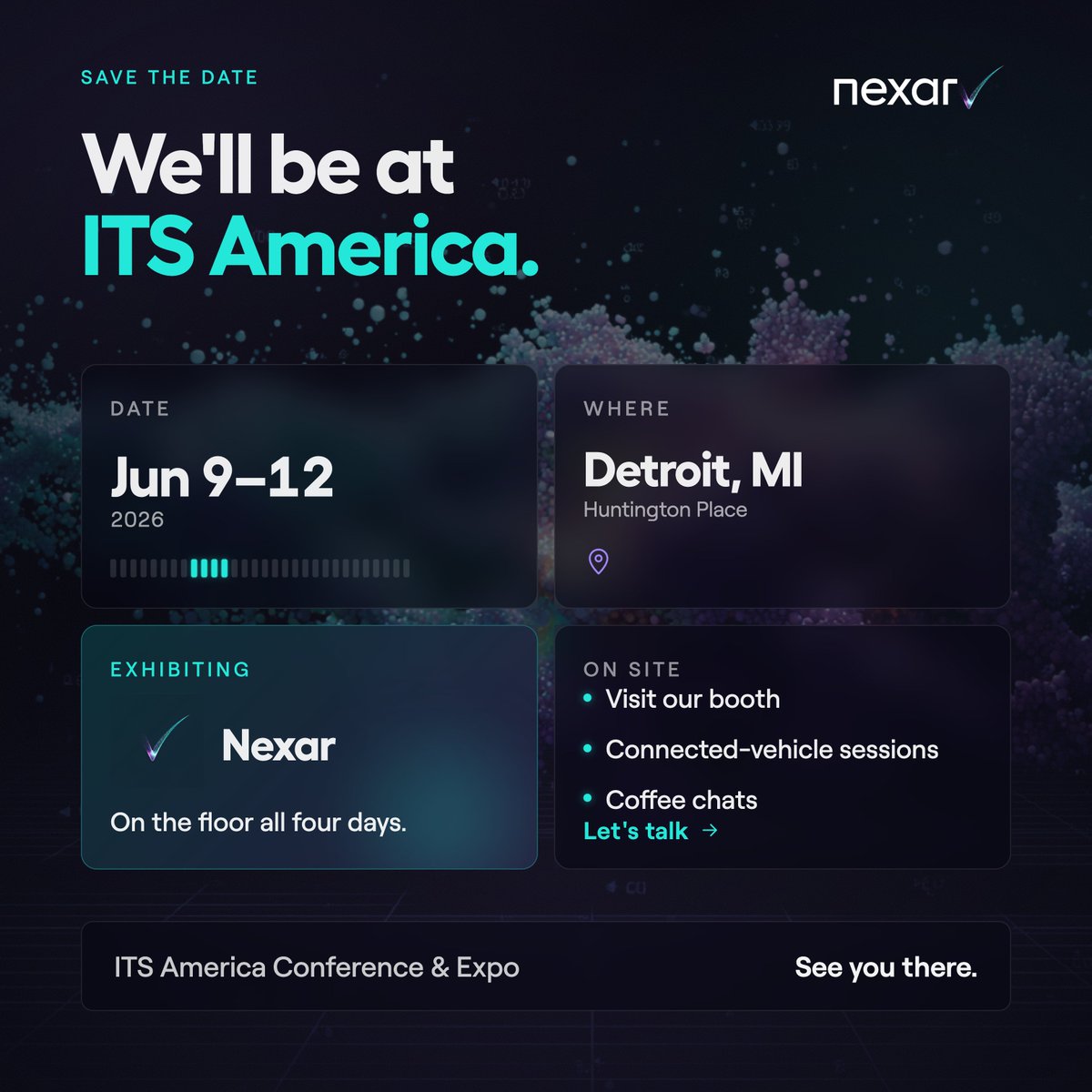
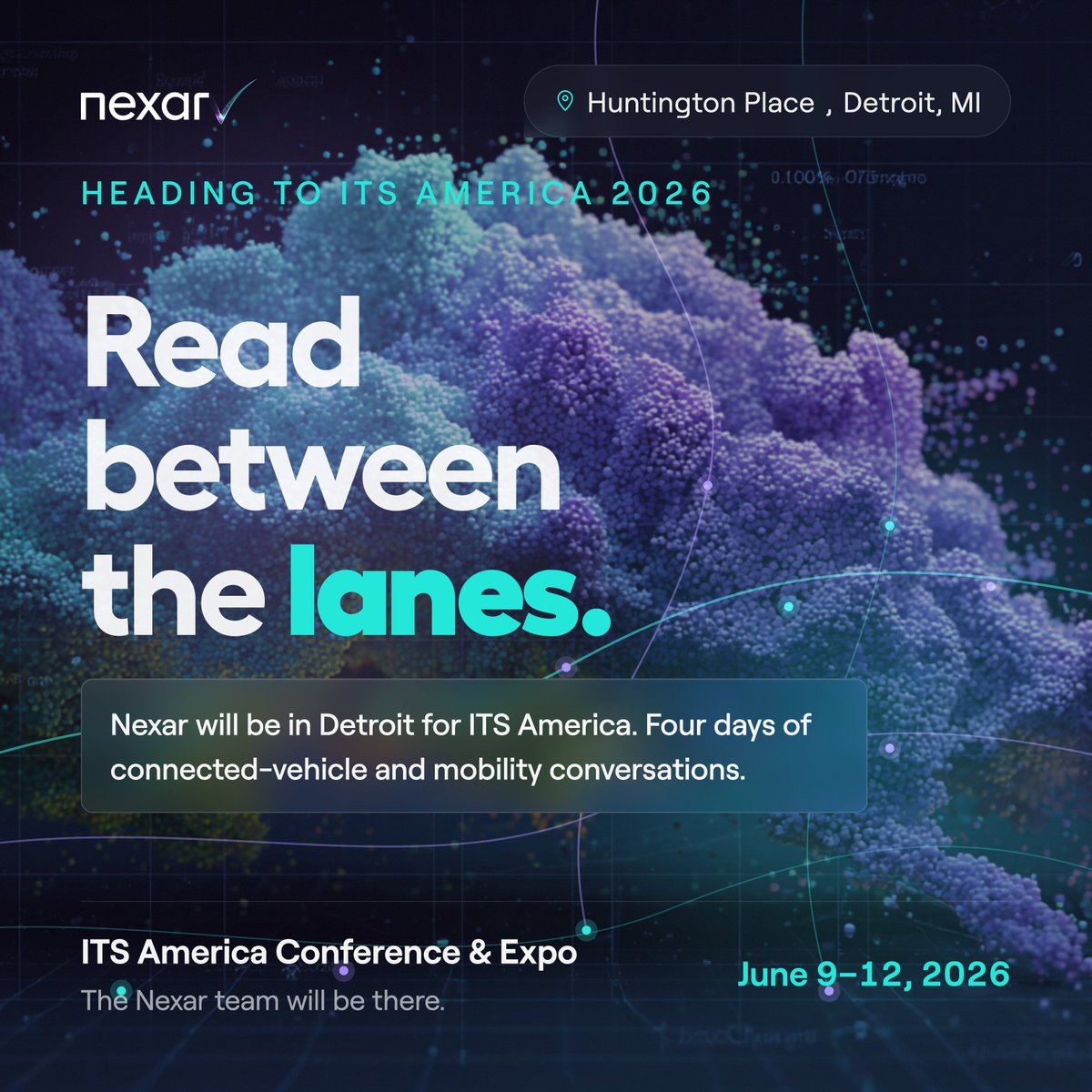
We'll be there. June 9–12. Huntington Place. Come say hi to our team on the ground.
For more on the work and the agent, visit here:
https://t.co/UM6nB3l6Ps
#WorkZoneSafety #Nexar
Memorial Day weekend is almost here, and the part of the road that gets the most coverage is not the part that matters most for safety.
Last year on the holiday Monday, commercial road activity in U.S. cities was down 22.9%. The drivers still working averaged 21.65 mph, the fastest urban pace of the month.
A faster road is not a safer one. With less commercial traffic to slow things down, a working driver's instincts for a Monday in their city do not quite match what is in front of them.
To everyone on the clock this Monday: drive carefully out there, and thank you.
For the full case study:
https://t.co/Ji9NPH82pT
We are heading to the @ITSAEvents conference in Detroit next month, and bringing with us a way for agencies to see what's actually in their work zones, not what the last report said.
Work zones don't sit still. Cones get moved, barriers shift overnight, lanes open and close through the day. Inspectors can't be everywhere, self-reports lag, and complaints arrive after someone has already swerved.
Most mismatches are minor. Some are catastrophic. 899 people died in U.S. work zones in 2023 - most of them drivers, not workers.
What we're bringing is continuous ground truth from 350K+ in-vehicle devices covering 98% of U.S. roads. Now plugged into agency workflows through @IBMwatsonx Orchestrate.
We'll be there. June 9–12. Huntington Place. Come say hi to our team on the ground.
For more on the work and the agent: https://t.co/p4cuuNeq0h
#WorkZoneSafety
This Friday, May 15th, is National Bike to Work Day. An estimated 100,000 Americans will leave the car at home and ride.
Last year's data has something useful to keep in mind.
On May 15, 2025, we recorded 358,419 rides across our network. Hard braking and cornering held essentially flat against the prior six Thursdays. Harsh acceleration ticked up about 4%.
The day tens of thousands of additional cyclists were on the road, the fleets around them did not spike in the events that come before a crash.
Another pattern is worth knowing about before Friday, and it reflects a seasonal change:
high-G impact rates in our data climb from ~800 per million rides in early April to 1,000–1,300 by late May. The seasonal curve is steeper than anything a single event day moves.
So take note: The road you are rolling onto Friday morning is, per mile, more impact-prone than the road in March.
For the full case study visit here:
https://t.co/0k9rLXHOpN
Enjoy your rides, and stay safe out there!
#BikeToWorkDay #RoadSafety #Nexar
The AI industry is realizing what we have known since 2015: Autonomous AI that moves through the physical world needs the physical world underneath it.
In their article a few days ago, @CurbivoreNews reported two of the largest mobility networks are now building real-world data programs to feed their AV partners.
Our CEO @ZMGreenb, quoted in the piece, explained how real-world data and operations as the groundwork have transitioned from "nice things to have", to required infrastructure for autonomous deployment.
The contrarian position we had 11 years ago, has now the consensus.
For the full article visit:
https://t.co/Qo0baI9PYV
371 fewer pedestrian deaths in the first half of 2025.
Down 11% year over year, the biggest drop in fifteen years of GHSA tracking.
371 more people who got to celebrate a birthday this year, sit through a graduation, call their kids on a Tuesday.
To the engineers, the planners, the cities, the drivers who paid more attention this year than last: well done. The work is working.
Let's keep it going.
For the report, visit here:
https://t.co/LXlER0iAgG
What a moment for our CEO Zach Greenberger.
Tune in live, tomorrow morning to seem him on IBM THINK's main stage:
https://t.co/CI3Z7jSAwI
#IBMTHINK#PhysicalAI#Nexar
Tomorrow I'm on the main stage at IBM THINK 2026.
Wild sentence. I used to work at @IBM. I watched those stages from the crowd.
Now I'm bringing @getnexar to that stage with a real-time intelligence layer for cities improving road safety with real-world data.
From IBMer to IBM Think main stage. Circle complete.
#IBMTHINK #PhysicalAI #Nexar
Thirteen days ago we made a claim: the best collision prediction model is also a world model.
The responses since then showed exactly why that distinction matters.
Because the responses didn't come only from automotive. They came from Warehouse automation teams. Drone programs. Humanoid robotics engineers. Defense tech operators. Bodycam manufacturers. All asking the same question: does this work in our environment?
It does. Not because we trained in those specific environments- because we trained it somewhere harder.
99.4% average precision. 22 million parameters. Edge-deployable on hardware already inside most robotic systems today. No environment-specific retraining required.
One model. For everywhere.
Run your own videos on BADAS 2.0 and see for yourself. Link in the thread
Welcoming Jennifer Vescio @northface17, former Chief Business Development Officer at Uber, to the Nexar Board of Directors.
She's the third recent board addition, following Yann LeCun and Francis Suarez earlier this year.
https://t.co/IFFVkFfsAm
Three days since BADAS 2.0 launched - and the response has been overwhelming.
Researchers who've spent years on this problem reaching out. AV engineers asking hard integration questions. Safety teams stress-testing edge cases we've never seen. City planners asking whether the same behavioral signatures that predict crashes can reshape how roads get designed.
This isn't hype. This is the field recognizing something real.
A model that learned physics, not patterns. That runs on in-vehicle devices, not a data center. That explains every prediction in plain language. That works on footage it was never trained on.
The conversations happening right now are exactly why we built this. We're just getting started.
Link to run BADAS 2.0 on your own videos in the thread.
Today, we are launching BADAS 2.0. The world’s best collision prediction model, outperforming frontier benchmarks like NVIDIA Cosmos and Google Gemini.
Its also 91x smaller with higher precision...
BADAS 2.0 is built on a V-JEPA2 world model architecture and trained entirely on real-world video from a network capturing over 100M miles every month.
Not simulated. Not curated. Real-world chaos.
The model doesn’t just detect events. It understands what is happening, explains it, and generalizes to environments it has never seen before. The new true benchmark of safety for Physical AI.
Try your own videos on it!! Link in the first comment 👇
We just built the best collision prediction model on the planet.
BADAS 2.0: 99.4% AP. Built on V-JEPA2, Yann LeCun's physical AI architecture. A true world model that understands reality, not just the road.
Explainable. Generalizes beyond driving. Runs from cloud to edge. Our 22M model beats NVIDIA's 2B Cosmos.
We published the benchmarks. We're inviting comparison.
Safer roads, safer cars. That's the point.
Run your own videos on BADAS 2.0, link in the first reply.
"Every truck on the road is generating data that nobody's capturing today. It happens, and it disappears."
Nexar CEO @ZMGreenb on the "What The Truck" podcast from @FreightWaves.
The data was always out there. Someone had to build the network to catch it.
So we did. 350K+ cameras. 100M+ miles/month. All capturing real life.
That network is the basis for everything we do. From BADAS, to our work with @IBM.
To see more on our network and what it powers, visit here, and let's start the conversation:
https://t.co/rz16t4hLKn