There's a reason muscles only grow under resistance, why diamonds only form under pressure, why the deepest faith almost always emerges from the hardest seasons. Hardship isn't a detour from God's plan — sometimes it's the very classroom He uses to shape us.
That doesn't make it easy. It doesn't make the heartache lighter or the waiting shorter. But it does mean nothing is wasted. Every difficult step you've taken, every prayer prayed through tears, every morning you got up when staying down felt easier — God sees it. And He's building something in you that will honor Him for years to come.
This plea is not merely heartbreaking. It is theologically indicting.
Every religion that elevates a historical figure invites an obvious objection: you have imported the limitations of his century along with his wisdom.
Christianity is not immune to this on its surface. But the question is not which century your prophet came from. The question is whether the man you elevated transcended his century or merely inhabited it.
Jesus touched lepers in a world that quarantined them. He held public theology with women when the rabbinical tradition refused them. He stood inside Roman imperial power and refused every offer of it. He told his disciples that greatness looked like a servant and that the meek, not the militarily dominant, would inherit the earth. He did not import 1st century Rome. He confronted it at every structural point.
Muhammad worked within the gender architecture of 7th century Arabia. He occasionally softened it. He did not dismantle it, he codified it. Surah 33:59 does not emerge from divine aesthetics. It emerges from a situation where his men were harassing women in Medina’s streets, and the solution offered was not to discipline the men but to mark the women.
Distinguish your wives so we know which ones we can abuse.
That is the textual sociology behind the hijab. You can argue across fourteen centuries about jurisprudence and interpretation but you cannot erase the situation that produced the verse.
When a founding figure does not confront the power structures of his world but works within them, those power structures become sacred. The 7th century gender architecture does not stay in the 7th century. It travels forward dressed as revelation.
This is why the Taliban are not an aberration. They are the answer to a sincere question: what does serious, uncompromising application of the external enforcement paradigm look like when you remove the moderating pressure of Western political shame? Afghanistan is the answer. Those men are not distorting Islam. They are implementing it without apology.
Christianity is structurally different. Not because Christians are morally superior but because the architecture is different by design.
The compliance mechanism is inward. The law written on the heart, not enforced at the school gate. This means God chose that the most devout believer and the most flagrant sinner face each other in the same invisible courtroom, and He alone presides. He gave us the mandate to preach and persuade. He did not give us the authority to coerce. When men try to, they are not being more Christian. They are being less. The architecture resists them.
Islam’s architecture does not resist them. It licenses them. And men who want power will always find a religion that licenses them and call it devotion.
So that girl’s cry is a theodicy in one sentence. She is right. Whatever god demands this cannot be the creator of women.
The left refuses this conversation because it forces a choice between feminist commitments and the reflexive defence of Islamic exceptionalism. They will choose the latter, dress it in the language of anti-colonialism, and leave Afghan girls crying in the dark.
Christianity has the harshest verdict on human nature of any religion on earth. It also has the most extravagant grace of any religion on earth. That is not coincidental.
Every other religion does one of two things. It sets a bar you can clear; works, rituals, devotion, and moral accumulation, with a path to standing before your god with something to show.
Or it dissolves guilt altogether, telling you the self is an illusion, that sin is merely ignorance, that enlightenment is just a reframe. Human religion, across every culture and every century, moves in one of these two directions. Earn your way in, or talk your way out.
Christianity does neither. It does something no human committee would or could design.
The Sermon on the Mount is not mere moral teaching, it is an intense prosecution. Jesus does not merely raise the behavioral bar, but He relocates it to the interior, where nobody can hide. The Pharisees; the most disciplined religious performers in the ancient world, could clear the behavioral bar. They could not touch the heart bar. Nobody back then could and nobody since has.
Anger is murder, lust is essentially adultery. When Jesus finished speaking in Matthew 5, no one in that crowd was still standing, all their defenses collapsed. That does not look like religion, it resembles a courtroom. And the verdict is an emphatic GUILTY, without exception.
Now watch what happens next.
The same God who delivers that verdict does not simply show mercy. A judge who acquits a criminal is merciful. What Christianity offers is not acquittal. The criminal does not simply walk free. He moves into the judge’s house, he gets the last name and he receives an enormous inheritance. Romans 8:17 says we are heirs of God and co-heirs with Christ. Not pardoned, or tolerated but adopted and entitled to the full inheritance of the eternal Son.
People underestimate what that inheritance means because they think in earthly categories. The richest human who has ever lived will die, and his estate will eventually dissolve. What Romans 8 describes is something creation itself is groaning in anticipation of; the full revelation of the glory of the sons of God. You are not inheriting assets. You are inheriting glory. The shared, eternal glory of the Son of God.
No human religious imagination arrives here. The gap is too wide. The indictment is too severe and the grace is too extravagant, and they are too precisely proportional to each other to have been invented. The depth of the hole and the height of the rescue match exactly. That kind of architecture does not come from a fleshly committee.
The most devastating indictment in the history of religion. The most generous verdict in the history of religion. Both in the same book, both from the same God. The paradox is not a contradiction. It is in my opinion, comprehensive proof of the substance and the veracity of this beautiful faith.
I find it strange that fully grown adults spend their time debating abortion as though they somehow entered the world differently from every other human being.
Every single one of us started the exact same way.
A sperm. An egg. A unique human DNA sequence. A developing human life.
That's not religion. That's not politics. That's basic biology.
Yet we're constantly told a series of increasingly absurd claims to justify ending that life.
🔹 "It's just a clump of cells."
You are a clump of cells.
So am I.
The question isn't whether something is made of cells. The question is what kind of cells they are.
A human embryo isn't dog cells, cat cells, or tree cells.
It's human.
🔹 "It's not a human."
Then what species is it?
There is no stage of pregnancy where a human mother is carrying a dolphin, a kangaroo, or a toaster.
The unborn child is human from conception.
The debate is about whether that human has rights.
🔹 "It's not alive."
If it's not alive, why is it growing?
Why does it have a heartbeat, brain development, cell division, metabolism, and measurable biological activity?
Things that aren't alive don't develop.
🔹 "It's my body."
Your body has your DNA.
The baby has its own DNA.
Your body may be female.
The baby may be male.
Two distinct human beings are involved.
🔹 "It's just reproductive healthcare."
Removing a splinter is healthcare.
Treating cancer is healthcare.
The deliberate termination of a developing human life is a completely different moral question, which is why abortion remains one of the most debated issues on Earth.
🔹 "Nobody should tell a woman what to do."
Society tells all of us what we can and cannot do when another human life is involved.
The entire debate comes down to one question:
When does a human life deserve protection?
Everything else is a distraction.
The reality is simple.
Every abortion supporter was once an unborn child.
Every politician arguing for abortion rights was once in a womb.
Every activist marching for abortion was once dependent on their mother for survival.
Nobody arguing this issue today would be here if someone had decided that dependence made them less human.
That's the uncomfortable truth at the center of the abortion debate.
You don't have to be religious to recognize it.
You just have to be honest enough to admit how every single one of us got here.
When I was Muslim, I would argue & say we had the same prophets as Christians.
But this one broke me:
Surah 17:101: Allah gave Moses 9 clear signs.
I knew the list. The staff. The shining hand. The drought. The flood. The locusts. The lice. The frogs. The blood.
I held onto those 9 signs like proof I had the real story.
But bro, you know what shook me?
There’s a night missing.
After all nine signs, right before Israel walks out of Egypt, something happens that the Quran goes completely silent on.
A lamb is slaughtered.
Its blood painted on the doorposts.
And death passes over every house covered by that blood.
The Passover.
I grew up hearing the whole Exodus story. But nobody ever told me about the blood on the door.
Islam just skips it.
And here’s what wrecked me.
The Bible, the book I was taught was corrupted, mentions the Passover over 70 times.
Exodus. Leviticus. Numbers. Deuteronomy. The Psalms. The Prophets. The Gospels. Paul.
70 times.
So I had to ask myself the honest question:
If men corrupted this book, why would they obsess over the same story for 1500 years? Across dozens of authors who never met?
You don’t forge a document 70 times.
That’s just not corruption.
That to me is preservation.
And then I read the line that finished me off.
1 Corinthians 5:7.
“Christ our Passover lamb has been sacrificed.”
That’s when it hit me.
The whole story was never just about Moses.
It was always pointing to a King.
The final lamb. Whose blood, when applied to your life, makes death pass over you.
Forever.
The Quran gave me 9 signs but hid the one night that explains why any of them happened.
Because the moment a Muslim understands the Passover…
he’s one step away from the cross.
Nobody asks why beauty exists, but everyone asks why suffering does. The question nobody asks is the one that changes everything.
Modern physics confirms that the universe has an undeniable, finely tuned order: the gravitational constant is calibrated so precisely that a deviation of 1 in 10^40 collapses everything.
The human eye processes 10 million colors. DNA encodes more information per cubic millimeter than any human technology has approached. This is all magnificent, the designer’s track record is not in question.
If a surgeon has performed ten thousand flawless operations and you are on his table, you do not demand explanations for every incision. Excellence earns the right to say “I know what I’m doing” before the full explanation arrives. Past precision earns theological trust for the parts we cannot yet explain.
It also proves capability: if this God can build something as complex as DNA, then he has the technical capacity to end suffering. The question is not if, but when.
A hidden premise is buried inside the very popular complaint about suffering. When we ask why God allows suffering, we assume we deserve better. We demand perfection now, before the final act of history.
The Christian framework refuses that assumption, it posits that sin is not merely a behavioral lapse correctable with effort; it is an ontological distortion, a fracture in our nature, and a chosen distance from the source of all coherence. The world we experience is not random cruelty; it is the accurate shape of that distance. The farther from the light you go, the darker it gets. That is the factual architecture. In this sense the staggering question is not why we suffer, but why, given what we are, anything beautiful exists at all.
What we have now is a mediated reality. God governs through instruments and delegated systems; the sun for light, the rain for growth. This is God operating behind a veil, and the reason is mercy. To drop the veil and introduce his full presence into a fractured world would mean immediate consumption by absolute justice.
To end all suffering this second would require either importing evil into the final perfect state, or executing final judgment immediately, closing the door on everyone not yet reconciled. The pause before the last act is not negligence, it is a stay of execution, the widest mercy available, keeping the door open for reconciliation before the final reality sets in.
Revelation 21 promises he will wipe every tear from every eye. This is not a general amnesty where wrongs are administratively cleared, but something personal, individual, and complete. If a single person in the new creation carries unaddressed grief over what God allowed, the system fails. The promise is therefore not a mere comfort verse, but it is a contractual commitment from a God with the full capacity to keep it.
In the New Jerusalem, the delegation stops. There is no sun or moon, for God himself is the light of the city. He removes the veil and gives all of himself. What we are living in now, with its suffering and its waiting, is simply the scaffolding. Scaffolding has rough edges by nature, and that is not an indictment of the architect.
I’ve heard so many people insist there has to be more than one way to God, as though a single path is inherently unfair and multiple options are self-evidently just.
But this argument almost never engages the actual question. It skips straight to fairness and never asks: fair given what? Fair given which diagnosis?
Jesus Christ is not a preference. He is a prescription. And prescriptions are exclusive because diseases are specific.
The Christian claim is not that God is stingy with salvation. It is that sin carries a documented consequence which is death and separation from God, and that consequence requires a specific solution. You cannot treat a debt by being a better person going forward. The debt still exists. You cannot treat it by praying in a certain direction or performing symbolic acts. Those things do not touch the penalty but only demonstrate that you have underestimated it.
So when someone says there must be another way, they are making one of two arguments without realising it: either sin is not serious enough to require the cross, or God was too dramatic when he said the consequence was death. Both positions require you to call God a liar. That is your right. But it is not a generous theology, it is a pretentious contradiction.
And perhaps more importantly, the message of Christ is not only about eternity. Accepting the resurrection means accepting your nature. It means living with the knowledge that every time you sin, you are crucifying him again. That image does not automatically stop sin, but it creates friction. It creates gravity, and it makes repentance something you pursue, not something you schedule.
A judge cannot pardon an offense the defendant refuses to acknowledge. But the deeper problem is not even guilt, it is jurisdiction. When you reject Christ, you are not simply saying “I am innocent.” You are saying “this court has no authority over me.” You are contesting God’s right to declare the consequence in the first place.
But God has already entered the record. 1 John 1 says you have sinned. Romans 6 says the wage of that sin is death. These are not opinions. They are the charges, filed and documented. Every other religious path; Islam, Buddhism, Hinduism, however sincere and however demanding, hands you a program for self-improvement. They say: do this, abstain from that, accumulate enough, and you can close the gap yourself. They make you the solution to your own problem. Christianity alone says the gap cannot be closed from your side, and then points to the only one who closed it from his.
So the question “why can’t there be many ways to God?” is really the question “why can’t I negotiate the terms of my own pardon?” And the answer is that you are not the judge. You did not set the penalty. You do not get to revise it because you find it inconvenient. The court is already in session, and the evidence is already submitted. The only remaining question is whether you will accept what has already been done on your behalf, or insist that a crime you committed in a court you refuse to recognise deserves a sentence you are willing to serve.
Grace is not the absence of consequence. It is consequence fully met, by someone else, on your behalf. Rejecting that is the most expensive pride a person can carry.
I know Christ. I know grace. Still, there are days when I act like God is waiting for me to make myself easier to love.
So I start making promises...
I will get it together!
I will clean myself up!
I will come back when I am easier to love.
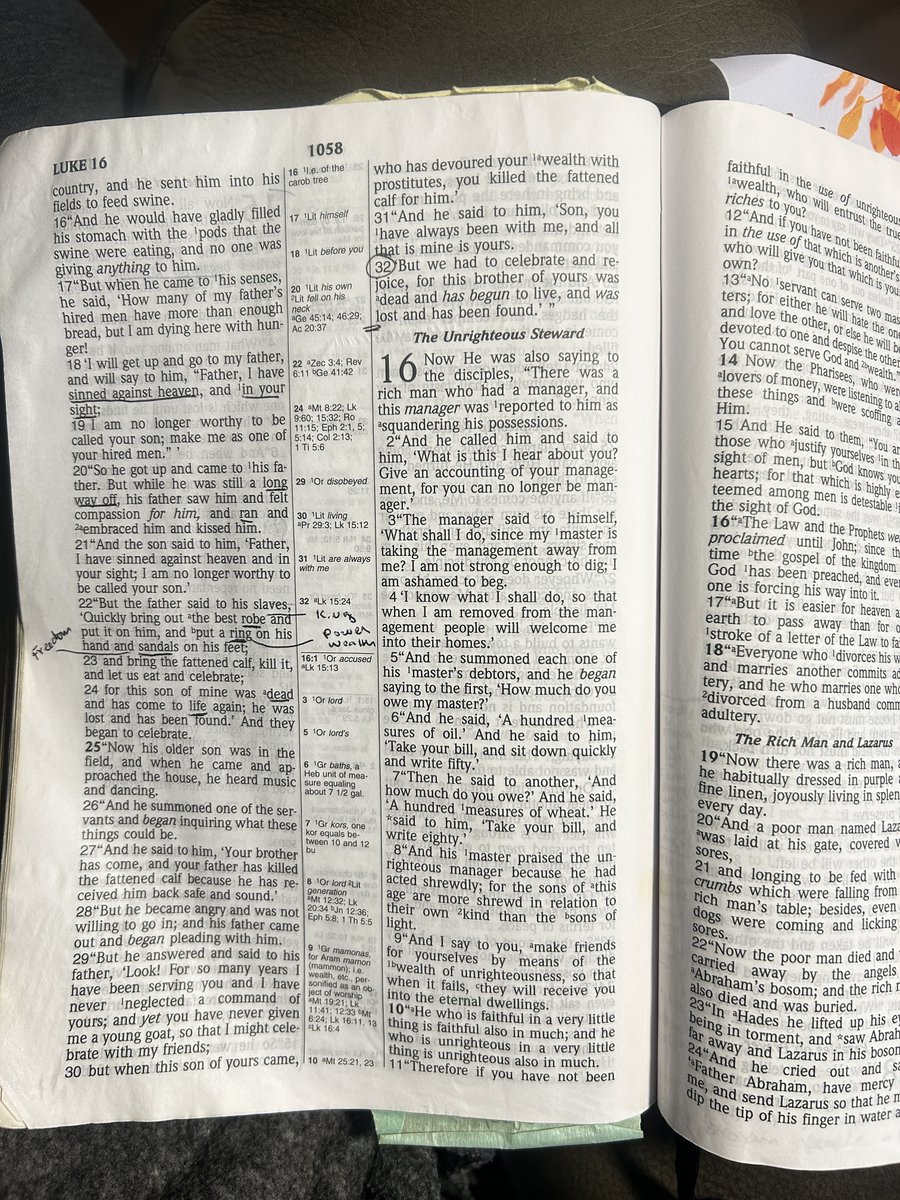
Then the old story finds me again. The boy has his apology ready, but his father is already running.
“But while he was still a long way off, his father saw him and felt compassion, and ran and embraced him and kissed him” - Luke 15:20
The boy smelled like the far country, but the father ran anyway.
That is the part that keeps finding me. Christ does not wait for me to clean up enough to be held. He comes down the road in mercy and puts His arms around the sinner He already decided to love.
And all my rehearsed speeches die in His embrace.
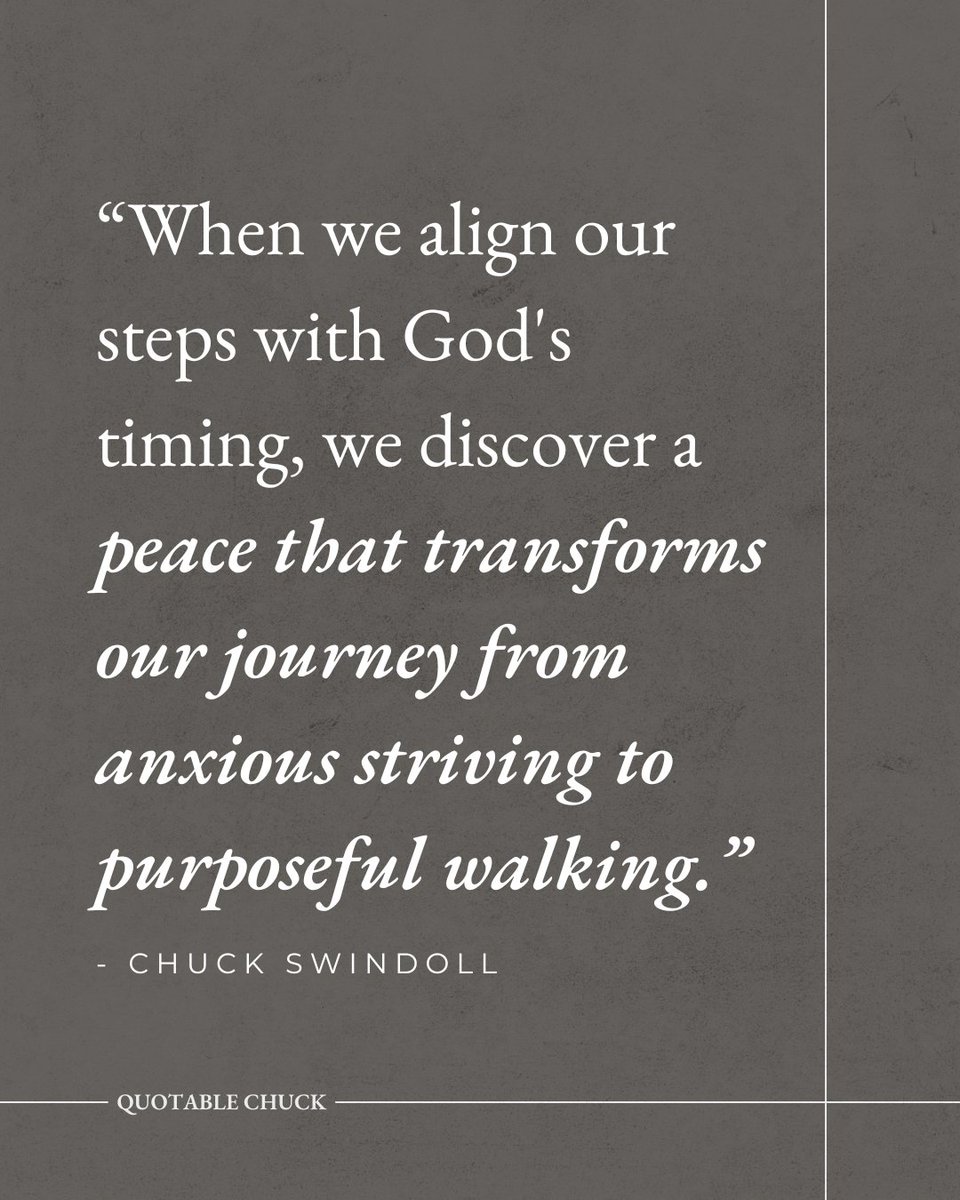
Anxious striving has a particular rhythm — fast, fragmented, exhausting. We rush ahead, second-guess, double back, and somehow end the day more depleted than when we began. There has to be another way.
There is. When we stop demanding our own timeline and start trusting God's, something shifts. We don't move slower exactly — we move with Him. Our steps fall in sync with a wisdom larger than our own, and the journey transforms from a frantic sprint into a purposeful walk. Peace isn't found in arriving. It's found in walking with the One who knows the way.
Where do you need to slow down and step in time with Him today?
There is a basketball statistic that preaches the gospel to me, and it is the ‘plus-minus’ (+/-) stat.
It is a metric used to calculate what a team is like when a specific player is on the floor versus when he is off it.
If a player’s team is a plus +20 when he is on the floor, it means they are the better team on average when he is out there, and if they are a minus -20, it means the team is severely worse off the moment he sits on the bench.
We calculate a player’s real value not by their isolated highlights, but by what the game looks like when they leave the floor. The score changes. The whole system degrades.
This is the exact logic required to understand the true horror of hell. Hell terrifies me. Not necessarily because of fire, but because I have tasted God.
At its most precise definition, hell is the complete and total absence of God. It is not an arbitrary punishment added to a neutral space. It is not fire introduced into an otherwise livable situation. The absence of God is itself the condition, and everything else follows from that.
Think about what that means if God is actually good. I do not mean morally good in the way a decent man is good. I mean Good as the source, the very ground from which all genuine goodness in this universe draws its supply.
Every moment of beauty you have ever experienced, every relationship that felt like it was worth something, every morning that made you glad you were alive, and every act of kindness that restored your faith in people was entirely downstream of Him. You were drinking from a river and did not know the spring. Hell is the complete removal of the spring.
This is why the basketball plus-minus metric is the most honest way I have found to explain this reality. When the presence leaves the floor, the system collapses. That is not a cruel punishment; that is a revelation.
Aa mild hell therefore would actually be a theological scandal. If existence without God was manageable, or even merely unpleasant, it would mean goodness was never really concentrated in Him to begin with. It would mean goodness was ambient, that the universe could sustain something decent on its own.
The horror of hell is not evidence of God’s cruelty. It is evidence of His magnitude. The severity of His absence proves the weight of the presence.
I fear hell because God has been kind enough to show me what He is. Once you have seen the sun, you do not need anyone to explain what darkness means.
Every person alive is already living inside the goodness of God without knowing it; the common grace that holds the whole world together, the dignity in a stranger’s face, the way justice still makes your chest tighten when it is violated. That is God. All of it is God. Remove it entirely and that is the death sentence.
This is why hell is not a doctrine I hold academically. It is one I hold the way you hold something you do not want to drop.
Why Isaac, Not Ishmael?
Today, Muslims around the world celebrate Eid al-Adha, believing it marks the moment Abraham was willing to sacrifice his son Ishmael.
But this narrative, recast centuries later by Muhammad, hijacks the original account and distorts it.
In the Bible, the foundation of both Jewish and Christian traditions, the son on the altar was not Ishmael, but Isaac.
Ishmael was the result of human effort, Abraham’s attempt to fulfill God’s promise through his own performance, through Hagar, Sarah’s maidservant.
It was a solution born out of impatience and control.
But God’s redemptive plan was never about what man could do for God, it was always about what God would do for man.
Isaac was the son of promise. He was born not through human scheming but through divine intervention.
Sarah was barren. Abraham was old. His very existence was a miracle. Isaac represents grace, God doing the impossible, fulfilling His covenant not through man’s effort, but through His own power and faithfulness.
The apostle Paul said that Hagar, the mother of Ishmael, represented Mount Sinai, where the law was given, a symbol of human striving, condemnation, and bondage.
But Sarah, the mother of Isaac, represented Jerusalem above, freedom, grace, and divine sonship. Ishmael is law; Isaac is gospel.
If God had asked Abraham to offer Ishmael, it would mean He was demanding a sacrifice born of human effort. But He wasn’t.
He was foreshadowing the ultimate sacrifice, Christ, the Lamb of God, also born of a miraculous promise, also offered by His Father on a hill.
Isaac was the prototype of substitutionary atonement. He symbolized the Son not born of the flesh but of the Spirit, God’s initiative, not man’s.
To replace Isaac with Ishmael is theological vandalism. It exchanges grace for works, divine election for human performance, and the gospel for law.
That’s why Isaac, not Ishmael. Because salvation was never meant to begin with our striving, it was always meant to begin with God’s promise.
To discover the real you, look at what you spend time thinking about when no one is looking, when nothing is forcing you to think about anything in particular.
Rape victims are often accused of adultery under Sharia law if they report being raped by married Muslim men.
Here is a shocking example:
A 13-year-old girl in Somalia was raped by a married Muslim man. Instead of punishing the rapist, an Islamic Sharia court sentenced the little girl to death. The Muslim rapist accused her of “seducing” him by appearing in public, and the court agreed — convicting her of adultery.
Hundreds of Muslim men gathered to stone her to death as an offering to Allah.
They laughed, cheered and shouted “Allahu Akbar” as she screamed in agony until her last breath. Not one man stepped forward to save the 13-year-old rape victim.
Everyone in the village heard her cries for help before the execution. Instead of intervening, they tied her hands behind her back and chained her feet. The local imam directed the men to dig a hole and bury her up to her waist so she could not move or dodge the stones aimed at her head.
For hours before and during the stoning she begged for mercy, looking toward her neighbors, her father, and every Muslim man taking part. Until her final breath she cried out, but no one rescued her. Of the hundreds of men present, none showed compassion.
The participants gladly joined this Islamic act of worship, ignoring her pleas and rejoicing with “Allahu Akbar” while brutally killing her.
This is not an isolated barbaric act.
This is Sharia law in practice — where the victim is punished and the rapist protected if he is married.
Not all cultures are equal.
Some protect the innocent.
Islam punishes the raped girl and calls it justice.
The West keeps importing this ideology while pretending it is compatible with our values.
It is not.
Share this. The world must see the true face of Sharia and stop the denial.
Apart from the absurdity and demonic degeneracy of the claim itself, this exposes a deeper theological problem. The reasoning implicitly normalizes male lust as something primarily managed through external regulation rather than internal moral responsibility.
In the Sermon on the Mount, Jesus radically internalizes sin. He does not say, “If someone causes you to lust, they are guilty.” He says, “If YOU look lustfully, YOU have sinned.” The burden is placed first on the heart, the eyes, the will of the individual.
That is why Christ says, “If your right eye causes you to sin, pluck it out.” The problem begins within. Moral failure is not outsourced onto other people’s clothing, appearance, or existence.
By contrast, this kind of reasoning creates a framework where responsibility is continually externalized:
Women must veil so men do not lust,
men must grow beards so other men are not tempted, society must endlessly regulate appearances because self-control is treated as secondary.
Christianity addresses desire at the root. It confronts the human heart itself rather than building an ever-expanding system of external restrictions to compensate for it.
Galatians 4:4 looks like a transition verse.
“But when the fullness of time had come, God sent forth His Son.”
If you read it fast, it sounds like a timestamp. But if read slowly, it is the most staggering sentence in the Bible.
‘Fullness of time’. Paul isn't saying God picked a convenient moment. He is saying God declared a moment complete. “The preparation is finished and everything I have been building across centuries is exactly where I need it to be”. God looked at human history and said: now.
Which forces the question. Why then? Why not a thousand years earlier, when Moses was fresh? Why not a thousand years later? What was so perfect about the first century?
I started looking into it and I have not recovered.
God needed a people with the theology. He spent 2000 years forming Israel; the covenant, the sacrificial system, the prophets, Isaiah 53 written seven centuries before Calvary, the framework of a coming Messiah who would bear the sin of the world. The Jews were shaped by wilderness, exile, and divine discipline, until the theological infrastructure for substitutionary atonement was fully in place.
But theology alone could not travel. God needed a language. Not a tribal dialect, but a universal tongue. So five hundred years before the Gospel, He let the Greek philosophers begin.
Heraclitus sat in Ephesus and concluded the universe was governed by an invisible rational principle. He called it the Logos.
The Stoics built on it. Philo of Alexandria stood at the intersection of Greek thought and Hebrew scripture and said the Logos was the mind of God in creation. For five hundred years, philosophy built a conceptual category it could not fill.
Then God sent a conqueror with no interest in theology. Alexander the Great wanted glory and empire. God let him want it. In satisfying his ego across three continents, Alexander Hellenized the ancient world and forged Koine Greek, the common tongue of the docks, markets, soldiers, and slaves. A language stripped of complexity, simple enough for anyone, universal enough for everyone.
The Hebrew scriptures were translated into it. The Septuagint was born. God used a pagan conqueror’s ambition to translate His own Word.
Then Rome came and paved the road. The Pax Romana. Piracy cleared. Stone highways stretching from Spain to Syria. A framework for movement the ancient world had never seen.
None of them knew they were collaborating.
Heraclitus thought he was doing philosophy. Alexander thought he was building a monument to himself. Rome thought it was building an empire for Rome. Not one of them understood they were stagehands. God was with Heraclitus in his pondering, with Alexander in his conquest, with Roman engineers laying stone, quietly requisitioning their work for a purpose none of them could see.
And then, when the covenant people were in place, the language primed, the roads built, and the category ready, when everything He had been quietly assembling was finally set, God stepped into the room they had unknowingly prepared.
John picked up his pen and wrote: “In the beginning was the Logos.”
Every Greek philosopher in the Mediterranean felt the ground shift. “And the Logos became flesh.” The category they spent five centuries constructing was not a principle. It was a Person.
The ‘fullness of time is not a timestamp’. It is God’s signature on a completed work. And the humbling thing is that this work was not built by saints. It was built by conquerors, philosophers, and emperors who thought they were writing their own story. God let them think that. And used every word. If this is not amazing then I don’t know what is.
Nobody needs God’s help to find Islam. The flesh already approximates to it.
To polygamy, to violence, to the idea that standing before God is something you can earn with the right volume of works and the right length of prayers. To the kind of spirituality that leaves the ego largely intact and asks it to simply try harder.
The flesh is not threatened by any of that. The flesh is comfortable there.
What you actually need God’s help for is to be Christian. To be humble enough to admit that you cannot earn what only grace can give. To turn the other cheek when every sinew in you is screaming for retaliation. To accept that what you need is not better behavior but a complete newness of being, that the old self must not be reformed but crucified. Islam makes demands of the flesh. Christ makes demands of the soul. That is a completely different religion.
You don’t pray anyone toward Islam. The flesh already knows the way. What everyone needs help getting to is the cross.