Gittiğiniz herhangi bir havaalaninda internetsiz kalmayin diye havaalanlarinin wi fi sifresini paylasan bir site. Bir kosede dursun illa ki lazim olur 😊 https://t.co/fHIGDLYfnI
Deniz Göktaş'ı kınıyorum, diktatörlük olsa; Deniz bu gösteriyi yayınladıktan sonra soruşturma açılır, yurtdışından kendi ayağıyla ifade vermeye gelse bile ters kelepçe takılıp görüntüleri de "yakalandı" diye servis edilirdi. Diktatörlük böyledir, biz hiç öyle miyiz?
Dünya Kupası'na katılım hakkı kazanmış profesyonel futbolcular yurt dışı tatiline giden turistler gibi elçilik önünde vize kuyruğuna girmiş.
Üstelik kendi ülkelerinde ABD misyonu olmadığı için komşu ülkeye gelmişler.
FIFA, ona buna yalakalık yapacağına kendisine bağlı lisanslı sporcuların namusunu savunsun.
Bu rezalet bir görüntüdür. İran'ın Dünya Kupası kafilesi için özel seyahat belgesi düzenlenmeli ve ABD'ye girişte hiçbir sorunla karşılaşmamaları sağlanmalıydı.
Adamları süründürüyorlar bunu da bilerek yapıyorlar.
İran çekilmeli diyenler de yanlış düşünüyor. Neden çekilsinler? O kadar katılım hakkı kazanmışlar, bir sürü eleme maçı oynamışlar, İranlıların hakkı değil mi dünya kupasında takımlarını izlemek? Aslında yapılması gereken ABD'nin ev sahipliğini iptal etmekti ama kimsede böyle bir cesaret yok.
Güçleri ancak Rus ve Belaruslu sporcuların bayraklarını sansürlemeye yeter.
@euroleague_time Fenerbahçe Euroleague kazanırken bütçe diyenler, bu sene iyi rezil oldular. Beşiktaşlılar, tarihin en kolay eurocup sezonunda, kendisinden altta bütçeli takma kupa verdiler. Diğer yandan gslilerin hocası da, devasa bütçesi ile, 2-0'dan seriyi kaybetti😂 hala konuşurlar mı acaba?
Bu videoyu dün akşam Saraybosna'da Sönmeyen Ateş Anıtı önünde, Bosna Hersek'in Dünya Kupasına gitmesini kutlayan Boşnakların arasında çektim.
3 yıldan fazladır Saraybosna'da yaşıyorum. Bosna Hersek'e gelmeden önce de bölge hakkında bilgi sahibiydim. Özellikle 30 yıl önce yaşanan savaş ve sonrasında olanlar...
Açık söyleyeyim, milli maçlar sırasında kendimi kaybediyorum biraz, Kosova - Türkiye maçında Ozan'ın ayağından kaçırdığı top, Uğurcan'ın kurtarışıyla direkten dönen top falan derken dayanamayıp kapadım ve Bosna Hersek maçını izledim.
Ancak bir taraftan da Türkiye'mizin maçını takip ettim. Türkiye kazanınca oğullarım ve eşimle birlikte evde kutladık.
Bosna Hersek - İtalya maçı penaltılara gitti ve sonunda Bosna, maçı kazandı.
Evde bulunan Türk bayrağımızı aldım ve dışarı çıktım. Boşnaklar çılgınlar gibi seviniyordu. Bir süre Türk bayrağını açıp açmamakta tereddüt ettim. Çünkü onların sevincine saygı göstermek zorundaydım. Ancak gurbetteyim, tek başımayım ve sevinmek de istiyorum.
Sonunda Türk bayrağımızı çıkardım ve açtım. O saatten sonra, "abi, abi" diye seslenenler, "Türkiye kardeş", "idemo zajedno (beraber gidiyoruz)" seslerini duydum. Bayrağı görenler, Turska, Turcin diye bana seslenmeye başladılar.
Eve gelene kadar Türk bayrağıyla ve benimle fotoğraf çekilenlerin sayısını hatırlamıyorum. Açıkçası çok hoşuma gitti ve duygulandım.
Buralarda yani Bosna'da futbol sadece futbol değil... Aslında onlar bir topun kaleye girip, sonrasında alınan galibiyete değil, yaşadıkları onca acıya, soykırıma rağmen ayakta olduklarını, yıkılmadıklarını, vazçmediklerini gösterdikleri için seviniyorlar bir anlamda..
Bu sevince ortak olmak, hayatım boyunca unutmayacağım, unutamayacağım anlardan biri olarak kalacak...
When Paris was paved with wooden 'Cobblestones'....
A rare glimpse into 19th Century streets of Paris, where wood once replaced stone to dampen the noise of heavy carriages. Today, the Passage Saint‑Maur holds some of the last remaining blocks in the city.
#drthehistories
Amaru, the serpent of renewal and divine power, holds a central place in Andean mythology, particularly in the cultures of ancient Peru.
Often depicted as a large, powerful serpent or snake, Amaru represents a profound symbol of transformation, renewal, and connection between the earthly and spiritual realms. In Andean cosmology, serpents are seen as mediators between the physical world and the world of the gods, symbolizing the cycles of life, death, and rebirth.
Amaru’s association with the earth’s forces—its ability to shed its skin—aligns with the ideas of regeneration and change. The serpent is also considered a guardian of sacred knowledge, wisdom, and the vital forces of nature.
In Inca traditions, Amaru was revered as a sacred creature, often linked with water, fertility, and the agricultural cycles essential to Andean societies. Its role transcends mere mythology, embodying both the natural and divine energies that shape the world.
#drthehistories
The ancient Persian vertical-axis windmills, first built over 1,000 years ago, are a remarkable example of early engineering and innovation. These windmills, which played a key role in grinding grain and pumping water, were essential for communities in Iran’s arid regions, where harnessing wind power helped overcome the challenges posed by the harsh desert environment. Unlike modern horizontal-axis windmills, the Persian design featured a vertical axis, allowing the blades to catch the wind from any direction, eliminating the need for constant adjustments.
Constructed using local materials like mud bricks and wood, these windmills were both resourceful and well-suited to the desert landscape. Their long, vertical sails captured wind energy efficiently, converting it into mechanical power for essential tasks like irrigation and milling. Many of these windmills are still operational today, continuing to serve rural and agricultural areas that lack modern infrastructure.
The survival and continued use of these ancient windmills is a testament to the ingenuity behind their design. Despite advances in technology, these windmills remain a symbol of early renewable energy solutions, showcasing the wisdom of ancient engineers. Their ability to endure for centuries and function in modern times speaks volumes about the lasting effectiveness of their practical and sustainable engineering.
#drthehistories
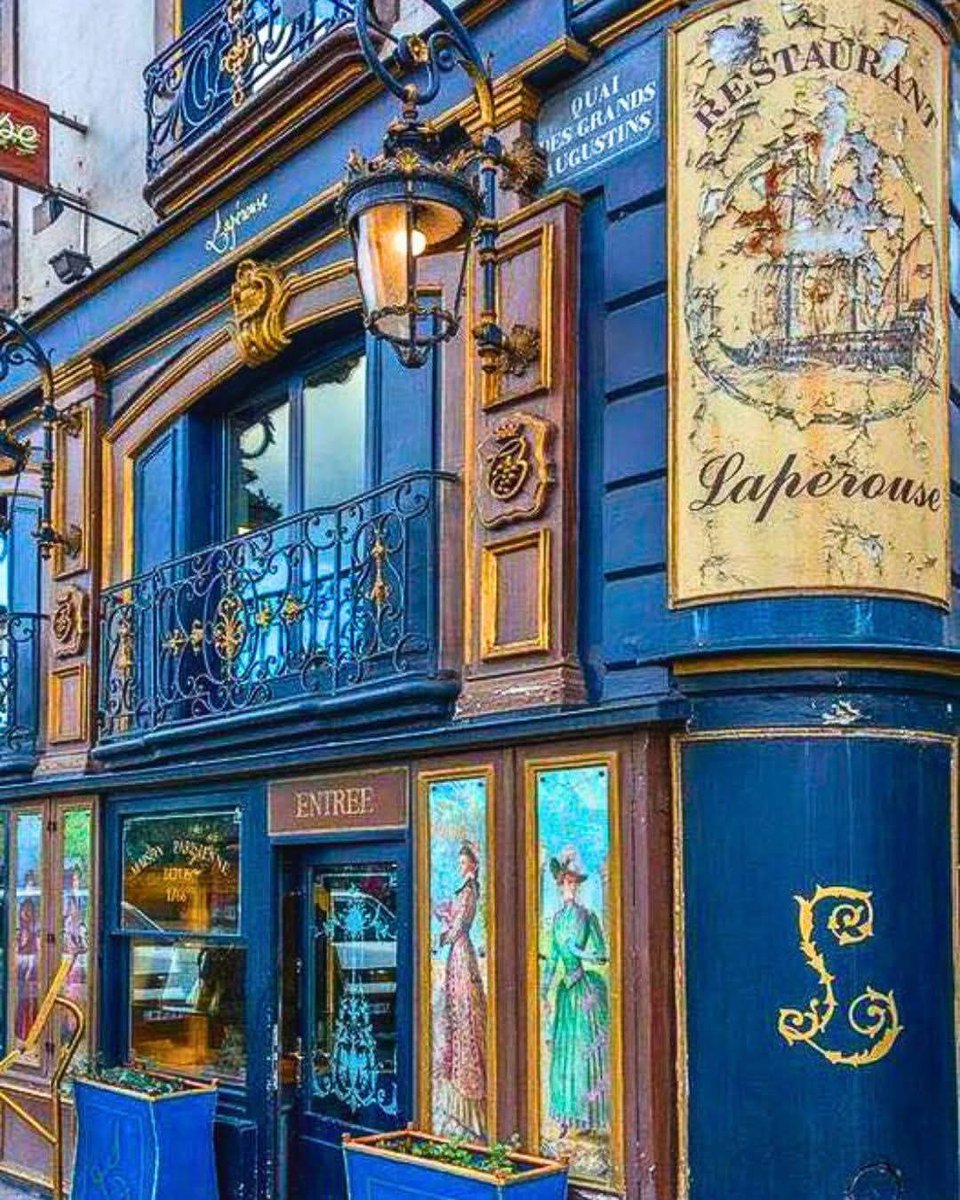
Le Perouse is at 51 Quai des Grands Augustins in Paris 🇫🇷 and dates back to 1766.
Originally opened by Monsieur Lefèvre, who was known as the lemonade seller to King Louis XV, it first served as a wine shop and a salon for Parisian high society.
By mid-19th Century, it had transformed into a popular gathering spot for prominent literary figures such as George Sand, Alfred de Musset, and Victor Hugo.
In 1850, the restaurant was bought by Jules Lapérouse, who renamed it after himself and the famous navigator Jean-François de Lapérouse. During this period, it gained a reputation for its private salons, which provided discreet dining spaces for senators and their lovers. These salons were noted for the mirrors, in which diners etched marks to test the authenticity of their diamonds.
Lapérouse was also awarded three Michelin stars between 1933 and 1968.
#archaeohistories
Grotto in an Ice-berg, photographed 5th January 1911 CE, by Herbert George Ponting during British Antarctic ("Terra Nova") Expedition (1910-1913 CE). Shows scientists T Griffith Taylor and Charles S Wright at the entrance, and Terra Nova in distance.
Terra Nova Expedition, officially British Antarctic Expedition, was an expedition to Antarctica which took place between 1910-1913 CE. Led by Captain Robert Falcon Scott, the expedition had various scientific and geographical objectives. Scott wished to continue scientific work that he had begun when leading Discovery Expedition from 1901-1904 CE, and wanted to be first to reach geographic South Pole. He and four companions attained pole on 17 January 1912, where they found that a Norwegian team led by Roald Amundsen had preceded them by 34 days. Expedition, named after its supply ship, Terra Nova, was a private venture financed by public contributions and a government grant. It had further backing from Admiralty, which released experienced seamen to expedition and from Royal Geographical Society (RGS).
Terra Nova Expedition was the largest ever research mission to the pole. A team of 12 scientists including two biologists, three geologists and a meteorologist were part of the team. Another hut was built at Cape Evans. They studied Antarctic wildlife on land and in sea. They surveyed new terrain, examined the geology and studied formation of glaciers and land surfaces. They made observations of magnetism and atmospheric electricity and recorded weather data in many locations. At this time, there were still many unanswered questions about Antarctica and information accumulated by the expedition’s scientists would help to answer them. Team collected specimens from 2109 different animals. Of these, 401 were new to science. They even collected samples from the sea floor at a depth of half a kilometre using trawls. They also collected rock samples, penguin eggs and plant fossils.
One of most important discoveries was a fossilised fern-like plant which was known to grow in India, Africa, New Zealand and Australia. It suggested that the climate 250 million years ago had been mild enough for trees to grow. This discovery, along with other evidence gathered by Scott's team, was a hint that India, Africa, New Zealand, Australia and Antarctica had in distant past all been part of one "supercontinent" known as Gondwanaland.
Scott's team also collected first thorough set of weather data for Antarctic, which has served as a baseline to track changes in weather patterns ever since. Three members of the team travelled for five weeks in winter to study an Emperor penguin colony come on to land and lay their eggs. In temperatures as low as minus 60 degrees Celsius the team overcame intense hardship all in the name of science. Scott and four others made it to the South Pole only to find that Roald Amundsen’s team had beaten them. All five perished from cold and starvation on the return journey. Despite the tragic end to the expedition Scott’s team will always be remembered, not only for their bravery but also for their contribution to science.
Terra Nova expedition had a tragic end. None of the team who made it to South Pole survived trek back. Weather conditions were far worse than they predicted. Captain Oates suffered with frostbitten feet, and he realised this was slowing team down and endangering their lives. He was only able to walk a few miles. Oates sacrificed his own life to give the others a better chance of surviving. His body was never found. After Oates’s death, rest of team also severely weakened. They were running low on food and were completed isolated. Rescue was impossible. On March 29th, Scott wrote his final diary entry. Some of their bodies, journals, and photographs were found by a search party 8 months later.
(Colorized Photograph)
#archaeohistories