@ShaneRyanHere Baseball is unlike any other sport, from pony to MLB. It’s all about winning a series against the other team. Not about win total; it’s about beating another team in 3, 5, 7 games. If you cannot do that you lose. Simple as that. Basics of baseball
@rbarbosa91 How else to report what happened? Curious as to what you would consider stating to document that part. Obviously they were prepped and draped. Should we exclude that as well?
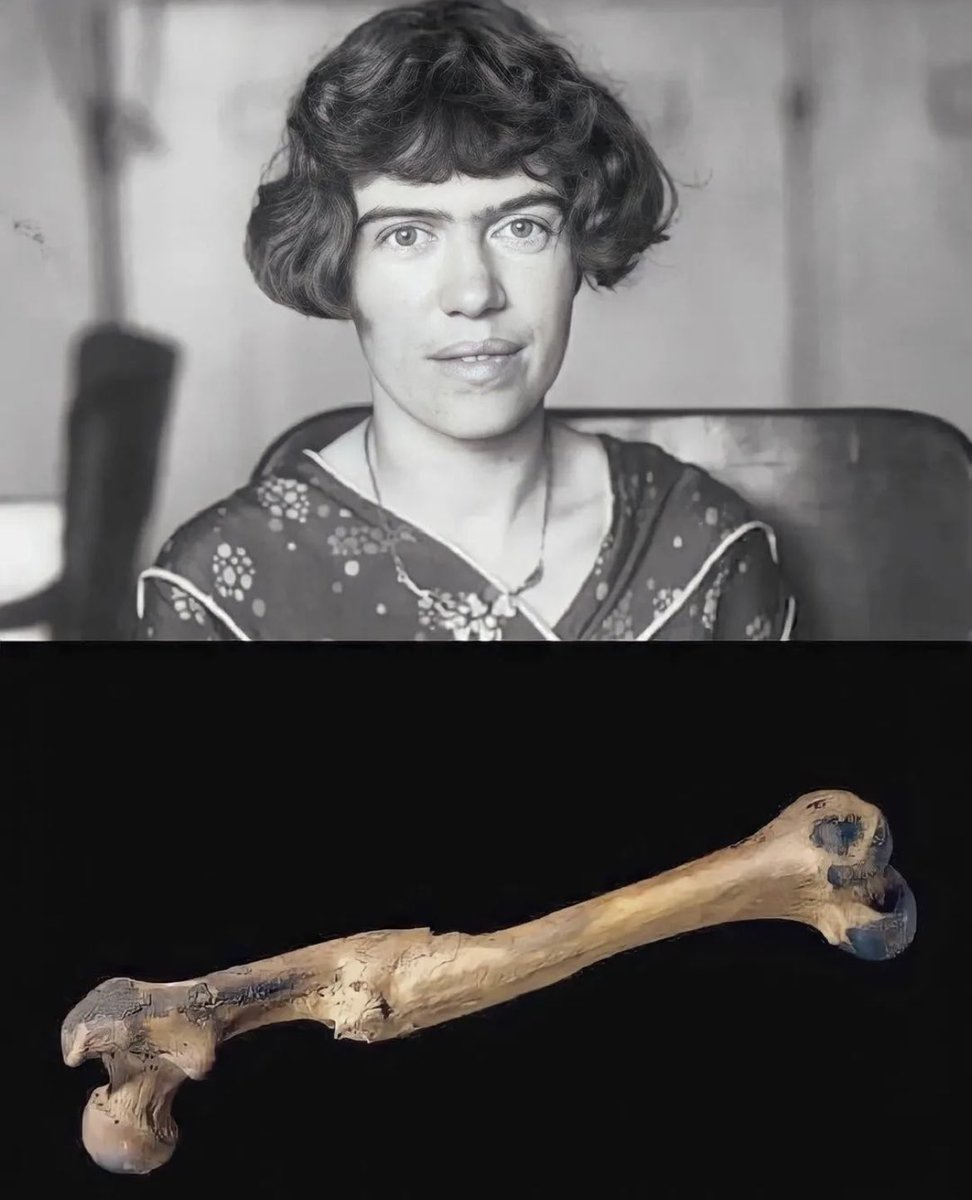
The concept of civilization is often associated with various tangible artifacts and advancements, such as tools, architecture, or systems of governance. However, anthropologist Margaret Mead presented a different perspective when she was asked about the first sign of civilization in a culture. Rather than focusing on material objects, she emphasized the significance of a healed femur bone.
In Mead's view, the animal kingdom provides a stark contrast to human civilization. When an animal breaks its leg, survival becomes nearly impossible. The inability to escape from danger, access water, or procure food renders the injured animal vulnerable to predators. Consequently, no animal lives long enough for a broken leg to heal naturally. Thus, the healing of a femur bone is a profound indication of civilization.
Why is a healed femur bone considered the first sign of civilization? Mead's explanation lies in the collective care and empathy demonstrated by a community. When someone breaks their leg, it is a moment of extreme vulnerability and danger. However, if the injured individual receives aid and support from others, they can overcome this critical period.
The act of caring for someone with a broken leg requires time, compassion, and a sense of responsibility towards others. Mead suggests that the healing process involves multiple steps. First, someone must have witnessed the accident and recognized the injured person's distress. Then, they would have provided immediate assistance, possibly by binding the wound and ensuring the person's safety. Finally, they would have stayed by their side, offering ongoing care and support during the recovery period.
By highlighting the significance of collective care, Mead emphasizes that civilization begins with the recognition of the suffering of others and the willingness to help. It is through acts of compassion and support that a community establishes its foundations of empathy, cooperation, and social cohesion. The healing of a broken femur, symbolizing the survival and recovery of an individual within a community, reflects the values and actions that underpin a civilized society.
Mead's perspective challenges the notion that civilization is solely determined by material progress or technological advancements. While such developments are undoubtedly important, they are built upon a deeper foundation of human connection and mutual aid. The healing of a broken femur bone serves as a metaphor for the care and support that individuals provide to one another, promoting the well-being and progress of society as a whole.
In conclusion, Margaret Mead's unconventional response to the question about the first sign of civilization reminds us of the fundamental importance of collective care. Civilization, she argues, is not solely defined by tangible artifacts or structures but by the empathy and support extended to those in need. The healing of a broken femur bone represents the compassion and responsibility that underpin a civilized society, highlighting the significance of human connection and mutual aid in fostering progress and well-being.
@bambam1729@JSESMedia True. Maybe they hit the guy on the head with a mallet? The overgrowth on the plate tells me that it’s real and the person lived with it in. Pretty sure they got the radial nerve (hard to imagine they knew that anatomy). Could be a fascinating story we will never fully know
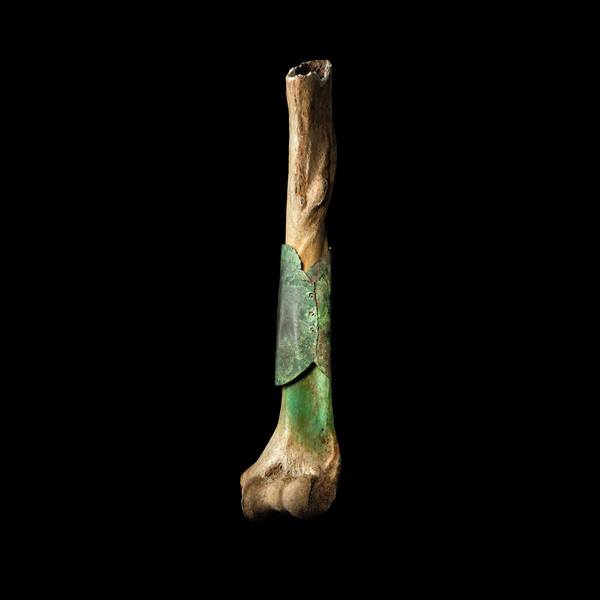
Humerus Varnhemiensis is a humerus bone repaired by a copper-sheet cylinder from the late medieval time period, 1260-1527. Very likely, the plate was placed round the bone to stabilize a cut injury and the copper had an antibacterial effect on the wound: https://t.co/TxdbJ3Kh0Q
@bambam1729@JSESMedia Probably the earliest ORIF of a humeral shaft fracture on record. Appears to be legitimate although outside of the original source not sure how else to confirm
@CBaumbuschMD@kevinfarmermd@shouldergeek@NuelleSportsMD Absolutely concetrically reduced and centered humeral head on axial images. Would love to see coronal but suspect it would not change my treatment. No screws, sutures etc. will be fine. Let it go. Tell 40 yr old skateboard is for kids
@AdamMeakins Check the c-spine for possible syrinx (could be Charcot but with pain this is less likely). Non-op (SSN blocks/ablation) or arthrodesis for severe pain. Recon options non existent
@AvrahamCooperMD Proximal Long Head Biceps rupture. When we diagnose a biceps tendon rupture typically are referring to distal. Whole different animal (non-op proximal, acute repair distal)
@northwoods1980 Totally correct. Tell them to look at the Blueprint system from Tornier (Stryker). Only reproducible way to measure those and help them plan their arthroplasty. Other companies have software as well
@northwoods1980 Sorry misunderstood. Teres atrophy super common and clinically insignificant IMO. Etiology hard to determine but traction is hard for me to buy. Don’t think it’s more common in GH DJD than other pathology.
@northwoods1980 Yes 3D CT recons are the most accurate to determine glenoid morphology using Walsch criteria. Need a scan protocol like Blueprint to determine accurate version to make sure scapular axis is controlled (Imascap). JP Warner has published on this