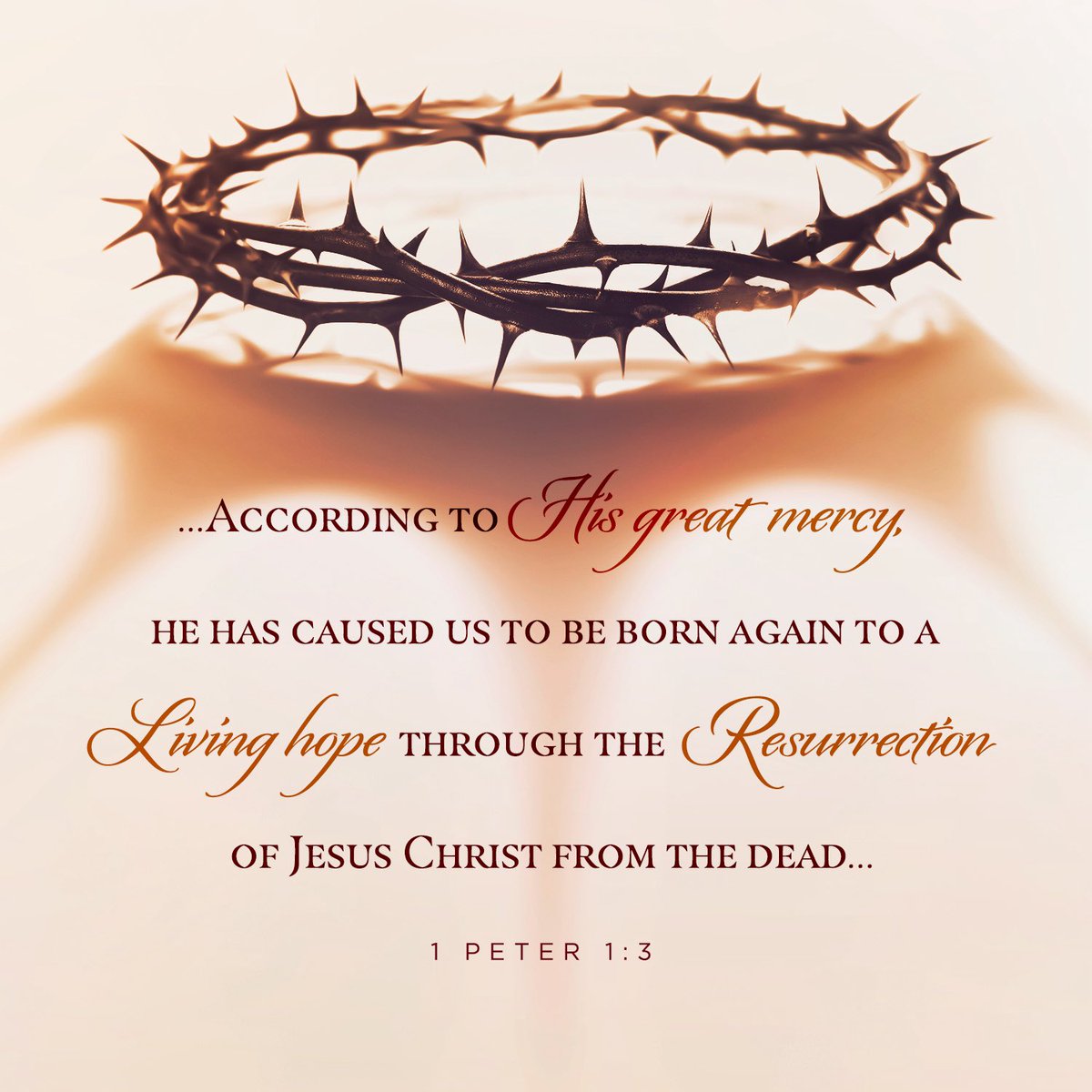
This morning I choose to see myself through God’s eyes.
I am not overlooked or ordinary.
I am His beloved child, created with purpose, covered by grace, and worth far more than I can ever measure.
🚨 BREAKING: Gov. Ron DeSantis has just signed a law BANNING Sharia Law from being enforced anywhere in the state of Florida
Sharia Law and Islamism are INCOMPATIBLE with America.
This should be a FEDERAL law.
Our kids are drowning in ADHD, obesity & allergies while corporations push more sugar & screens.
Time to get them outside, eating real food from healthy soil.
Nature is the best medicine.
MAHA
A very blessed and good Sunday to all of you
Every day I share something that makes Arkansas special a historic town, a forgotten landmark, or a piece of our state’s past. Today, it’s a person.
If you’ve shopped at the Walmart in Van Buren, there’s a good chance you’ve met this greeter. He is a U.S. Air Force veteran who greets customers with a smile, welcomes people with a song, and treats complete strangers like old friends. If someone is hurting and asks, he’ll even stop and pray with them.
I’ve been in Walmarts all over this country, and I’ve never met another greeter quite like him. People smile when they talk to him he lightens everyone’s day.
Arkansas isn’t just defined by its mountains, rivers, and history. It’s also defined by people like him. He’s one of those people who quietly make their communities better, one smile at a time.
That’s Arkansas, too.
Is there someone in your hometown or community who makes people’s days a little brighter just by being themselves?
“If My people who are called by My name will humble themselves, and pray and seek My face, and turn from their wicked ways, then I will hear from heaven, and will forgive their sin and heal their land.” (2 Chronicles 7:14)
In September of 1814, America was once again in trouble.
The young republic was only thirty-eight years old. The War of 1812 had gone badly. British troops had marched into Washington, burned the Capitol, set the White House ablaze, and now turned their sights toward Baltimore. If Fort McHenry fell, the harbor would be open, the city would likely follow, and another devastating blow would be dealt to the fragile nation.
Amid this uncertainty, a young American lawyer named Francis Scott Key sailed under a flag of truce to the British fleet. He had come to negotiate the release of a friend, a physician the British had captured.
He succeeded.
The British agreed to free the doctor.
But there was a catch.
Because Key and his companions had seen too much of the British fleet and learned too much about its plans, they were not allowed to return to shore. Instead, they were detained aboard a ship in the harbor and forced to watch the coming battle from behind enemy lines.
On the morning of September 13, the bombardment began.
For the next twenty-five hours, British warships unleashed somewhere between 1,500 and 1,800 bombs and rockets upon Fort McHenry. These were the “bombs bursting in air” and the “rockets’ red glare” of the song—not poetic embellishments, but terrible realities.
Key stood on the deck through the endless day and the long, terrifying night. Every explosion lit the darkness for a fleeting instant before the smoke swallowed everything again. Somewhere beyond that wall of fire stood the fort. Somewhere beyond it flew an American flag if it still flew at all.
He could not see.
He could only listen.
As long as the guns continued firing, there was reason to hope. The British would not waste ammunition on a fort that had already surrendered.
Then, just before dawn…
The guns fell silent.
For the first time all night, there was only stillness.
It was the most frightening sound of all.
Had the fort finally fallen? Had the defenders surrendered? Had the flag been torn down in the darkness while no one could see?
There was nothing to do but wait.
As the first light of September 14 slowly pushed back the smoke, Francis Scott Key strained his eyes toward the distant fort.
Then he saw it. Not a British flag.
The American flag. Still there. Still flying.
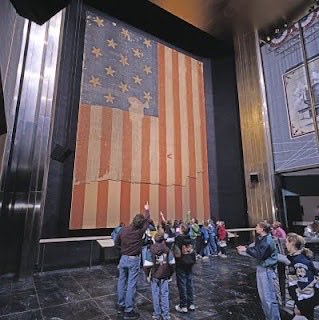
That flag was no ordinary banner. Months earlier, the fort’s commander had commissioned a Baltimore flagmaker, Mary Pickersgill, to sew a flag so enormous “that the British would have no difficulty seeing it from a distance.” It measured roughly thirty by forty-two feet, carried fifteen stars and fifteen stripes, and was so large it had to be assembled on the floor of a brewery because no ordinary room could contain it.
That was the Star-Spangled Banner.
The very flag Key saw through the morning mist.
The very flag that still survives today in the Smithsonian.
Overcome by what he had witnessed, Key reached into his pocket, pulled out an envelope, and began writing. The words came from a heart that had spent an entire night fearing his country might disappear with the dawn.
He first titled the poem Defence of Fort M’Henry.
Within days it was printed and circulating throughout the country. Before long, people began singing it to a melody they already knew—an old British tune called “To Anacreon in Heaven,” originally written for a London social club. There is something beautifully ironic in that: America’s most beloved patriotic song borrowed the melody of the very nation it had just survived. It also explains why the anthem is so notoriously difficult to sing. It was never written for ordinary voices gathered in stadiums or school assemblies.
The song spread quickly and became one of America’s favorite patriotic hymns, but it would wait more than a century before receiving official recognition. Not until 1931 did Congress declare “The Star-Spangled Banner” the national anthem of the United States.
The late Robin Williams was a comedic genius. An American original & by all accounts a truly decent person who did quiet acts of kindness for total strangers. He was also a patriot who had a beautiful & unique way to show his love for America. God bless him!
Happy 250th and Good Saturday to all of you.
Did you know Arkansas celebrated the Fourth of July long before it became a state?
When Americans in the Arkansas Territory gathered on July 4 before statehood in 1836, they didn't celebrate as Arkansans they celebrated as proud Americans.
The day often began with a public reading of the Declaration of Independence, followed by patriotic speeches, church services, militia drills, musket and cannon salutes, community feasts, fiddle music, dancing, and formal toasts to the United States, the Constitution, and George Washington.
Along the Arkansas River, steamboats were decorated with flags and blasted their whistles in celebration. In frontier towns like Little Rock, Arkansas Post, and Batesville, neighbors came together to celebrate the nation's birthday even while living on what was still America's western frontier.
One of the most fascinating traditions? Many gatherings ended with a toast to "the future State of Arkansas," years before statehood became a reality.
Freedom was worth celebrating here long before Arkansas earned its 25th star on the American flag.
Happy Independence Day! 250 Years of Freedom
Eighty-two years ago today, freedom stood on the edge of extinction, and Allied forces stormed into hell to help save the world.
We will never forget the courage, the sacrifice, and the blood spilled on that fateful day.
VIDEO: GMO Ticks and Mosquitos Have Been Caught on Video Raining Down From the Sky Across the United States. Gov't Whistleblowers, Top Scientists and Others Are Now Documenting the Fact That This is Part of a Larger, Bill Gates-Backed Human Engineering Program. Bottom Line — This Constitutes a Violation of Medical Informed Consent Under the Nuremberg Code and is Punishable By Death.
Mother’s Day isn’t a Hallmark card for everyone.
Some are missing mothers who are gone. Some have lost children through miscarriage or death. Some are estranged from their children. Some are caring for sick or disabled children who may never say “Happy Mother’s Day.” Some have children serving far away in the military. And some spend their lives mothering others through love, kindness, faith, friendship, and family.
To every woman carrying joy, grief, longing, or love today you are in my heart and prayers. Thinking of you all today.
A blessed and good Sunday to everyone.
The American heroes murals are not about legends. They are about every day people.
The grain tower in Fort Smith has a new meaning. An artist turned concrete into something bigger—three faces that tell a story of hard work, heritage, and quiet strength.
A WWII veteran who spent decades working at that very mill. A young Black entrepreneur representing drive and independence.
An Apache man connecting the city to its deeper roots.
Not the heroes you read about in history books but the ones you live next to. This old mill can be found on Wheeler Avenue right by the Fort Smith national Cemetery.
Do you think everyday people are the real heroes we forget to honor?