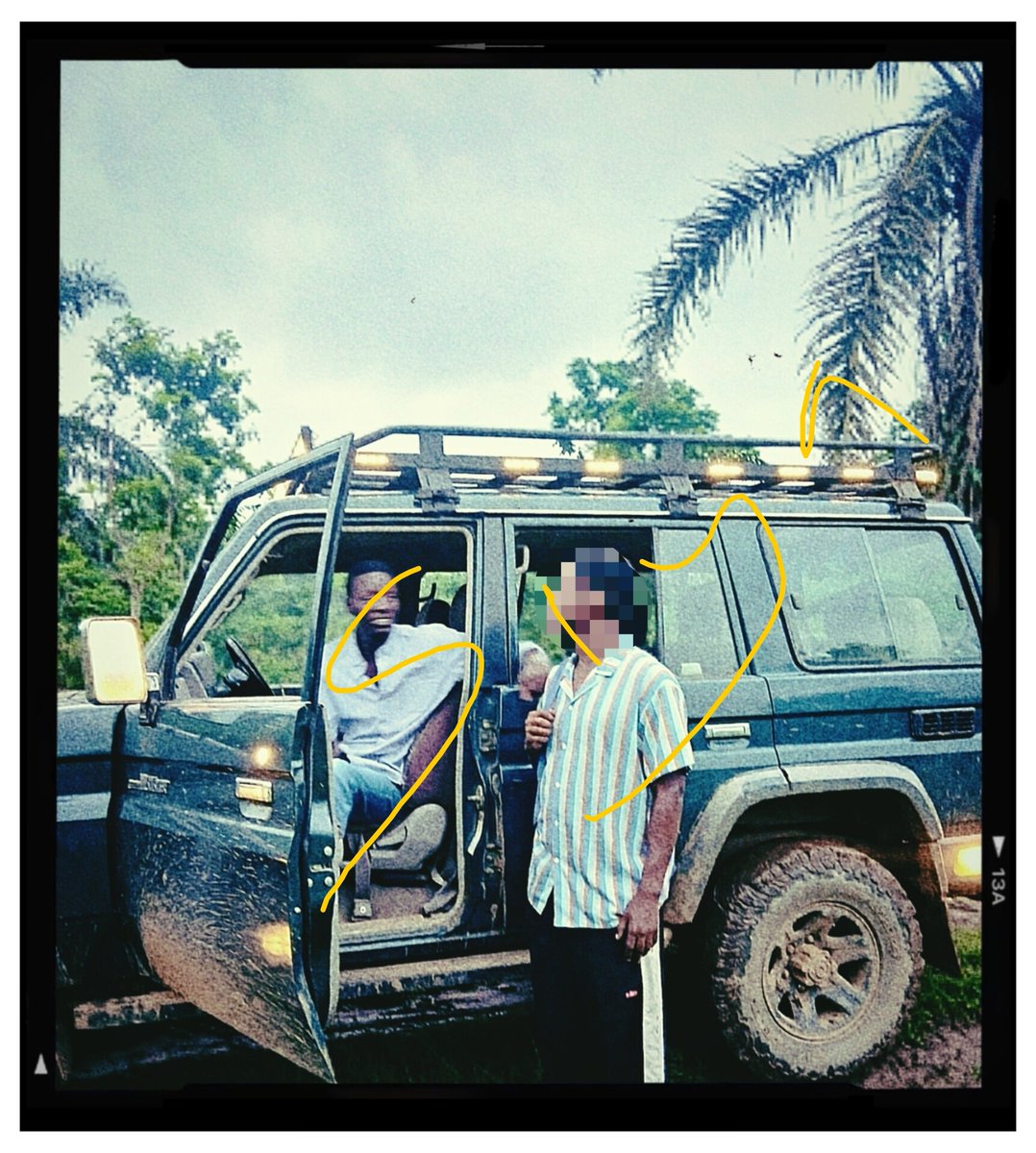
@blue_jin7@bryanodong Didn't mention that you said people should be abducted tho but you wouldn't be saying those things if you're a victim of abduction that's all and you wouldn't want an ad being made of in any context
@blue_jin7@bryanodong That your open line is all i have to read to know your take is completely devoid of remorse for people affected by abductions and someone's trying to make a mockery out of it!
@blue_jin7@bryanodong Tell that to a wife who hasn't seen her husband(a sole bread winner) in months because he was abducted...
Are you people that soulless 😒
I'm thinking the same they just wanted the visibility even when negative because you can't be that daft to not know abduction isn't a subject to joke about
Monica Seles: the greatest career that never happened
In April 1993, Monica Seles was 19 years old and the best tennis player on the planet. Not one of the best. The best. She had won 8 Grand Slams. She had been No. 1 for most of two years. In her last 9 majors she had lifted the trophy 8 times. She had faced Steffi Graf, the woman she dethroned, in 4 Grand Slam finals and beaten her in 3.
Two-handed off both sides, flat, early, relentless. Nobody had seen anything like it. Nobody had ever won that much, that young.
Then, on 30 April 1993, at a changeover in Hamburg, a 38-year-old German named Günter Parche leaned over the barrier and drove a kitchen knife into her back. His reason? He was obsessed with Graf and wanted her back at No. 1.
He got his wish.
The wound itself healed in weeks. The rest didn't. Seles disappeared from the tour for 28 months. In that window, 9 majors were played. Graf won 6 of them. Graf went from 11 Slams to 17 while her only real rival sat at home.
Parche was tried twice. Suspended sentence. Not a single day in prison. Seles never played in Germany again.
She came back in 1995, reached the US Open final in her second tournament, and won the 1996 Australian Open. It was her 9th major. It was also her last. The player who returned was brave, popular and still top-5, but the fearlessness was gone, and she later wrote openly about the depression and binge eating that followed the attack.
So what was lost?
Players peak between 24 and 27. Seles was 19 and still improving. Her prime years would have been 1996 to 2001. Give her just half the majors Graf collected while she was away, add a normal prime through the Hingis and Davenport years, and she lands somewhere between 18 and 22 Grand Slams. Possibly more.
There is a real argument that the all-time record would belong to her, not Margaret Court or Serena Williams.
And tennis lost its rivalry. Graf vs Seles was Federer vs Nadal a decade early: power vs precision, the established queen vs the teenage usurper, a final at every major.
Instead, Graf's 22 carries a question she never asked for, and Seles's 9 carries an asterisk she never deserved.
Seles was inducted into the Hall of Fame in 2009. In 2025 she revealed she has been living with myasthenia gravis, a rare autoimmune disease, for years. She has never been bitter in public. She has never had to be. The numbers speak loudly enough.
8 majors at 19. One man with a knife. The biggest "what if" in the history of the sport. The greatest that never was.