Until now, physicians using AI in clinic had to assemble the patient’s context themselves. Allergies, comorbidities, medications, prior procedures, copy-pasted in from the chart.
Today we’re announcing a partnership with @CedarsSinai. OpenEvidence now works directly inside Epic, drawing on the patient’s full record and interpreting the medical literature through the lens of that specific patient.
Cedars-Sinai is the first academic health system to deploy patient-aware clinical intelligence at enterprise scale. The clinician asks a complex question in natural language. The answer reflects both the best available evidence and the patient in front of them.
Patient data is never stored after the clinical session or used for any other purpose.
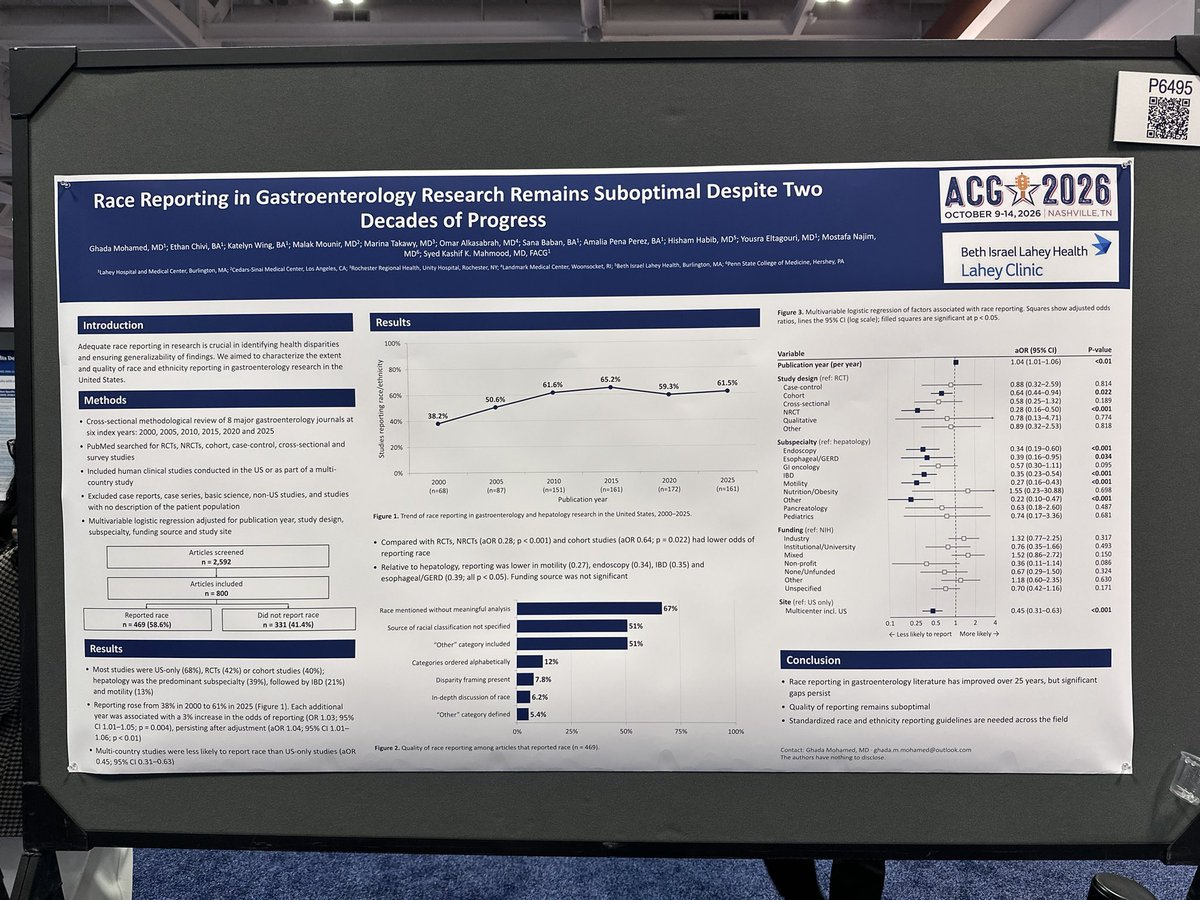
Grateful for the opportunity to present my research at #ACG2024 and for my first outstanding poster presenter! Grateful for the mentorship and guidance of @SriGaddamMD.
Thrilled to share our findings on early-stage pancreatic cancer staging, published on @JAMA_current: lymph nodes often missed on preop imaging with huge impact on treatment and survival - @SriGaddamMD@GhadaMMD_@CedarsSinai
Our paper in @AnnalsofIM on rapidly changing trends in GLP-1RA use
- Use has dramatically increased since 2011 particularly after 2020
- Use in obesity without diabetes has tripled
- Off-label use has increased from from 0.21% in 2019 to 0.37% in 2023
- Semaglutide (Ozempic, Wegovy) rose from 31% of prescriptions to 88% from 2019 to 2023
- Although men, African Americans, and Hispanics generally have higher rates of diabetes and obesity, they are disproportionately prescribed fewer GLP1 meds
https://t.co/NaMPh8D9s3
Well, that's a first!
Our paper's imaginative illustration of "carrot trachea with steak lungs on a plate" made it to the cover of the Gastroenterology journal!