ویدیوی سخنرانی من در نشست «گفتوگوی امنیتی قندهار ۲۰۲۶» درباره همکاریهای انرژی و تجاری ایران و هند در شرایط تحریم منتشر شد.
سخنرانی: دقیقه ۴۳
پرسشوپاسخ: دقیقه ۸۷
لینک: https://t.co/mNDhiPBJbK
#ایران_هند
The recording of my presentation at the Kandahar Security Dialogue 2026 is now available.
Topic: India–Iran Energy and Trade Cooperation under Sanctions.
Presentation: 43:00
Q&A: 1:27:00
Watch: https://t.co/mNDhiPBJbK
@indic_rf
5/5 | The central distinction is between multipolarity and shared great-power dominance.
For India, strategic autonomy requires a voice in decisions affecting its interests—not merely good relations with powerful states.
Read Akbaruddin’s article: https://t.co/0796l9Sbmn
1/5 | Is multipolarity becoming great-power dominance?
Syed Akbaruddin, India’s former UN Permanent Representative, former MEA spokesperson and veteran diplomat, warns in Hindustan Times that a potential Trump–Xi–Putin summit risks a new Yalta-style order.
4/5 | His warning also extends to BRICS.
Opposition to Western dominance does not automatically mean support for a more inclusive order. India cannot assume that China or Russia will necessarily defend its interests in negotiations among major powers.
2/2 | Three questions emerge: Is Pakistan diversifying energy supplies? Is Kuwait seeking deeper economic and security ties amid tensions with Iran? Or is Islamabad hedging between Tehran and Arab partners?
India’s UAE oil-storage partnership offers a useful comparison.
1/2 | Pakistan and Kuwait are expanding their five-decade energy partnership, exploring fuel storage, refining, logistics and re-exports.
The timing matters: amid Persian Gulf tensions, energy security is increasingly intertwined with regional strategic calculations.
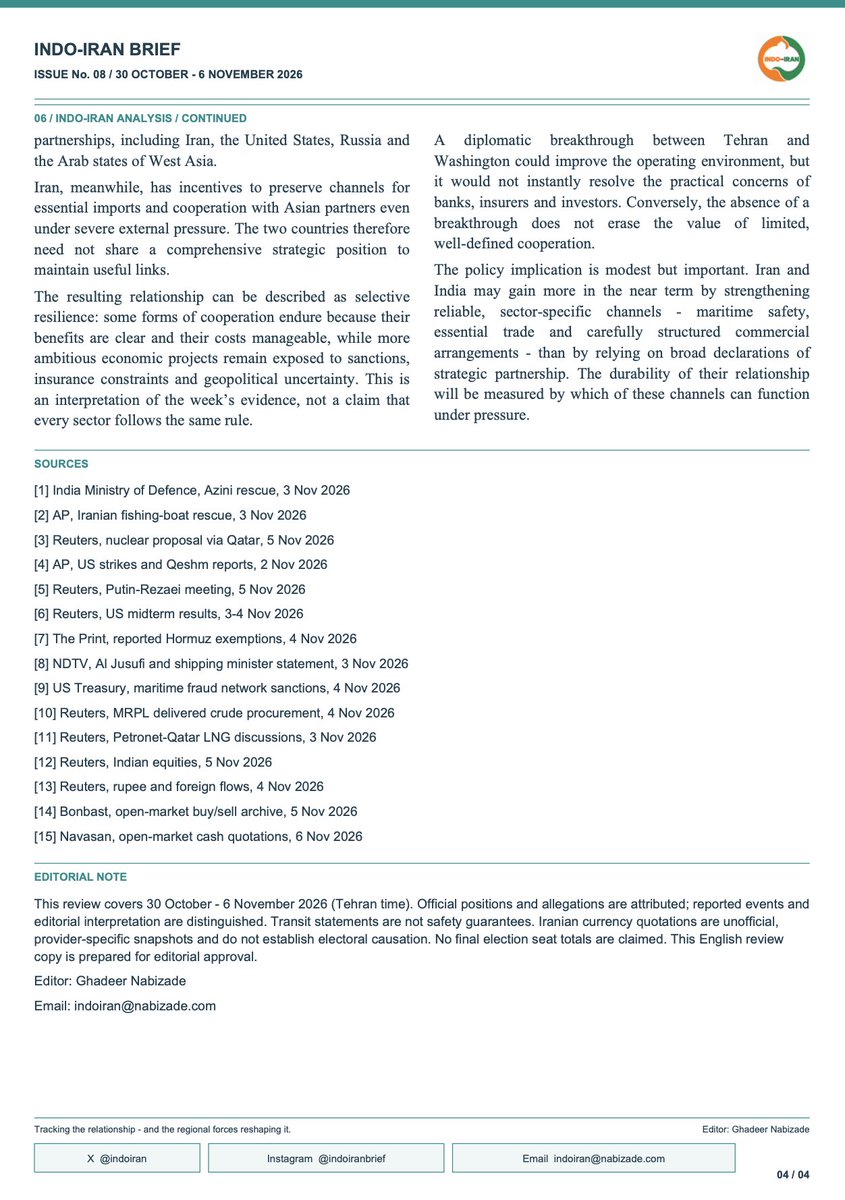
INDO–IRAN BRIEF | Issue 8 30 Oct–6 Nov 2026
This week: India rescues 20 Iranian sailors, Iran–US diplomacy, Strait of Hormuz shipping, US sanctions on India-based firms, and energy markets.
Analysis: Selective Resilience in India–Iran ties.
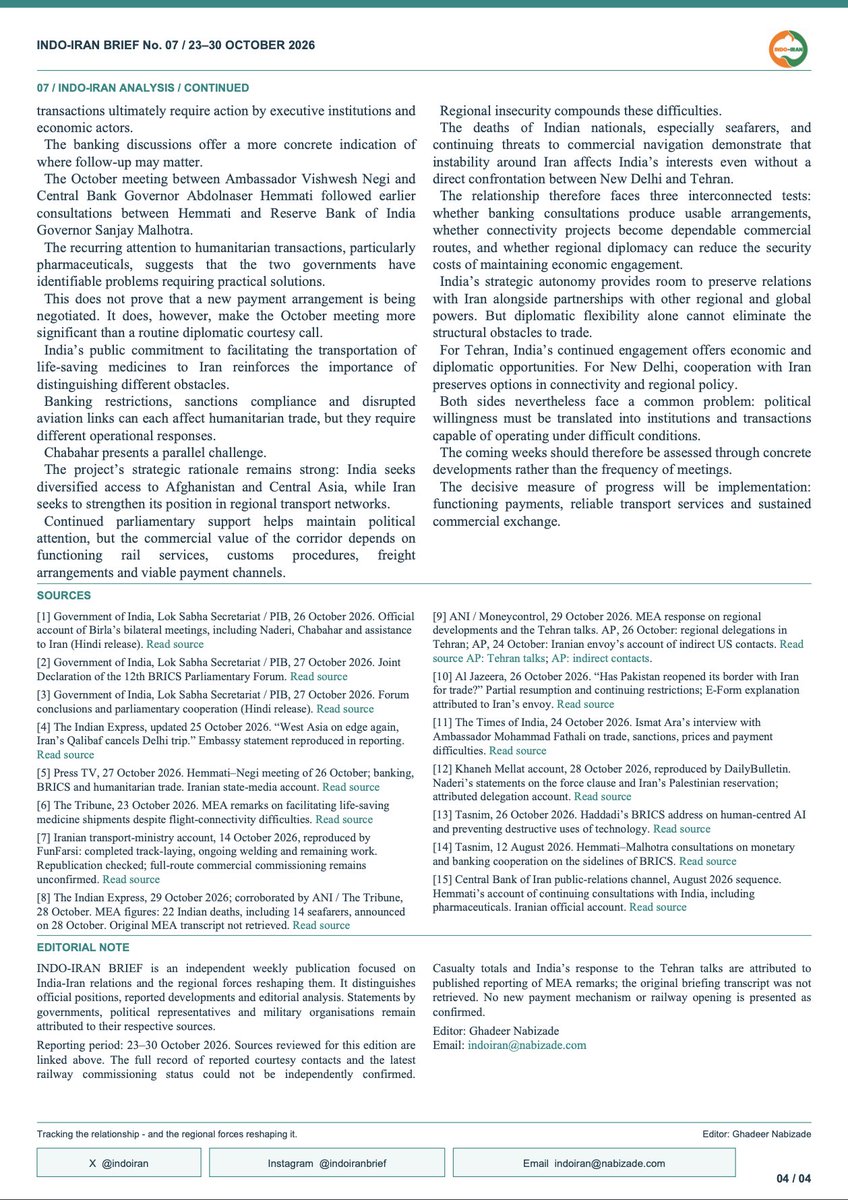
𝗜𝗡𝗗𝗢–𝗜𝗥𝗔𝗡 𝗕𝗥𝗜𝗘𝗙 | 𝗜𝘀𝘀𝘂𝗲 𝟬𝟳
23–30 October 2026
From parliamentary diplomacy to banking and Chabahar: can India–Iran engagement deliver functioning payments, reliable transport and sustained trade?
Read the latest English edition.
@India_in_Iran@Iran_in_India
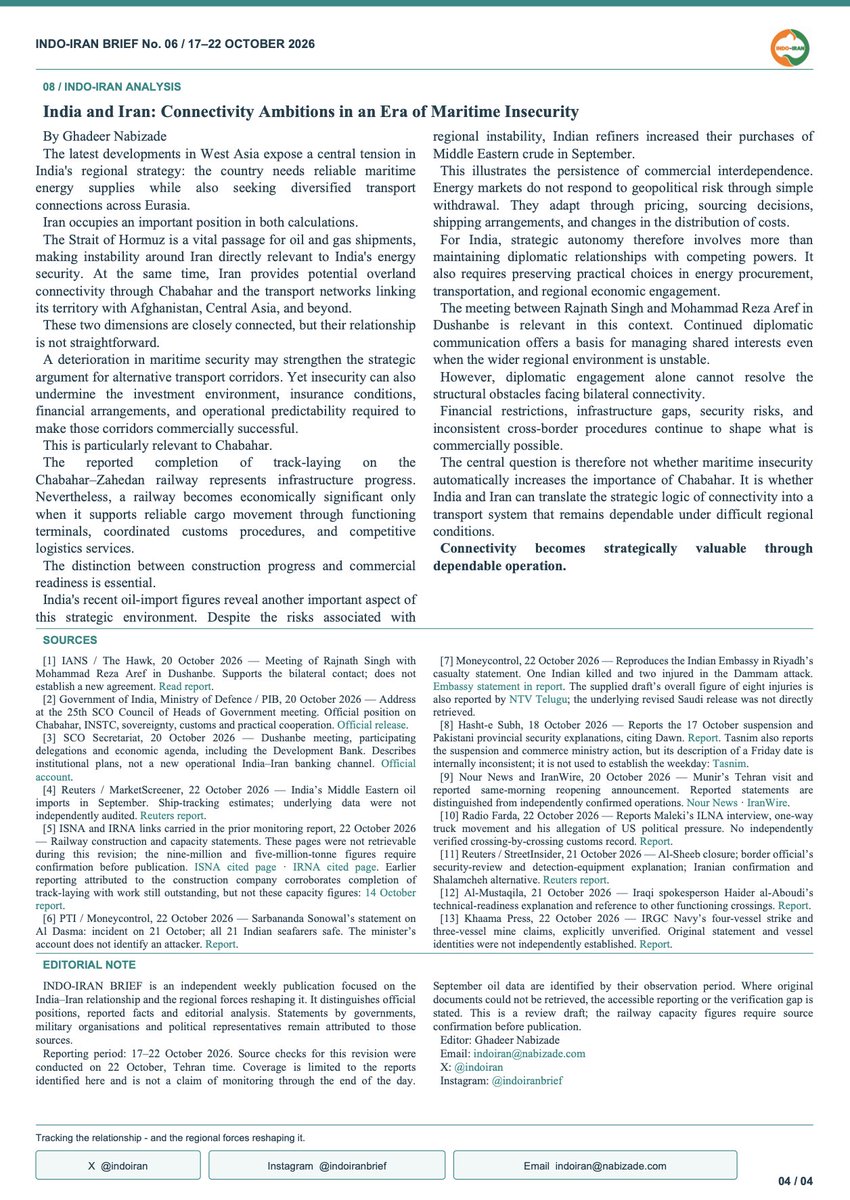
India–Iran ties are shaped by more than diplomacy. Energy, regional connectivity and security pressures all influence where the relationship can go.
INDO–IRAN BRIEF follows these forces through weekly reporting and analysis. Issue 06 (17–22 Oct 2026), in English is attached.
Trump has waived key provisions of the 2026 Graham Sanctioning Russia and Iran Act, easing the immediate tariff threat to major Russian energy buyers, including India. Existing sanctions remain in force, and Washington retains the option to reverse course.
Compulsory hijab in Iran is wrong. So is forcing girls in Azerbaijan to remove it. Barring hijab-wearing students from school apparently to defend secularism and curb religious influence is not liberation. It is another form of controlling and humiliating women. Deeply upsetting.
در ایران مخالف اجبار به حجابم؛ در جمهوری آذربایجان هم اجبار به کشف حجاب را همانقدر احمقانه و ظالمانه میدانم. منع ورود دختران محجبه به مدرسه، ظاهراً به نام ��کولاریسم و مهار نفوذ مذهبی، تحقیر زنان است؛ آن هم در جامعهای عمدتاً مسلمان با اکثریت شیعه. عمیقاً ناراحتم.
“O God, of all the precious blessings You have bestowed upon me, let my life be the first thing You take away from me, before my dignity, honor, integrity, or sense of justice.”
— Imam Ali ibn Abi Talib (600–661 CE), the first Imam of Shia Muslims.
«Dios mío, de entre todos los bienes valiosos que me has concedido, haz que mi vida sea lo primero que me arrebates, antes que mi dignidad, mi honor, mi honestidad o mi sentido de la justicia».
— Imam Alí ibn Abi Tálib (600–661), primer imán de los musulmanes chiíes.
«خدایا، از میان نعمتهای ارزشمندی که به من بخشیدهای، اگر قرار است چیزی را از من بگیری، نخست جانم را بگیر؛ نه ایمانم، نه شرافتم و نه عزتم را.»
امام علی
نهجالبلاغه، خطبه ۲۱۵
A personal note: India’s delegation in Moscow included Ambassador Vinay Kumar, who served as Deputy Chief of Mission at the Indian Embassy in Tehran from 2006 to 2009.
I had the privilege of working with him in 2009.
@vkumar1969
3/5
At the 8th Moscow Format meeting on 5 October 2026, Afghanistan joined India, Iran, Russia, China, Pakistan and Central Asian states.
India reaffirmed support for Afghanistan’s sovereignty, unity and territorial integrity.
5/5
The disagreement meant the 8th Moscow Format ended without a joint statement.
For India and Iran, however, Afghanistan remains a shared regional arena linking security, connectivity and access to Central Asia even where their approaches are not identical.