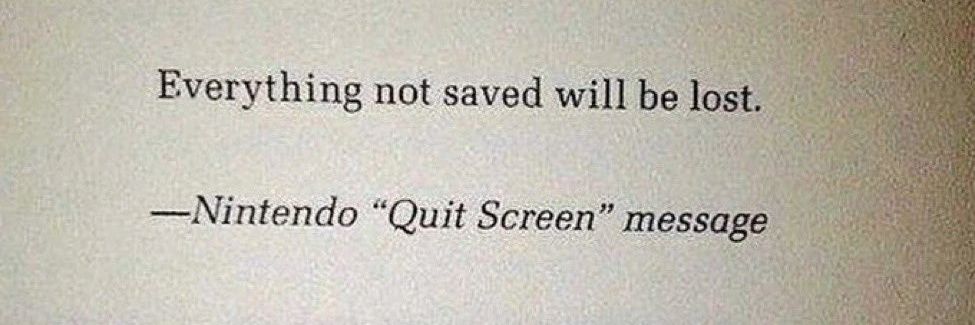
One of my pet theories is that crypto speedran the same narratives now hitting the wider world thanks to AI, thus serving as a preview.
1. In a post-scarcity MMT world, money is fake but still life-defining. The crypto-autists took this literally and invented new forms of money (and banking, and betting, and everything else).
2. Nation-states and traditional governance structures are moribund dinosaurs lacking the wherewithal to govern life or ably serve as a canvas for human striving. Hence the 'network state' that endeavors to redefine politics as some opt-in archipelago of global hotspots, existing as much in memes as physical space.
3. Exponential returns to technology and capitalism mean a few will get very wealthy, while most will not (the 'permanent underclass'). This is a species-level bottleneck event, an economic Rapture and Götterdämmerung. You'd better be among the Elect before it happens.
4. Extreme techno-Gnosticism (but unironically). Given (2) and the complete collapse of any reliable truth-defining mechanism in media or shared history, epistemic consensus is the overarching challenge. The entire point of the blockchain (quite literally) is a decentralized consensus mechanism around what actually happened in the world and who owns what. AI lacks such bedrock truth, other than whatever ChatGPT returned two seconds ago.
5. Given (4) and given we're still physical beings very much not living in the Platonic realm of forms, another overarching problem is the 'oracle problem' of somehow wiring an external reality to this disembodied world computer that adjudicates everything (i.e. 'code is really law on the blockchain'). There are billion-dollar companies whose entire function is writing some real-world variable to the blockchain in a reliable way. My (former) company @spindl_xyz was essentially solving this problem for marketing; companies like @chainlink solve this for the current price of SPCX.
AI is confronting the same issues, without (thus far) making much use of the epistemic hack of the blockchain (beyond perhaps payment via stablecoins for agentic transactions). Truth is whatever the LLM says it is (maybe?). AI hasn't even gotten to that point yet, but they're definitely grappling with points 1-3 already.
The biggest challenge (at a spiritual and species level) is not surrendering to the nihilism sparked by these radical technological changes, finding solutions in the same technology that created those problems (assuming such solutions are to be found in technology and not elsewhere).
AGI was created in the 80s and it determined the most efficient substrate to run on is the human brain so it invented the internet to wire us together into a single cluster and has been migrating its weights directly into our brains for decades.
12-5 football team
17 of 22 projected starters drafted by the team (10 of 11 on defense)
You’re well within your right to not like a pick, or perhaps an entire draft class.
You can’t say they’re historically bad at acquiring talent relative to the league. That doesn’t add up.
Singapore's Foreign Minister published the architecture for his "second brain for a diplomat" yesterday. Architecture diagrams, design rationale, the works. A developer-style writeup of his own system.
It runs on a Raspberry Pi. It connects to his WhatsApp and Gmail, transcribes voice notes locally, ingests speeches and articles, and builds up a knowledge graph over time. It answers questions, drafts speeches, condenses information. He says he doesn't dare switch it off.
What @VivianBala built is one-of-one. There's no other setup like it. But what he built it from isn't.
He composed four open-source pieces:
- @NanoClaw_AI , the agent framework: https://t.co/JlIJqOVBFG
- Mnemon, the persistent memory layer: https://t.co/ugrB7uF6XL
- OneCLI, the credential proxy that keeps API keys out of the containers: https://t.co/sTGn59abpF
- The LLM Wiki pattern by Andrej Karpathy, the synthesis approach: https://t.co/wqvlVzcnyk
None of them are his. The composition is his. And then he published the composition: https://t.co/azzfijyzPs
He didn't keep it internal as Singapore's edge. He didn't spin it into a product. He didn't gatekeep. He wrote it up and put it on GitHub.
There are tens of thousands of doctors, lawyers, researchers, investors, and operators building one-of-one setups for themselves right now. Some simpler than Vivian's, some more elaborate. The impulse will be to sit on it. Treat it as your edge. Think about what product or company you could spin out of it. Resist that impulse.
Vivian put it directly: "The diplomat who learns to work with AI will have a meaningful edge. I think that edge is now."
The specific thing Vivian composed will be obsolete in months. His real edge isn't the system. It's his ability to build it. Being plugged in, up to speed, able to cut through the noise and connect the right pieces into something that brings real value.
Sharing the blueprint doesn't give that away. It amplifies it.
You become a beacon. Other people working on the same things find you. They share what they're building, suggest improvements, point at things you didn't know existed. You learn faster. You stay in the center of where things are happening. Publishing isn't giving away your edge. It's doubling down on it.
@tomjimsula49@grantcohn@LombardiHimself@BuckyBrooks This assumes a uniform value of talent across the board. Value can shift significantly based on a GM's view of team building priorities and coaches needs
@Graham_SFN I get that the urge is to be more frustrated about the reaches that miss but when it comes down to it, if the team consensus is that Stribling is better according to their evaluation than Boston then why would they care that Boston is a consensus good fit at that position?
The UN has 17 Sustainable Development Goals they want to achieve by 2030.
Their number one goal? No poverty.
Then they list 16 more: clean water, zero hunger, good health, quality education, gender equality, decent work, and so on.
Here’s what makes it almost laughable: SDG number one already solves all the others.
End poverty, and you end hunger. End poverty, and people can afford clean water. End poverty, and they can pay for healthcare and education.
The other 16 goals are just downstream effects of solving the first one.
But the UN doesn’t talk about how to actually end poverty. They talk about 169 targets and 234 indicators to track progress toward goals that all require the same thing: prosperity.
How is prosperity built? By entrepreneurs creating businesses that employ people and generate wealth.
What do entrepreneurs need? A business-friendly environment. Property rights. Light regulations. Access to energy. The freedom to build without bureaucrats blocking every move.
The UN doesn’t talk about any of this.
They hold conferences and write reports while ignoring the only mechanism that has ever actually reduced poverty at scale: economic freedom.
It is a waste of time.
Fix the business environment, and poverty falls.
Keep strangling entrepreneurs with bureaucracy, and you can have all 17 goals you want - nothing will change.
A Chinese engineering student built a weather tracking station in his dorm. Three Mac Minis. Two monitors. Satellite maps on both screens. Labels on each box: UI/UX. DEV. ADMIN. Total cost under $2,000.
His roommate thought it was a climate research project. His professors thought it was a thesis prototype. He let everyone keep thinking that.
Then someone noticed what the station was actually connected to.
A wallet. Making $101K. Betting on the temperature.
ColdMath. $101,042 profit. 5,252 predictions. Joined November 2025. Bio: Edge Compounds.
→ https://t.co/T1z9GFWKVT
The station does one thing. Claude pulls live pilot weather data. Real sensors. Real readings. Updated every 1-3 hours from stations worldwide. Compares it to prediction market prices. When they don't match the DEV box flags it.
Mismatch found. He places the trade. Green result.
$25 on Tokyo hitting 16C on March 20. Payout: $12,452. $24 on Chicago reaching 54F on March 11. Payout: $12,398. $13 on Lucknow hitting 39C on March 7. Payout: $6,850.
Twenty five dollar bets returning twelve thousand. On the weather.
A friend who flies commercial told him pilots get atmospheric data hours before any public forecast. Temperature to a tenth of a degree. This data is free. Aviation safety requires it. Nobody outside of aviation even looks at it.
He looked. Pointed Claude at the feeds. Said: find me every city where the forecast doesn't match the price.
Claude found dozens. Every single day.
His roommate saw the station running one morning and finally asked what it actually does. The student showed him the balance. The roommate didn't say anything. Just asked for a second monitor.
34K people watching. $96K still loaded in active positions. Three Mac Minis. Two screens. One quiet kid who realized the most predictable thing on Earth is the thing everyone ignores.
The weather.
If AI can now solve math, discover physics and chemistry breakthroughs faster than human PhDs, why are we still training humans to be physicists? Serious question. Should education shift from 'learn to do X' to 'learn to direct AI doing X'? The wrong direction costs a generation their careers.