In a letter to Prime Minister Shehbaz Sharif the chief minister pointed to a sharp contrast in the number of passengers at the two major airports in the region – Gilgit and Skardu. Between March and June 2026, he said Skardu Airport handled more than 50,000 passengers, while Gilgit Airport managed only around 4,000.
Express Tribune
Iran fires missiles at Arab countries—we all condemn—the World stands up condemning Iran
US targets hospitals and schools in Iran,the World is silent.
Israel wipes out entire villages, murdering thousands in Lebanon and Gaza,the World is silent
#WorldCup2026#iran
Gilgit-Baltistan's unanimous voice
For decades, the constitutional status of Gilgit-Baltistan has remained one of Pakistan's most unresolved political questions. Governments have changed, committees have been formed, constitutional packages have been announced, and promises have repeatedly been made. Yet the people of the region continue to live without the full constitutional rights enjoyed by citizens in the country's four provinces.
The unanimous resolution passed by the Gilgit-Baltistan Assembly this week is significant not merely because it demands provisional provincial status, but because it reflects an unprecedented political consensus. Treasury and opposition benches—often sharply divided on governance and policy—spoke with one voice on an issue that transcends party politics.
That consensus deserves serious attention in Islamabad.
The resolution calls for provisional provincial status through constitutional amendments while reaffirming Pakistan's principled position on the Jammu and Kashmir dispute. It neither challenges Pakistan's international commitments nor seeks to alter the country's longstanding diplomatic stance. Instead, it proposes a constitutional arrangement that protects Pakistan's legal position while addressing the democratic aspirations of nearly two million people.
This distinction is crucial.
For years, critics have portrayed any discussion on constitutional rights for Gilgit-Baltistan as being incompatible with Pakistan's position on Kashmir. The Assembly's resolution directly addresses that concern by explicitly linking provisional provincial status to Pakistan's international obligations and any future settlement of the Jammu and Kashmir dispute.
The demand, therefore, is neither radical nor unprecedented. It is a carefully worded constitutional proposal that attempts to reconcile democratic representation with national policy.
The people of Gilgit-Baltistan have contributed immensely to Pakistan's security, economy and tourism. The region hosts some of the world's highest mountains, serves as the gateway to the China-Pakistan Economic Corridor (CPEC), supplies water resources that sustain much of the country and has become Pakistan's fastest-growing tourism destination. Yet its residents remain without representation in the National Assembly and Senate and have limited participation in the country's constitutional institutions.
The resolution also reflects political maturity. Instead of engaging in partisan point-scoring, elected representatives chose unity over division. Such consensus is rare in Pakistani politics and should not be dismissed as routine legislative business.
Successive governments have acknowledged the constitutional question. From the reforms introduced during Shaheed Zulfikar Ali Bhutto's government to the 2009 Gilgit-Baltistan (Empowerment and Self-Governance) Order under Asif Ali Zardari and the 2018 Gilgit-Baltistan Order introduced following the Sartaj Aziz Committee's recommendations during Nawaz Sharif's tenure, every administration has recognised that the status quo cannot continue indefinitely.
Yet recognition has rarely translated into decisive action.
The latest resolution provides the federal government with another opportunity to move beyond discussions and initiate meaningful constitutional reform. Its call for inclusion in the National Finance Commission Award and representation in federal institutions reflects practical governance concerns rather than political symbolism.
Ultimately, this debate is not simply about provincial status. It is about constitutional equality, democratic participation and ensuring that the people of Gilgit-Baltistan enjoy rights comparable to those of every other Pakistani citizen, while safeguarding the country's national interests.
By Shabbir Mir
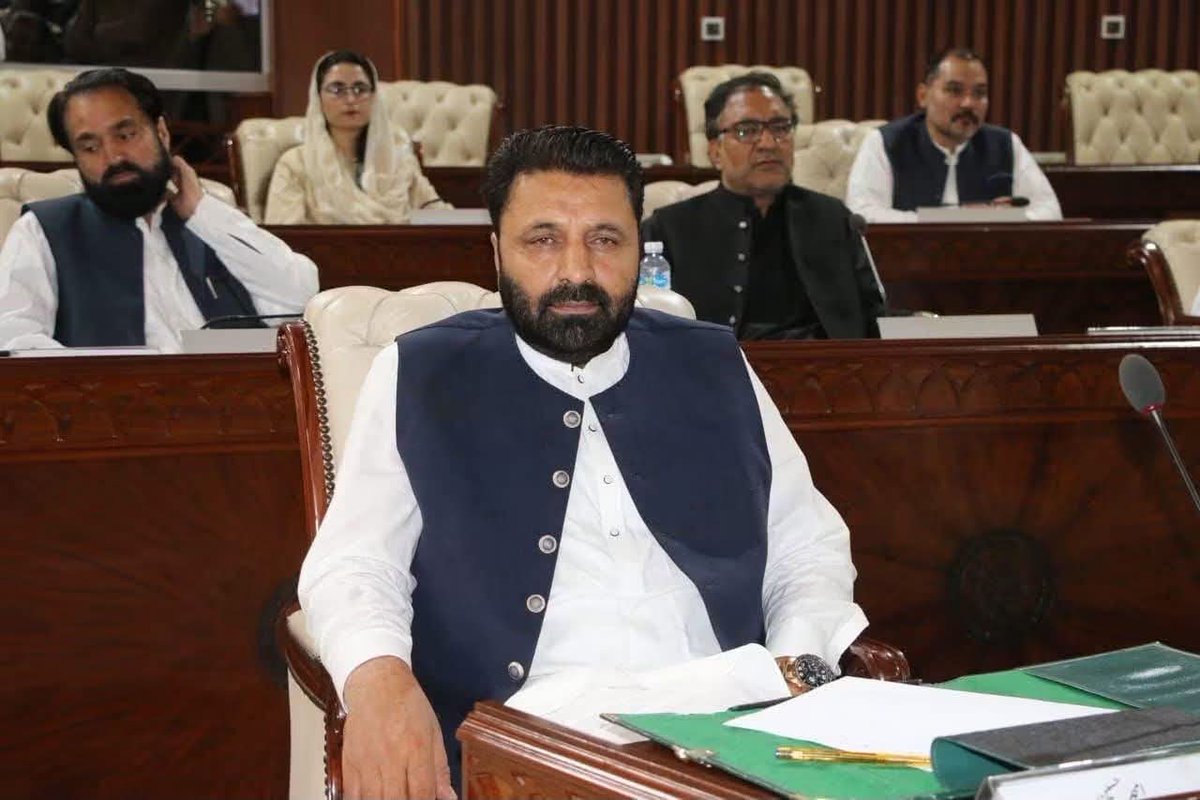
In a unanimously passed resolution moved by PPP Member Syed Jalal Shah, the GB Assembly demands the immediate conferment of Interim Provincial Status upon GB,ensuring constitutional parity, political enfranchisement,and substantive representation in national decisionmaking bodies
Appreciation to the Prime Minister of Pakistan, Mr. Shehbaz Sharif, for attending the farewell and State funeral of the martyred Supreme Leader.
@CMShehbaz
The U.S. government's conduct as World Cup host follows its familiar foreign policy: bending rules, bullying rivals, creating obstacles, and cheating. This is their MAGA playbook. Iran rejects such games. We stand firmly for our rights.