1/14 Tweetorial alert 📢 Evaluating patients for AKI is important, but the vast possible etiologies can make this difficult. Here is the diagnostic method @TracyMullis1 and I teach residents rotating with us as outlined in our brand new pocket guide we give to our residents.
Here is the inside story on how @UpToDate does what it does.
From my experience as an author/section editor for UpToDate for 20 years, here is how it works. It’s amazing!
Every day a team of people @UpToDate scour the top medical journals (and major meeting abstracts) for articles of importance. In my case they pertain to myeloma and related disorders. Any article that is felt to be important is sent to a expert MD medical editor at UpToDate who reviews the paper. If the information is felt to be important, the relevant chapter is updated with this content, summarized in a few sentences in Word track and then sent to the author of the chapter who is a top expert in the field.
As an author I have to review the update in detail and then make a decision whether to include the new information, and whether the way it has been incorporated is correct or needs to be edited.
Once I make a decision, it is then reviewed by an expert section editor. For 15 years for me, the section editor was Dr. Robert Kyle! (Currently I’m the section editor and we have about 6 experts serve as authors on over 40 chapters pertaining to myeloma and related disorders). The section editor independently decides whether the author made the right call and either approves or we have a back and forth till we agree.
The updated chapter is then reviewed again by the expert MD editor at UpToDate and then posted.
For important phase III trials or FDA approvals we usually make the update within a week. Sometimes by the next day! With so many important papers, every week there are 2-3 updates pertaining to my chapters that go through the above process! It’s hard work but it keeps me ridiculously current. And more importantly it keeps the content accurate and current. This is not random addition of new information. It’s vetted information that’s added.
Every UpToDate chapter is also peer reviewed annually. Each chapter also undergoes an annual author and editor review to make sure that the overall content and flow is good and to delete content that may be no longer important or accurate. The extraordinary process and rigor involved is why it’s such an invaluable irreplaceable resource. It is AMAZING and hard to replicate.
UpToDate is easy to navigate. But the newly launched UpToDate Expert AI takes it to the next level! It makes the entire content available to query just like you query a top ranked LLM. But it’s not searching the random internet or a stack of published articles. It’s primarily trained and derives vetted and adjudicated UpToDate content. It will not randomly hallucinate. It will not list 10 options for treatment newly diagnosed myeloma but will give you what experts currently feel is the best option based on the latest evidence. All answers are referenced and pointing to specific content sections in UpToDate (which also has links to source material). So you can immediately get all the background information if you need more detail.
Working with UpToDate has helped my career immensely. For the last 20 years it has been impossible for me to not know about every important study related to myeloma and related disorders as they get published! For 20 years, I have received a precise summary of every important article published in my field. More importantly I am forced to read them, review the source material, and make a judgment call. As a result I remember this stuff. A gift indeed!
1/
Why do we use urine antigen tests to diagnose respiratory pathogens?
Patients admitted with pneumonia are often diagnosed with S pneumoniae or legionella based on a positive URINE test.
Let's try and figure out why we search the urine to identify lung pathogens.
I never knew this occurred 🤯
Obviously massive energy savings from not running a Na/K ATPase, but I guess you lose the ability for a strong membrane potential and muscle movements and advanced nervous systems?
Seems like a good trade off for something just sitting on coral though!
Proactive vs Reactive DDAVP: The Clamp Finally Faces an RCT
Thank you Thai Air Force for doing the trials that need to be done!
https://t.co/wT293ER9Dm
Our VESPER team, led by Dr. @john_basmaji have recruited the first two patients into our RCT of venous congestion guided resuscitation in septic shock!!
Our goal is to understand how venous congestion can be used to guide decisions surrounding fluids, inotropes, RV support in septic shock.
Focus for VESPER right now is feasibility but we have already recruited two patients in the first week live!
Well Jonathan , sometimes an AVG is still needed but most of the the the transformed AVG from the venous counterpart is good enough . We provide explanations in our paper. Thank you for posting and the App is being launched !
Happy to see our commentary with @jbrianbyrd suggesting that Angiotensin II should be part of the evaluation of primary hyperaldosteronism @HyperAHA@NUFeinbergMed@NU_Nephrology
https://t.co/cOo68ZW7eG
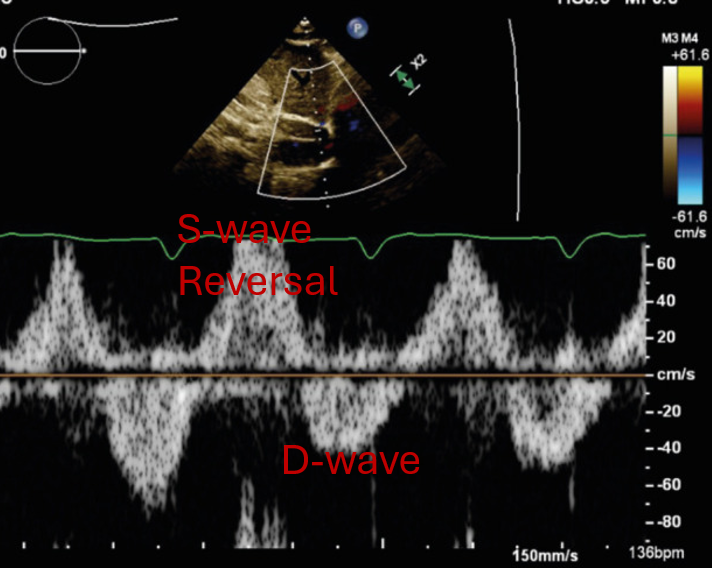
#VExUS score Is Associated with Worsening Renal Function and Reduced Natriuretic Response in Patients with Acute #HeartFailure#POCUS#FOAMed#Nephpearls
🔗 J. Clin. Med. 2024, 13(20), 6272; doi: 10.3390/jcm13206272
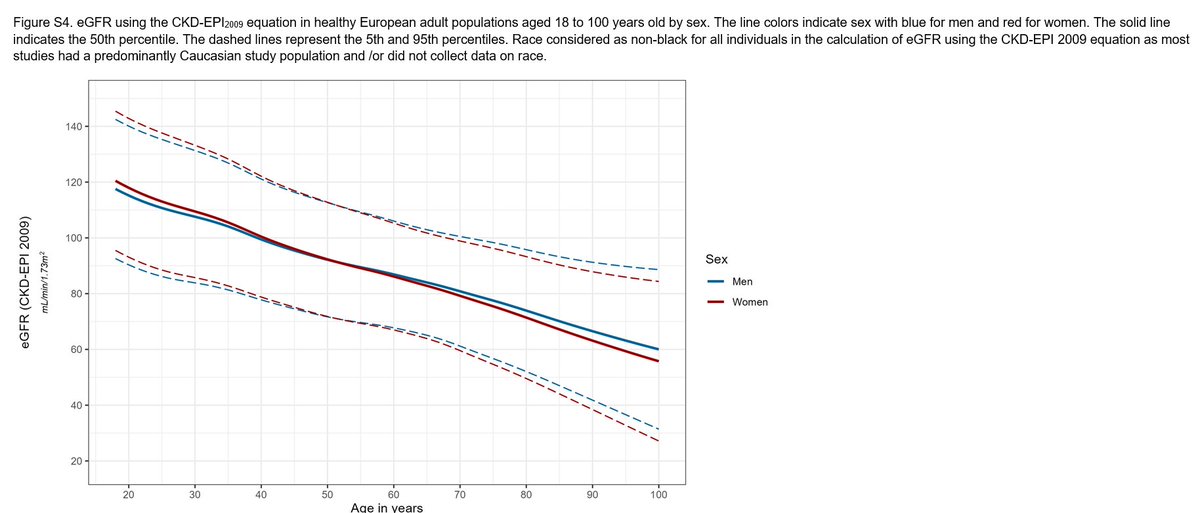
Age-specific reference values of eGFR for European adults by Megan E. Astley, @jjcarrero1, Elke Schäffner, Kitty Jager et al should further question current CKD definition by eGFR < 60.
Instead, lower eGFR limits should be defined in octo- & nonagenarians.
https://t.co/k0UrdTcFI1
On Tuesday I received the NOA (notice of award) for an @nih_nhlbi R01 grant submitted back in Feb 2024 and marked pending after the Oct 2024 Council meeting. Let me tell you the story of the 15 years it took to get here:
Beautiful animation of metabolic flux in the mitochondrial Kreb (TCA) cycle
The three "CO2" coming off the cycle is how you lose weight: carbon from your material body coming off as gas you end up breathing out
By @janetiwasa
SCCM guideline update on critical care #Ultrasound.
Honored to be part of this expert panel—an incredible learning experience. Grateful to the co-chairs @Jose_Diaz_Gomez@NikraDoc for the opportunity!
#POCUS#FOAMed#Nephpearls
🔗https://t.co/vdKxnzS5tk
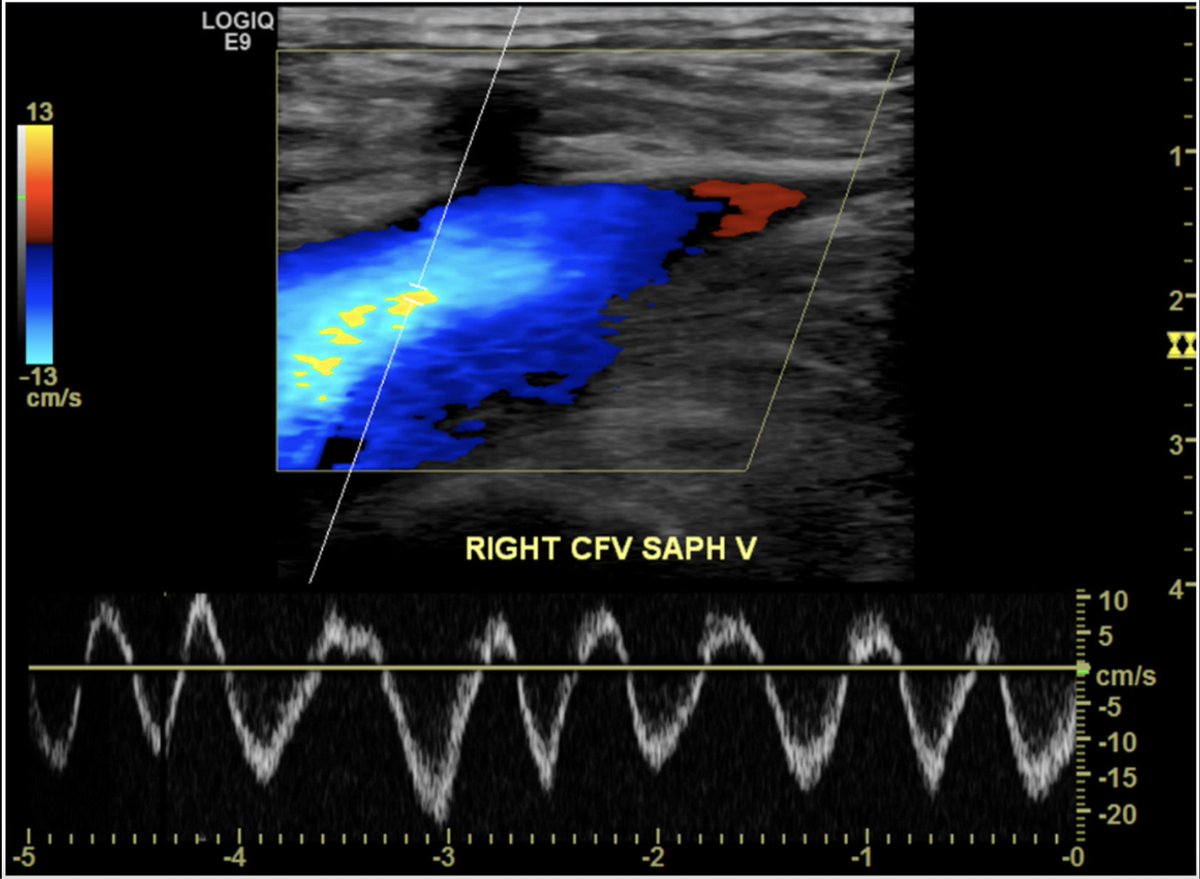
1/5 What’s all the buzz about femoral vein doppler?
A recent paper (PMID: 37165284) by @drvimalzenICU and @ThinkingCC showed that femoral vein doppler had good accuracy in detecting venous congestion and moderately correlated with #VEXUS scores
🌟HIT! High Impact Clinical Trials – What and Why
First Rajiv Agarwal @AgarwalRajivMD
Combination Effect of Finerenone and Empagliflozin in Participants With Chronic Kidney Disease and Type 2 Diabetes Using a UACR Endpoint Study (CONFIDENCE)—Baseline Characteristics
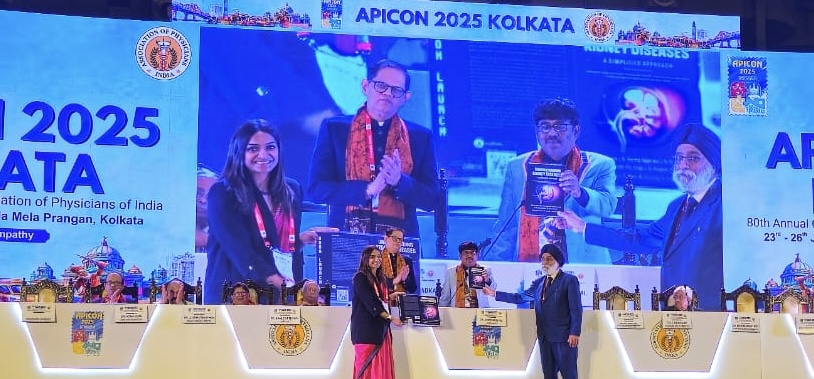
Happy to announce the launch of our book - Understanding Kidney Diseases: A Simplified Approach, at the grand Inauguration Ceremony of Association of Physicians of India Conference - APICON 2025 in Kolkata! 📷
This comprehensive, user-friendly guide simplifies nephrology for clinicians, students, physicians, and residents. Packed with infographics, clinical insights, and expert contributions from across India, it’s designed to make diagnosing and managing kidney diseases easier in everyday practice.
Available now on notionpress https://t.co/VMmLFakVrH (USE CODE KIDNEY20) and Amazon https://t.co/oileutnkBs
EDITORS Drs - Priti Meena, Garima Aggarwal, Urmila Anandh, Edwin Fernando, Vinant Bhargava, NP Singh, Anupam Prakash
Thank you to all the authors, this is testament to your expertise and dedication.