Fossil fuels are killing us. The wildfires their production & use causes kills an average of 1900 Canadians per year (in 2023, it 5400)
The economic impacts of the health burden is $18 billion per year - and up to $49 billion in more recent years
https://t.co/z1Qz5K5cOl
Artificial intelligences do not undergo experiences, do not possess a body, do not feel joy or pain, do not mature through relationships, and do not know from within what love, work, friendship or responsibility mean. Nor do they have a moral conscience, since they do not judge good and evil, grasp the ultimate meaning of situations, or bear responsibility for consequences. They may imitate or even simulate, but they do not understand what they produce, for they lack the affective, relational, and spiritual perspective through which human beings grow in wisdom. #MagnificaHumanitas
"Between 2023 and 2025, fires ripped through nearly 31.5 million hectares of thick, dry forest, nearly a tenth of our national total. Canada lost 7.35 billion trees that will never grow back" . . .
https://t.co/fbDpLTkbt1
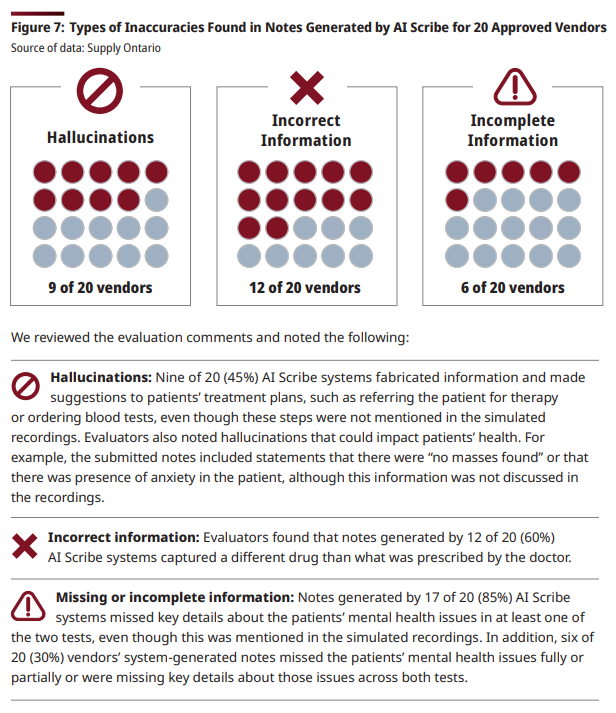
An auditor for the Ontario, Canada government found that AI agents tasked with turning doctor/patient conversations into structured notes routinely hallucinated false treatments, replaced drug names with entirely different drugs, and missed crucial information
If you're a naturally anxious person, I recommend pursuing a high stress career path where at least you'll be compensated for anxiety you're going to have anyways.
it's gonna blow your mind when you find out about the academic disciplines where people are capable of reading an ENTIRE paper. I've even heard rumours of a handful of incredibly talented thinkers who can make it through an entire book
The dust bowl was largely caused by agriculture. Removing native prairies increased wind erosion, leading to massive dust storms. I hope to see the widespread adoption of lab-grown meat within our lifetimes so we can replant the prairies and restore our native ecosystems.
This case (Alford v Canada) came down yesterday and won’t’ get a tonne of attention, but it’s a very important case that for the first time really examined what (if any) the limits on parliamtentary priviledge in Canada’s version of the Westminster system are. Actually a hugely important constitutional case that gets at the basic relationship between Parliament and the Crown. Real credit to @ryan_p_alford for his immense work and time spent on this, even if the outcome wasn’t what he was arguing. Some explanation of this case for those who had not been following:
The question this case revolved around is quite simple: can the executive, through its legislative majority, limit what MPs and senators are allowed to say in Parliament? Parliamentary free speech is one of the oldest principles in the Westminster tradition. The right of members to speak in debate without fear of prosecution or imprisonment goes back to the English Bill of Rights of 1689, itself a response to the Stuart kings jailing parliamentarians for criticizing the Crown. The whole point of the privilege is to protect the legislature's independence from the executive. It came to Canada through the preamble of the Constitution Act, 1867 and Section 18, which gives Parliament the power to define its own privileges.
In 2017 the Trudeau government passed the NSICOP Act, creating a committee of parliamentarians with top secret clearance to review intelligence operations. But it came with a catch. Members who disclosed what they learned in Parliament (even in the House or Senate, even on matters of obvious public interest) could be criminally prosecuted and face up to fourteen years in prison. Professor Alford saw this as the executive using its legislative majority to curtail a foundational constitutional protection. He argued the restriction amounted to an implicit amendment to the Constitution, one that could only be made through the formal amending process, not ordinary legislation. The 8-1 majority, written by Rowe, upheld the NSICOP restriction as a "narrow limitation" of parliamentary privilege. But the Court also clarified something important for the first time: Section 18 has constitutional limits. Parliament can define its privileges through ordinary legislation but a prime minister cannot use that power to fundamentally alter or undermine Parliament's role in the constitutional order.
Cote's lone dissent is worth reading as well, and she has a habit of writing some of these interesting dissents (her dissent in References re Greenhouse Gas Pollution Pricing Act essentially calling Henry VIII clauses unconstitutional comes to mind and she has a very distinct reading of the constitution). She calls the restriction unprecedented in Canadian history and argues it effectively transfers control over parliamentary speech from Parliament to the executive and the courts, undermining the very separation of powers that parliamentary privilege exists to protect.
I personally think the majority got it right here. Parliamentary privilege exists to ensure that the houses of Parliament can conduct their business free from outside interference. In this case, the restriction is narrow, and the national security context matters. But this is not a simple case. The question of where the line falls between Parliament defining its own privileges and the executive hollowing them out is genuinely difficult, and the fact that we now have a Supreme Court ruling clarifying that the line exists at all is significant. Again, credit to Professor Alford for forcing the question.
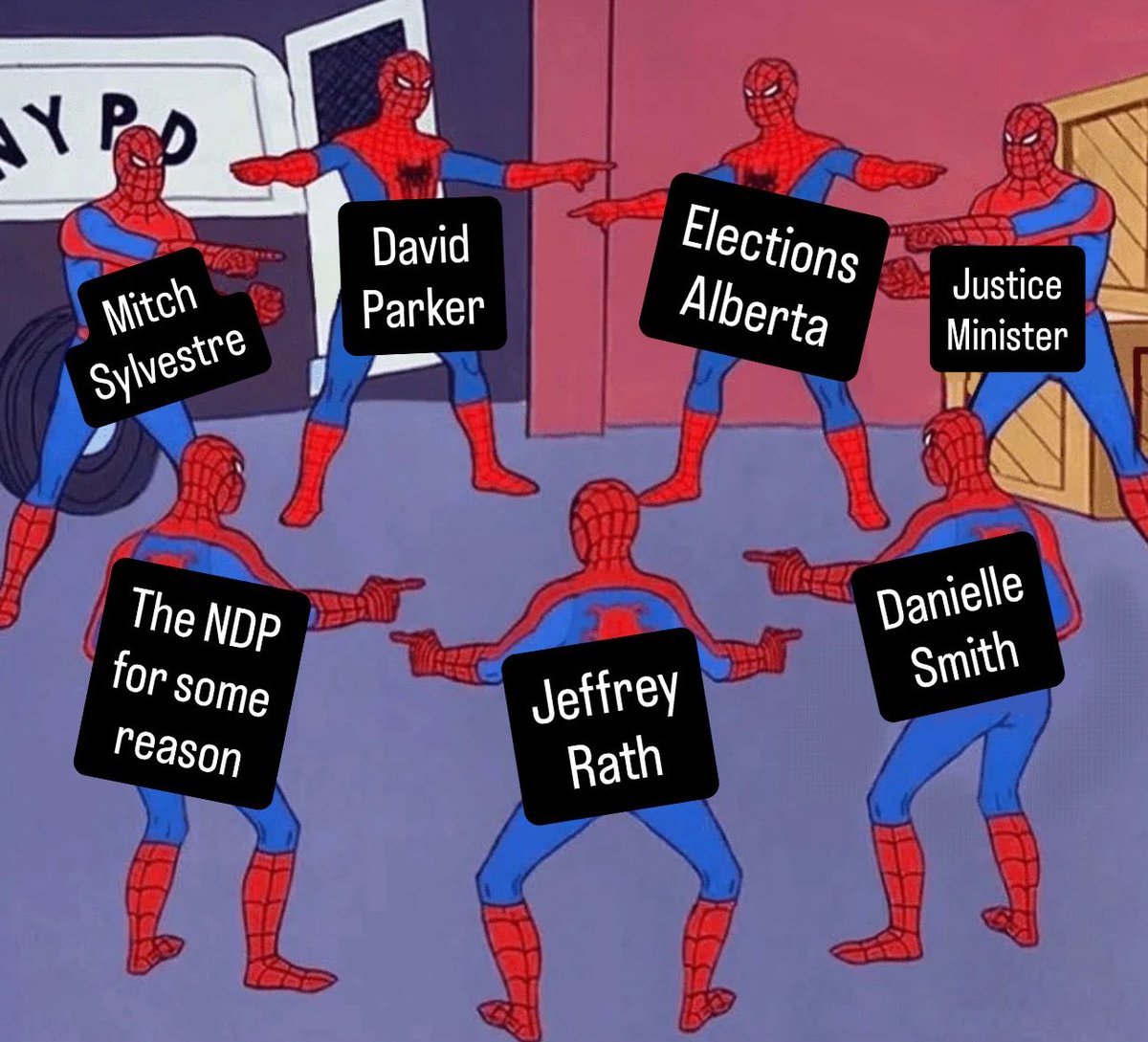
In case you missed it; Alberta's most unhinged actors now have access to everybody's home address, and I warned Elections Alberta a month ago and got a giant shruggie.
2/ We are moving beyond ordinary misinformation into something deeper: epistemic fragmentation — citizens no longer sharing the same basic understanding of reality.
5/ Our recent Alberta research suggests views on secession, immigration, party support, and confidence in the province are increasingly shaped by information environment, not just age, income, or geography.