One of the biggest causes of preventable revenue loss isn't billing. It's eligibility. Coverage changes, expired auths, and missed verification create denials before claims are submitted. Managed care success starts with getting eligibility right.
#Eligibility#ManagedCare
Managed care success doesn't start with the contract. It starts with operational readiness. The question isn't whether you're contracted, it's whether you're prepared.
#BehavioralHealth#ManagedCare
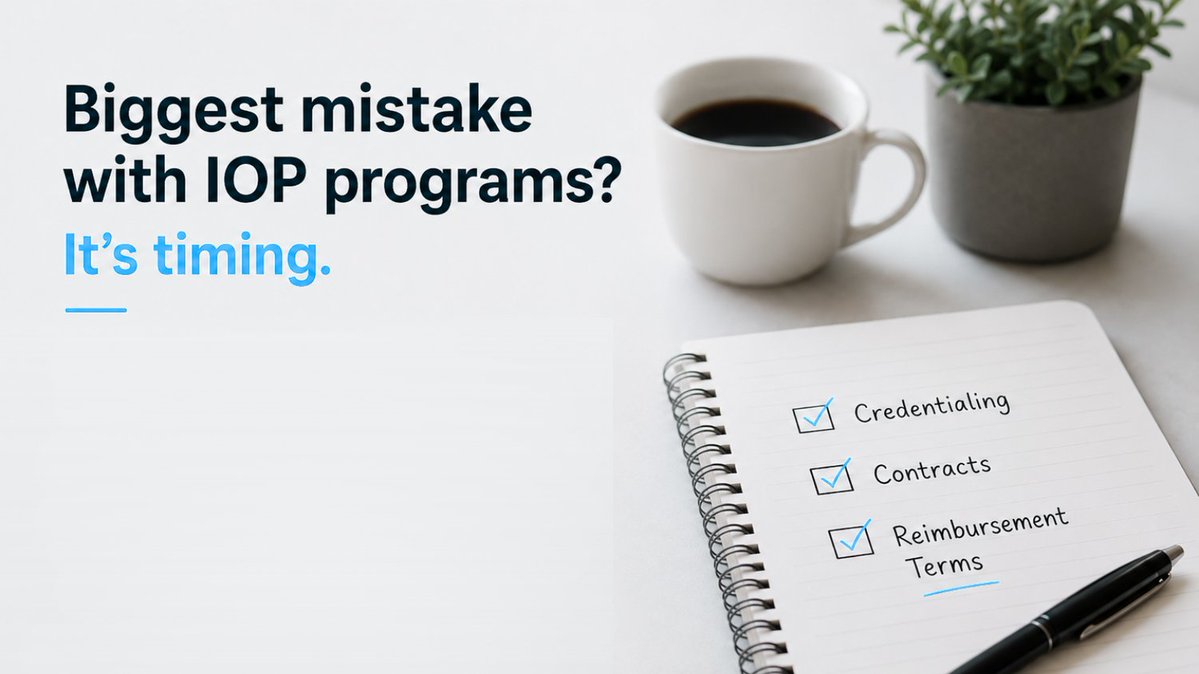
Biggest mistake with IOP programs? It’s not clinical or billing. It’s timing. Too many launch before contracts, credentialing, and reimbursement terms are finalized. Higher acuity care. Outpatient rates. IOP is a contracting shift first, clinical model second.
#IOP#ManagedCare
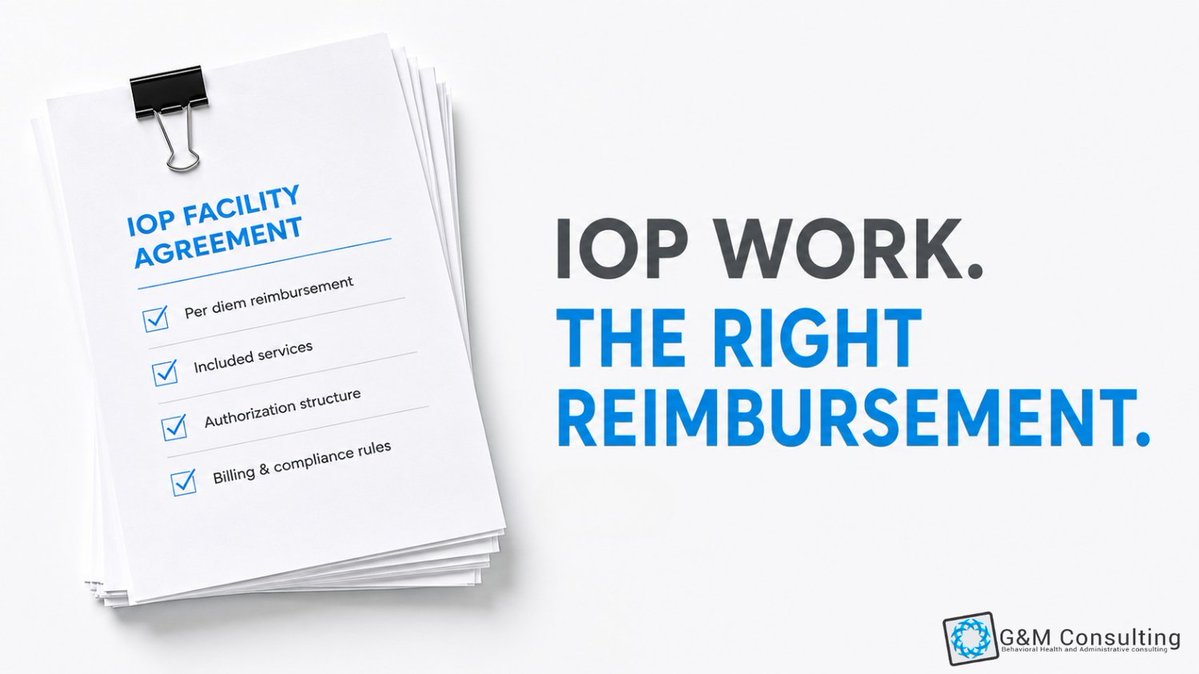
Most IOP programs don’t have a billing issue, they have a contracting issue. Outpatient agreements ≠ IOP. Without a facility agreement, you can bill, but you won’t be paid correctly. IOP work. Group therapy reimbursement. That gap is the problem.
#IOP#ManagedCare
Thinking about launching an IOP program? Start with the foundation. Contracts, credentialing, accreditation, reimbursement terms, and billing processes should be in place before you see your first client. Get the order wrong and underpayments often follow.
#IOP#ManagedCare
Built an IOP program… but getting paid like group therapy? It’s not your billing. It’s your contract. Expanding services doesn’t mean payers will reimburse at that level, especially without a separate IOP agreement. Check your contracts.
#BehavioralHealth#RCM#Leadership
Most agencies don’t have a strategy problem with commercial insurance. They have an infrastructure problem. Eligibility, auths, patient balances, coding, it all has to work together. If it doesn’t: errors rise, cash slows, margins shrink.
#RCM#BehavioralHealth
Most orgs don’t have a managed care problem, they have a visibility problem. Performance comes down to 4 areas: care model, operations, economics, visibility. Most are strong in 1–2, not all 4. We built a diagnostic to expose it.
#BehavioralHealth#ManagedCare
Revenue loss in managed care isn’t one big failure. It’s small breakdowns; auths, eligibility, coding, filing, patient balances.
Ignored alone. Together, they drain 10–20%.
If you’re not tracking it, you’re not fixing it. Visibility first.
#BehavioralHealth#ManagedCare
"We’ll make it up in volume” isn’t a strategy, it’s a risk. If your rate doesn’t cover your cost per service, more volume just increases losses. Know your costs. Validate the rate. Then scale. Otherwise you’re not growing, you’re scaling a problem.
#BehavioralHealth#RCM
Most behavioral health orgs don’t have a contracting problem, they have an execution problem. Auths missed. Docs weak. Denials ignored. Balances untouched. Contracts don’t drive revenue. Execution does.
#BehavioralHealth#RCM
You can be a “good provider” and still lose in managed care. Why? Because care without measurable outcomes isn’t enough anymore. Payers want data, performance, and cost efficiency, not intentions. Are you able to prove your value?
#ValueBasedCare#ManagedCare
Most behavioral health orgs don’t have an RCM system, they have workarounds. Intake guesses. Billing fixes. Leadership reacts. It’s disconnected. That’s where revenue leaks. High performers run aligned systems. Fix the system, not the symptoms.
#BehavioralHealth#RCM
RCM isn’t a billing function. It’s a leadership discipline. If you’re not in it weekly, you’re reacting and reaction is expensive. Control it or keep paying for it.
#RCM#HealthcareOps
Stand out to Medicaid MCOs by focusing on 3 things: access (how fast clients get care), engagement (do they stay), and results (are they improving). Not 25 metrics, just what matters. Focus drives growth. Where do you stand?
#BehavioralHealth#HealthcareOps#Leadershipp
Everyone thinks getting the payer contract is the hard part. It’s not, it’s making it work. Without a clear playbook, ownership, and understanding the rules, denials aren’t surprising, they’re inevitable. Contracts don’t drive revenue. Execution does. #RevenueCycle#HealthcareOps
Organizations winning in managed care made one shift: they stopped acting like vendors & started acting like partners. It’s not about volume, it’s about value, relationships, and results. Payers aren’t asking how many you saw, they ask what changed.
#ValueBasedCare#ManagedCare
Most think RCM is billing. It’s not—it’s operational. If intake, auths, and documentation aren’t aligned, revenue is at risk before a claim is sent. Denials are the symptom. Problem starts upstream. Winning orgs build systems for predictable pay.
https://t.co/cT4KUBju2F
#RCM#BH