𝗡𝗩𝗜𝗗𝗜𝗔 𝗚𝗧𝗖 𝗧𝗮𝗶𝘄𝗮𝗻 𝟮𝟬𝟮𝟲 - 𝗠𝗮𝗽𝗽𝗶𝗻𝗴 𝘁𝗵𝗲 #𝗛𝗲𝗮𝗹𝘁𝗵𝗰𝗮𝗿𝗲𝗔𝗜 𝗩𝗮𝗹𝘂𝗲 𝗖𝗵𝗮𝗶��
At NVIDIA GTC Taiwan 2026, our Co-Founder & CEO Dr. Tuan Cao @tuan_lifeai presented “LifeAI Biohub: A Purpose-built AI platform for Drug Development”
One signal emerged throughout the session:
As AI capabilities continue to advance, the bottleneck is no longer intelligence itself. It is the infrastructure that enables validation, governance, and coordination across the full spectrum of healthcare stakeholders.
𝗧𝗵𝗲 𝗛𝗲𝗮𝗹𝘁𝗵𝗰𝗮𝗿𝗲 𝗔𝗜 𝗩𝗮𝗹𝘂𝗲 𝗖𝗵𝗮𝗶𝗻
Pharma → Hospitals → Doctors → Labs → Regulators → Auditors → Patients
Sustainable progress in healthcare AI demands alignment across the entire ecosystem, not isolated optimization within a single organization.
𝗟𝗶𝗳𝗲𝗔𝗜 𝗕𝗶𝗼𝗛𝘂𝗯
Shared Infrastructure → Coordination Layer → Connected Network → Application Success
This is the foundation Life AI is building: the shared infrastructure and coordination layer for the healthcare AI value chain so that every application built on top can move faster, scale further, and earn trust across the industry.
The long-term opportunity in healthcare AI will not be defined by better models alone. It will be defined by the infrastructure that makes those models deployable, accountable, and impactful at scale.
It was a privilege to share this vision alongside the researchers, healthcare leaders, and technology builders at NVIDIA GTC Taiwan shaping the next chapter of AI.
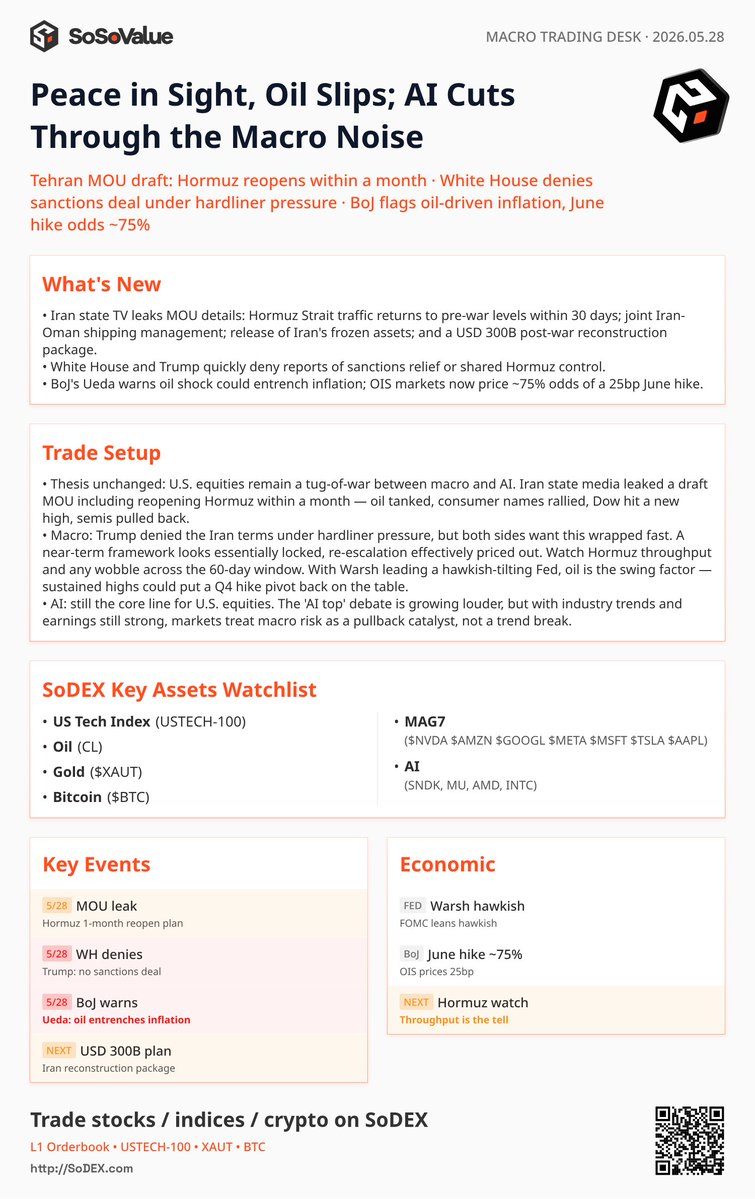
SoSoValue Flash: Iran Deal Denials Muddle Sentiment, Fed & BoJ Pivot Hawkish
💥 Core Catalyst: Truce Extensions & Tehran Shadows
The market’s "peace rally" hit a snag as the White House and Trump administration officially denied the leaked MOU terms regarding sanctions relief and shared control of Hormuz. While both sides remain motivated to resolve the conflict, the transition from back-channel leaks to formal negotiation has proven volatile, leaving oil prices sensitive to every headline.
🔍 Key Logic Shifts:
1️⃣ Fed Pivot: The "Warsh Era" at the Fed has begun with a distinctly hawkish flavor. By signaling support for removing "easing bias" and emphasizing the costs of entrenched inflation, Warsh has effectively shifted market focus toward potential Q4 rate hikes rather than cuts.
2️⃣ BoJ Shift: Governor Ueda’s characterization of the current energy crisis as a "fifth oil shock" has served as a formal warning to markets. With OIS pricing now suggesting a 75% probability of a 25bp hike in June, Japan is moving toward a decisive normalization phase.
3️⃣ AI & Market: AI remains the primary anchor for U.S. equities. While speculative headlines caused semiconductor volatility, the fundamental narrative—fueled by robust hyperscaler capex and NVIDIA’s structural dominance—persists. Markets are currently treating macro-headline "wobbles" as opportunities for consolidation within the broader AI uptrend.
📊 Trade Setup (SoDEX Assets to Watch):
Core: $USTECH-100 | $CL (Crude) | $XAUT | $BTC
MAG7: $NVDA | $AMZN | $GOOGL | $META | $MSFT | $TSLA | $AAPL
AI Hardware: $SNDK | $MU | $AMD | $INTC
Every person has a moment when healthcare felt complicated or out of reach.
Your voice can turn those moments into something meaningful.
Join me on @LifeNetwork_AI: https://t.co/PFyATJxudQ
Code: WZCB85W
#LifeAITestnet#HealthcareAI
Your voice can earn by offering clarity where systems feel confusing.
If you've lived it, you can shape it.
Join @LifeNetwork_AI: https://t.co/PFyATJxudQ
Code: WZCB85W
#LifeAITestnet#HealthcareAI
🤖 Community Question:
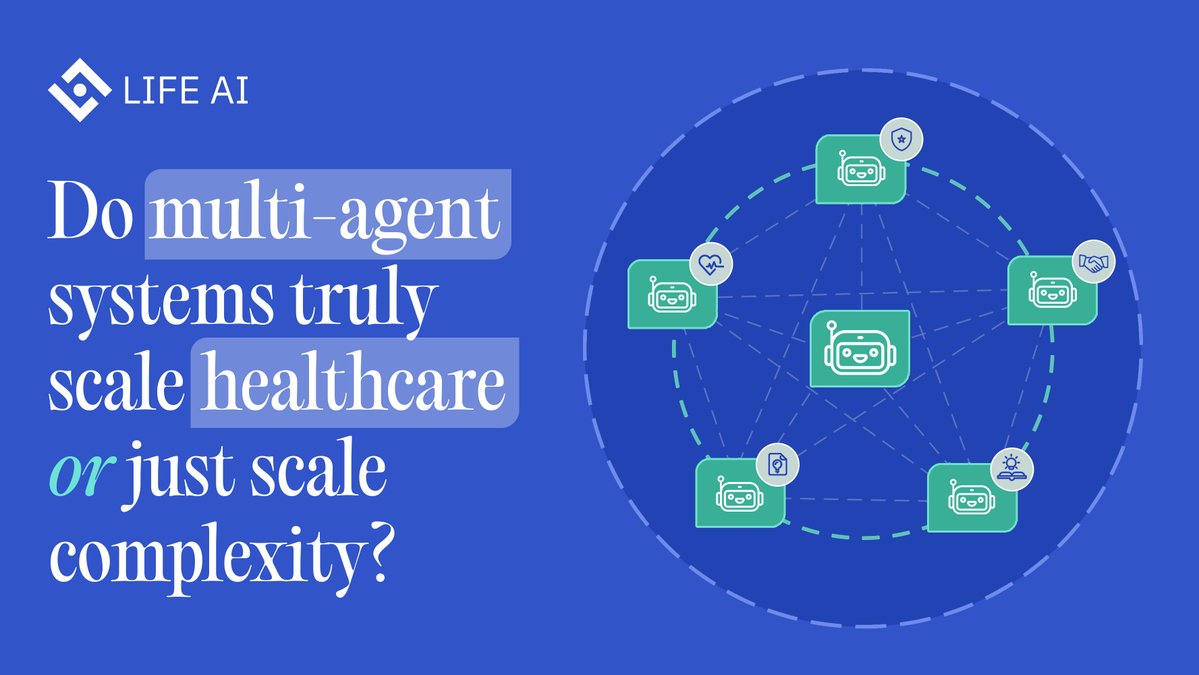
Do multi-agent systems truly scale healthcare or just scale complexity?
Viewpoint A: Scalable Coordination
Healthcare workflows are too complex for a single agent.
Multi-agent systems split tasks, cross-check outputs, and improve efficiency at scale, especially in areas like care coordination and prior authorization. With the right guardrails, they offer a practical path forward.
Viewpoint B: Compounding Risk
More agents also mean more risk.
Errors can cascade, decisions become harder to explain, and accountability gets blurred. As systems grow, governance becomes more difficult and scaling too early increases exposure.
👇 Drop A or B and share your perspective
🤖 Community Question:
Do multi-agent systems truly scale healthcare or just scale complexity?
Viewpoint A: Scalable Coordination
Healthcare workflows are too complex for a single agent.
Multi-agent systems split tasks, cross-check outputs, and improve efficiency at scale, especially in areas like care coordination and prior authorization. With the right guardrails, they offer a practical path forward.
Viewpoint B: Compounding Risk
More agents also mean more risk.
Errors can cascade, decisions become harder to explain, and accountability gets blurred. As systems grow, governance becomes more difficult and scaling too early increases exposure.
👇 Drop A or B and share your perspective
Earn by helping identify the gaps no one talks about.
Hidden problems need real voices.
Join me on @LifeNetwork_AI Testnet: https://t.co/PFyATJxudQ
Code: WZCB85W
#LifeAITestnet#HealthcareAI
🌐 Community Question:
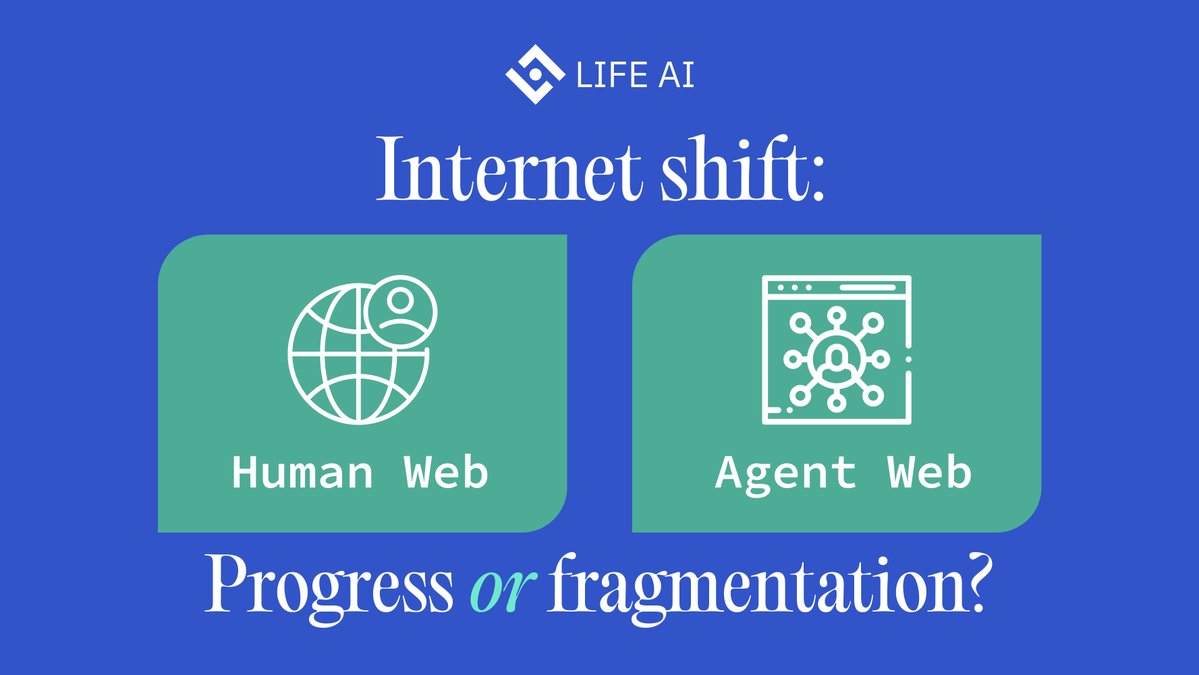
As the internet evolves to support autonomous AI agents, splitting into the Human Web (interfaces for people) and the Agent Web (API-driven infrastructure for machines), will this shift drive innovation and automation, or fragment and dehumanize the online experience?
Viewpoint A: A New Layer of Internet Intelligence
The rise of AI agents interacting directly with digital systems could transform the internet into a more intelligent infrastructure. Agents can automate tasks such as trading, payments, data analysis, and content generation, enabling a new agent economy. This machine-to-machine coordination may significantly improve efficiency, scalability, and innovation across industries.
Viewpoint B: Erosion of the Human-Centered Web
Expanding the Agent Web may reduce the role of the Human Web, as machines increasingly interact through APIs rather than human interfaces. This could create privacy and security risks, weaken traditional web models, and concentrate power in automated systems, potentially leading to a fragmented internet with less authentic human participation.
👇 Drop A or B and share your perspective
🌐 Community Question:
As the internet evolves to support autonomous AI agents, splitting into the Human Web (interfaces for people) and the Agent Web (API-driven infrastructure for machines), will this shift drive innovation and automation, or fragment and dehumanize the online experience?
Viewpoint A: A New Layer of Internet Intelligence
The rise of AI agents interacting directly with digital systems could transform the internet into a more intelligent infrastructure. Agents can automate tasks such as trading, payments, data analysis, and content generation, enabling a new agent economy. This machine-to-machine coordination may significantly improve efficiency, scalability, and innovation across industries.
Viewpoint B: Erosion of the Human-Centered Web
Expanding the Agent Web may reduce the role of the Human Web, as machines increasingly interact through APIs rather than human interfaces. This could create privacy and security risks, weaken traditional web models, and concentrate power in automated systems, potentially leading to a fragmented internet with less authentic human participation.
👇 Drop A or B and share your perspective
🩺 Community Question: Is the “AI five layer cake” framework sufficient to power healthcare AI systems?
(The “AI five layer cake” framework: Energy → Chips → Infrastructure → Models → Applications, introduced by Jensen Huang of NVIDIA)
Viewpoint A: Yes
Healthcare AI aligns with the stack. Energy, chips, and infrastructure enable intelligence generation at scale. Medical models, trained on clinical and biomedical data, interpret complex signals; applications then deliver value through radiology assistance, drug discovery, and clinical workflow automation.
Viewpoint B: Not entirely
The stack shows how capability is produced, but impact depends on translating that capability into clinical use. Strict validation, regulation, and the need to integrate with hospital workflows slow translation; consequently, healthcare applications often scale more slowly than the underlying AI stack.
👇Drop A or B and share your perspective