This is Archie. Just came from an epic day of zoomies and fetch at the park. Now waging a heroic battle against sleep in the backseat, complete with legendary head bobs and crossed eyes. Pure determination. would tuck him in 🐶💤
Can you help me out? I am trying to get a free gift.
Hello friends, I need your help to click this link below to get more puppy snacks for my new pet!!
https://t.co/HcrE1dE7h7
3 million Razer Silver and 50 game keys are up for grabs. Download Razer Cortex on PC and use my invitation code 7bc7eb326ca6 for more entry tickets. Don't miss out! https://t.co/0tduiGb1yz #RazerCortex#ShareAndWin
RTX 4070 or $500 Giveaway!
To enter, perform these tasks via the link below:
🔁 Retweet + Like
✅ Follow: @agirlmegan + @VastGG
Enter Here: https://t.co/aLK4raMq5e
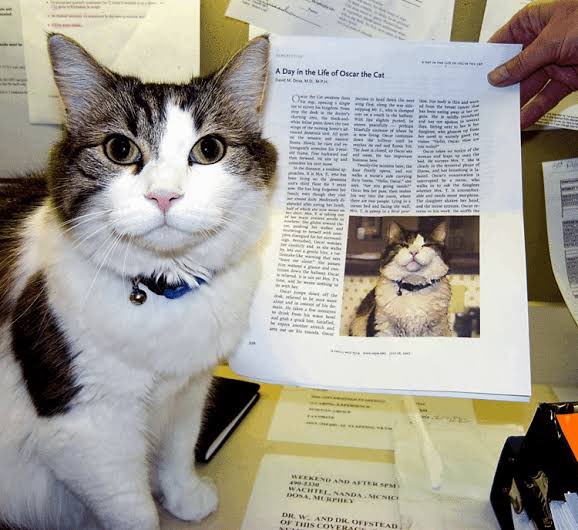
In 2005, a six-month-old kitten named Oscar was adopted by a nursing home in the US to be raised as a therapy cat. However, the workers noticed something peculiar about him.
While Oscar usually preferred to be alone, he occasionally crawled into a resident's bed and snuggled beside them.
The eerie thing about this is that the resident that Oscar would cuddle with would usually die within hours.
Initially, the staff didn't think much of it, but after this happened 20 times, they started to believe that Oscar knew when someone was close to passing away, and so when they noticed the cat next to a resident, they would call their loved ones to warn them.
Researchers speculate that Oscar could smell biochemicals released by dying cells and so chose to comfort lonely residents.
On one occasion, the staff was convinced that a resident was about to pass away, but Oscar refused to sit with them. Instead, he chose another resident who looked healthier, and that person passed away first.
Oscar died in 2022, and over the course of his life he accurately predicted over 100 deaths.
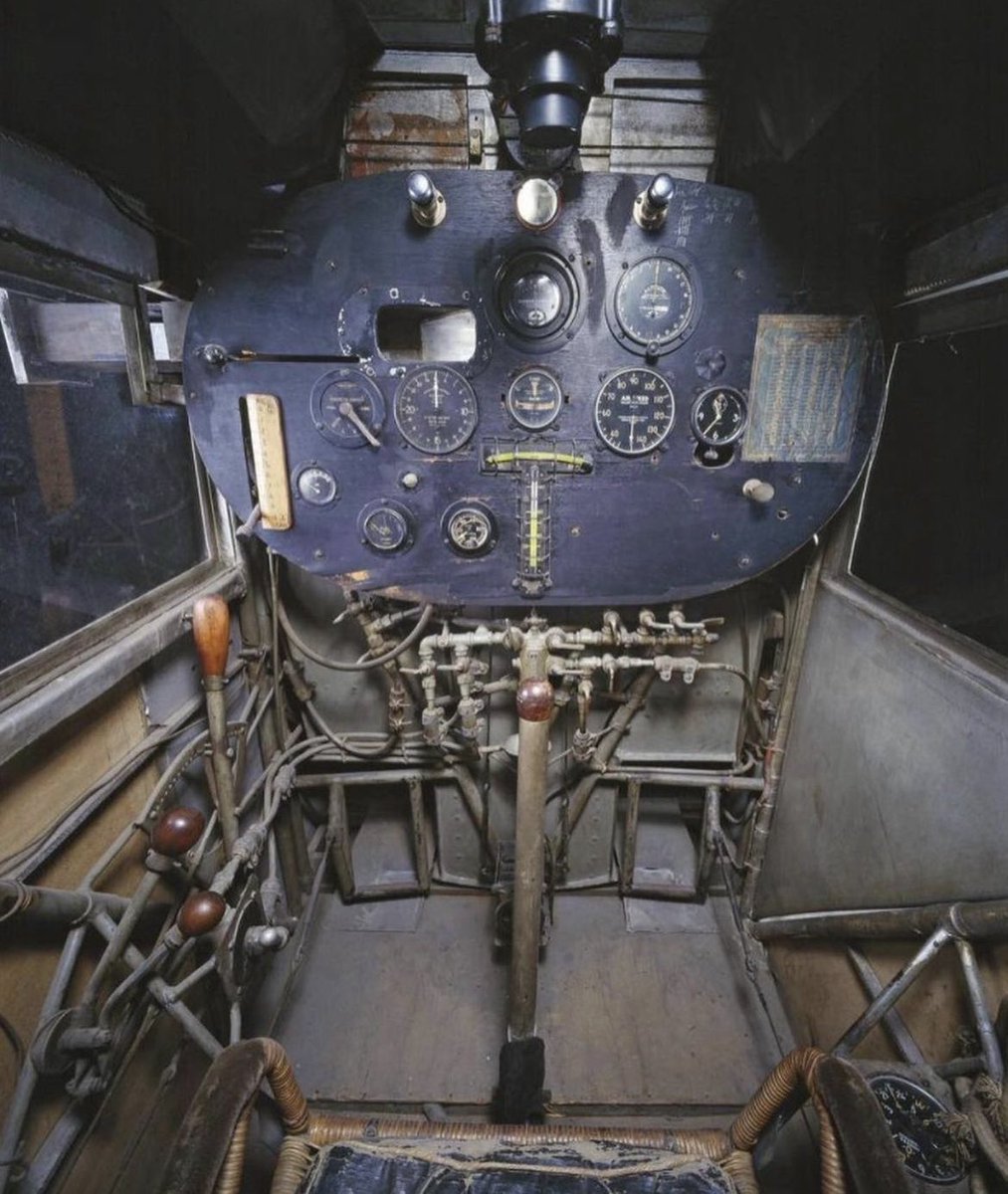
This is the cockpit in which Charles Lindbergh sat while piloting the first aircraft to make a solo non-stop transatlantic flight, the Spirit of Saint Louis, in May of 1927. Note the periscope used instead of a forward window. The Spirit was designed and built in San Diego to compete for the $25,000 Orteig Prize, which was offered by New York hotel owner Raymond Orteig to the first aviator to cross the Atlantic non-stop, either from New York to Paris or vice versa.
Lindbergh, a U.S. Air Mail pilot, believed that a single-engine, single-seat, high-wing monoplane would provide him with the best chance of success. Under his close supervision, the Spirit was designed and constructed in just 60 days.
To enhance the center of gravity and minimize the risk of being crushed in case of a crash, Lindbergh had the large main and forward fuel tanks placed in the front section of the fuselage, ahead of the pilot, with the oil tank acting as a firewall. As a result of this design choice, there was no front windshield, and forward visibility was limited to the side windows. However, this arrangement didn't bother Lindbergh, as he was accustomed to flying in the rear cockpit of mail planes with mail bags in the front. When he needed to see forward, he would simply look out the sides.
To address the need for some forward vision, Lindbergh enlisted the help of a former submarine serviceman to design and install a periscope. Inside the cramped cockpit, measuring 94 cm wide, 81 cm long, and 130 cm high, Lindbergh couldn't even stretch his legs.
Today, the Spirit of St. Louis is on display at the Smithsonian National Air and Space Museum.
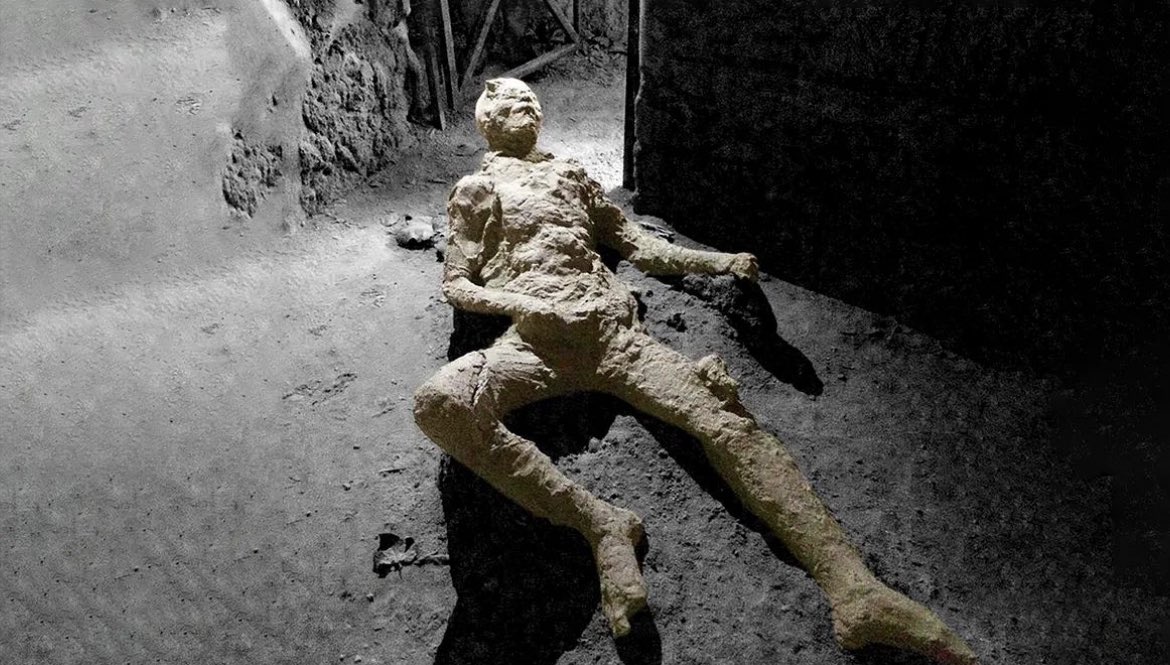
The photograph, released in 2017, showcases the remains of an individual who resided in Pompeii during the eruption in 79 AD. The posture of the body led to speculations suggesting that the man had died while masturbating. These theories ranged from the man employing self-pleasure as a coping mechanism to the notion that he had chosen to experience one last orgasm before his untimely demise. One online user humorously summarized the image as depicting an audacious individual indulging in a final act before confronting eternity.
However, the reality is that this man was not masturbating at the time of his death. The intense heat during the eruption caused his body to contort unnaturally. It is likely that he succumbed to the volcanic gas, and his body subsequently reacted severely to the heat, resulting in the observed position.
The catastrophic destruction of Pompeii occurred in 79 AD when the nearby volcano Mount Vesuvius unleashed a violent eruption, wiping out the Roman town. Despite the horrifying nature of this event, the ash from the volcano enveloped Pompeii, preserving it remarkably and offering us invaluable insights into Roman life.
The body depicted in the photograph is just one among thousands. Many of these ash casts lack a skeleton, as the ash's acidity has eroded it over time. Instead, they are hardened rock formations that replicate the original shape of the bodies they once covered. Nonetheless, some casts do still contain skeletons, enabling analysis to unravel the lives, deaths, and experiences of individuals within a Roman town.
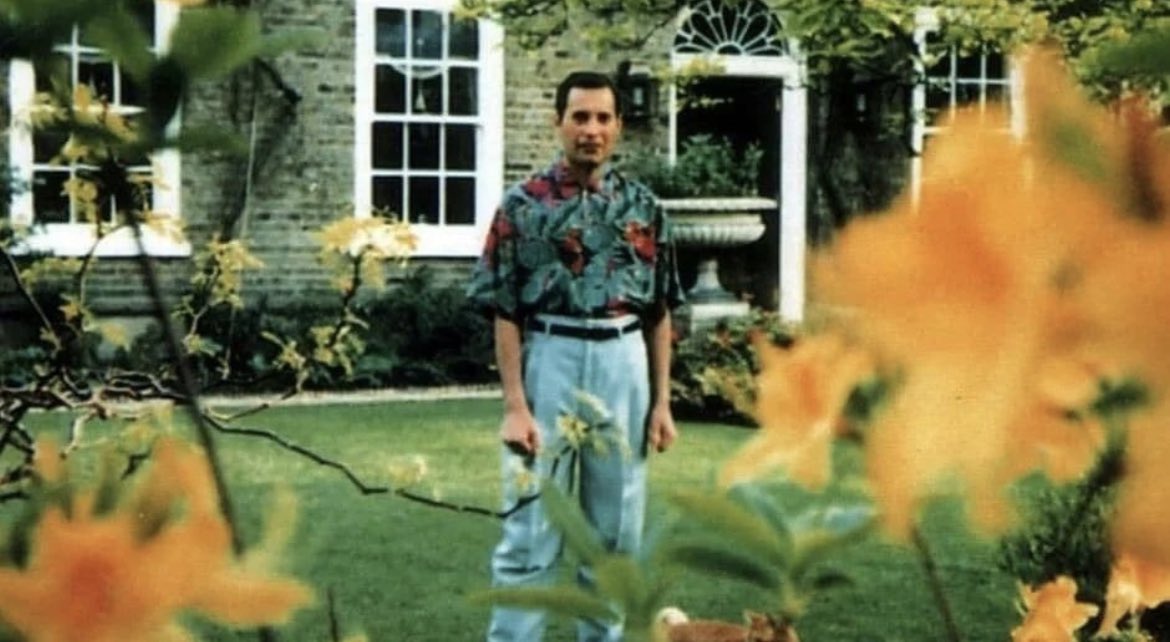
The final photograph of Freddie Mercury, taken in 1991, captures a poignant moment in his life. His partner, Jim Hutton, took this picture at their residence in London. Freddie Mercury, renowned as the lead vocalist of the iconic rock band Queen, is widely regarded as one of the greatest musicians of all time. Queen's composition and production of the legendary song "Bohemian Rhapsody" further solidify their status as one of the best bands in history. Notably, Mercury was an influential figure in the LGBT community during his lifetime and continues to be an inspiration today. Sadly, he succumbed to bronchial pneumonia as a result of AIDS.
In this photograph, Mercury appears visibly frail, with his skin tone and facial complexion displaying paleness compared to previous images.
Brian May, the guitarist of Queen, once recounted a conversation he had with Mercury during a dinner where they discussed his battle with AIDS. May recollected Mercury's words, stating, "The problem was actually his foot, and tragically there was very little left of it. Once, he showed it to us at dinner. And he said, 'Oh Brian, I'm sorry I've upset you by showing you that!'" May responded empathetically, saying, "I'm not upset, Freddie, except to realize you have to put up with all this terrible pain."
Tragically, Mercury passed away mere months before significant medical advancements against AIDS became available on the market. May expressed his sorrow, saying, "He missed by just a few months. If it had been a bit later, he would still have been with us, I'm sure. You can't engage in 'what if,' can you? You can’t go there because therein lays madness"
The well-preserved body of John Shaw Torrington, an unfortunate member of the 1845 Franklin Expedition. Torrington, a Royal Navy stoker, embarked on this ill-fated journey with the aim of discovering the elusive Northwest Passage. Tragically, he became the first casualty of the expedition, which ultimately claimed the lives of all involved. In 1984, forensic anthropologist Owen Beattie conducted an exhumation of Torrington's remains to investigate the cause of his demise. These remains stand as one of the most remarkably conserved examples of a human corpse since the discovery of the ancient Tollund Man in the 1950s.