No one jives with the long-term, multi-generation strategic stewardship angle more than me.
But writing a mandate with "a thousand-year horizon" is a bit much, isn't it?
maybe wait for like, the 32 year merge anniversary before announcing the da vinci code of management docs
4/ Many of the systems people rely on are becoming less accountable to the people who use them. Now, Ethereum’s original promise matters more than ever before.
We were Ethereum’s first steward. Now we are one of many. And when we are gone, we hope the principles here will continue on without us.
@cryptowanderer@yoavw@ethereumfndn gas is cheap on Optimism :)
not sure my tinkering is particularly meaningful, but I do believe weird is the way home!
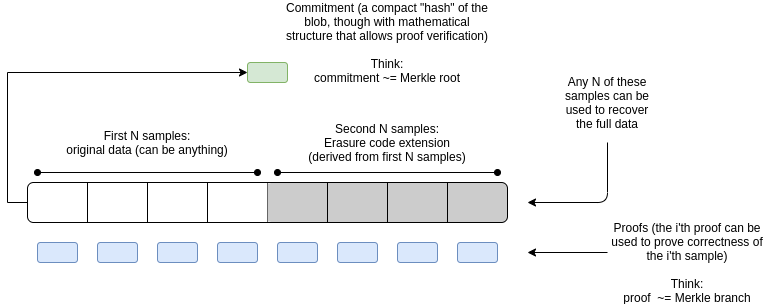
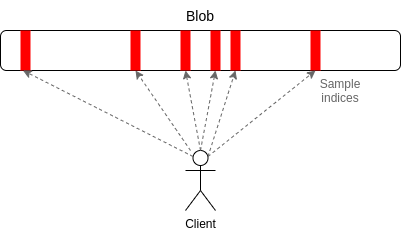
PeerDAS in Fusaka is significant because it literally is sharding.
Ethereum is coming to consensus on blocks without requiring any single node to see more than a tiny fraction of the data. And this is robust to 51% attacks - it's client-side probabilistic verification, not validator voting.
Sharding has been a dream for Ethereum since 2015 , and data availability sampling since 2017 ( https://t.co/Fa0jKFgObW ), and now we have it.
That said, there are three ways that the sharding in Fusaka is incomplete:
* We can process O(c^2) transactions (where c is the per-node compute) on L2s, but not on the ethereum L1. If we want to scaling to benefit the ethereum L1 as well, beyond what we can get by constant-factor upgrades like BAL and ePBS, we need mature ZK-EVMs.
* The proposer/builder bottleneck. Today, the builder needs to have the whole data and build the whole block. It would be amazing to have distributed block building.
* We don't have a sharded mempool. We still need that.
But even still, this is a fundamental step forward in blockchain design. The next two years will give us time to refine the PeerDAS mechanism, carefully increase its scale while we continue to ensure its stability, use it to scale L2s, and then when ZK-EVMs are mature, turn it inwards to scale ethereum L1 gas as well.
Big congrats to the Ethereum researchers and core devs who worked hard for years to make this happen.
@VALRdotcom any reason you dn't support any L2s like @Optimism@base or @arbitrum ? You're making all your customers pay mainnet gas fees like it's 2019
Truly astounding how none of the pro Ethereum threads mention the actual real case for it
It’s the distribution and neutrality of the social consensus layer; Ethereum is the only major network outside of Bitcoin that is pretty much guaranteed to be maintained by volunteers for the next century, even if all companies and foundations vanish / lose funding.
It’s the most basic, crucial ingredient of lasting open-source software. Nobody on ct seems to give any attention to it.