May 30 is National Creativity Day ✨
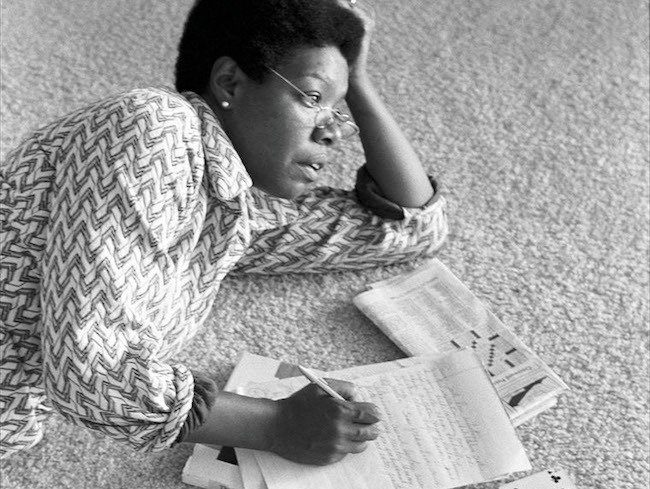
Dr. Maya Angelou: “You can’t use up creativity…” ✍🏽Finish the thought: “The more you use, ________.”
🎨 What will you create today?
(📸 Margaret Courtney-Clarke)
"He's a legend, not only in the ring but for his international stance for a lot of different things.
He's passed on a lot of legacy, a lot of opportunities to myself..."
Michael Jordan with the great Muhammad Ali before Game 1 of the 1997 @NBA Finals.
Credit - @natlyphoto
You are not who you were yesterday — and that is your power. Growth is not always loud or visible, but it is always unfolding.
✍🏽 Journal Prompt: What are you still becoming? Honor the process. There is beauty in who you are becoming.
#SundayReflection#MentalHealthMatters
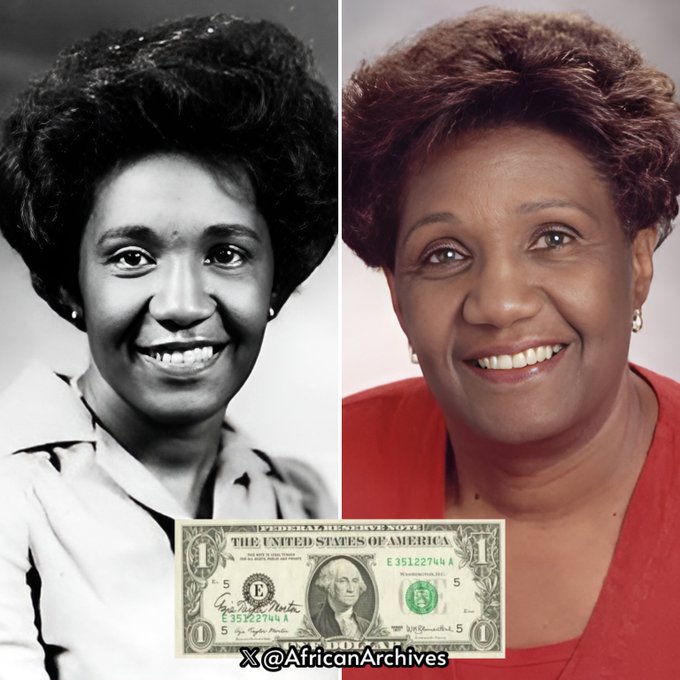
Azie Taylor Morton was the first and only black person to serve as U.S. Treasurer! She was appointed by President Jimmy Carter on September 12, 1977, she served as the 36th Treasurer until January 20, 1981. All bills 💵printed during that time has her signature on it.
Dr. Opal Lee, the Grandmother of Juneteenth, is being honored with her own Barbie. At 99, her lifelong fight for truth, remembrance, and freedom will inspire new generations. Representation matters, and history deserves to be celebrated! https://t.co/dVwVUdft9A
In 1974, Stevie Wonder became the first Black artist to win the Grammy for “Album of the Year”, setting a precedent that reshaped what recognition at the highest level could look like.
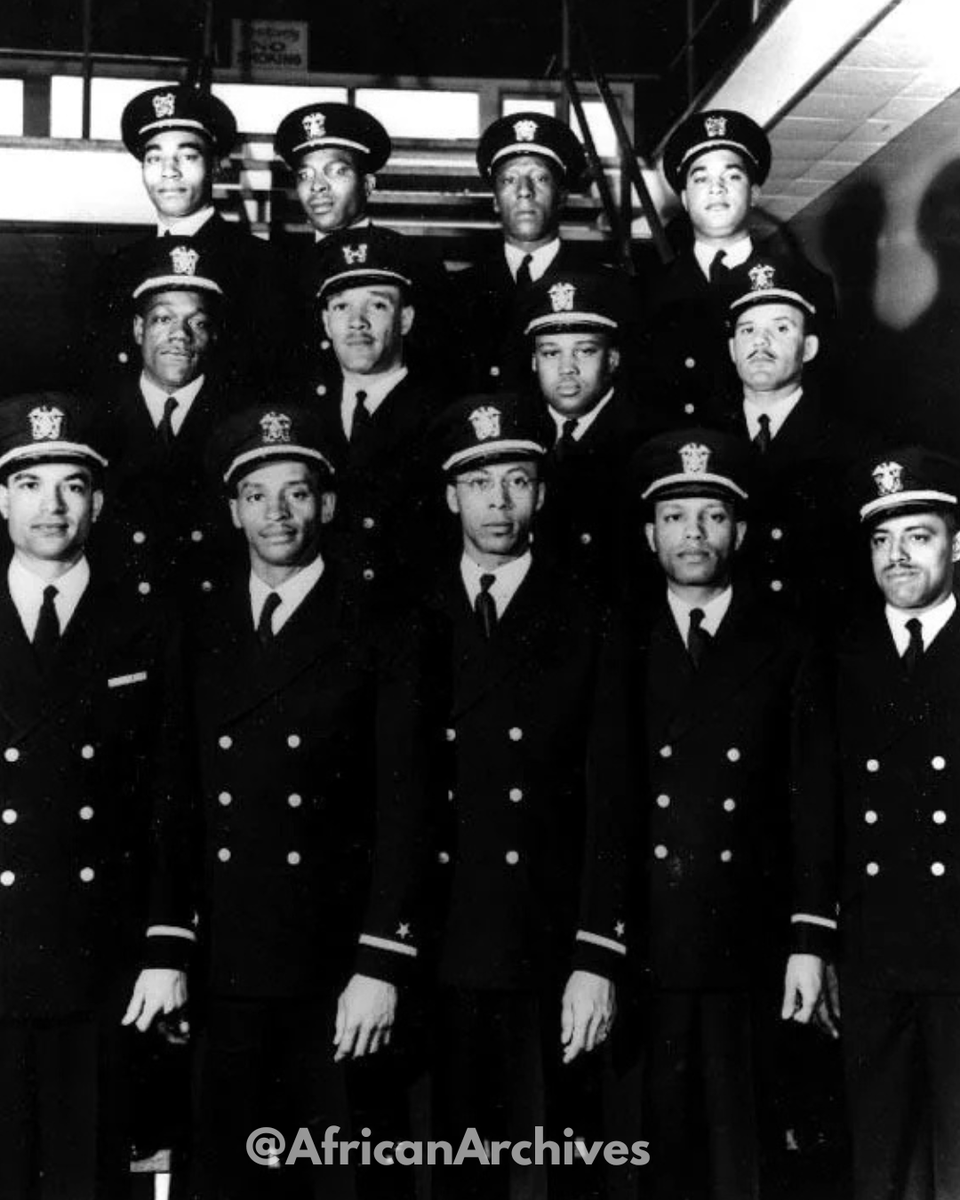
THE GOLDEN THIRTEEN
In 1944, the Navy gave 16 Black men 8 weeks to complete 16 weeks of training. All 16 passed with some of the highest scores recorded in Navy training. The Navy commissioned only 13. Three men who passed were denied commissions—no reason given. This is their story.
In 1944, as World War II raged across the globe, the United States Navy remained strictly segregated. Black sailors were largely confined to menial roles—cooks, stewards, and laborers—regardless of their intelligence or leadership ability. Against this backdrop of institutional racism, a quiet but historic challenge unfolded at Great Lakes Naval Training Station in Illinois. It would produce a group later known as the Golden Thirteen.
That year, the Navy selected 16 highly qualified Black enlisted men for an experimental officer training program. From the start, the odds were stacked against them. While white officer candidates received 16 weeks of instruction, these men were ordered to complete the same curriculum in just 8 weeks. They were given no textbooks, little formal instruction, and no assurance that passing would lead to commissions. Instead, they were expected to teach themselves navigation, seamanship, naval law, engineering, and leadership—under intense scrutiny.
Despite these conditions, all 16 men passed. Their scores were not merely adequate; they were exceptionally high, surpassing many other officer classes. Their performance left no doubt about their capability or readiness to lead. Yet when results were announced, the Navy commissioned only 13 of them, making them the first Black commissioned officers in U.S. Navy history.
The remaining three men, who had also passed, were denied commissions without explanation. No deficiencies were cited. Their exclusion underscored a harsh reality: even excellence could not fully overcome racism.
The Golden Thirteen went on to serve with distinction, though often in segregated units and without authority over white sailors. Still, their very presence as officers shattered a barrier that had existed since the Navy’s founding. Their achievement helped expose the lie of racial inferiority and helped pave the way for the Navy’s desegregation in 1948.
For decades, their story was largely ignored. There were no parades, no immediate honors. Yet their legacy endures. The Golden Thirteen proved that leadership, intelligence, and courage are not bound by race—and that progress is often forced into existence by undeniable excellence.
They were given half the time, fewer resources, and no guarantees.
They passed anyway.
And in doing so, they changed the U.S. Navy forever.
If you love our content and would like to support the page, you can buy us a coffee here: https://t.co/K1AhtZuOFs
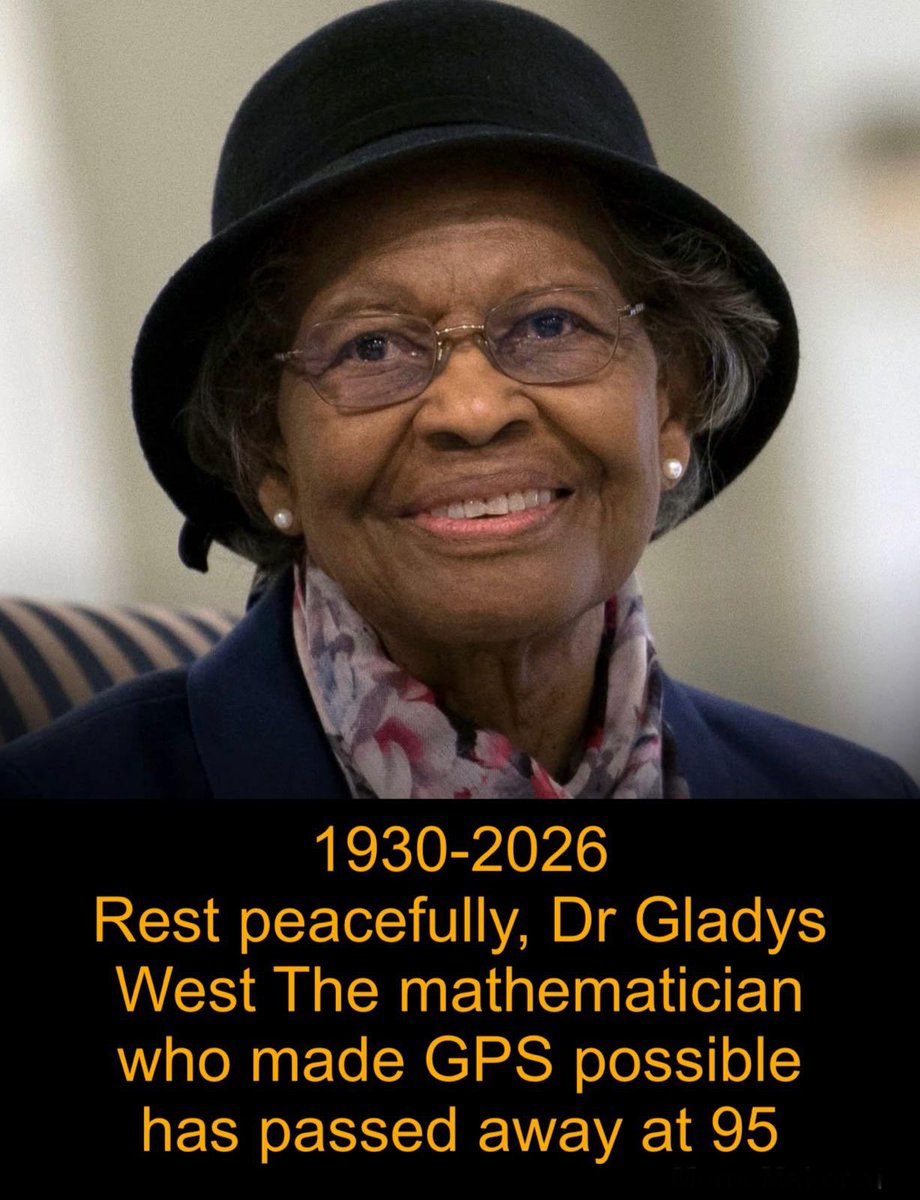
The world has lost a mind whose work guides us every day.
Gladys West, a pioneering mathematician whose contributions helped make modern GPS possible, has passed away at 95, peacefully on January 2026, surrounded by family and friends.
West’s mathematical models of the Earth’s shape became a critical foundation for satellite navigation, allowing precise positioning anywhere on the globe. Her work helps guide everything from airplanes and ships to smartphones and emergency services, though she once joked that she still preferred using paper maps.
Born in 1930 in rural Virginia, West grew up in the South, working on her family’s farm and walking miles to a one-room schoolhouse. She originally planned to study home economics, but discovered a love for geometry that led her to pursue mathematics. A scholarship took her to Virginia State College, where she earned her degree and later a master’s in mathematics.
In 1956, she joined a U.S. Navy research facility in Dahlgren, Virginia. Over a 42-year career, West worked with early computers to develop algorithms that accounted for the Earth’s irregular shape, gravity, and tidal forces, refinements that were essential for accurate satellite positioning.
Without the mathematical groundwork she helped establish, the global navigation systems used today would not function as they do.
For most of her career, West’s contributions remained largely unknown outside scientific circles. Later in life, she received major honors, including induction into the U.S. Air Force Hall of Fame and the Prince Philip Medal.
She inspired generations of scientists and mathematicians.